Old Town in Franklin, Tennessee: A Mississippian Village and Mound Complex
Site at a Glance
- Rating
- 3.7
- Popularity
- Very Low
- Country
- United States
- Primary era
- Medieval
- Eras represented
- Medieval, Modern
- Civilizations
- Mississippian
- Site type
- Settlement
- Remains
- Village
On this page8 sections
History
Mississippian occupation
Old Town in Franklin, Tennessee, was a village and mound complex built by communities of the Mississippian culture in the United States, with its main habitation around 1250–1450. The Mississippian culture was a tradition among communities of southeastern and central North America whose settlements included earthen mounds. Artifacts from Old Town span approximately 900–1450, while finds from salvage excavations indicate that its principal habitation was later, around 1250–1450. Charcoal from a prehistoric refuse pit yielded a radiocarbon date of 1214, a separate piece of evidence from that main habitation period.
Mound complexes of this kind are interpreted as regional centers for civic and ceremonial activity and as permanent residences for ruling elites.
Investigation and later land use
Physician Joseph Jones, then Nashville’s municipal health officer, investigated Old Town in 1868. He later described the site in detail in a book published in 1876, and it was noted in another publication in 1878. In 1928, county road crews building a bridge over Brown Creek near its confluence with the river accidentally exposed a large burial ground. A local resident tried to record information about the site.
The Thomas Brown House was built in the 1840s or 1850s. “Old Town” is also a name for the house and appears in the name of the nearby Old Town Bridge. Ahead of construction and renovation work, the Tennessee Division of Archaeology carried out brief salvage excavations in 1984 and 1991. Property owners also allowed artifact recovery from small areas at the site’s edge when work required it, including a water pipeline project in 1984 and renovation of the house in 1991. In 1989, a 41-acre area was listed on the National Register of Historic Places as the Old Town Archaeological Site, within a National Register group for Mississippian cultural resources in the Central Basin.
Remains
Enclosure and settlement
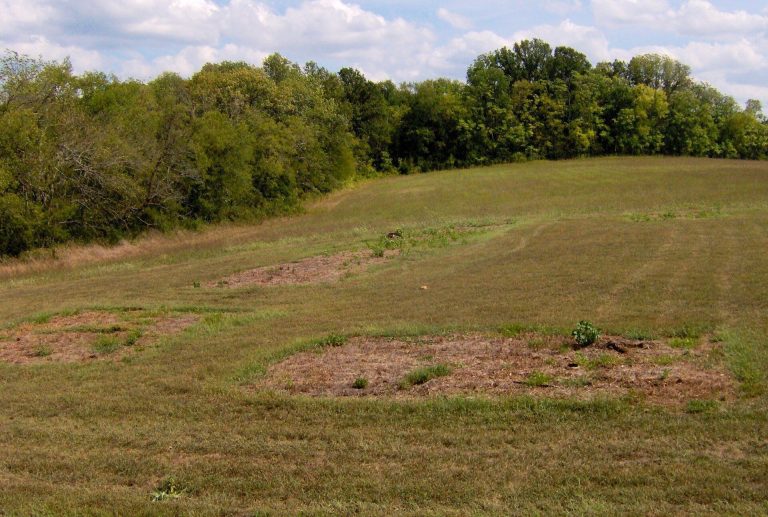
The 12-acre area investigated archaeologically lies at the confluence of the Harpeth River and Dolorson Creek, on the Harpeth River branch of the Natchez Trace, a historic route through the southeastern United States. Steep earthen embankments formed a semicircular enclosure about 2,470 feet long around the village. Parts of the embankments were topped by a wooden palisade, a barrier made from upright stakes, interpreted as a defensive feature. Village areas, a plaza, and several large earthen mounds occupied the enclosed space, with the mounds standing within the embankments.
Mounds and burials
Platform mounds
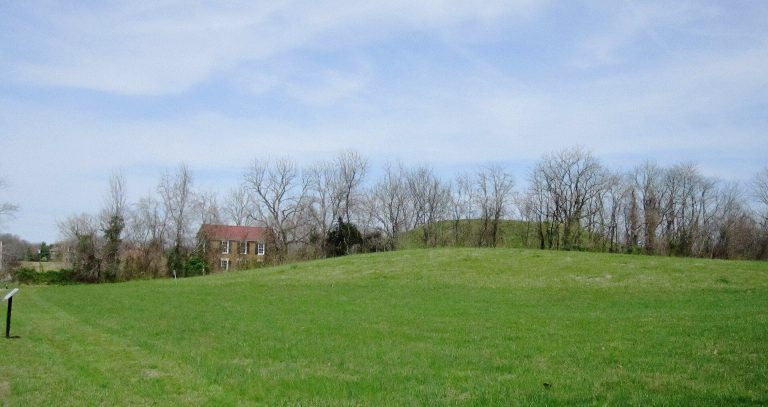
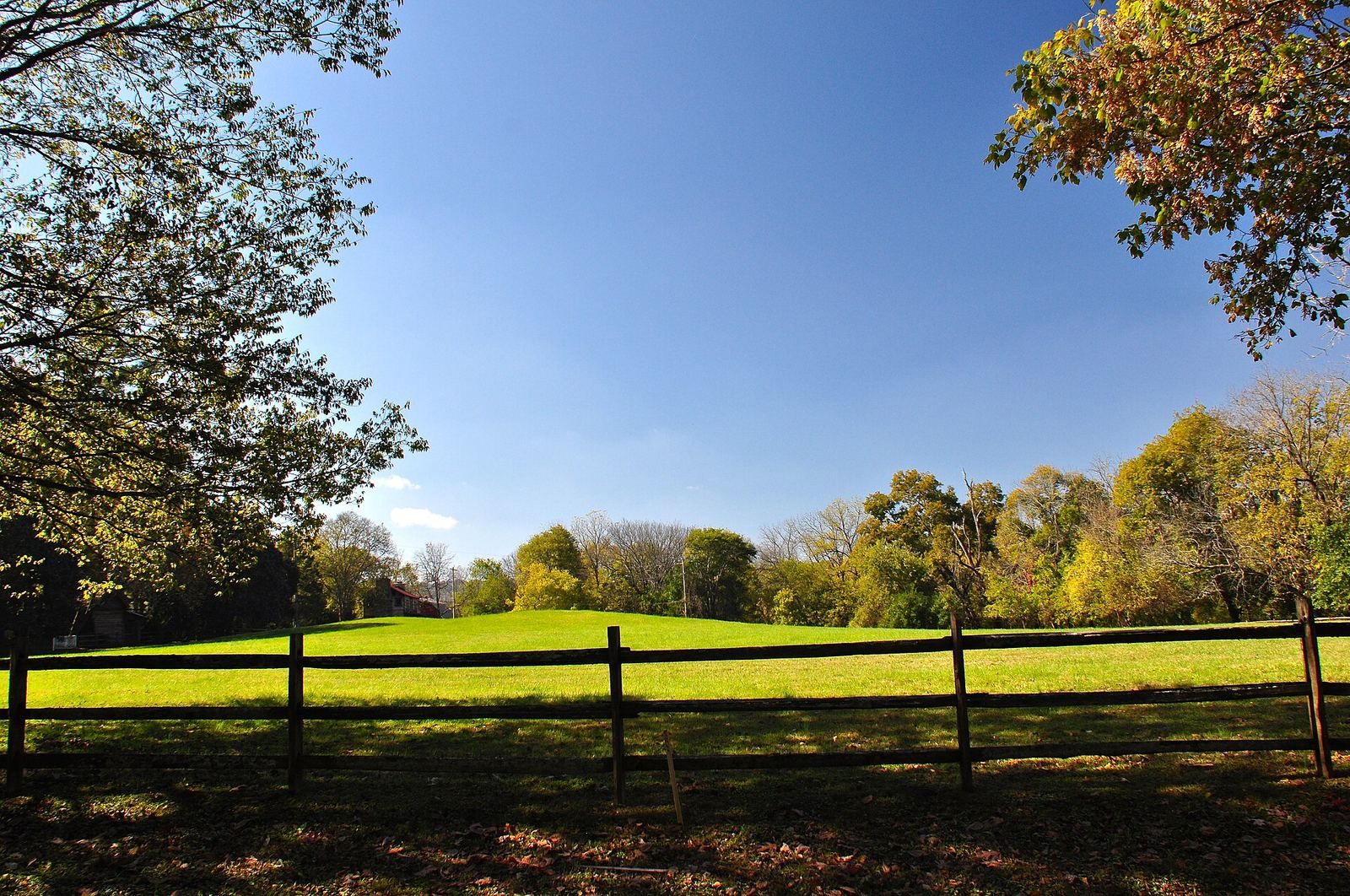
Joseph Jones described two platform mounds, earthen structures with level summits. The largest, a rectangular mound called Mound A, measured 112 by 65 feet and stood 11 feet high. Mound B measured 70 by 65 feet at its base and rose 9 feet. Most of the mound described as especially important was occupied by the property owner’s wife’s flower garden when Jones visited. In a portion outside the garden, he found a frog effigy.
Burial mounds and graves
Across the plaza, one burial mound measured 30 by 20 feet and stood 2.5 feet high. The location of another burial mound is occupied by the Thomas Brown House. Burials at the site included stone-box graves, shallow rectangular pits lined along the bottom and sides with large, thin limestone slabs and covered with another slab after the remains were placed inside. Jones opened at least 50 such graves. Most were along the banks of the river and creek.