Holy Trinity Church in Westbury on Trym: A Collegiate and Parish Church
Site at a Glance
- Rating
- 4.7
- Popularity
- Low
- Country
- United Kingdom
- Primary era
- Medieval
- Eras represented
- Medieval, Modern
- Civilizations
- British, English
- Site type
- Religious
- Remains
- Church
On this page10 sections
History
Holy Trinity Church in Westbury on Trym, in the United Kingdom, is a parish church whose present building dates from after 1194 and combines Early English and Perpendicular Gothic, two phases of English Gothic, the latter marked by strong vertical lines. Its history includes service as a minster, an early medieval church serving a wider area, a monastery, and a collegiate church.
Minster and monastic foundations
An early foundation here was traditionally placed in 716–17, although the foundations recorded for those years were at Yate and Bredon. King Offa of Mercia established a minster at Westbury between 793 and 796.
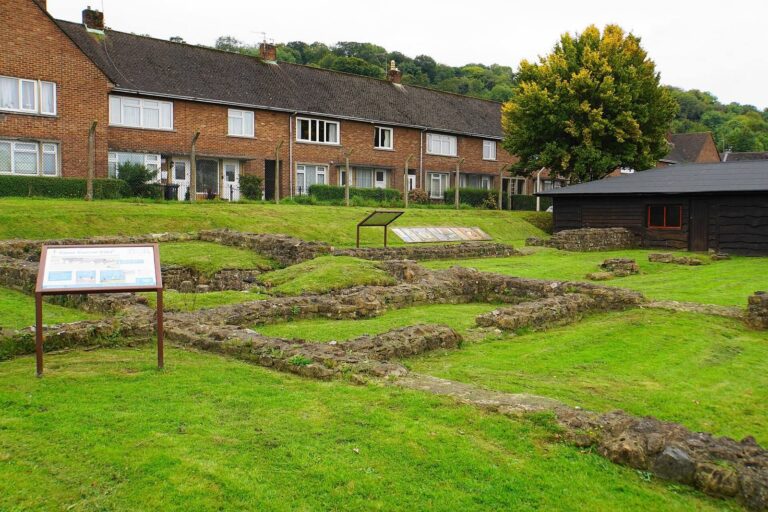
Around 963–64, Bishop Oswald of Worcester made the minster a Benedictine priory, a monastery whose monks followed the Rule of Saint Benedict, a guide to communal monastic life. He brought the English monk Germanus from Fleury Abbey in France to serve as prior. After acquiring land at Ramsey in 966 for an abbey, Oswald moved the community there, and the priory buildings at Westbury later fell into disrepair. Around 1093, Bishop Wulfstan of Worcester recovered the dilapidated priory and rebuilt it as a monastery under the Worcester diocese.
Collegiate church
Monks and secular priests, clergy serving outside a monastery, repeatedly displaced one another until the dispute was settled in favour of the priests. Around 1194, the church became collegiate, served by a body of clergy called canons. Until the mid-16th century, its canons received revenues from surrounding areas, including Aust, Henbury, and Lawrence Weston.
John Wycliffe, an English theologian and religious reformer, was a canon from 1362 until his death in 1384. In 1367, his prolonged absence prompted an accusation that he had neglected his duties as prebendary of Aust, a clerical position supported by designated revenues. William Canynge, a prominent Bristol merchant, served as dean of Westbury College from 1469 until his death in 1474.
In the mid-15th century, Bishop John Carpenter undertook extensive rebuilding and rededicated the church to the Holy Trinity. He intended it to become a joint cathedral for the Worcester diocese, but the plan was not carried out.
Parish church
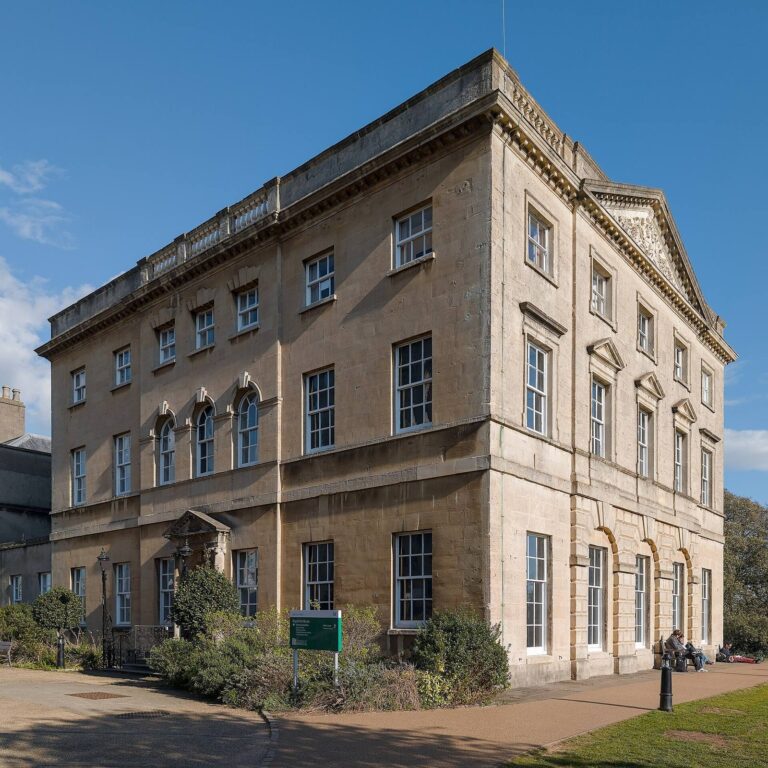
In 1544, during the Dissolution of the Monasteries, the 16th-century suppression of monastic institutions in England, the church became a parish church in the newly established Bristol diocese. Westbury College’s residential buildings passed to Sir Ralph Sadler, a Tudor statesman and diplomat. The church remains a Church of England parish church and is listed at Grade I by Historic England.
Remains
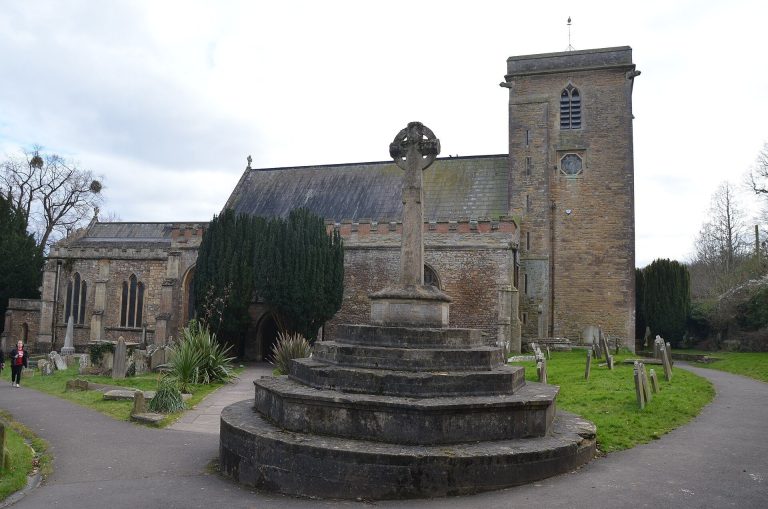
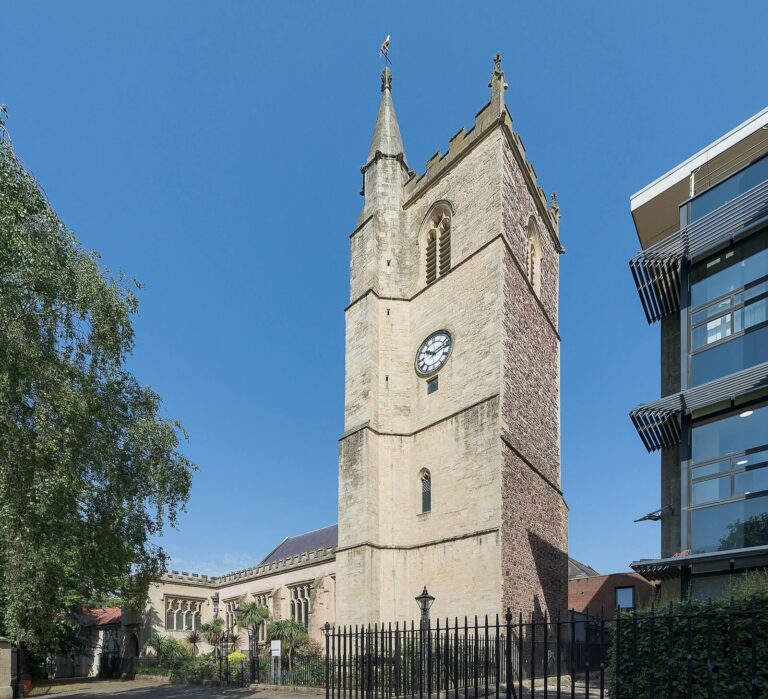
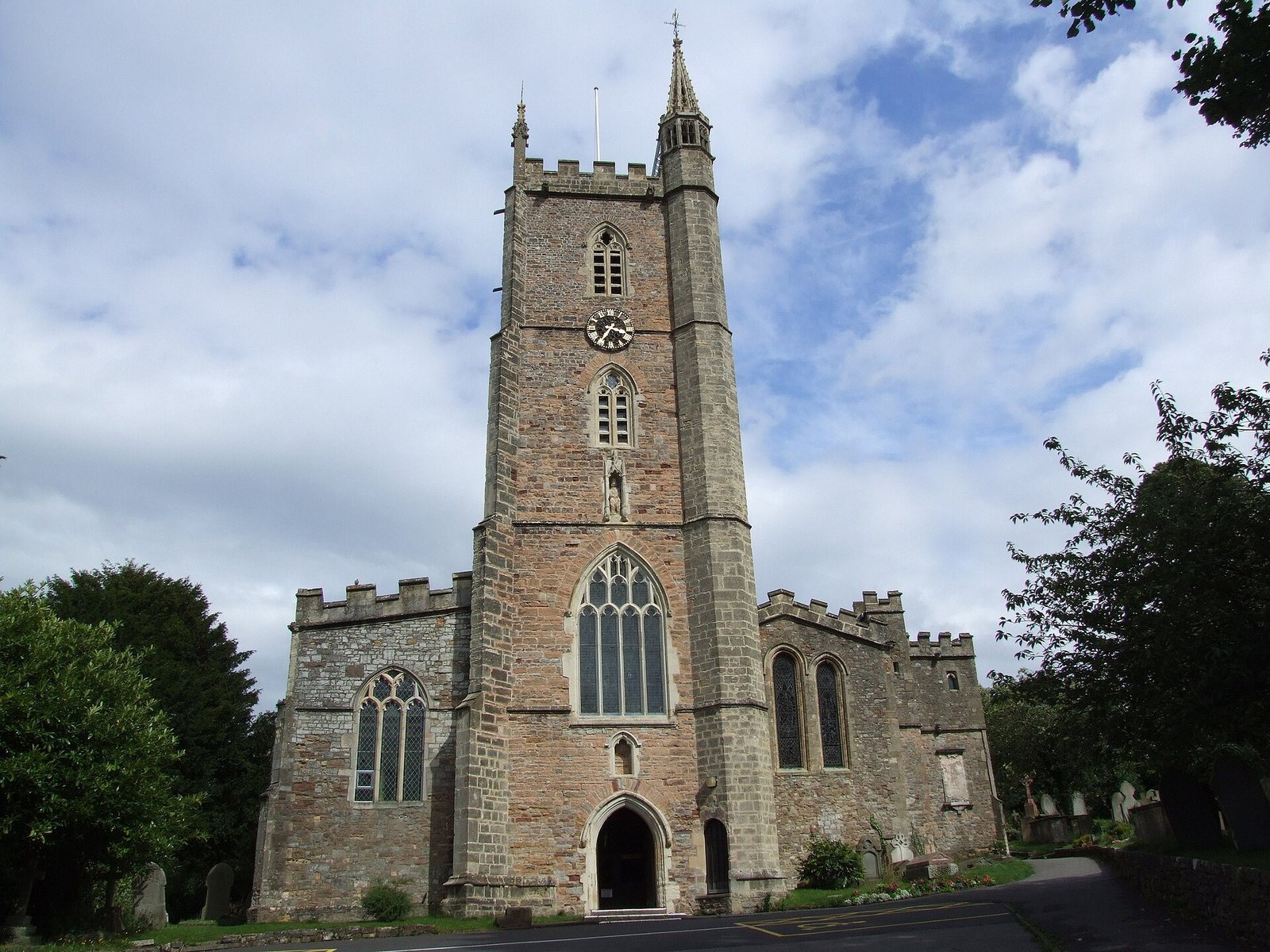
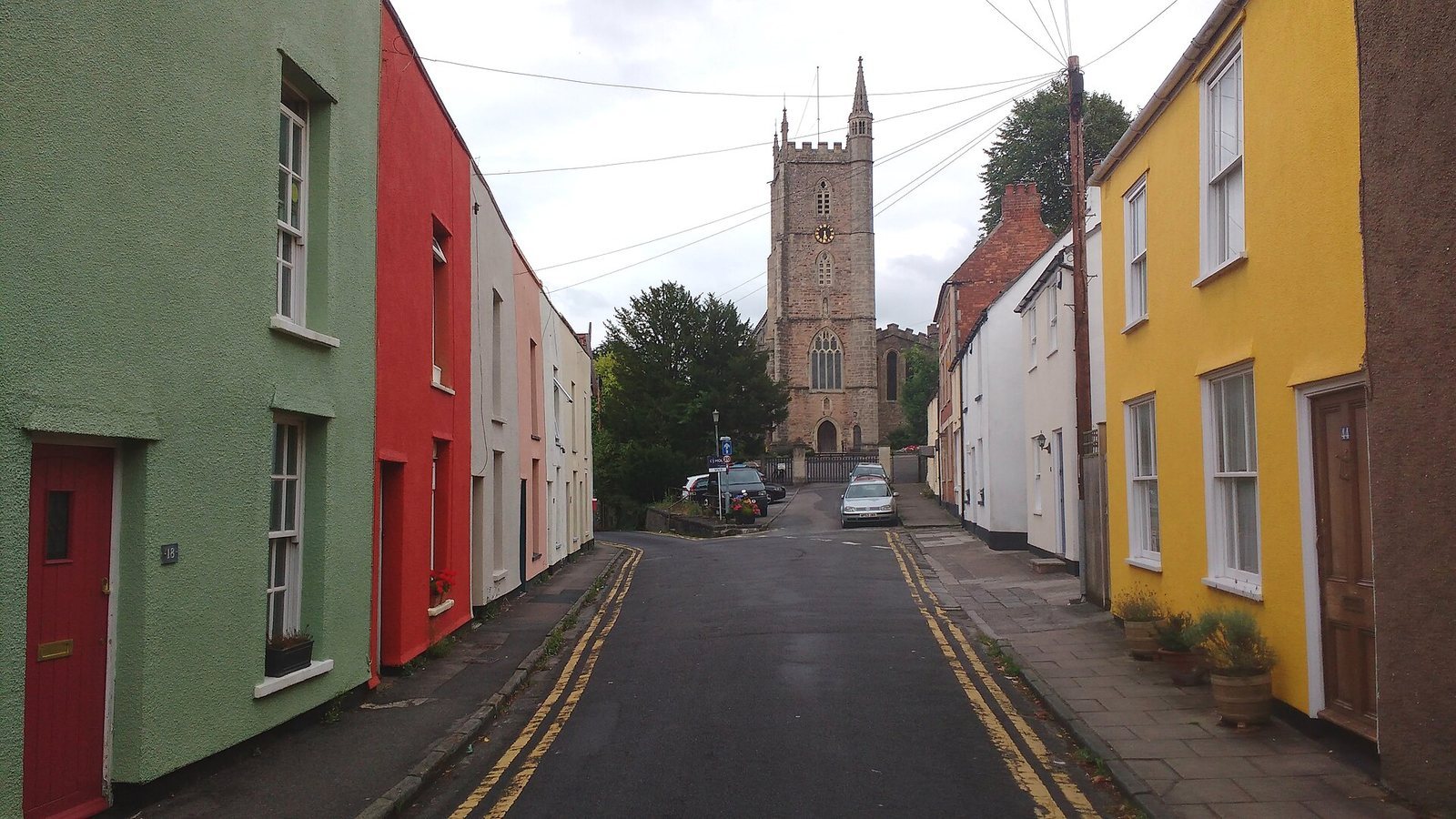
The church’s surviving fabric brings together an early 13th-century nave and aisles in the Early English style with later Perpendicular work. Its principal parts include the nave, chancel, choir, north chapel, and tower.
Church fabric and fittings
Nave and aisles
The nave and its aisles date from the early 13th century and are in the Early English style. The nave’s upper windows, known as a clerestory, rise above the adjacent roofs to bring light into the church.
Chancel and north chapel
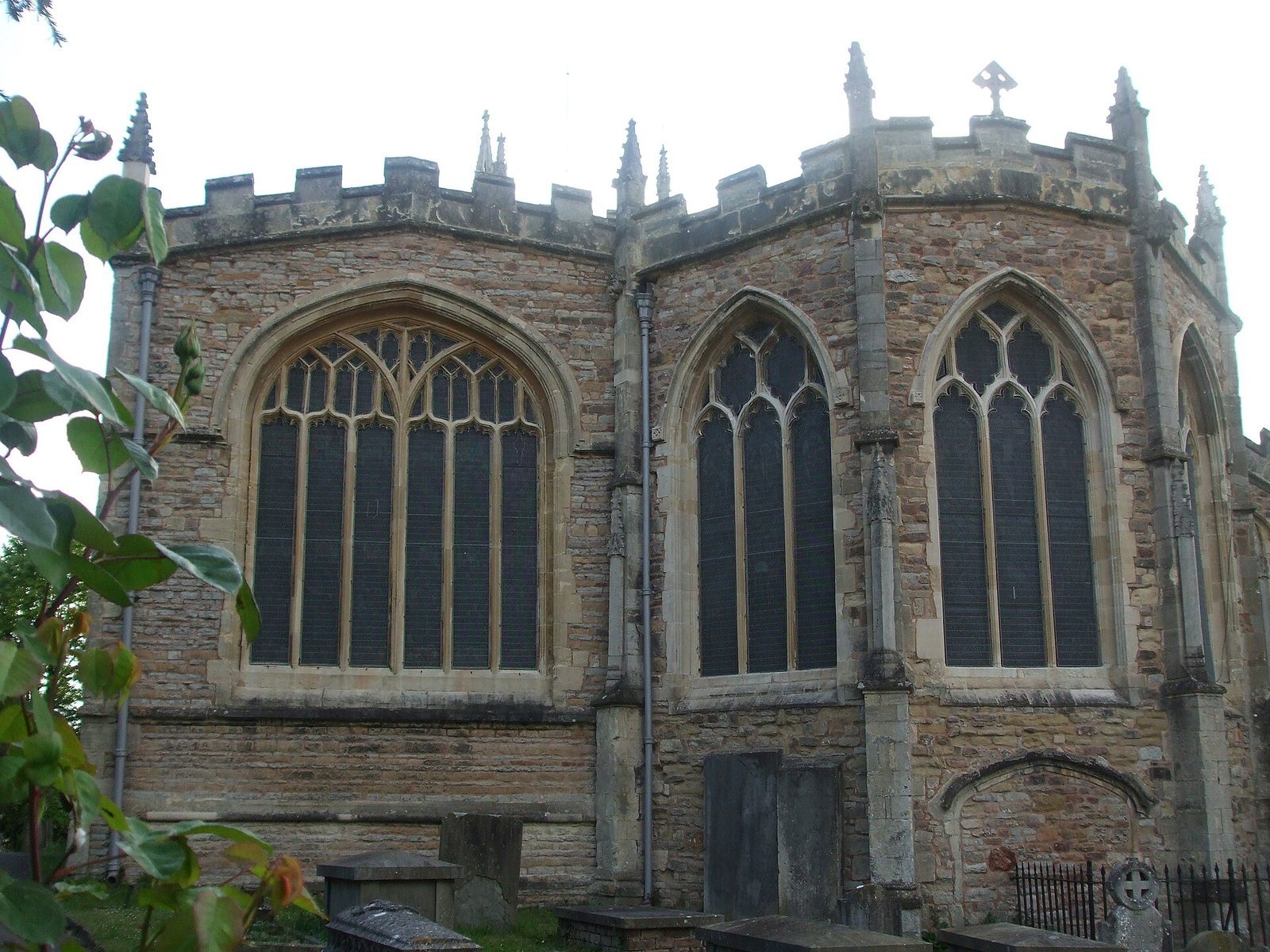
The chancel, choir, and north chapel belong to the mid-15th-century rebuilding. The chancel ends in a many-sided apse, a terminal end of the church that was an uncommon form in the late Gothic period.
Tower and altar features
The tower dates from the mid-15th century and was restored in the mid-19th century. A 19th-century reredos, a decorative structure behind the altar, depicts the Last Supper. Carpenter’s tomb lies in the crypt, an underground chamber beneath the altar; its stone cadaver is in the chancel. Oriel College, Oxford, donated a canopy of Purbeck marble for the tomb in 1853. Carpenter had served as the college’s provost, or head.
College gatehouse and churchyard graves
The gatehouse survives from Westbury College’s residential buildings. The churchyard contains First World War graves for a soldier and an officer of the Gloucestershire Regiment, a British Army regiment, and an officer of the Royal Flying Corps, Britain’s military aviation service during the war.