Anubanini Rock Relief: A Lullubi Royal Monument in Iran
Site at a Glance
- Rating
- 3.6
- Popularity
- Very Low
- Country
- Iran
- Primary era
- Bronze Age
- Eras represented
- Bronze Age, Classical
- Civilizations
- Parthian
- Site type
- Civic
- Remains
- Rock Art
On this page9 sections
History
The Lullubi relief
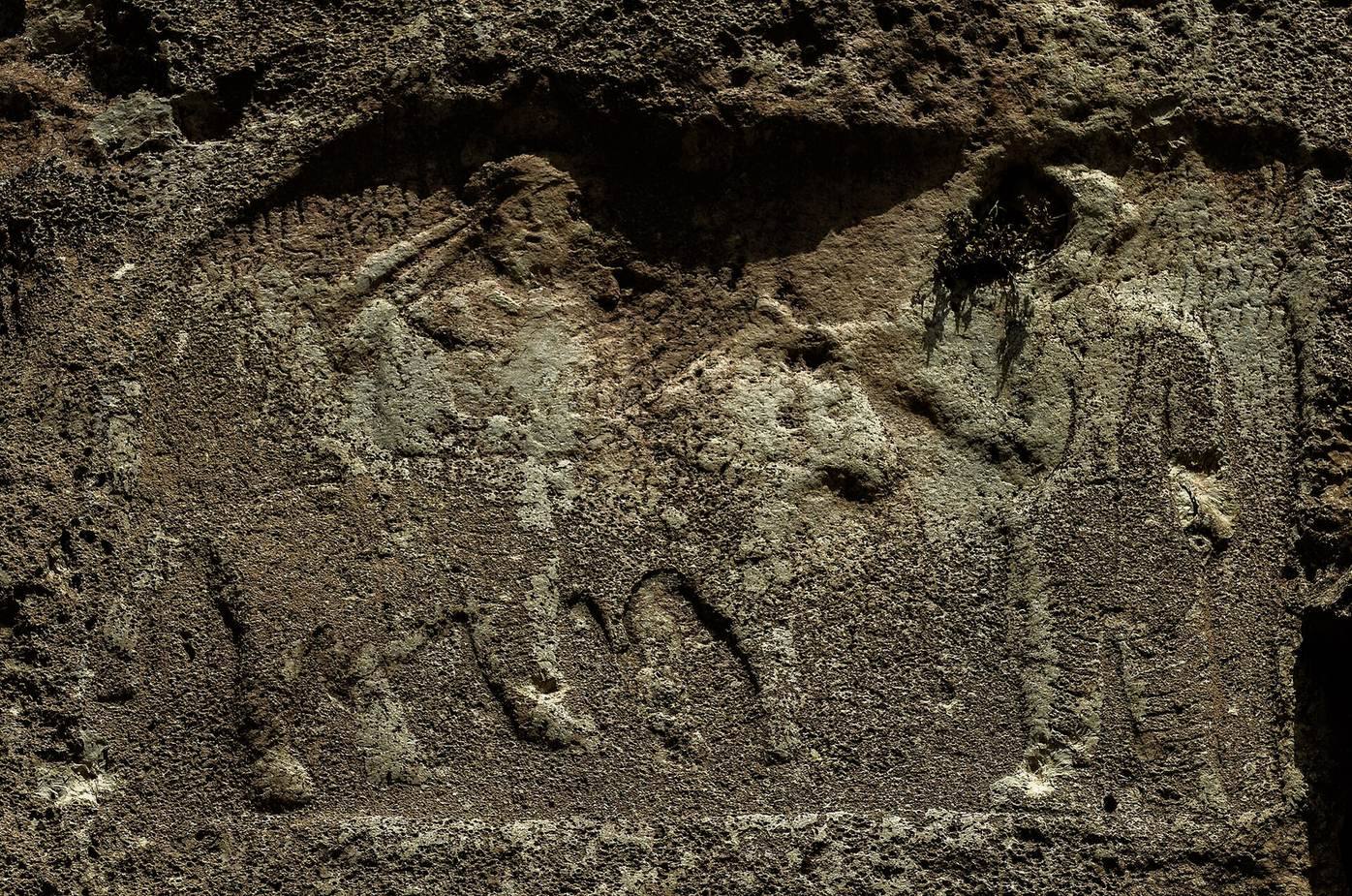
The Anubanini rock relief is a Lullubi royal carving on Mount Sarpul near Sarpol-e Zahab in Kermanshah province, Iran. Usually dated to about 2300 BCE, it is attributed to the Lullubi, an ancient people of the Zagros highlands, and has also been assigned to the Isin-Larsa period, an early second-millennium BCE era named for two Mesopotamian city-states. Lullubi rock reliefs are the earliest in Iran, preceding later Elamite examples at Eshkaft-e Salman and Kul-e Farah.
Anubanini’s Akkadian-language inscription presents him as the powerful king of Lullubium. He says that he placed images of himself and the goddess Ninni on Mount Batir, and calls on deities to protect the monument. A curse against anyone who damages it names Anu, Antum, Enlil, Ninlil, Adad, Ishtar, Sin, and Shamash.
The composition has been compared with reliefs at Behistun, a monumental site in western Iran associated with the much later Achaemenid Empire. Those carvings date to the fifth century BCE, and the Behistun Inscription may have been influenced by the earlier Lullubi monument.
Later carvings and modern record
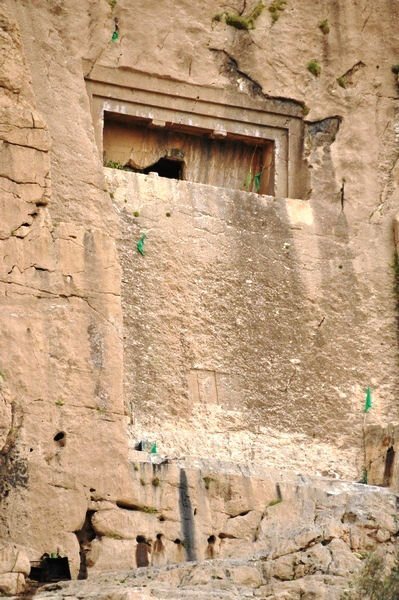
A second relief was made during the Parthian Empire, a later Iranian empire, in the name of Gotarces. Its attribution is uncertain. Gotarces II, who ruled from AD 39 to 51, is considered more likely than Gotarces I; he is also associated with other carvings, including an equestrian relief at Behistun.
In 1840, the French architect and draughtsman Pascal Coste made a painted depiction of the relief. Iran included it in the National Heritage List in 1932.
Remains
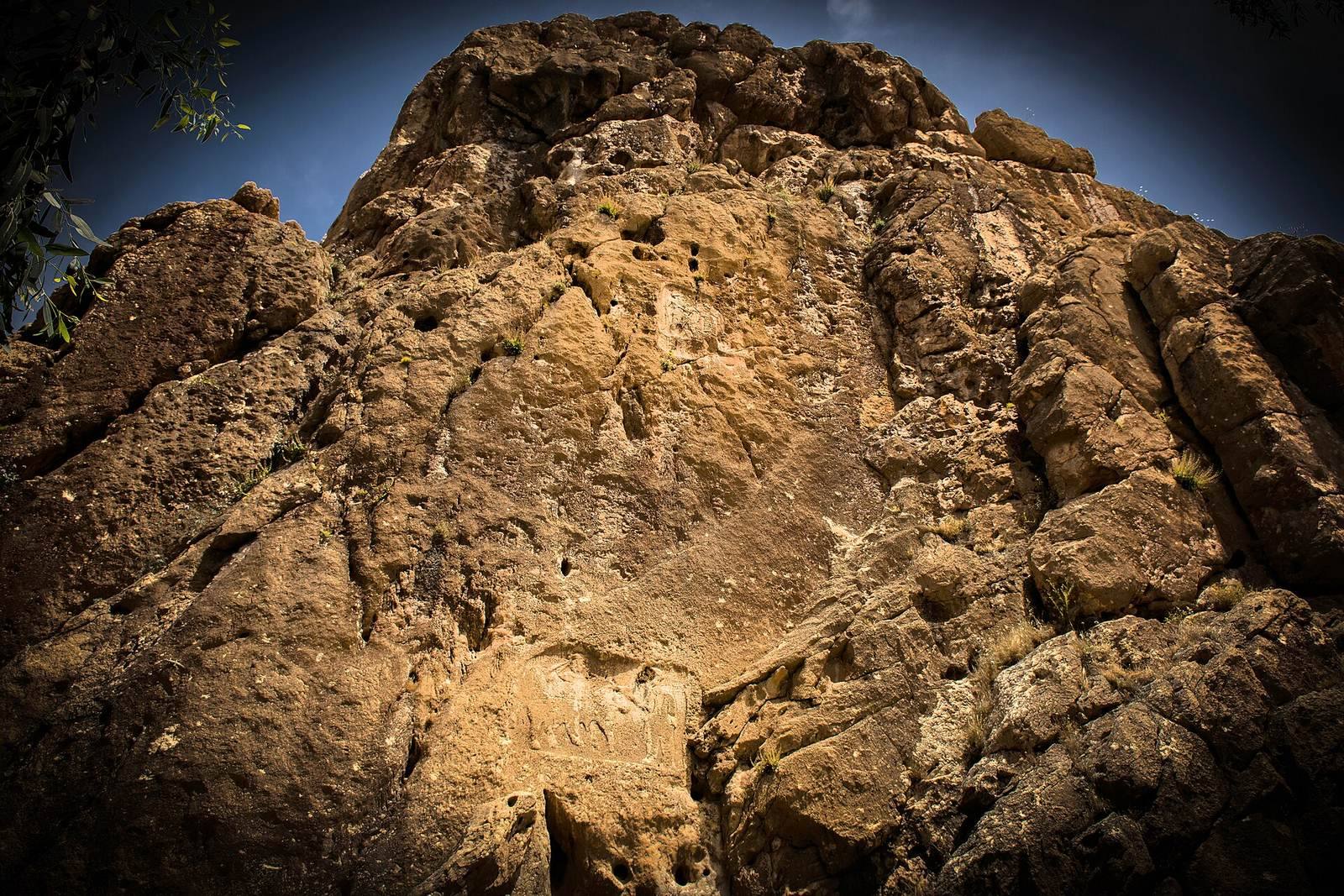
The reliefs occupy the face of Mount Sarpul. The principal panel is cut into a cliff 16 metres above the ground, overlooking a village, while the city of Sarpul lies at the mountain’s foot. The Anubanini composition follows contemporary Mesopotamian royal art, arranging human and divine figures across the rock surface. Other carvings are found lower on the cliff and in the surrounding area.
Carvings on the cliff and nearby
Anubanini composition
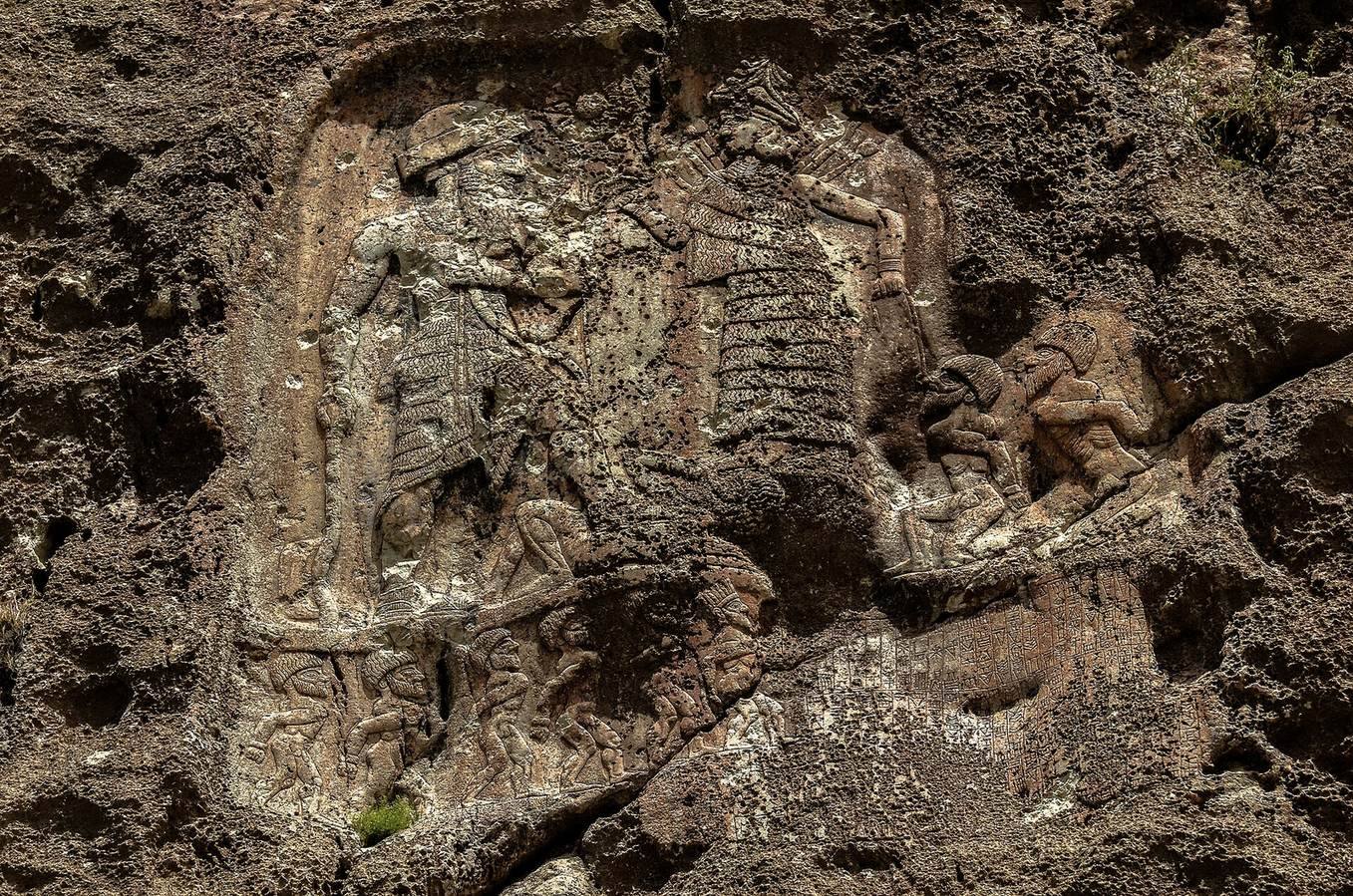
Anubanini is shown bare-chested, in a short skirt, a roll-brimmed hat, and sandals, carrying an axe, bow, and arrow. He plants one foot on a captive’s chest. Eight further captives appear in the scene: two kneel behind the goddess, and six stand in a lower row. Another captive is shown naked and crowned, held by the king; the crown may have been feathered, like crowns on some Luristan bronzes. The goddess Ninni is identified with the Lullubi counterpart of Ishtar, a major Mesopotamian goddess also associated with the name Inanna. She wears a long, flounced dress, a horned headdress with four pairs of horns, and a collar. She extends a ring in her right hand, while club-like weapons rise behind her shoulders.
Inscription and condition
The inscription is in Akkadian, an ancient Mesopotamian language, and uses cuneiform writing. A label on the relief reads “Lullubi-ki,” meaning “Country of the Lullubi.” The carving suffered about 30 percent damage during the Iran-Iraq War. Older photographs show the king’s figure nearly intact.
Parthian relief
A separate relief is carved lower on the same cliff beneath the Anubanini panel.
Nearby reliefs
Sar-e Pol-e Zohab I lies about 200 metres away. It shows a beardless warrior with an axe trampling an enemy, with a sun disk above. The ruler is usually considered Lullubi, though he has also been proposed as a king of Simurrum, an ancient Zagros kingdom, and a son of Iddin-Sin. The inscription has been read as “Zaba(zuna), son of …”. Two further reliefs, Sar-e Pol-e Zahab III and IV, depict beardless warriors trampling enemies while facing goddesses. These three carvings are less well preserved than the Anubanini relief.