St George’s Church, Esher: A Tudor Parish Church
Site at a Glance
- Rating
- 4.7
- Popularity
- Low
- Country
- United Kingdom
- Primary era
- Early Modern
- Eras represented
- Medieval, Early Modern, Modern
- Civilizations
- British, English
- Site type
- Religious
- Remains
- Church
On this page10 sections
History
Early records and the Tudor church
St George’s Church, Esher, in the United Kingdom, is a rare English church built around 1540 during the Reformation, the 16th-century religious transformation in which the Church of England separated from papal authority. Esher appears in the Domesday Book, William I’s survey of English land and resources made in 1086. The first recorded patron and rector of a church at Esher appears in 1292; a rector was the clergyman responsible for a parish. The present church served as Esher’s parish church for about 300 years.
Georgian patronage and royal worship
In 1725–26, Thomas Pelham-Holles, 1st Duke of Newcastle-upon-Tyne, commissioned architect John Vanbrugh to add a family chamber pew on the church’s south side. The Duke worshipped at St George’s from nearby Claremont, as did his brother Henry Pelham, who was associated with Esher Place. Successors of the Duke at Claremont are thought to have continued worshipping at the church for more than a century. People connected with this history included Princess Charlotte and her husband, Prince Leopold of Saxe-Coburg; Leopold’s niece by marriage, Princess Victoria, later Queen Victoria; Victoria’s youngest son, Prince Leopold, Duke of Albany; and Princess Alice, Countess of Athlone.
Parish change and preservation
By the mid-19th century, the church was considered too small for Esher’s growing population. Nearby Christ Church, built on Esher Green in 1853–54, took over the parish role. St George’s then fell into disrepair, but the local community restored it in 1965. It is now cared for by the Churches Conservation Trust. The church remains consecrated and belongs to the Church of England’s Diocese of Guildford and Archdeaconry of Dorking. It has been Grade I listed since 1953, the highest category of listed-building protection in England.
Remains
Exterior fabric and roof
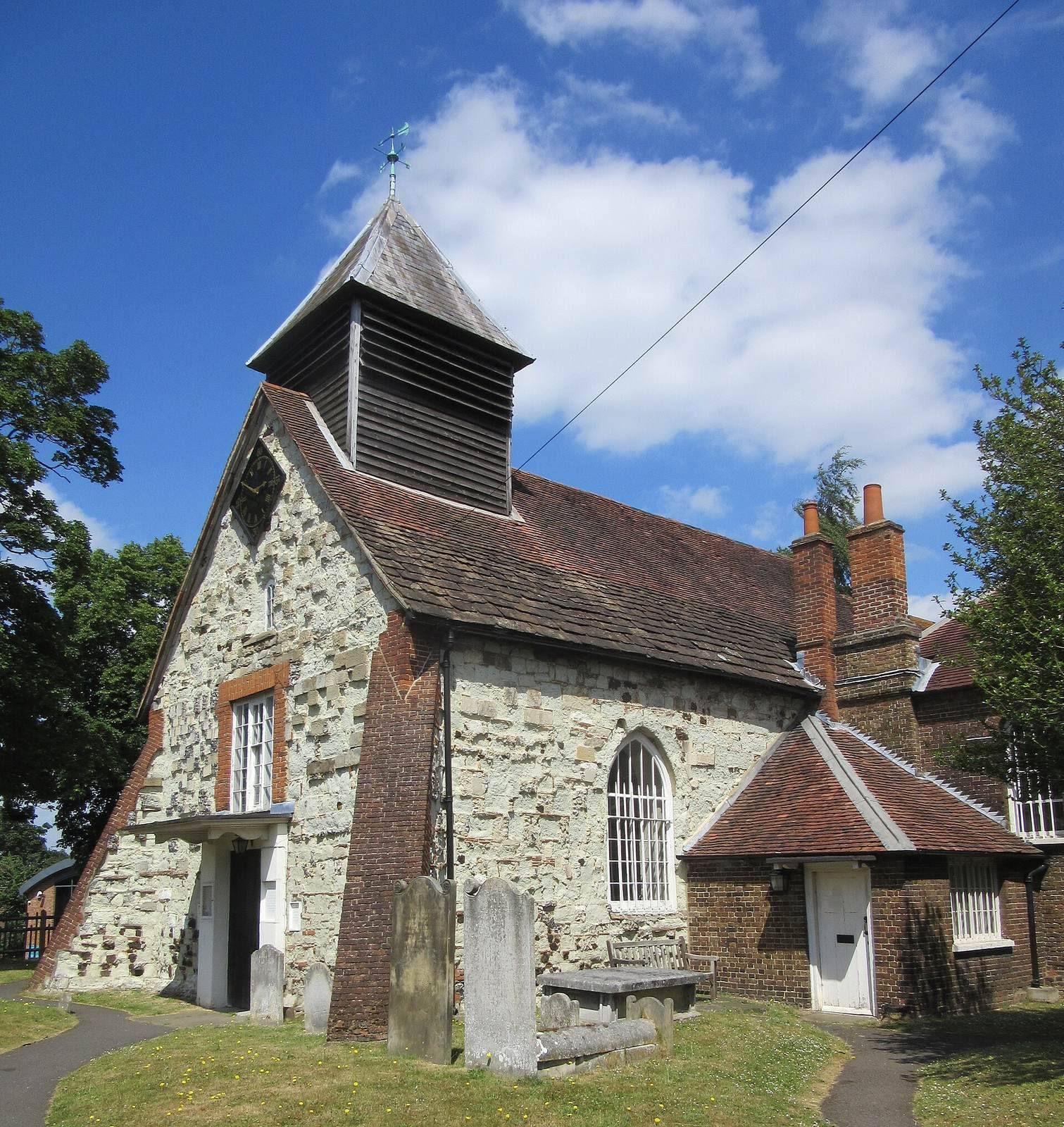
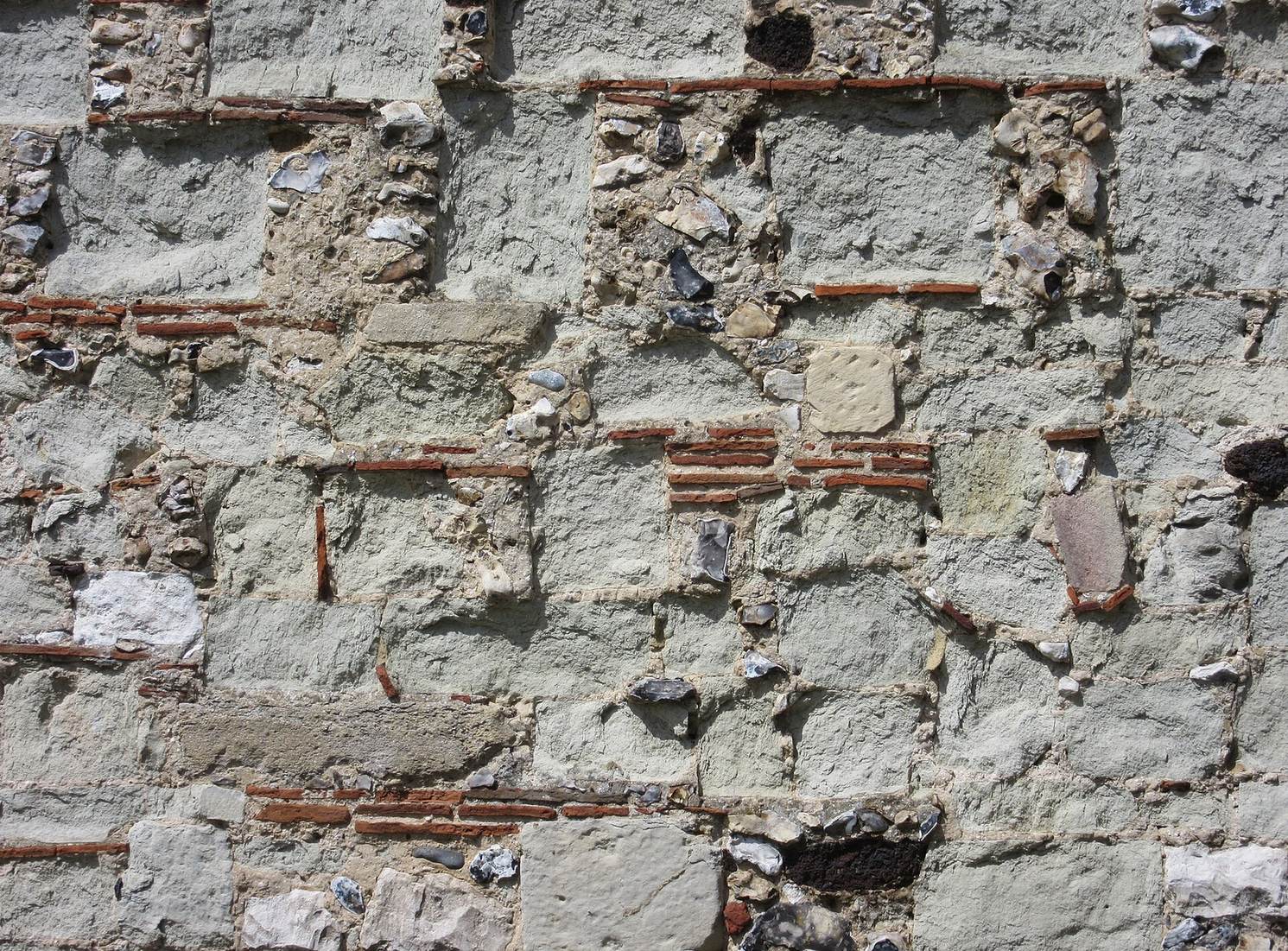
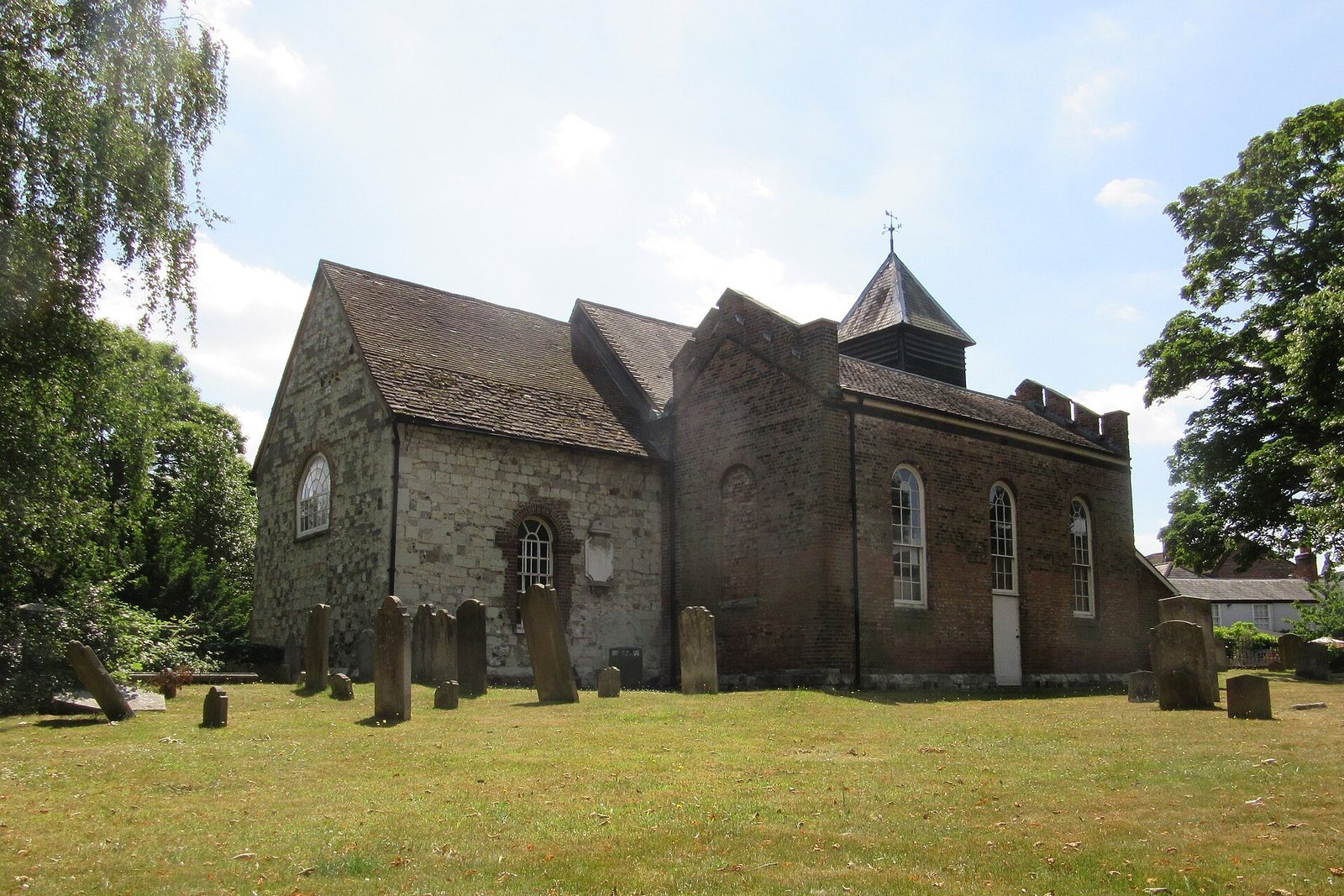
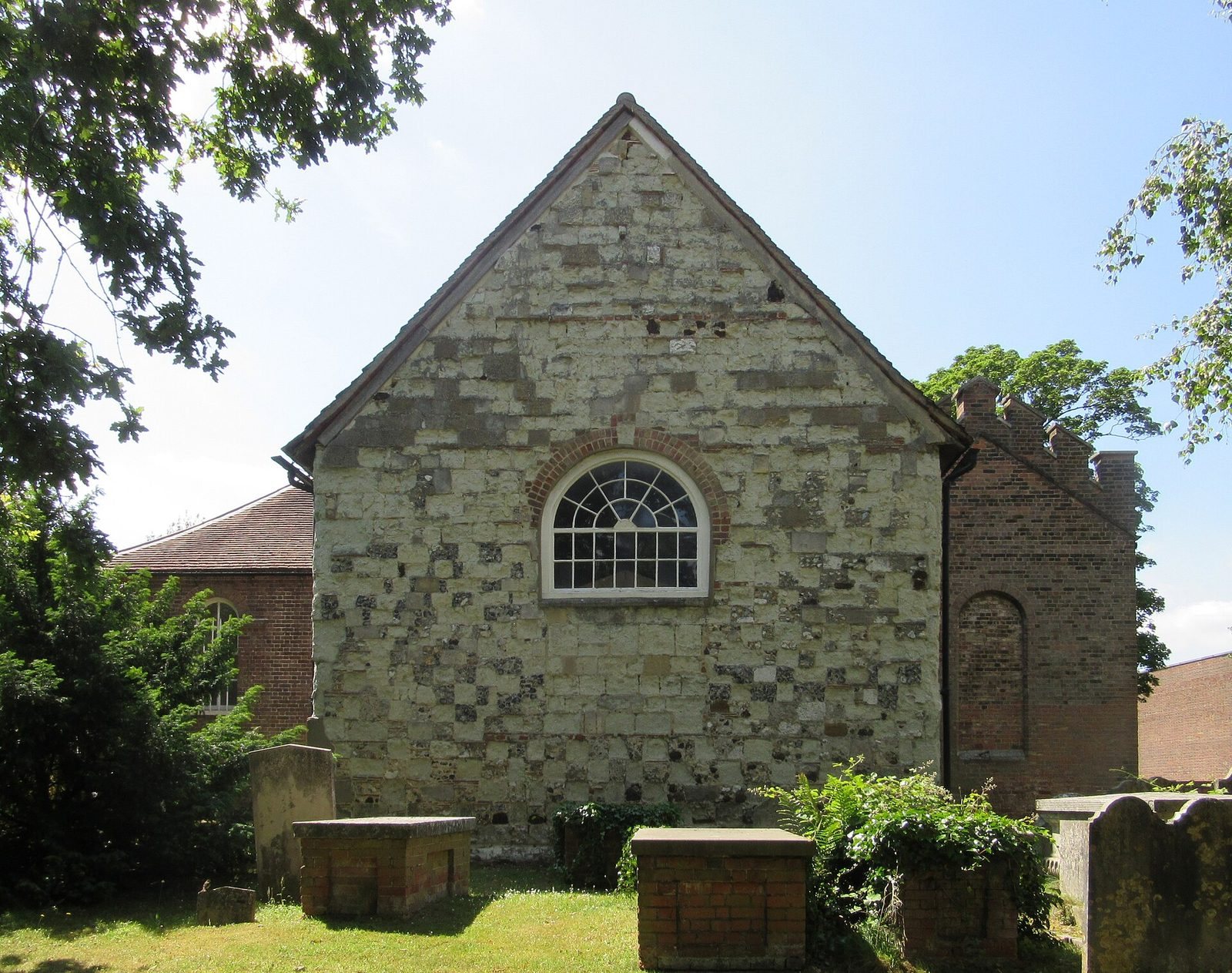
The church’s main body is built from chequered sandstone, clunch, a soft chalk-rich stone, undressed flint and brick. Its roof is covered with both stone and clay tiles. Two openings probably date from the 15th century: a doorway on the south side of the nave and a priest’s door on the north side of the chancel, now blocked. A small oak turret used for a bell or clock rises to a pyramidal spire. It contains the original clock mechanism from the early 17th century; the clock face and hour hand were added in 1783. Inside, the open Tudor roof retains its tie and collar beams, horizontal structural supports.
Interior and later additions
The south chamber pew
The brick extension on the south side has a slate roof and a separate entrance. Its enclosed family seating area connects with the main church through a bay in the south wall. The front has eight Corinthian columns, distinguished by ornate capitals, and flat attached pilasters beneath a pine pediment. The Georgian-style interior was later divided into two groups of three enclosed seating boxes. Those associated with Claremont sat on the right and those associated with Esher Place on the left, with a fireplace for each group. Vanbrugh’s alterations replaced the church’s Tudor windows with Georgian-style ones. A stained-glass window was transferred to the Great Hall of Wadham College, Oxford.
The north aisle and church furnishings
The brick north aisle, with its crenellated gables, dates to 1812. The three-decker pulpit and carved reredos, a decorated panel behind the altar, date to 1722. The pulpit has separate tiers for different parts of a service. George II’s royal coat of arms hangs from a beam in the chancel.
The royal memorial
At the west end of the north aisle stands a sculpted triptych, a memorial arranged in three panels, to Princess Charlotte and Prince Leopold. Queen Victoria commissioned it in 1870 from sculptor Francis John Williamson. The memorial was originally at Claremont before being placed in the church.