Saint Sophia Cathedral, London: A Greek Orthodox Cathedral
Site at a Glance
- Rating
- 4.8
- Popularity
- High
- Country
- United Kingdom
- Primary era
- Modern
- Eras represented
- Modern
- Civilizations
- British
- Site type
- Religious
- Remains
- Cathedral
On this page9 sections
History
Saint Sophia Cathedral is a Greek Orthodox cathedral on Moscow Road in Bayswater, London, United Kingdom. Commissioned for the city’s growing Greek Orthodox community, it was designed by John Oldrid Scott in the Byzantine Revival style, which draws on Byzantine architectural forms, and completed in 1879. It is the third Greek Orthodox church in London to bear the name Saint Sophia. Its dedication as the Church of the Holy Wisdom refers to divine wisdom, not to a historical saint named Sophia. The cathedral belongs to the Greek Orthodox Archdiocese of Thyateira and Great Britain and follows the Byzantine Rite, a liturgical tradition used in Eastern Orthodox churches.
Foundation and consecration
Earlier Greek Orthodox churches in London, including the former Church of the Dormition of the Theotokos, had become too small for the growing congregation. The two immediate predecessors to Saint Sophia stood at Finsbury Square and 82 London Wall. The community grew through arrivals from the Greek diaspora, Greeks living abroad, and visitors travelling along shipping routes that converged on London.
A committee of London Greeks commissioned the cathedral under the chairmanship of Emmanuel Mavrocordato, with lawyer and traveller Edwin Freshfield among those who assisted. Prosperous merchants, financiers, bankers and shipowners helped raise £50,000 over three years. Eustratios Ralli laid the foundation stone in January 1878, and the first worship service took place on 1 June 1879. On 5 February 1882, Antonios, Metropolitan of Corfu, consecrated it as the Church of the Holy Wisdom.
Cathedral and wartime role
In 1922, the Ecumenical Patriarchate of Constantinople, a leading institution in Eastern Orthodox Christianity, designated Saint Sophia as the cathedral of the Metropolis of Thyateira and Great Britain. A metropolis is an ecclesiastical administrative district, and this one encompassed Orthodox Christians in the British Isles and Malta.
After the German invasion of Greece during the Second World War, the Greek government in exile was based in London, and Saint Sophia became the cathedral of the Greek nation. Bombing during the Blitz damaged the building; it was later repaired.
Listing and museum
Saint Sophia has been a Grade I listed building since 1987. In England, Grade I is the highest listed-building category, for buildings of exceptional architectural or historic interest. A museum opened in the cathedral basement in 2006, displaying treasures given by nineteenth-century patrons and exploring the cathedral’s links with London’s Greek community.
Remains
Building and decoration
Exterior
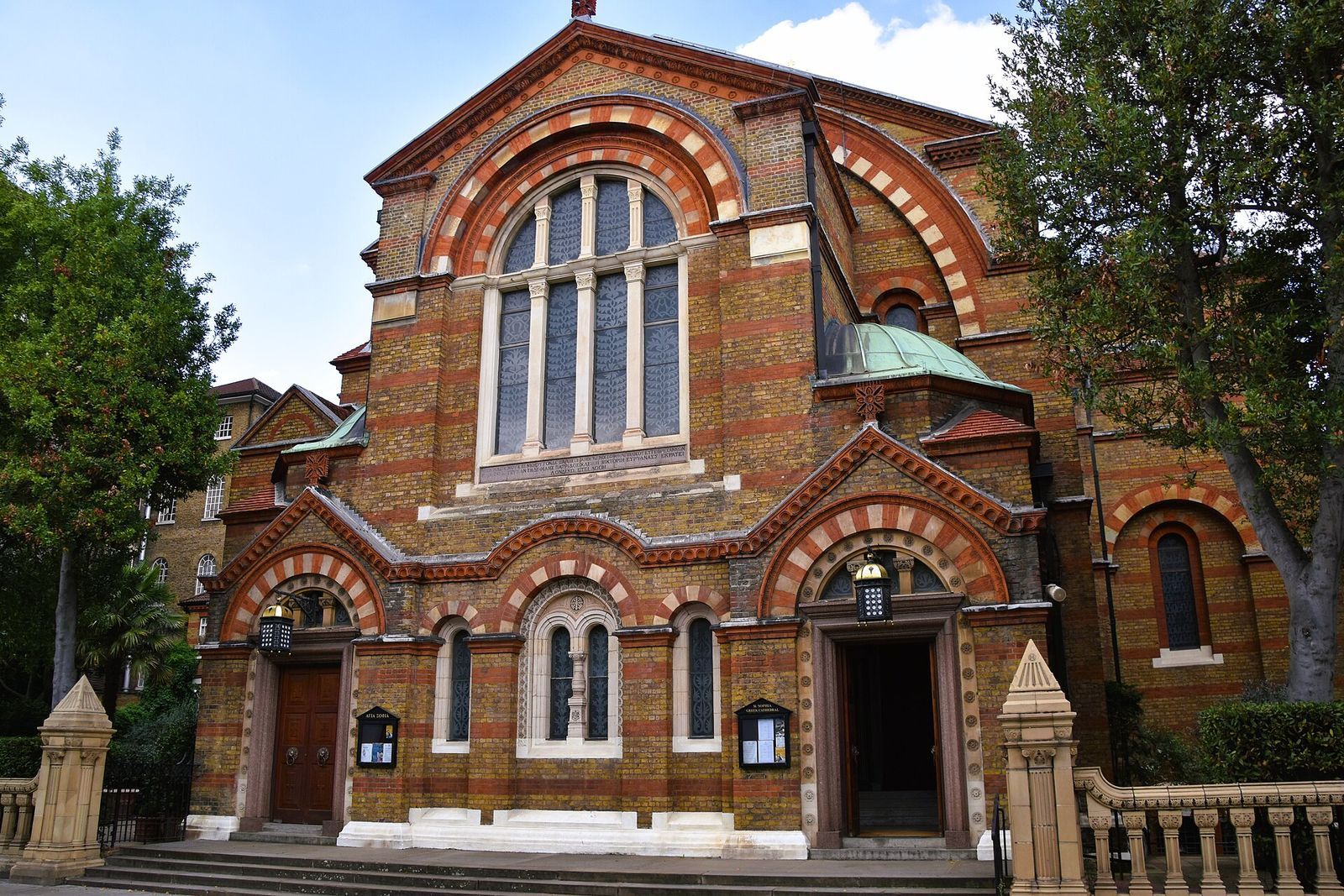
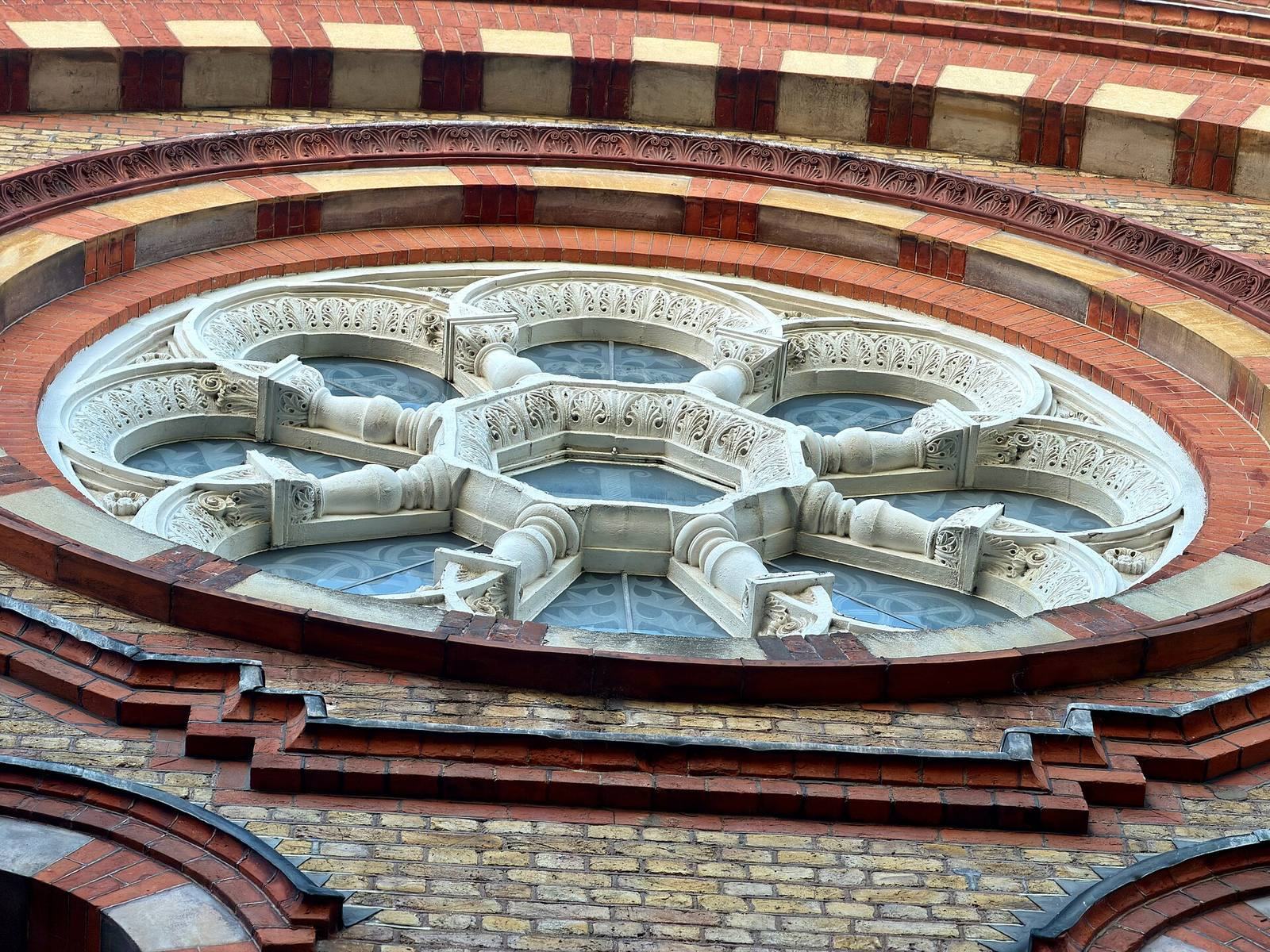
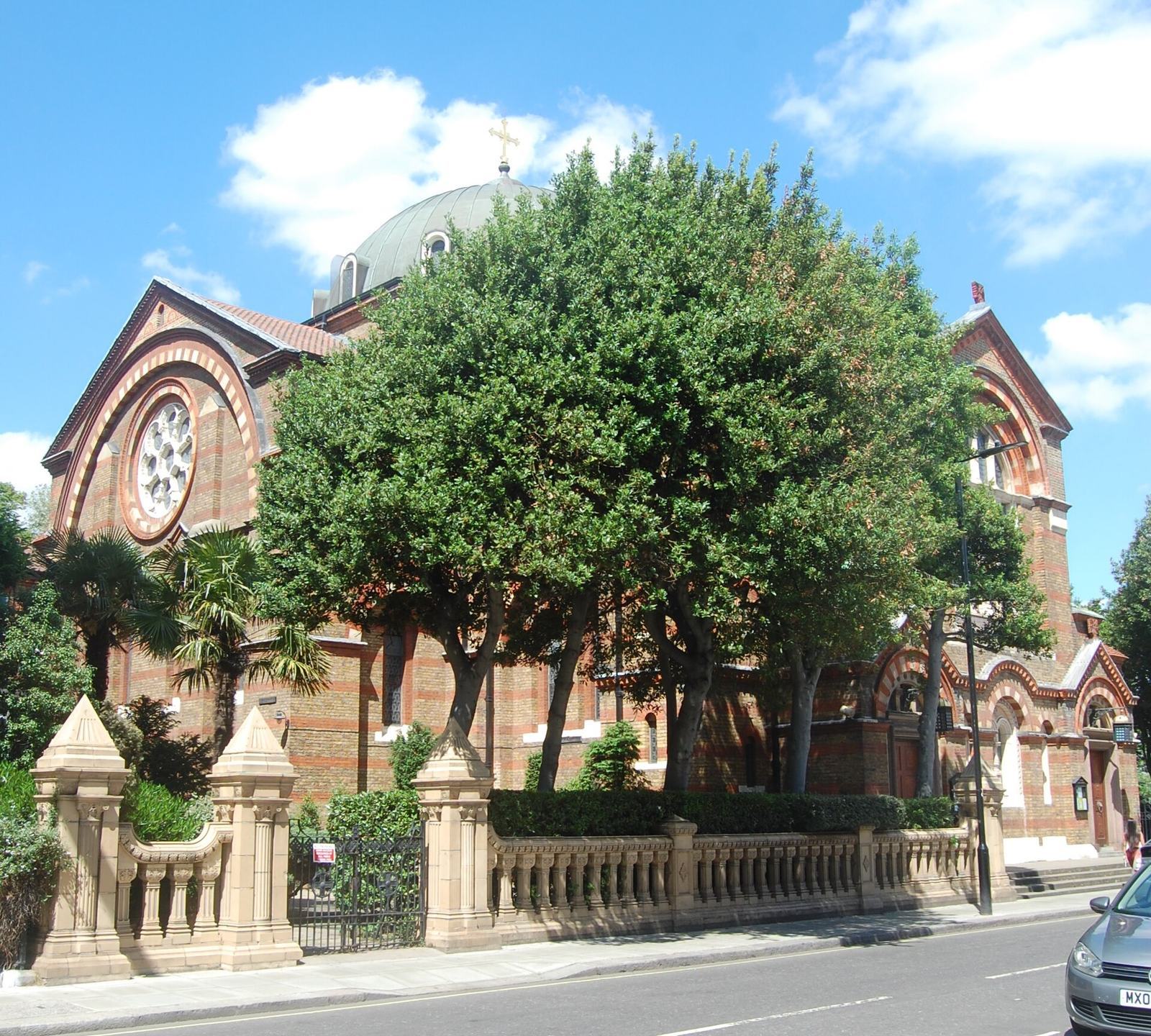
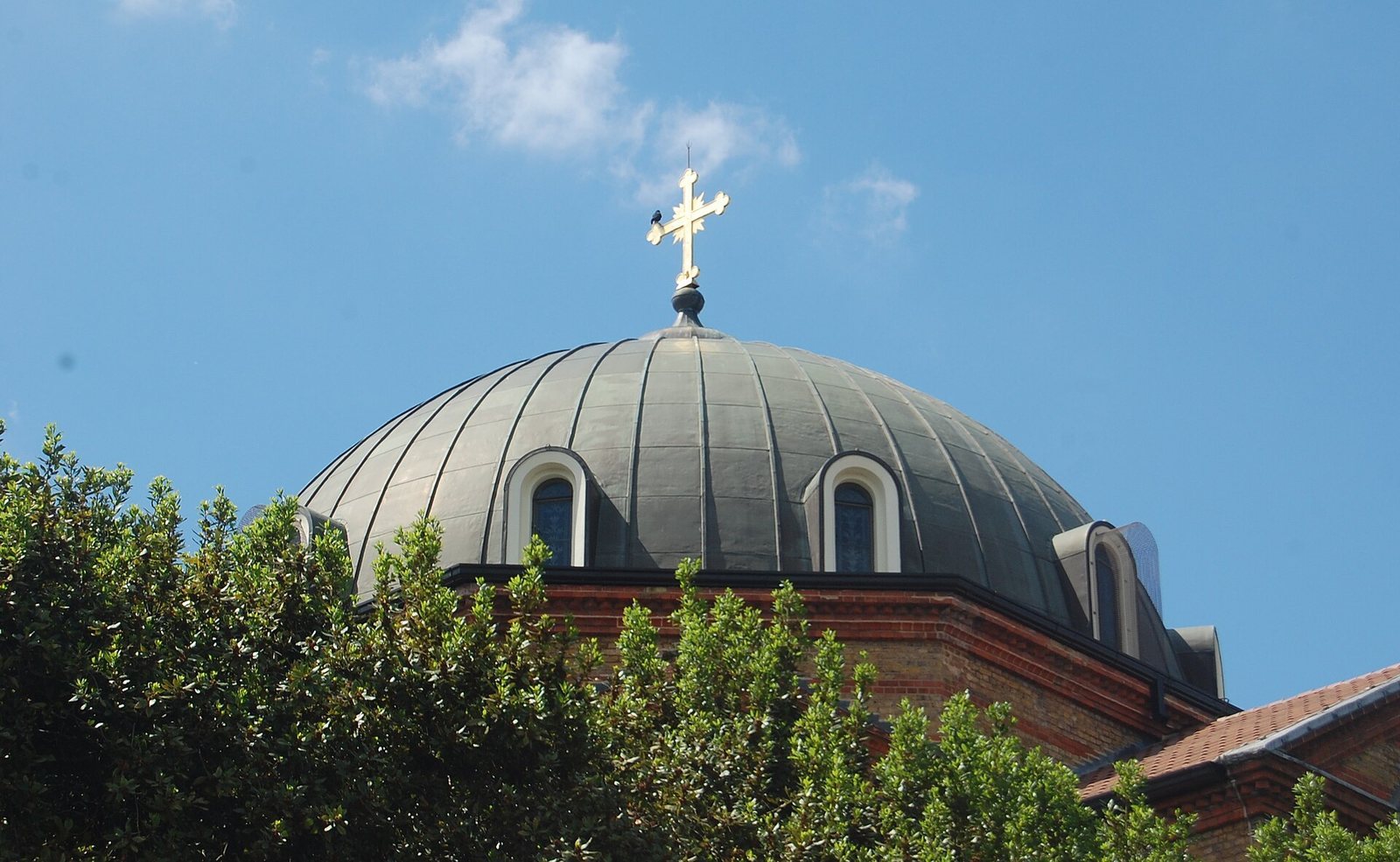
The cathedral is a brick building in the Byzantine Revival style. Its relatively restrained exterior is defined by a domed roof and arched windows.
Interior and iconostasis
Inside, polychromatic marble, marble made up of multiple colors, forms part of the decoration. The iconostasis, a screen bearing icons that separates the sanctuary from the main worship space, was painted by Ludwig Thiersch, who had studied religious painting in Athens. Thiersch advised against wall frescoes because of London’s damp climate.
Mosaics
The trustees commissioned Byzantine-inspired mosaics from G M Mercenero & Co, based on designs by Arthur George Walker. Further mosaics were commissioned from Boris Anrep beginning in 1926.