Trippet Stones: A Prehistoric Stone Circle on Bodmin Moor
Site at a Glance
- Rating
- 4.6
- Popularity
- Medium
- Country
- United Kingdom
- Primary era
- Bronze Age
- Eras represented
- Stone Age, Bronze Age
- Civilizations
- Unclassified
- Site type
- Civic
- Remains
- Megalithic Monument
On this page5 sections
History
Trippet Stones is a prehistoric stone circle on Manor Common in Blisland, on Bodmin Moor in Cornwall, United Kingdom. It is generally dated to the Late Neolithic or Early Bronze Age, two prehistoric periods. In 1907, astronomer Norman Lockyer proposed that an astronomical alignment placed its construction at about 1700 BC.
Archaeologist H. St. George Gray examined the circle in 1908, after excavating the nearby Stripple stones in 1905. John Barnatt later suggested that Trippet Stones may have replaced or supplemented Stripple stones within a wider programme of building in the western half of Bodmin Moor.
Aubrey Burl linked the name to a folk belief that girls were punished for tripping lightly on the Sabbath, the weekly day of religious observance.
Remains
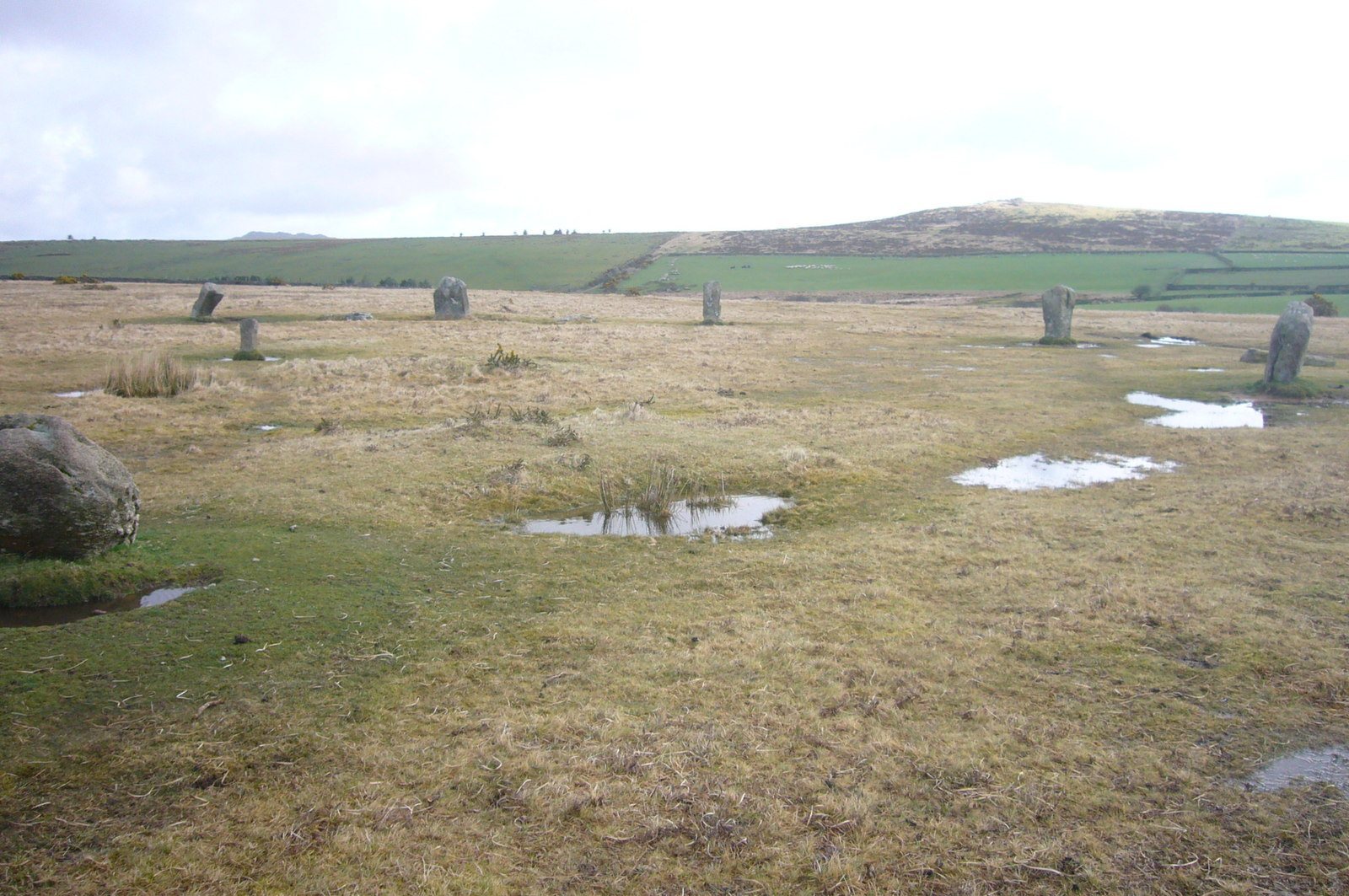
The circle stands on nearly level ground and has a slightly oval plan. Its surviving stones are granite, and the circle lies about 1 km west of the Stripple stones, across boggy ground.
The circle and its setting
Surviving layout
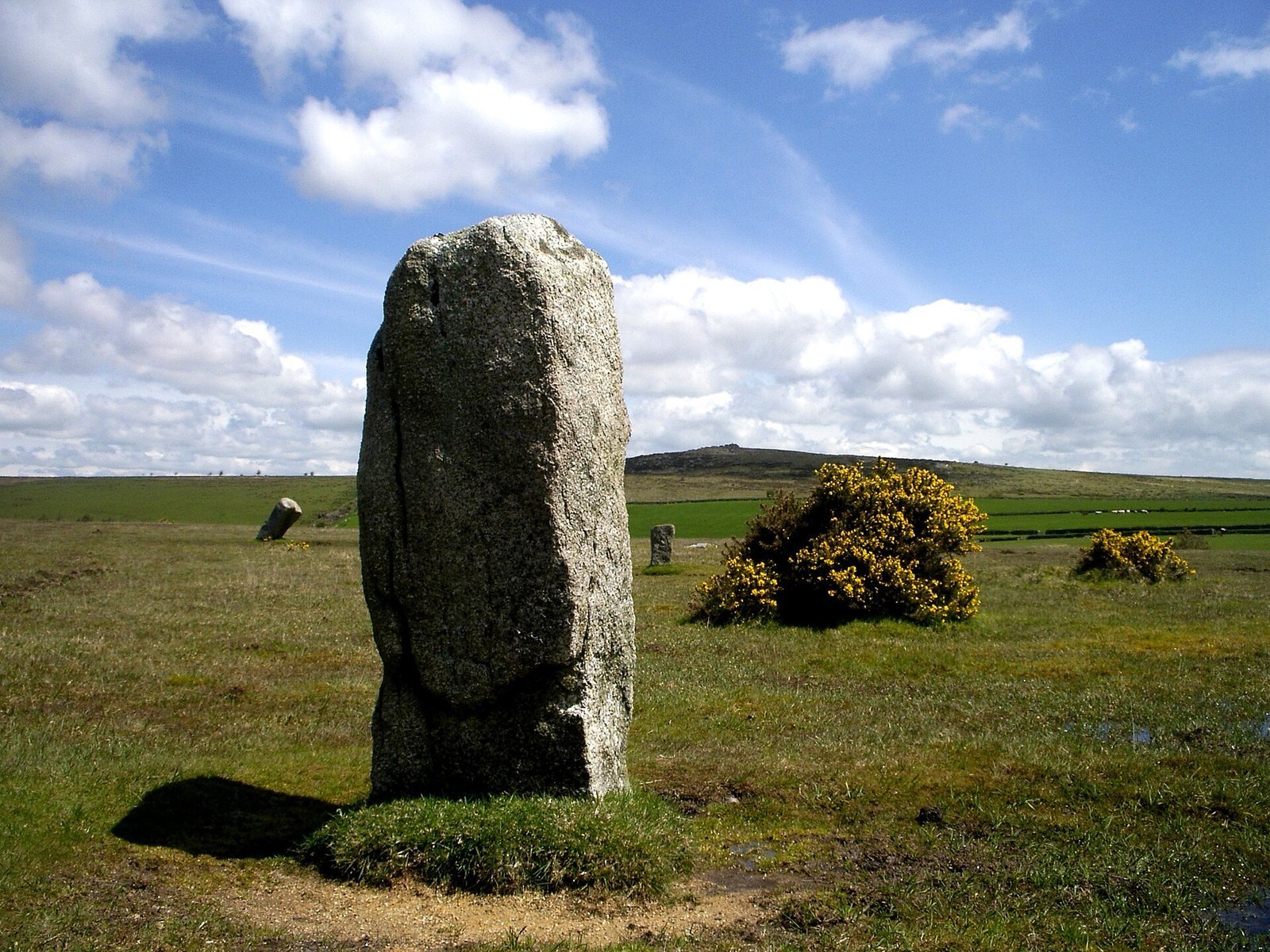
Eight upright stones and four fallen stones remain. They are spaced about 3.7 m apart on average, and the tallest standing stone is 1.6 m high. The fallen stones measure 2.1 m and 1.6 m long. The circle is about 31.9 m across.
Proposed extent and alignments
William Lukis thought the circle may once have held as many as 26 standing stones, with some removed through stone-breaking. Aubrey Burl proposed an original arrangement of 28 stones in opposing pairs. Lockyer identified an alignment involving Arcturus, a bright star, and Rough Tor, a hill on Bodmin Moor. He also noted an alignment of about 11 degrees between Trippet Stones and Leaze stone circle. If meaningful, he considered that it would relate to the direction in which stars rise above the horizon, rather than to the Sun, because it lay outside the Sun’s path. At Stripple stones, Gray recorded a southwest-facing entrance directed toward Trippet Stones.