Church of Christ the Consoler: A Victorian Memorial Church in Yorkshire
Site at a Glance
- Rating
- 4.9
- Popularity
- Low
- Country
- United Kingdom
- Primary era
- Modern
- Eras represented
- Modern
- Civilizations
- British
- Site type
- Religious
- Remains
- Church
On this page5 sections
History
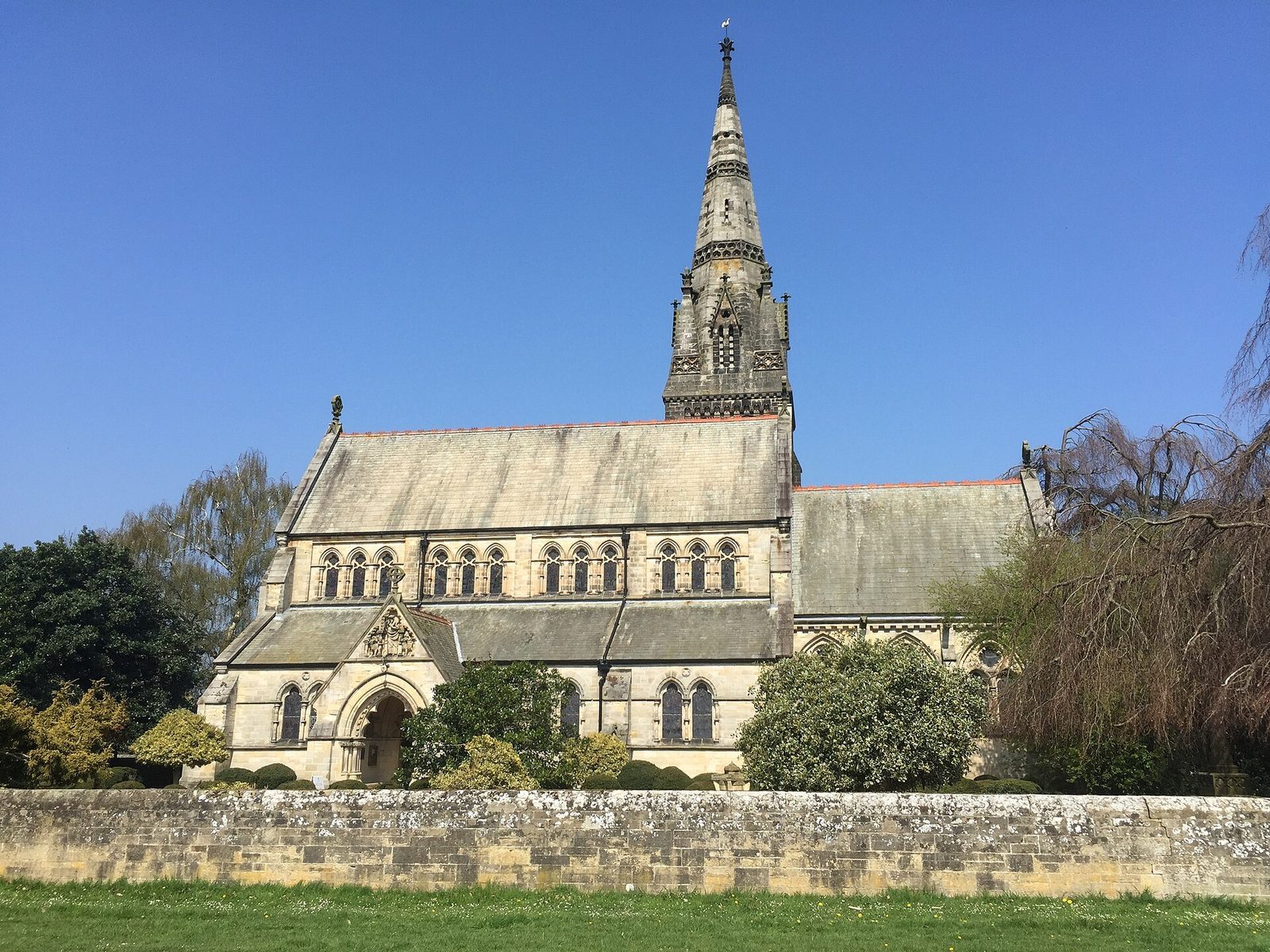
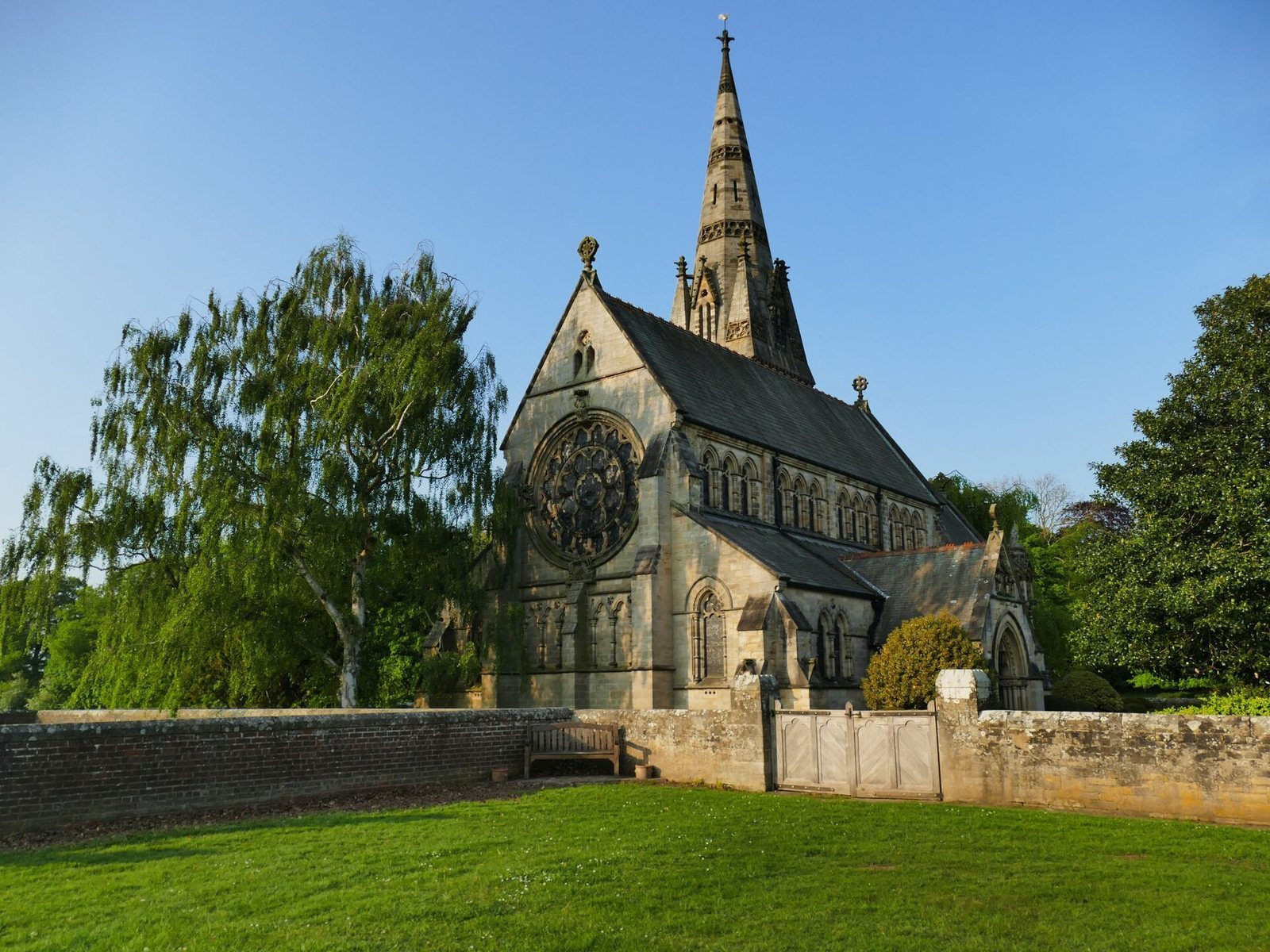
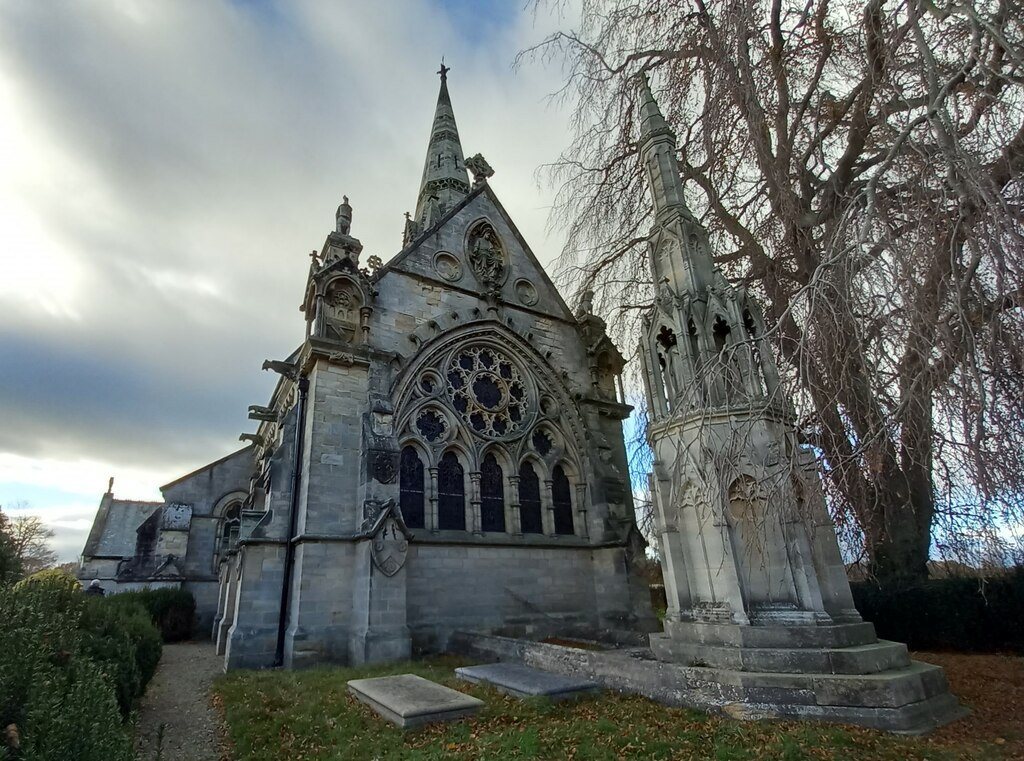
The Church of Christ the Consoler is an Anglican church at Newby Hall, Skelton-on-Ure, in North Yorkshire, England. Anglicanism is a Christian tradition historically rooted in the Church of England. Designed by William Burges in the Early English style, an early phase of English Gothic, the church was intended as a memorial to Frederick Vyner.
Vyner was captured by Greek brigands near Athens on 11 April 1870 and murdered on 21 April. A ransom had been demanded, and part of it was collected before his death. His mother, Lady Mary Vyner, decided that the unused money should fund a memorial church on her Yorkshire estate. The church was founded in June 1870, and George Robinson commissioned Burges to design it in memory of his brother-in-law.
Construction began in 1871 and was completed by 1876. Vyner’s sister, Lady Ripon, built St Mary’s Church on her Studley Royal estate as a parallel memorial project, and Burges received commissions for both churches in 1870.
The church belongs to the parish of Newby with Mulwith. It became a Grade I listed building on 6 March 1967, a status reserved in England for buildings of exceptional interest. On 14 December 1991, it was vested in the Churches Conservation Trust, a charity that cares for historic church buildings in England.
Remains
Set within the grounds of Newby Hall, the church is a Victorian Gothic Revival building, drawing on medieval Gothic forms. Its Early English design marked a shift from Burges’s preferred Early French style toward English inspiration. Architectural historian Nikolaus Pevsner praised its originality and richness, while judging its scale somewhat heavy.
Architectural fabric
Exterior
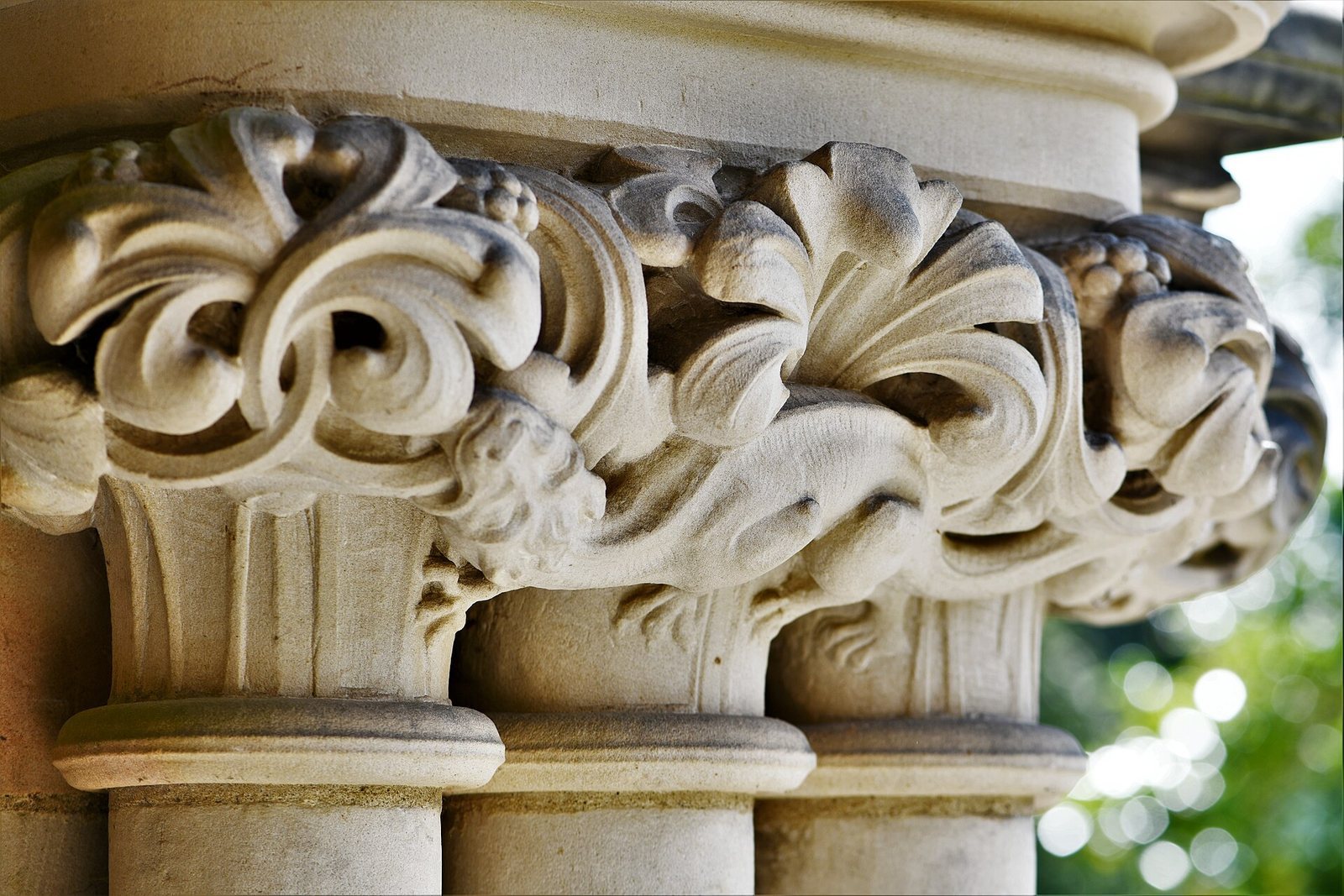
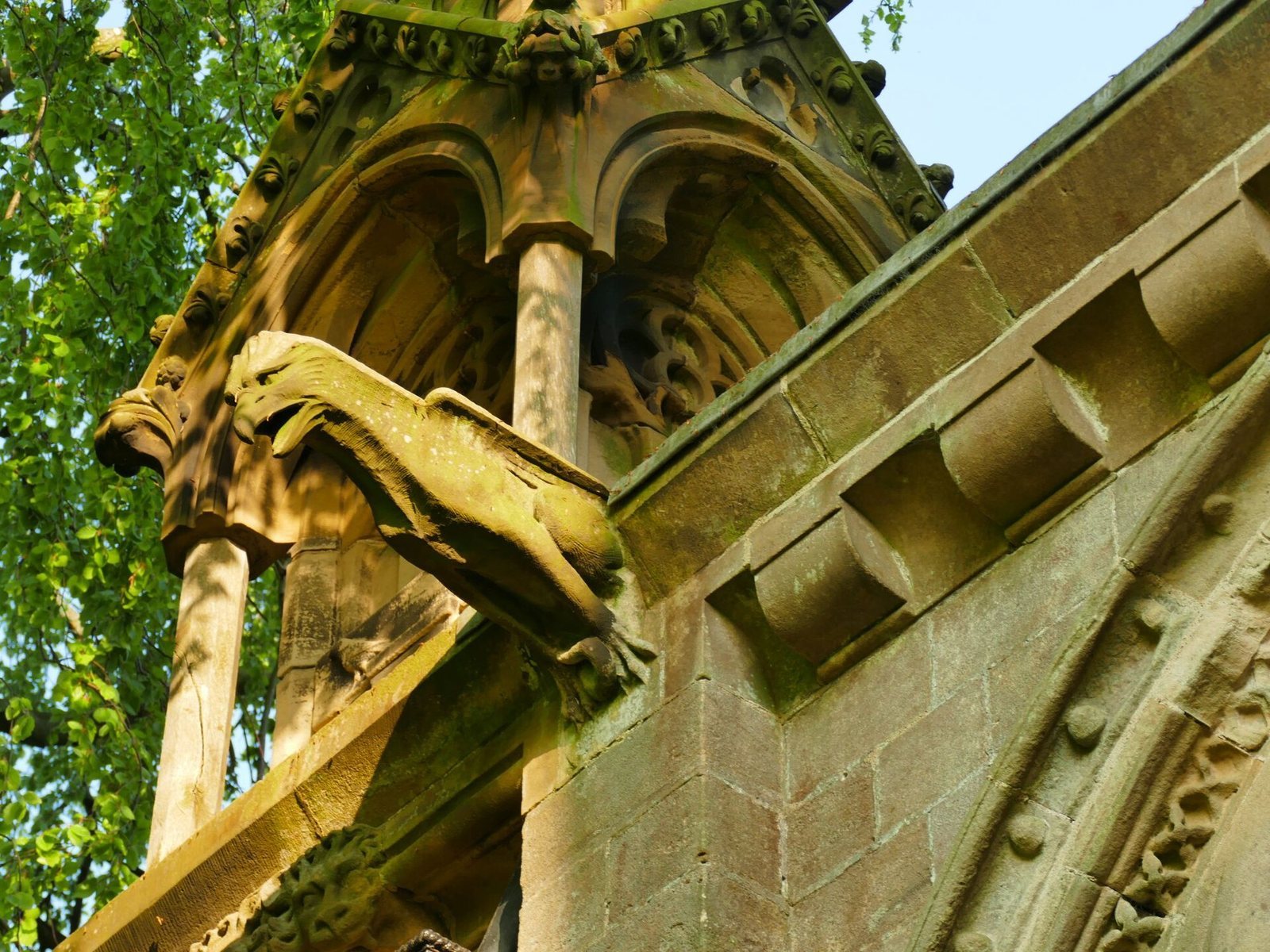
The exterior is built of grey Catraig stone, with Morcar stone used for the mouldings.
Interior
White limestone faces the interior, which is richly decorated. Burges’s collaborators Thomas Nicholls and Lonsdale also contributed to the church’s design and decoration.