Holy Trinity Church, Sunderland: An Anglican Parish Church
Site at a Glance
- Rating
- 4.8
- Popularity
- Medium
- Country
- United Kingdom
- Primary era
- Early Modern
- Eras represented
- Early Modern, Modern
- Civilizations
- British
- Site type
- Religious
- Remains
- Church
On this page12 sections
History
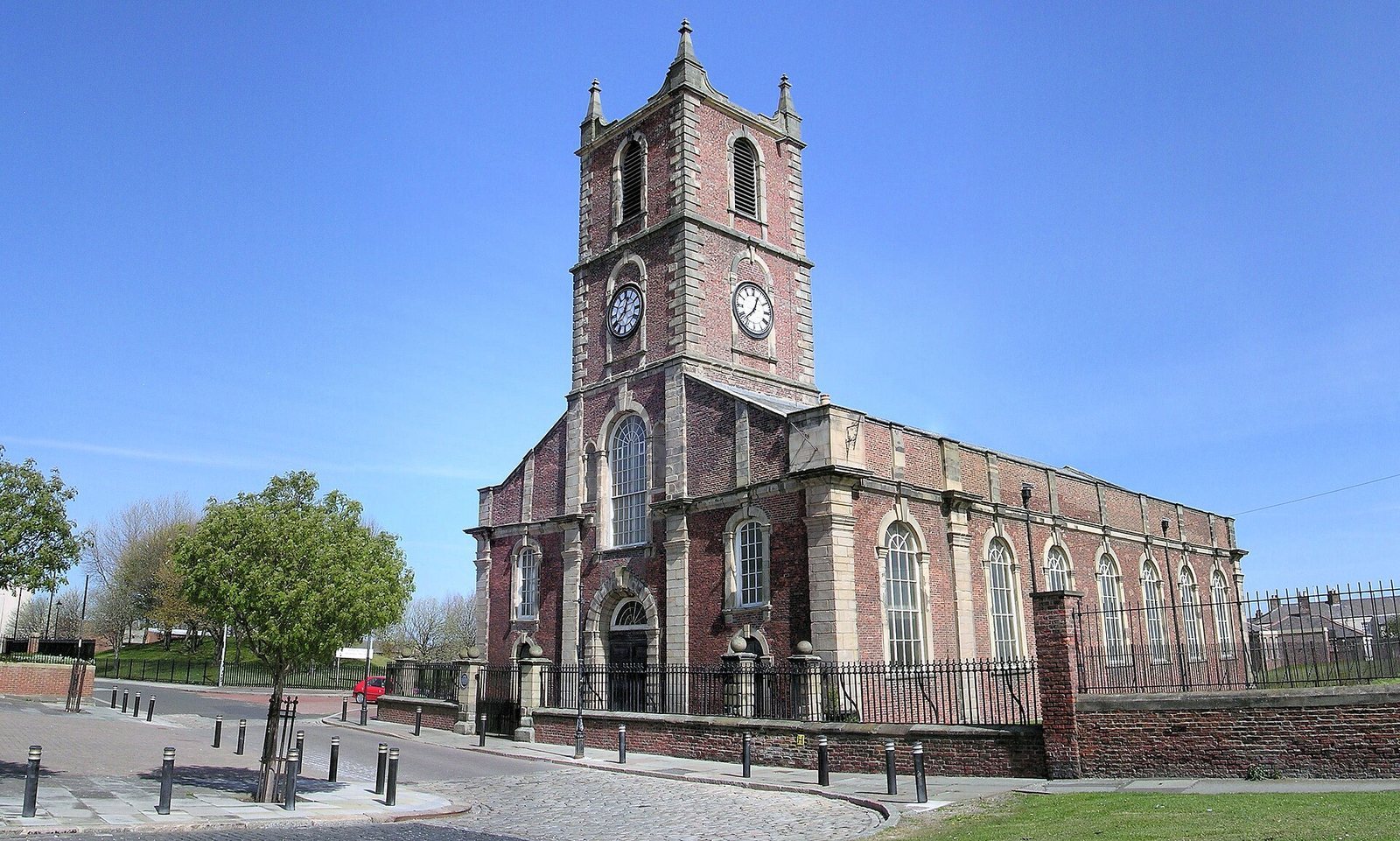
Holy Trinity Church, Sunderland, is a former Anglican (Church of England) parish church in the United Kingdom, built to serve the town’s new parish, a local church district. Construction began in 1718, and the church was completed and consecrated in 1719 in the Baroque style, associated with dramatic forms and elaborate visual effects.
Foundation and opening
By 1712, Sunderland’s expanding port population had outgrown St. Michael’s Church at Bishopwearmouth. Local merchants appealed for a new church on the town moor in east Sunderland, while population growth also encouraged the creation of a separate parish. An Act of Parliament established the Parish of Sunderland on 9 March 1719, with the consent of Nathaniel Crew, Bishop of Durham, and the Reverend James Bowes.
Holy Trinity was built for the new parish. Its first recorded marriage, between Jonathan Chambers and Elizabeth Hutchinson, took place on 2 June 1719, before the church’s consecration on 5 September. The original architect is uncertain. Local architect William Eddy and Daniel Newcombe, who became the church’s first rector, have both been associated with its design, and Newcombe was almost certainly involved.
Alterations and remembrance
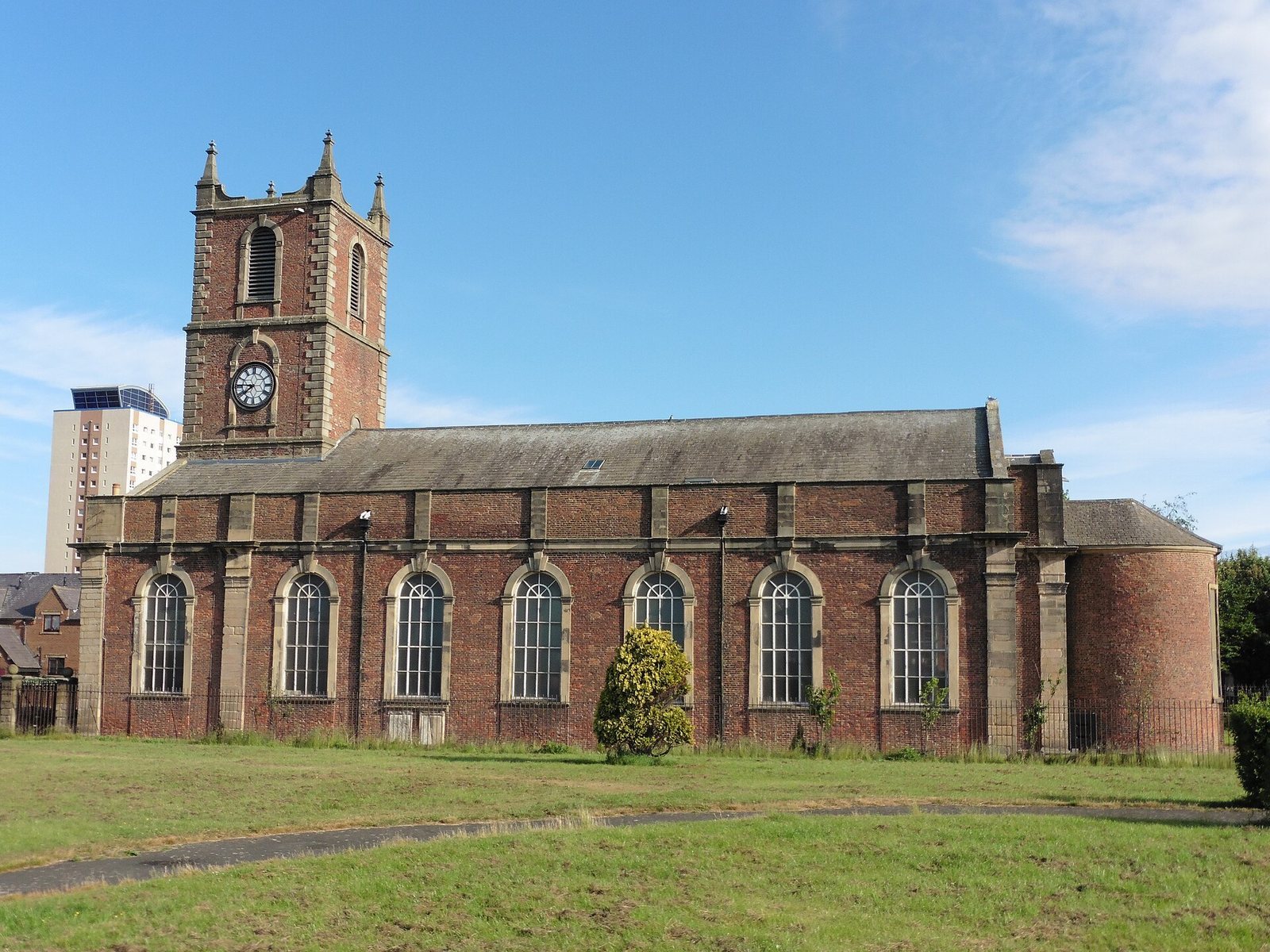
In 1735, Newcombe paid for an eastward extension that added an apse and gave the church a chancel, which it had previously lacked. The last burial in the churchyard took place in 1854.
In 1888, a churchyard headstone was erected in memory of Jack Crawford, a Sunderland sailor known as the “Hero of Camperdown.” During the 1797 Battle of Camperdown, a naval engagement, fire damaged the mast of HMS Venerable and Admiral Duncan’s flag came down. Crawford climbed the damaged mast and nailed the flag back in place. Sunderland residents awarded him a silver star. He later fell into poverty and died during a cholera outbreak. A statue commemorating him was placed in Mowbray Park in 1890.
Closure and preservation
Holy Trinity closed on 26 June 1988 as its congregation dwindled. It passed to the Redundant Churches Fund, now the Churches Conservation Trust, which preserves the building and undertakes repairs. No longer used for worship, the church serves as a community cultural venue called Seventeen Nineteen. It is Grade I listed, the highest listed-building category in England, with the designation recorded on 8 May 1950.
Remains
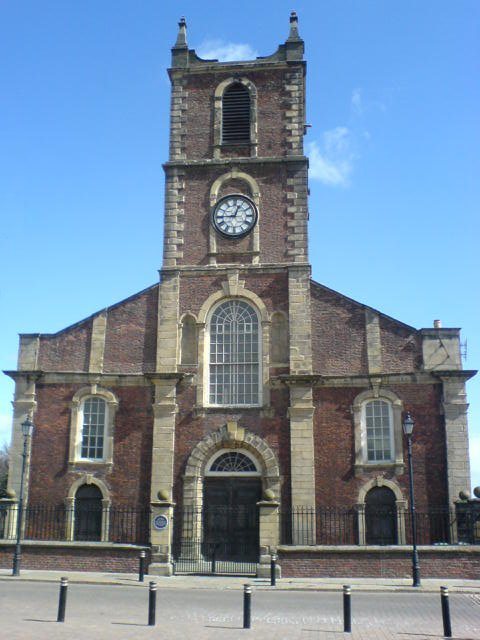
The church’s brick structure contains a central nave, flanking aisles and a chancel, with an apse at the east end. The churchyard and a nearby former school building are also part of the site’s physical setting.
Church building
Exterior and roof
Stone mouldings frame the doors and windows of the brick exterior, historically described as plain. In 1803 the roof was raised to make room for a new gallery, and the windows were reglazed. They were reglazed again at the beginning of the twentieth century.
Interior
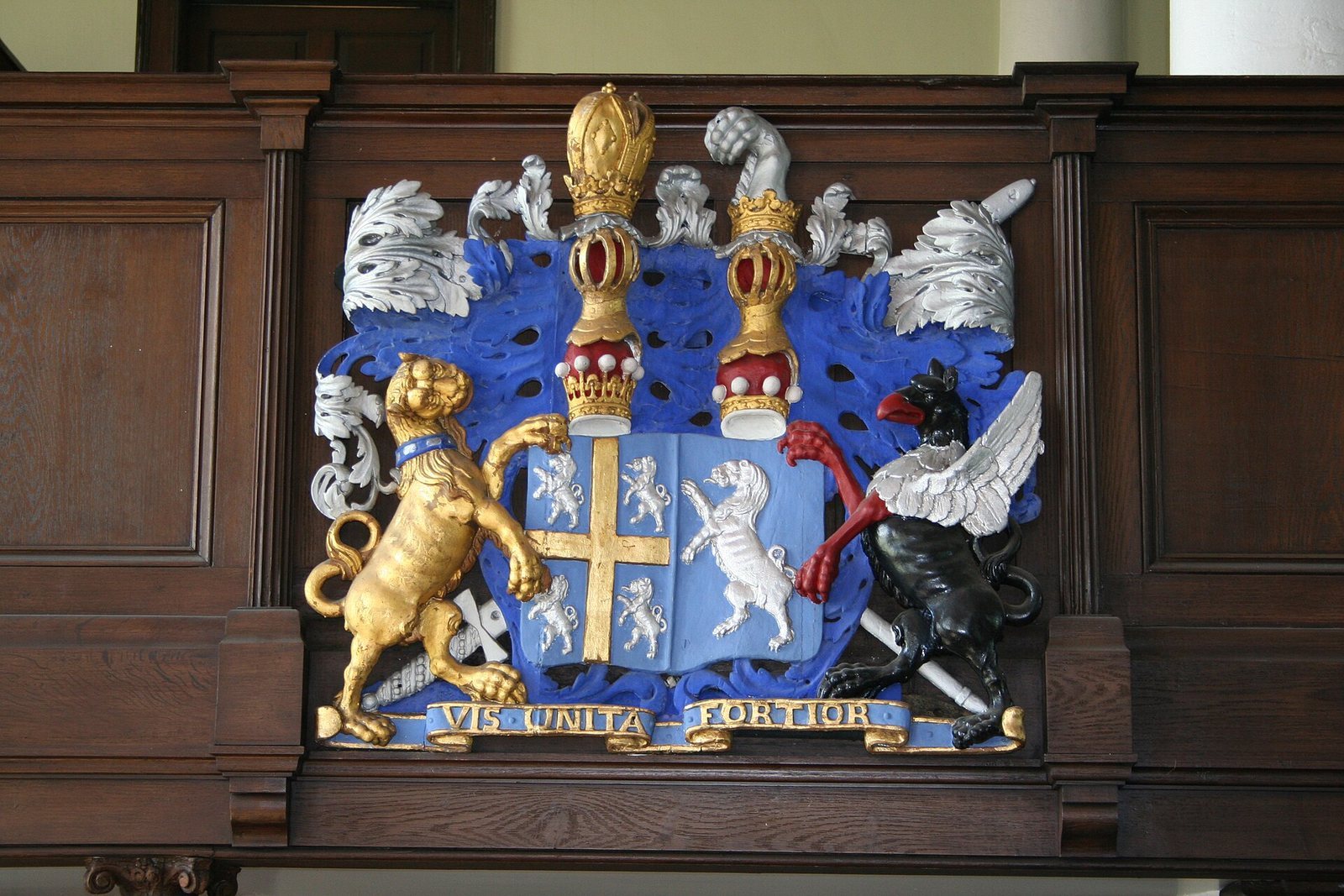
Seven pillars on each side divide the aisles from the nave. Each has a Corinthian-style capital, a column top decorated with foliage. The communion table sits within a domed recess, supported at its front by two Corinthian columns. Galleries run along both sides and across the west end of the nave. The west gallery front displays the royal arms and those of Lord Crewe, with a smaller choir gallery above it.
East end and windows
The large, nearly circular apse at the east end includes a Venetian window, with a broad central opening flanked by smaller side openings. A stained-glass window on the church’s east side depicts the Ascension. Installed in 1857, it was made by James Hartley’s glassworks in Sunderland.
Churchyard and associated building
Jack Crawford’s headstone
The churchyard headstone commemorating Crawford records his action aboard HMS Venerable during the Battle of Camperdown on 11 October 1797. Its inscription gives his Sunderland birth in 1775 and his death in his native town in 1831, aged 56.
Former Donnison School
The nearby caretaker’s cottage was formerly Donnison School, which closed sometime between 1905 and 1910. In 2007, the building became the Donnison School Heritage and Education Centre.