Guild Chapel of the Holy Cross: A Medieval Guild Chapel in Stratford-upon-Avon
Site at a Glance
- Rating
- 4.7
- Popularity
- Medium
- Country
- United Kingdom
- Primary era
- Medieval
- Eras represented
- Medieval
- Civilizations
- English
- Site type
- Religious
- Remains
- Chapel
On this page13 sections
History
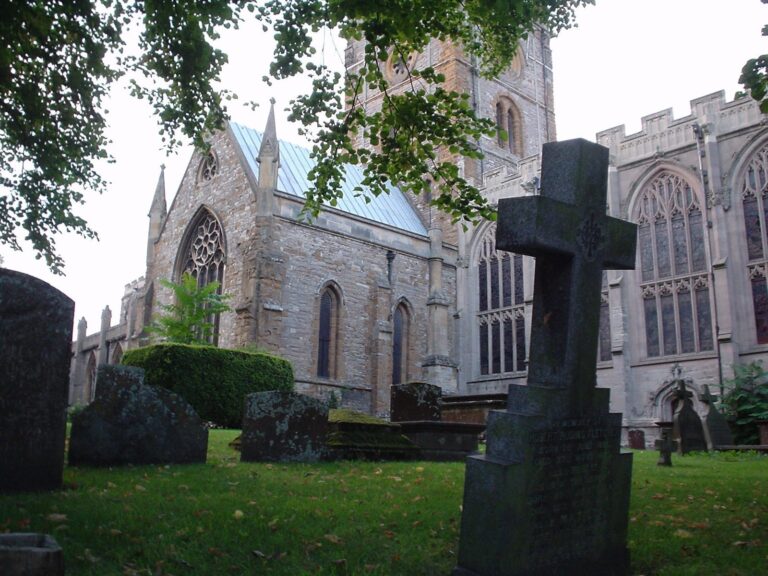
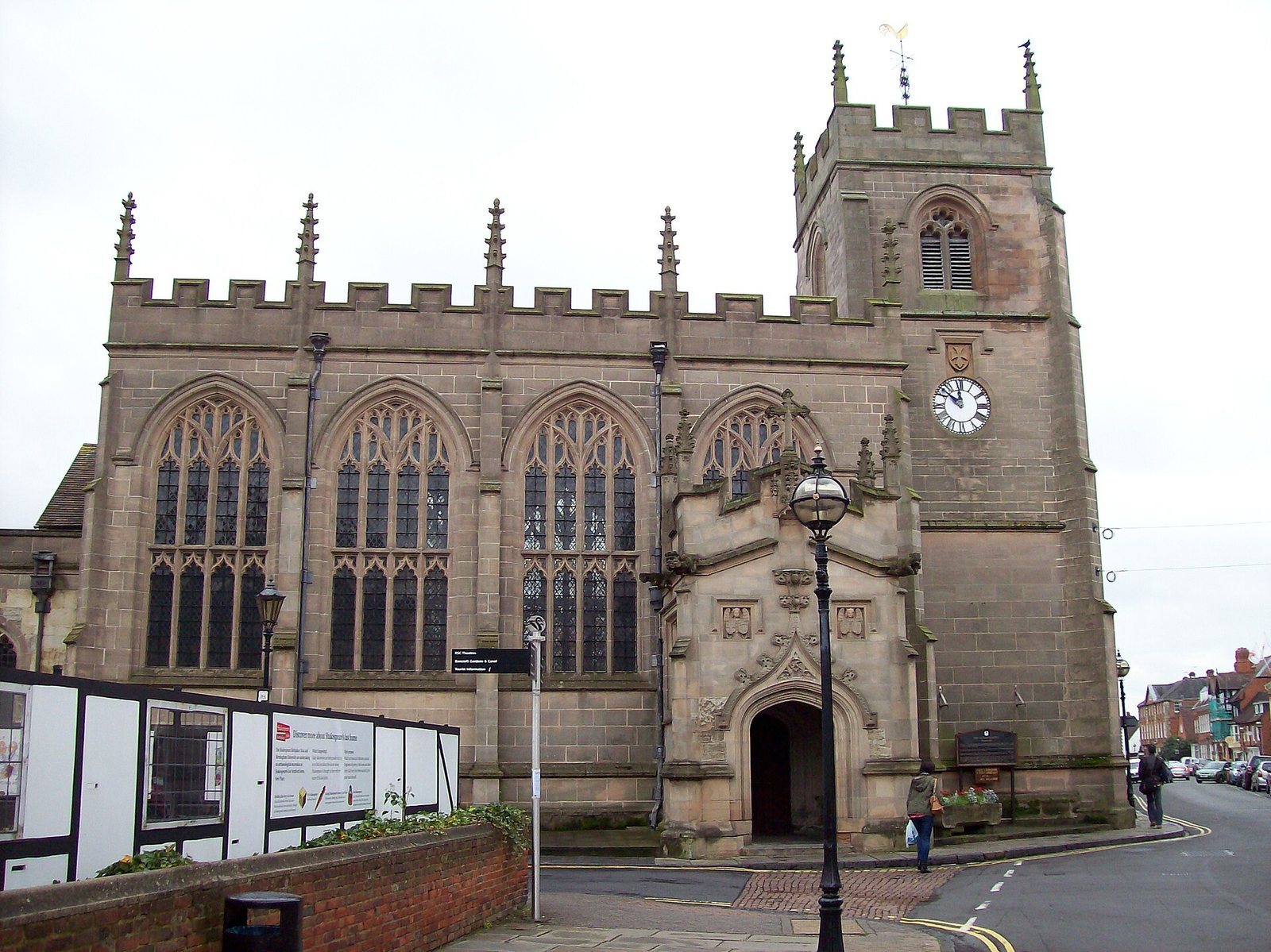
The Guild Chapel of the Holy Cross is a medieval chapel in Stratford-upon-Avon, in the United Kingdom. Associated with the Guild of the Holy Cross, it is built in the Perpendicular Gothic style, a late-medieval English Gothic style noted for strong vertical lines and window tracery. The date of its original construction is unknown.
The guild and the chapel’s rebuilding
The Guild of the Holy Cross was a religious membership association. A charter issued in 1269 allowed it to build a chapel for services for the souls of members’ ancestors. The chapel was refurbished in the 1420s, and around 1450 its chancel, the part of a church near the altar, was rebuilt. The nave, the main gathering space, and the tower date to rebuilding around 1490 associated with Hugh Clopton, a merchant and former mayor of London. In his 1496 will, Clopton left money for a major expansion.
Reformation and changing use
After Henry VIII died in 1547, the Protestant reforms pursued under Edward VI brought an end to the guild through the dissolution of chantries, endowed foundations for prayers and religious services for the dead. In November 1547, commissioners ordered shrines destroyed and monuments linked with alleged miracles, pilgrimages, idolatry, and superstition covered. The chapel likely underwent similar changes and appears to have fallen out of use.
In 1553, Stratford received a charter of incorporation, formally recognizing the town as a corporation with legal rights and a governing structure. The town repurchased the guild’s former possessions, and the chapel came under the town corporation’s control. During Mary I’s reign, Mass was again celebrated there. After Elizabeth I became queen, a 1559 purge of Catholic associations left the chapel redundant.
Between 1562 and 1564, payments made by John Shakespeare, then chamberlain of the Stratford Corporation, covered the defacing of images and removal of the rood loft, a raised gallery associated with a large cross. This work appears to have prepared the building for preachers invited to Stratford in 1564.
Restoration and later use
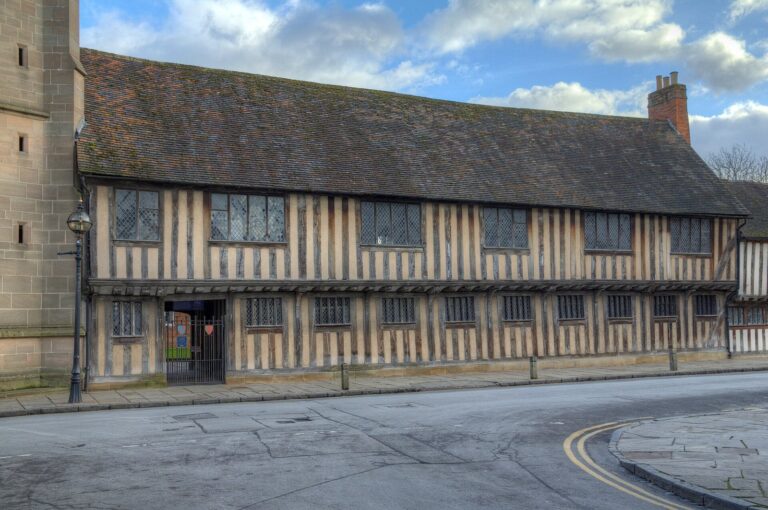
A restoration programme led by church architect Stephen Dykes Bower ran from 1954 to 1983. In the early 21st century, the University of York’s Department of Archaeology investigated the chapel using digital modelling and characterized it as one of Europe’s most important surviving late-medieval guild chapels. The building became Grade I listed in 1951, the highest listed-building category in England, for buildings of exceptional interest. A restoration project carried out in 2016 received the Society for the Protection of Ancient Buildings’ John Betjeman Award in 2017. The Stratford-upon-Avon Town Trust owns and maintains the chapel, which is used for services by King Edward VI School.
Remains
Architecture and surviving features
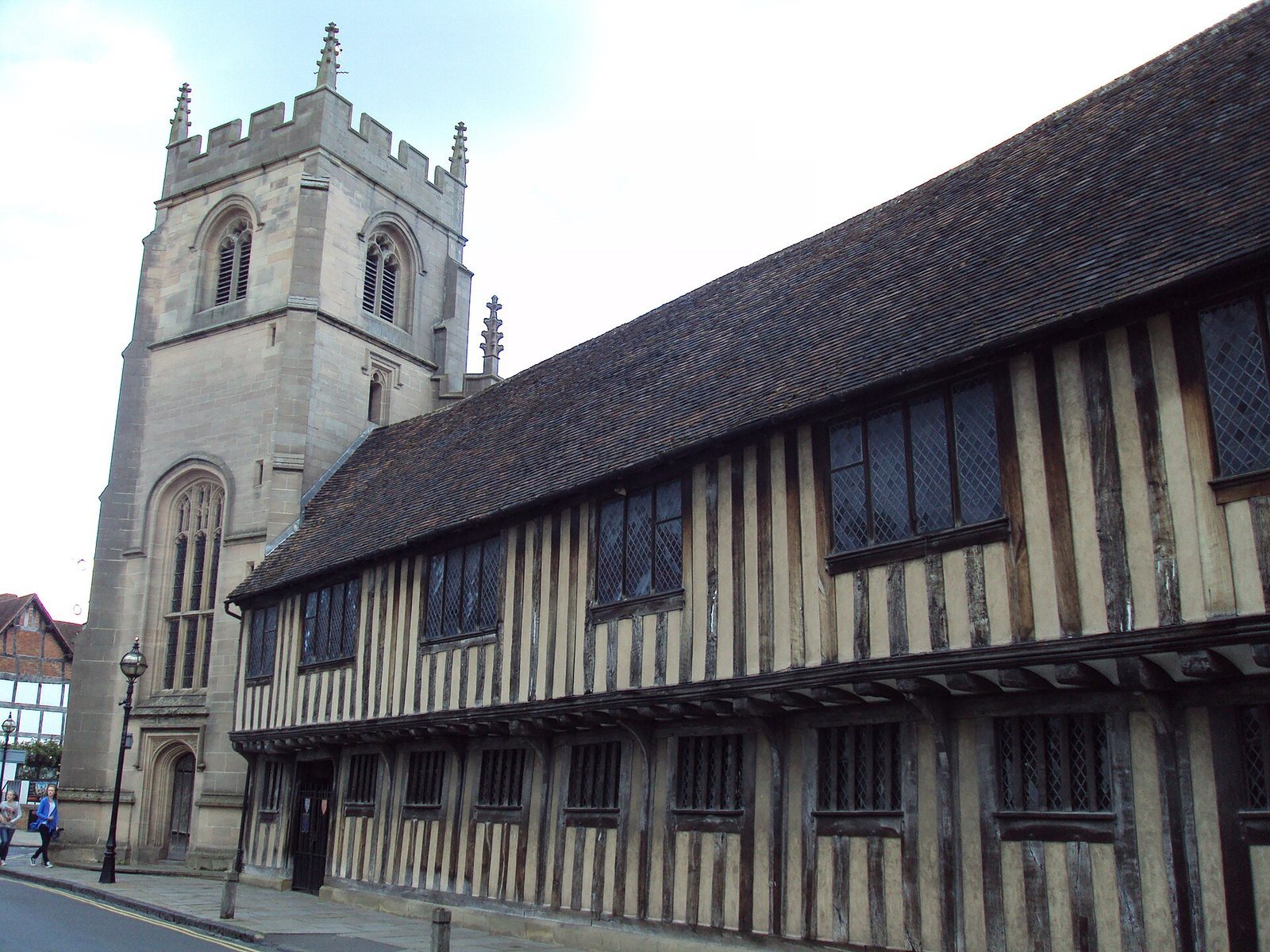
The chapel’s Perpendicular Gothic plan brings together a chancel, nave, and tower. It stands on Church Street, opposite the site of New Place, Shakespeare’s home.
Chancel
The chancel retains fabric from the 13th century and incorporates the rebuilding described in the chapel’s later medieval history. It occupies the part of the church near the altar.
Nave and tower
The nave forms the chapel’s main body, while the tower is part of its late-medieval structure. Together with the chancel, these elements make up the surviving architectural arrangement.
Great Bell
The Great Bell is a curfew bell, traditionally rung to signal an evening curfew, cast in 1633. It was renovated in 2018.
Wall paintings
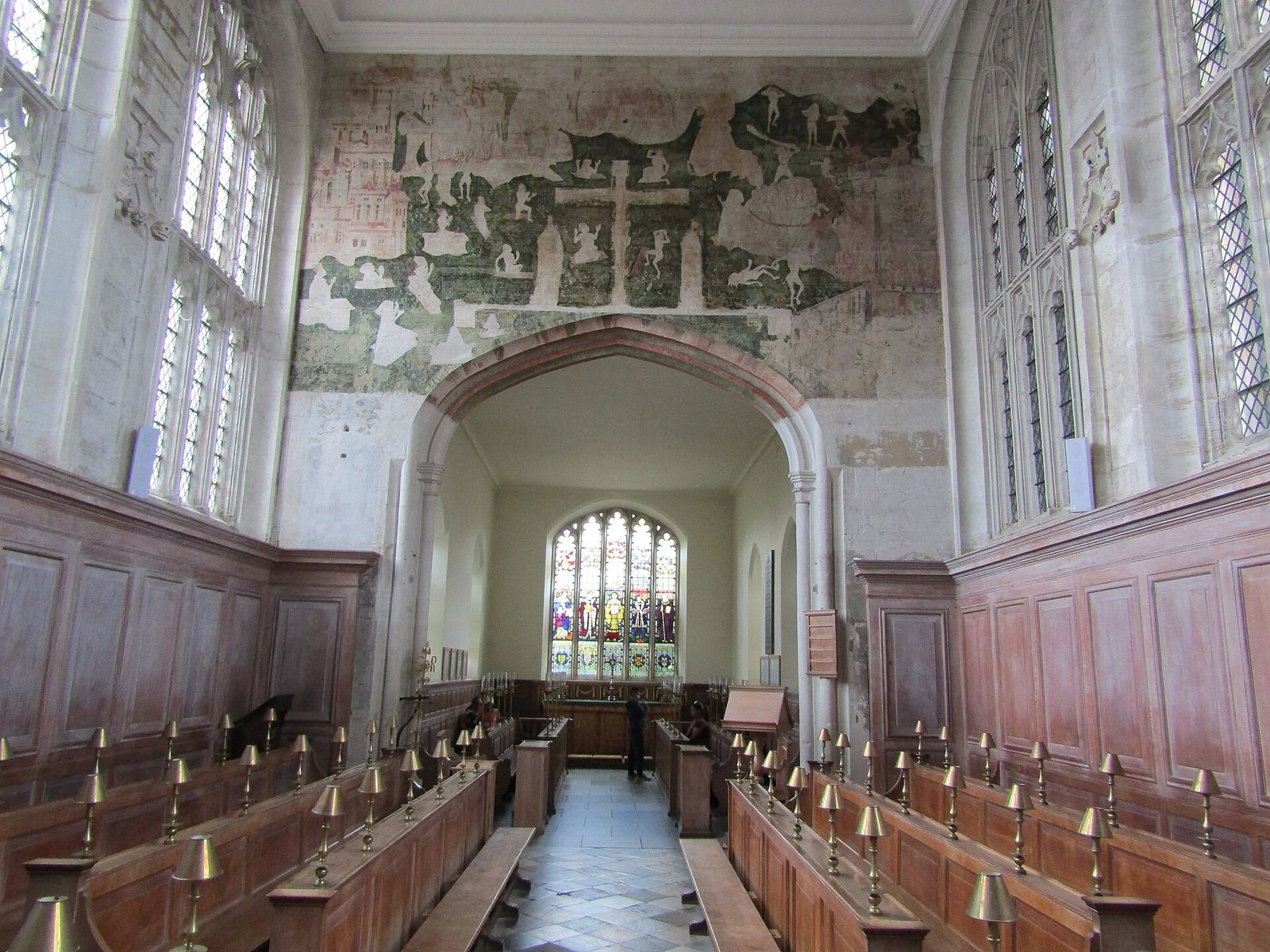
Restoration work in 1804 revealed wall paintings in the chapel. Stratford antiquary Robert Wheler described them, artist Thomas Fisher made drawings, and antiquary and publisher John Gough Nichols published the drawings in 1838.
Chancel paintings
Paintings in the chancel showed scenes from the legend of the discovery of the True Cross. They were painted on deteriorated plaster and were later destroyed.
Last Judgment
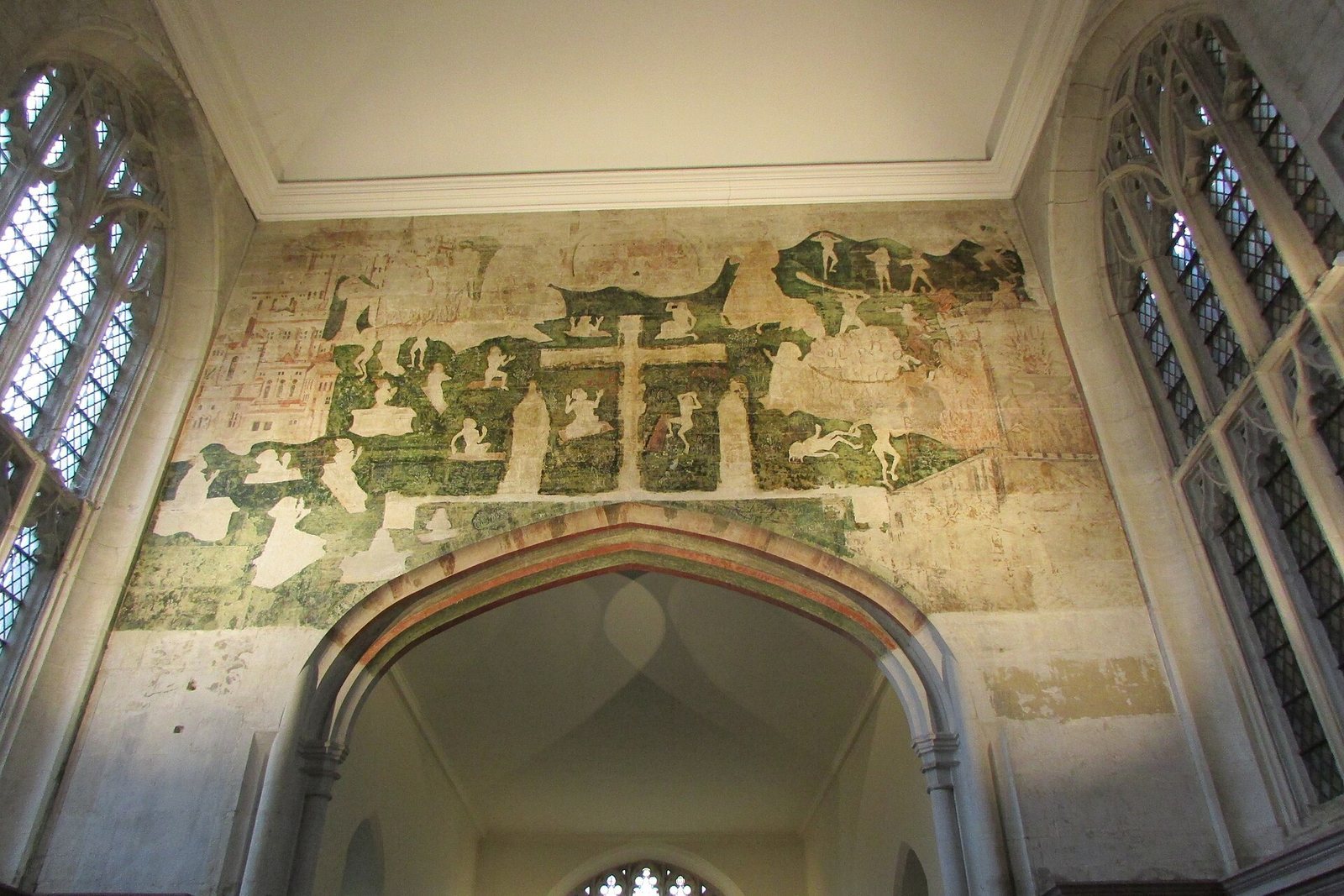
Above the chancel arch, a Last Judgment showed Christ seated on a rainbow above a rood, or large cross, with St John the Baptist and Mary on either side. Art historian and painter Ernest William Tristram re-exposed the painting in 1928.
Dance of Death
A Dance of Death, a scene in which death claims people from different ranks of society, was recorded as extending around the nave. The nave paintings were whitewashed again after their early 19th-century recording. In 1955, Wilfrid Puddephat, an art master at King Edward VI School, found traces of the Dance of Death and reconstructed its original appearance.