Holy Trinity Church, Coventry: A Medieval Church of England Parish Church
Site at a Glance
- Rating
- 4.8
- Popularity
- Medium
- Country
- United Kingdom
- Primary era
- Medieval
- Eras represented
- Medieval, Early Modern, Modern
- Civilizations
- British, English
- Site type
- Religious
- Remains
- Church
On this page9 sections
History
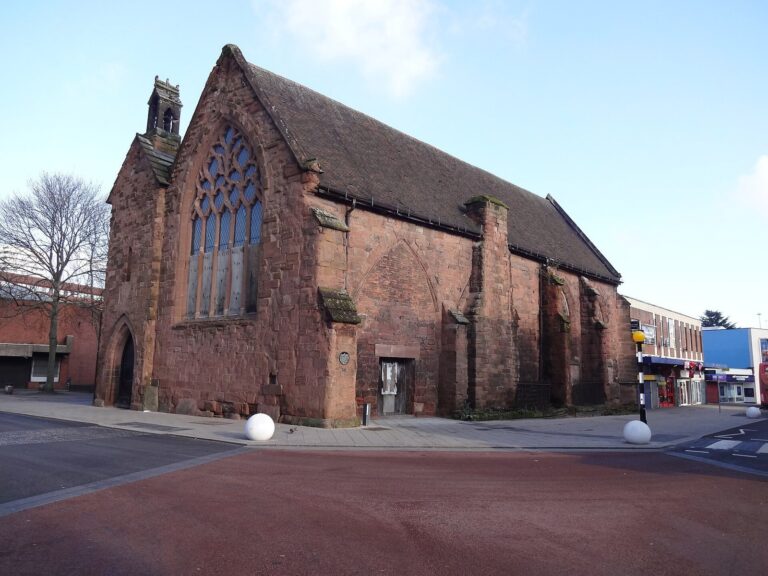
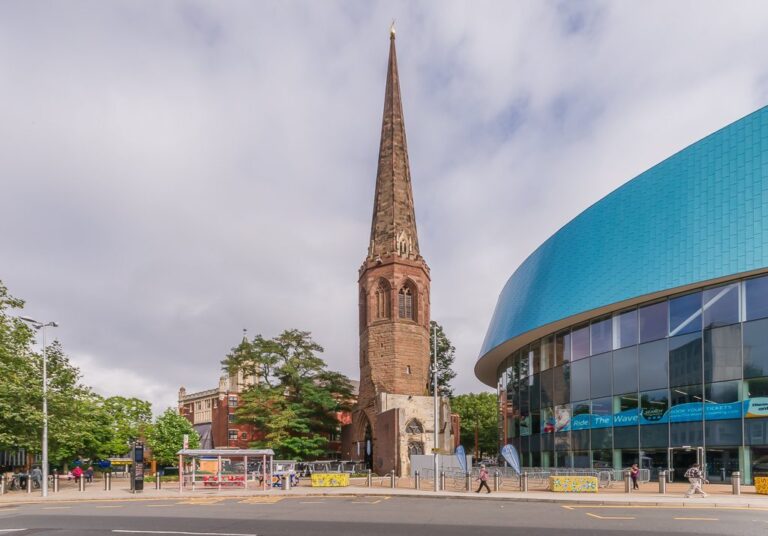
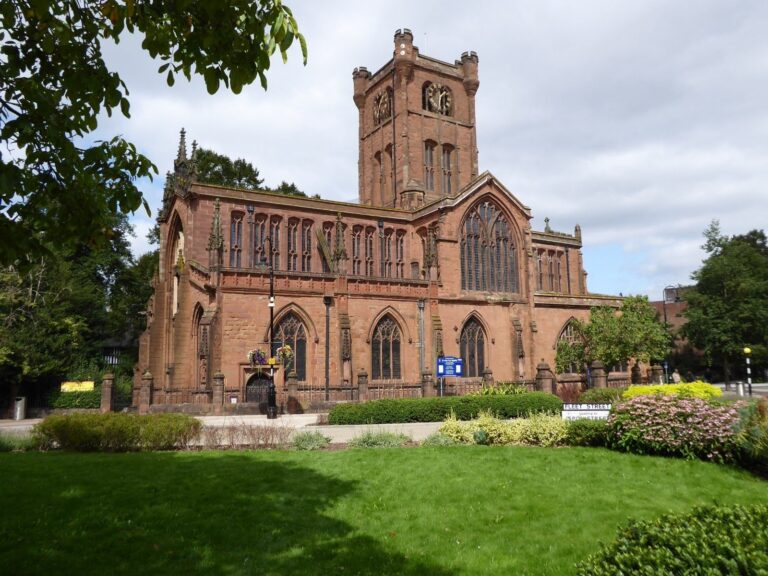
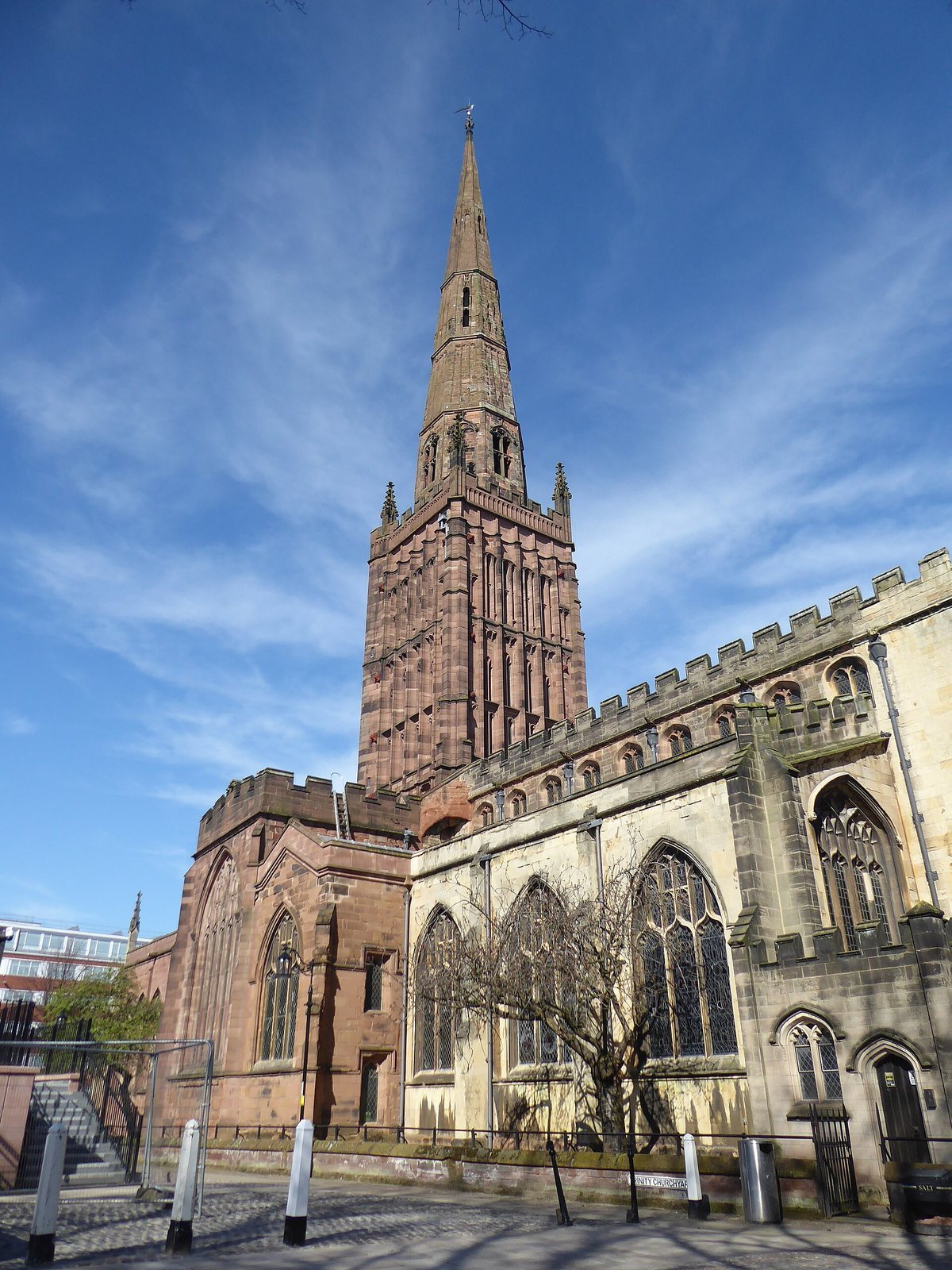
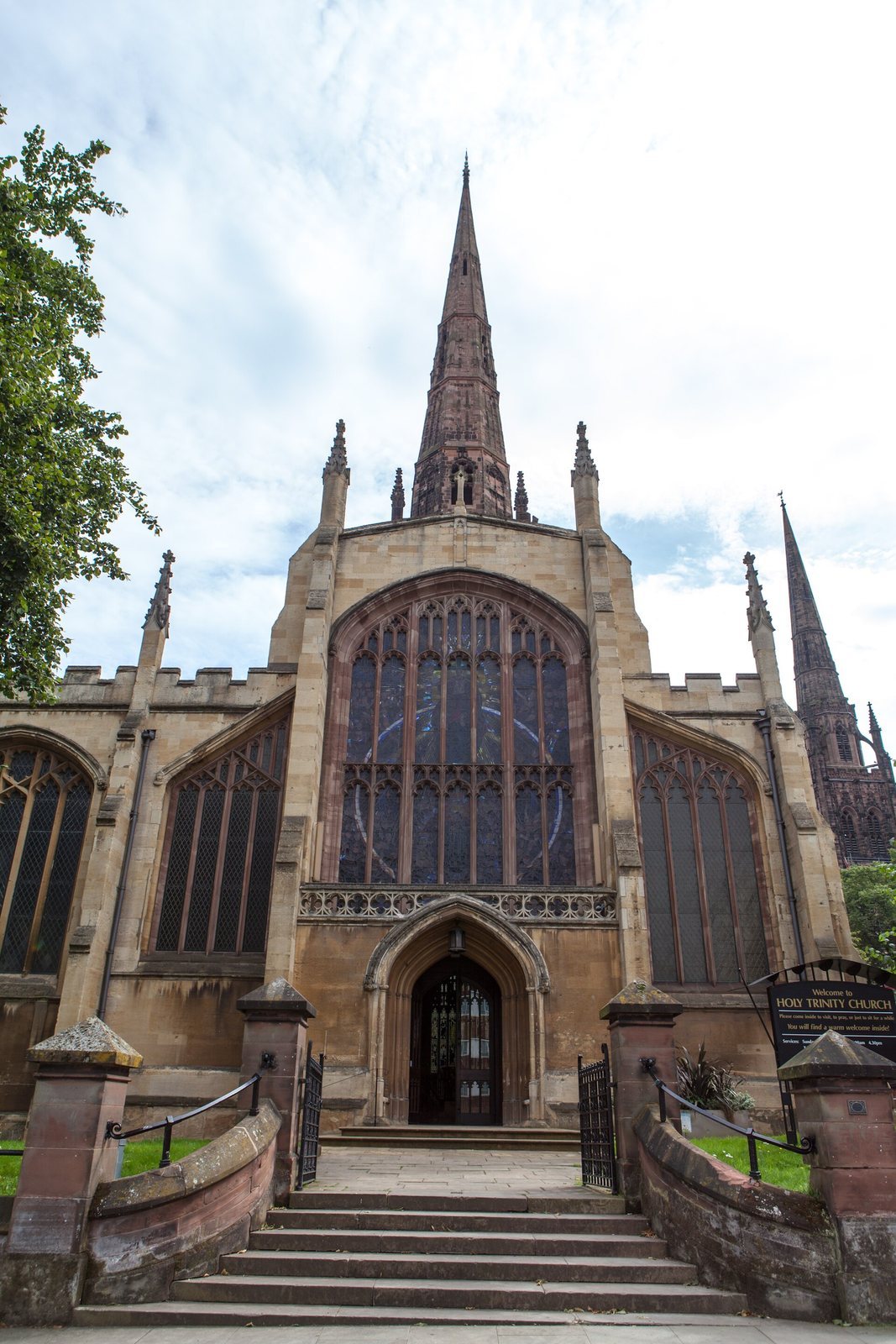
Holy Trinity Church, Coventry, is a parish church of the Church of England, the English Anglican church, in the United Kingdom. A church stood on the site by 1113, and the present church has 12th-century origins. The earlier church was destroyed by fire in 1257, and a replacement was built in the 14th century in the Perpendicular style, a late-medieval English Gothic style marked by strong vertical lines. The church survived German air raids during the Second World War without damage. It is Coventry’s only medieval church to have survived the raids intact and its only medieval church still complete.
The words Holy Trinity refer to the Christian doctrine of one God in three persons: Father, Son and Holy Spirit.
Rebuilding and conservation
Restoration took place from 1665 to 1668. The east end was rebuilt in 1786, the tower was recased, or given a new outer covering, in 1826, and the west front was rebuilt in 1843. The interior was restored in 1854.
The church’s Doom painting, dating to the 1430s, was uncovered beneath limewash in 1831. David Gee restored it and applied varnish, which later darkened and obscured the image. Conservation and restoration began in 1995, and the painting was revealed in 2004.
Parish and protection
Holy Trinity was formerly Roman Catholic and is now Anglican. Its Broad Church tradition allows a relatively wide range of theological views within Anglicanism. The church serves the parish of Coventry and belongs to the Diocese of Coventry, within the Province of Canterbury. It is Grade I listed, the highest listed-building grade in England, and is part of the Major Churches Network, an association of important churches.
Remains
Plan and structure
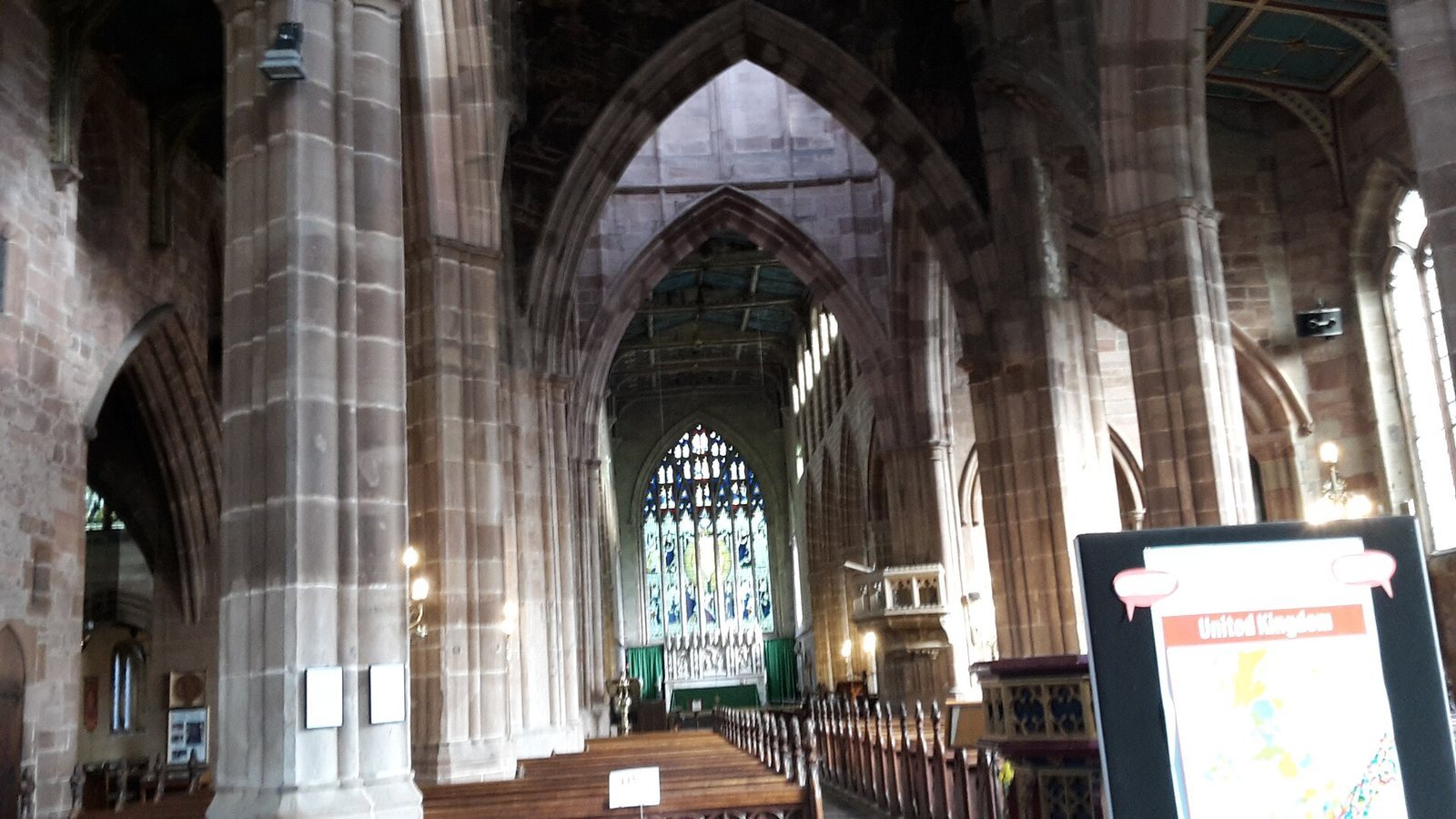
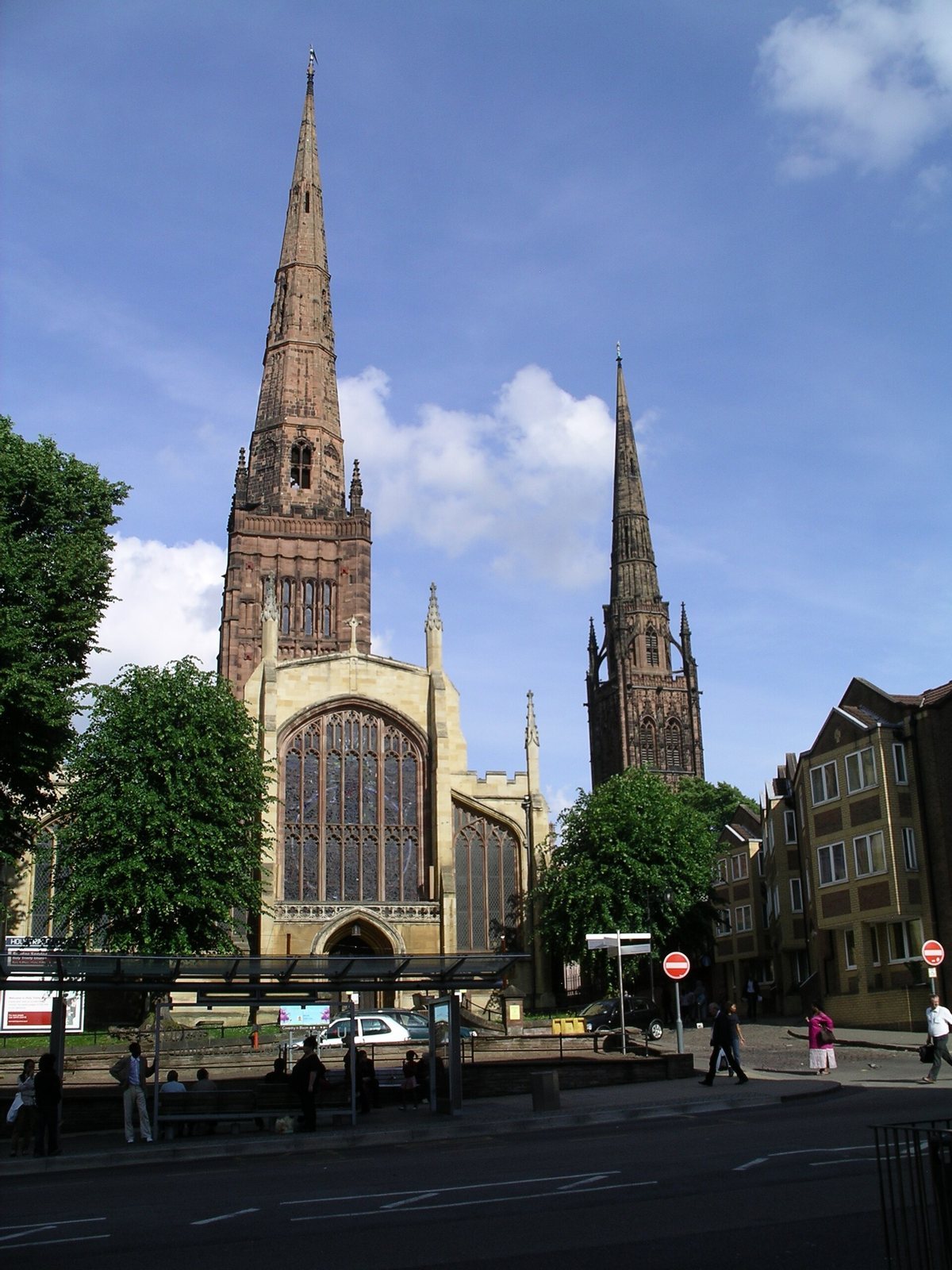
The church is 59 metres long, with three aisles and a basilican arrangement: a high central nave above lower side aisles. At the crossing, where the nave and transepts meet, a lantern tower, a tower over the junction that admits light, rises beneath a stone spire 72 metres high. The spire is among the tallest non-cathedral spires in the United Kingdom. Later chapels make the transept difficult to distinguish from outside. The choir ends in a flat wall with windows, and the vaults are wooden.
Painting and stained glass
Doom painting
The Doom, a depiction of the Last Judgment, occupies the church-facing spandrels, the roughly triangular wall areas beside an arch, above the chancel arch. It is an unusual example of late-medieval English painting.
Stained-glass windows
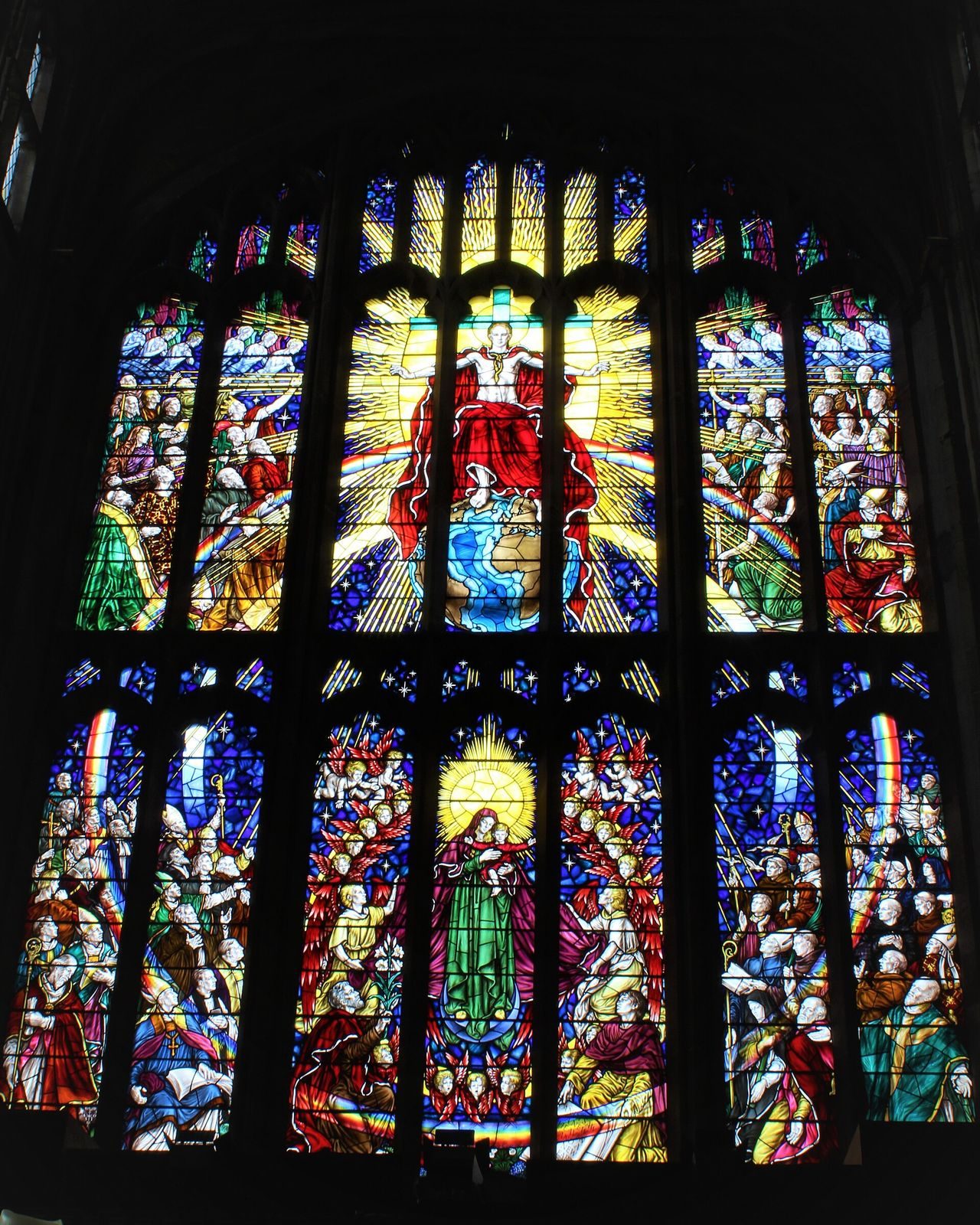
The east window, known as the Brides’ Window, was made by Ninian Comper in 1956. The west window depicts the Te Deum and was made by Hugh Ray Easton in 1955; the south-aisle window, showing Christ in Majesty, was made by Geoffrey Webb in 1933. Other windows are set in the south wall and on the north and east sides of the Marler Chapel.
Organs and their settings
The earliest recorded organ was built in 1526 by London builders John Howe and John Clynmowe. English Puritan clergy, Protestants seeking further reform of the Church of England, had it dismantled in the late 16th century because they opposed organs. Vicar Samuel Buggs, the parish priest, obtained a replacement in 1631. When Puritans regained control in the 1640s, that instrument was sold.
German organ builder Thomas Swarbrick made an organ in 1732, which stood on a gallery across the nave. A swell control and a foot-operated pedal section were added in 1829. Forster and Andrews built a new organ between 1855 and 1861. W. Hill & Sons rebuilt it in 1900, incorporating some earlier work; the instrument had four keyboards. An electrically powered air supply was added in 1923, followed by air-powered pistons installed by J. Charles Lee of Coventry in 1933.
Henry Willis rebuilt the organ in 1961. It had 59 stops, controls selecting groups of pipes, with 61 pipes per stop, along with 30 couplers linking keyboards or pedals and three tremolos that produced a wavering sound. The organ was dismantled in 2007 after it was judged beyond repair. A later organ chamber was built in the westernmost bay of the south chancel aisle.