St John the Baptist Church, Coventry: A Medieval Guild Chapel and Collegiate Church



Site at a Glance
- Rating
- 4.4
- Popularity
- Medium
- Country
- United Kingdom
- Primary era
- Medieval
- Eras represented
- Medieval, Modern
- Civilizations
- British, English
- Site type
- Religious
- Remains
- Church
On this page10 sections
History
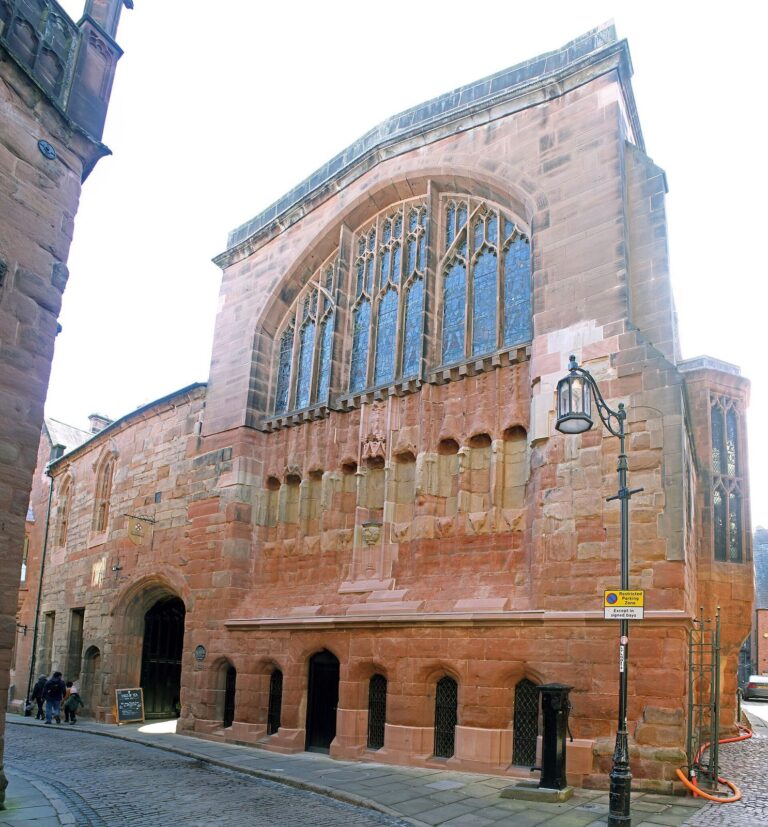
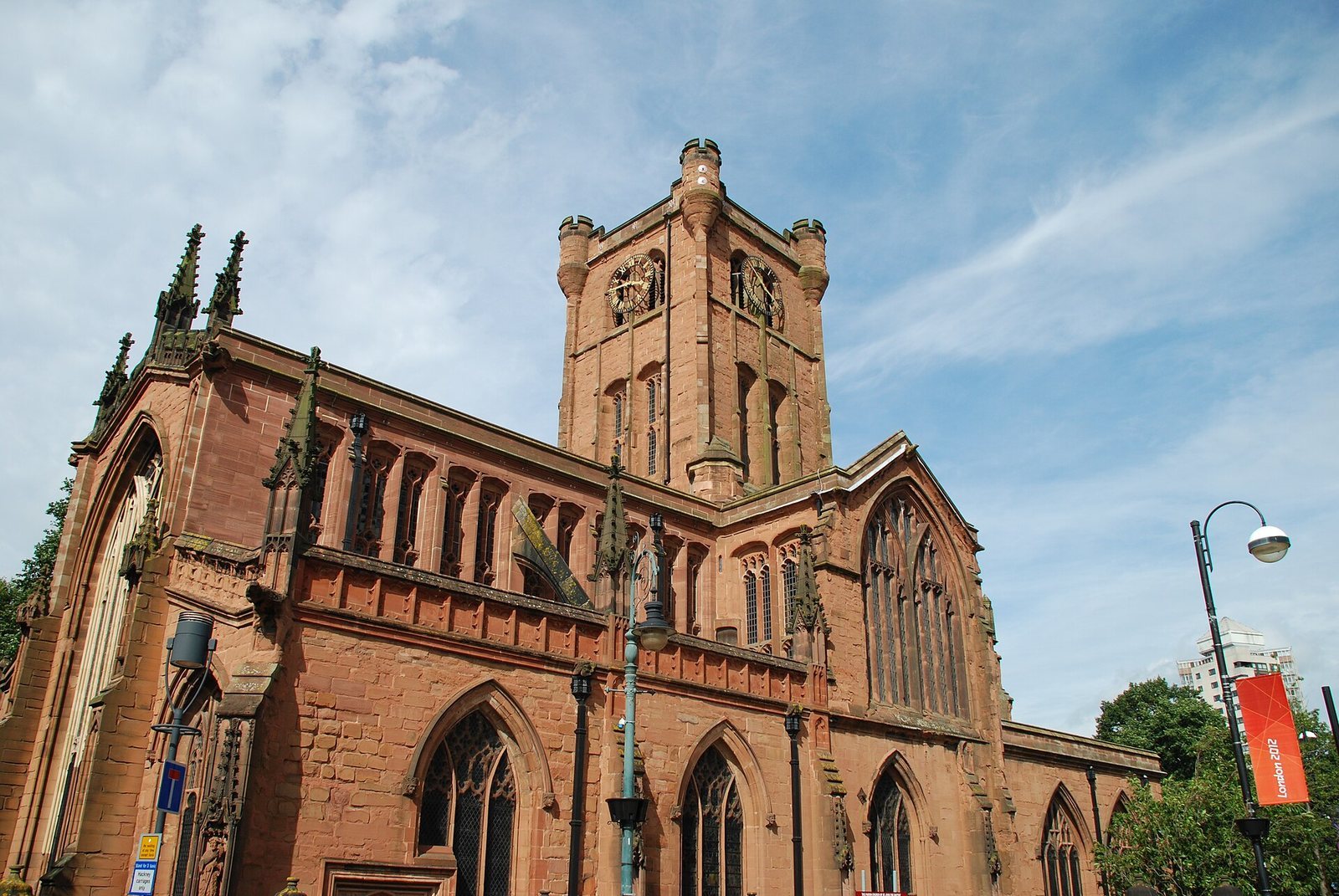
St John the Baptist Church is a medieval church in Coventry, United Kingdom, founded in 1344 by Isabella of France, queen consort of Edward II, as a chapel for the Guild of St John. It grew into an endowed collegiate church serving the guild and supporting prayers for the royal family.
Foundation and medieval growth
Isabella granted the Guild of St John land at Babbelak for a chapel dedicated to God and St John the Baptist. The guild, a lay association organized around shared religious activities, held its own services there. A chantry, an endowment for priests to celebrate Masses for particular people, was established with two priests to say Mass daily for the royal family. The chapel’s eastern part was ready for consecration on 2 May 1350, and its early dedication is also dated to 6 May that year.
Enlargements and endowments raised the chapel to collegiate status, meaning it was served by a body of clergy rather than only by a parish priest. The number of priests attached to the chantry increased to nine in 1393 and to twelve in the early 16th century.
Dissolution and changing uses
In 1548, the religious guilds were dissolved, bringing the Guild of St John and its college to an end. The priests received pensions ranging from £2 13s. 4d. to £5 6s. 8d.; five pensioners were still living in 1555. Worship at the church ceased around 1590.
During the English Civil War, a 17th-century conflict between supporters of the king and Parliament, the church was desecrated in 1648 and used to imprison Scottish soldiers captured at the Battle of Preston. It was later put to other uses, including as stables, a market, and a house for winding and dyeing cloth. In 1734, it was restored for worship.
Parish and present-day status
The church is an active Church of England parish in the Diocese of Coventry. Its worship follows the Anglo-Catholic tradition, which emphasizes Catholic practices and doctrine within Anglicanism, and reflects the influence of the 19th-century Oxford Movement, which promoted a recovery of Catholic traditions in the Church of England. The parish rejects the ordination of women as priests or bishops and has passed a resolution under the House of Bishops Declaration on the Ministry of Bishops and Priests, which provides alternative episcopal oversight for parishes with such objections. The parish receives this oversight from the Bishop of Oswestry and is associated with The Society, a Church of England body in the traditional catholic tradition. The church is a Grade I listed building, England’s highest category of listed-building protection.
Remains
In Coventry’s medieval Spon Street area, the church contains features attributed to its first guild chapel alongside later interior furnishings. The surviving evidence includes a wall and pier bases associated with the early chapel, as well as furnishings from the late 19th and early 20th centuries.
Medieval fabric
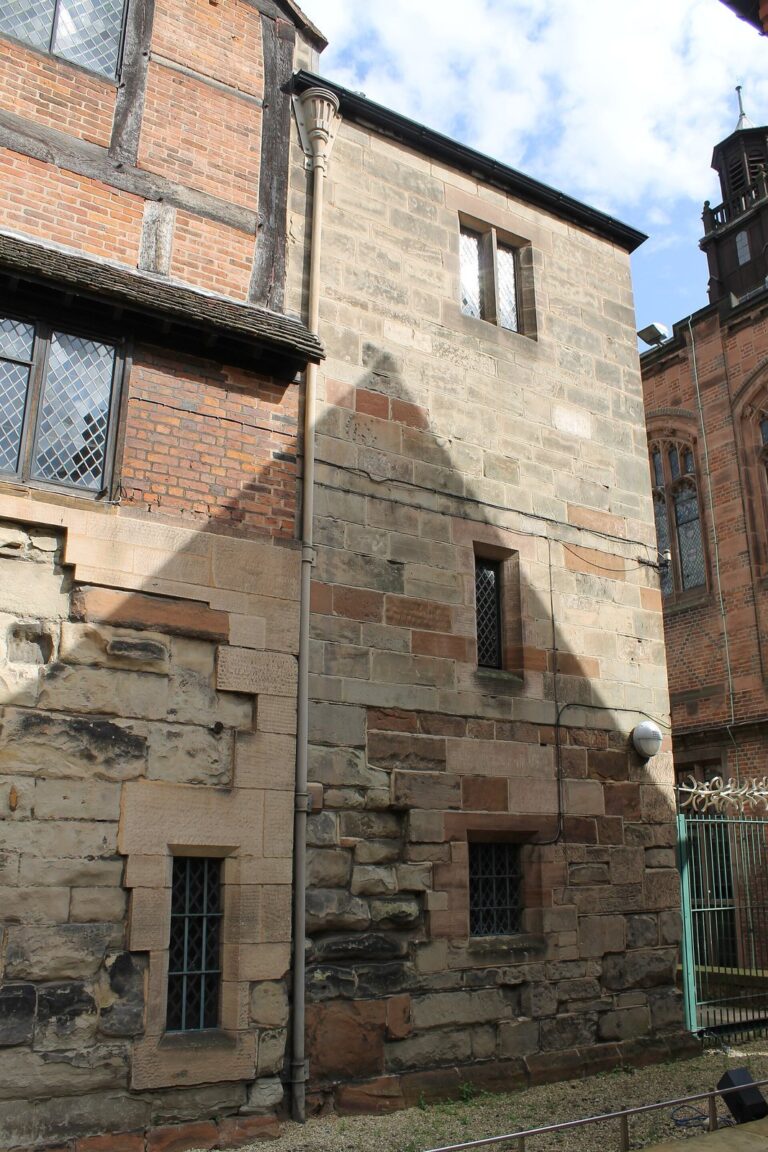
A wall running north to south through the middle of the chancel was uncovered in 1875 and is thought to have formed the east wall of the first guild chapel. Sir Gilbert Scott, a prominent 19th-century architect and church restorer, also considered two pier bases near the eastern tower to belong to that chapel.
Interior furnishings and devotional features
Rood screen and furnishings
Nearly all the church’s furnishings date from the late 19th or early 20th century and reflect the influence of the Oxford Movement. They include a carved rood screen, a partition between the chancel and nave, made in a late-medieval style.
South chapel reredos
The south chapel has a reredos, a decorated structure behind an altar, designed by Sir Ninian Comper, a British architect known for church work. Its central group depicts the Crucifixion.
Relic of Saint Valentine
The church possesses a relic of Saint Valentine of Rome, venerated as an early Christian martyr. In 2016, the relic was displayed on the altar in a reliquary, a container for a religious relic, during a Mass on Saint Valentine’s Day.