Wardley Hall: A Medieval Manor House and Bishop’s Residence
Site at a Glance
- Popularity
- Medium
- Country
- United Kingdom
- Primary era
- Early Modern
- Eras represented
- Medieval, Early Modern
- Civilizations
- English
- Site type
- Domestic
- Remains
- Manor House
On this page11 sections
History
Origins and early owners
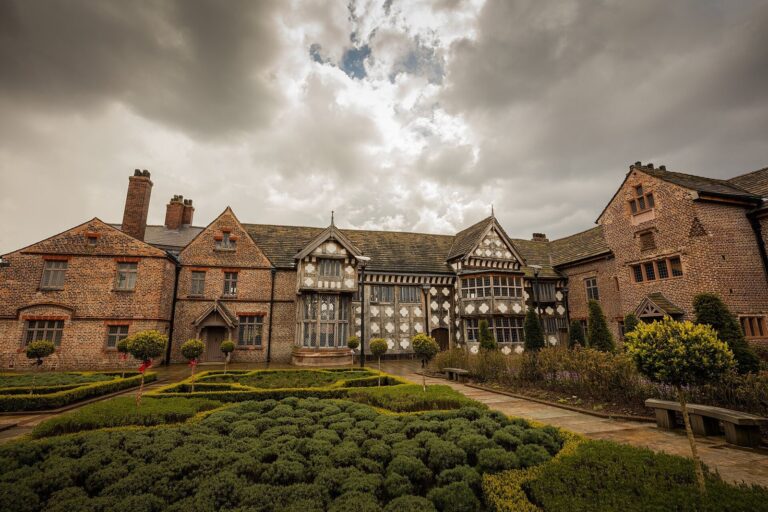
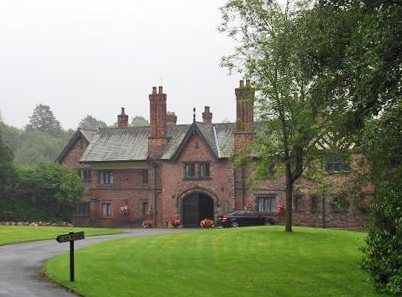
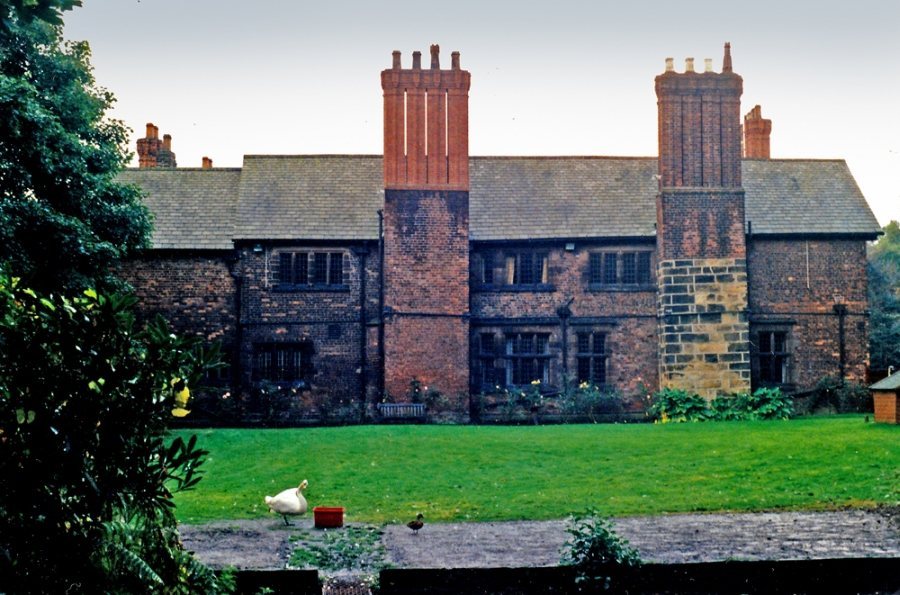
Wardley Hall is a medieval manor house in Worsley, within Salford, Greater Manchester, United Kingdom. Its present building dates to around 1500, and its construction is attributed to Thurstan Tyldesley. A moat surrounded the site by at least 1292.
The Tyldesleys, a Lancashire landowning family, held the hall until the late sixteenth century. In 1601, politician and lawyer Roger Downes bought it, and it remained in his family for three generations. By the early seventeenth century, it contained more than twenty bedrooms.
Ambrose Barlow and the skull tradition
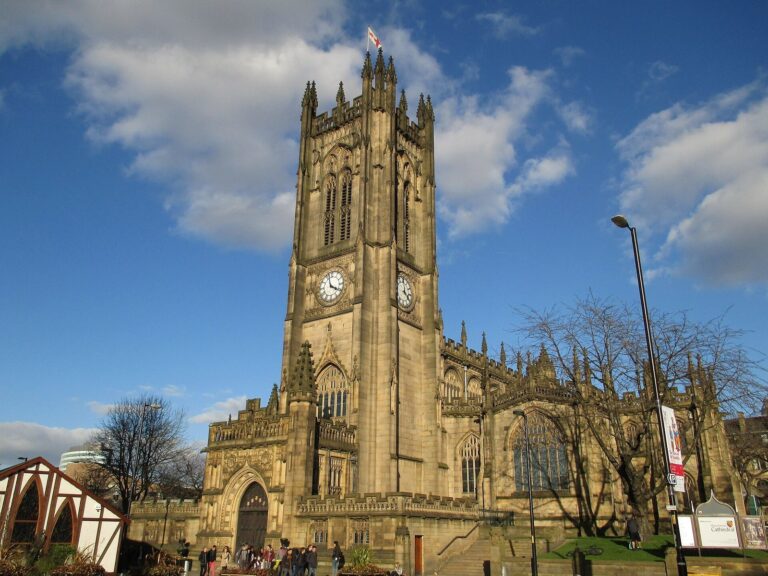
Ambrose Barlow, a Catholic priest and cousin of the Downes family, regularly visited the hall to celebrate Mass. In 1641, after Catholic priests were ordered to leave Britain on pain of execution, he refused to go. He was arrested after celebrating Easter Mass and executed on 10 September. He was hanged, disembowelled and quartered, then boiled in oil. His head was displayed on a spike outside Manchester’s Collegiate Church; a member of the Downes family later obtained his skull and brought it to the hall.
During renovations in 1745, the skull was found in a casket when a chapel wall was removed. It was reportedly thrown into the moat. After severe storms, the moat was drained and the skull returned to its former place. A tradition holds that moving it brings misfortune to the house; other stories associate it with unexplained activity and a scream.
The skull was once believed to belong to Roger Downes, who was said to have died in a drunken fight in which his head was severed. When Downes’s body was exhumed, his head was found intact, though a small piece of skull was missing. A forensic examination in 1960 estimated that the skull belonged to a man aged 50 to 60 and found a puncture consistent with a spike. The estimated age was also considered compatible with Barlow’s. In 1970, Pope Paul VI formally recognized Barlow as a saint, canonizing him alongside 39 other people who had died during the Reformation.
Later ownership and restoration
Restoration work took place in 1734. In 1760, Francis Egerton, who held the hereditary title of 3rd Duke of Bridgewater, bought the hall as part of a group of Lancashire estates. After his death, the estates were held in trust, or managed for designated beneficiaries, for his nephew George Leveson-Gower, 1st Duke of Sutherland, and George’s son Francis Egerton, 1st Earl of Ellesmere. Further restoration followed in 1894 and 1904, alongside extensive rebuilding during the nineteenth and twentieth centuries. Architect John Douglas carried out the major restoration of 1894.
Wardley Hall received Grade I listed status in 1966, a category in England reserved for buildings of exceptional architectural or historic interest.
From private ownership to the Bishop of Salford
Captain Thomas Nuttall, a British Army officer serving with the Royal Field Artillery in Germany, began living at the hall in 1919 or 1920 and bought it in 1924. When he learned that the planned East Lancashire Road would cut through the estate, he decided to leave. In 1928 he offered the hall to the Roman Catholic Diocese of Salford, but the diocese initially declined because of financial constraints.
Negotiations resumed when Nuttall’s representatives learned that the diocese was seeking land for a cemetery west of Manchester. On 12 May 1930, the diocese agreed to pay £7,500 for the surrounding land, while Nuttall gave the hall to the diocese on condition that it be preserved and used in keeping with its historic character. It has since served as the official residence of the Bishop of Salford.
Remains
The hall and its associated features
The hall has a four-sided timber-framed plan and a slate roof. Its surviving features include the Great Hall, a section of the surrounding moat, a chapel in the gatehouse north of the main building, and a niche at the top of the main staircase containing a skull associated with Ambrose Barlow.
Main house
The Great Hall is among the oldest surviving parts of the building and dates to the late fifteenth or early sixteenth century. Extensive rebuilding in the nineteenth and twentieth centuries altered the hall, while the major 1894 restoration was carried out by John Douglas.
Moat
A portion of the moat remains on the west side of the hall. It is the surviving part of the water-filled boundary that once surrounded the building.
Gatehouse chapel
A private chapel was built inside the gatehouse, the entrance building north of the hall. In 1561, Thurstan Tyldesley received formal permission for a private place of worship.
Skull associated with Ambrose Barlow
The skull is kept in a niche at the top of the main staircase. When it was found in a casket, it was described as having a good set of teeth and a considerable amount of auburn hair.