Church of St Michael and All Angels in Copford: A Norman-Era Church in Essex
Site at a Glance
- Rating
- 4.6
- Popularity
- Low
- Country
- United Kingdom
- Primary era
- Medieval
- Eras represented
- Medieval
- Civilizations
- English, Norman
- Site type
- Religious
- Remains
- Church
On this page7 sections
History
The manor and medieval church
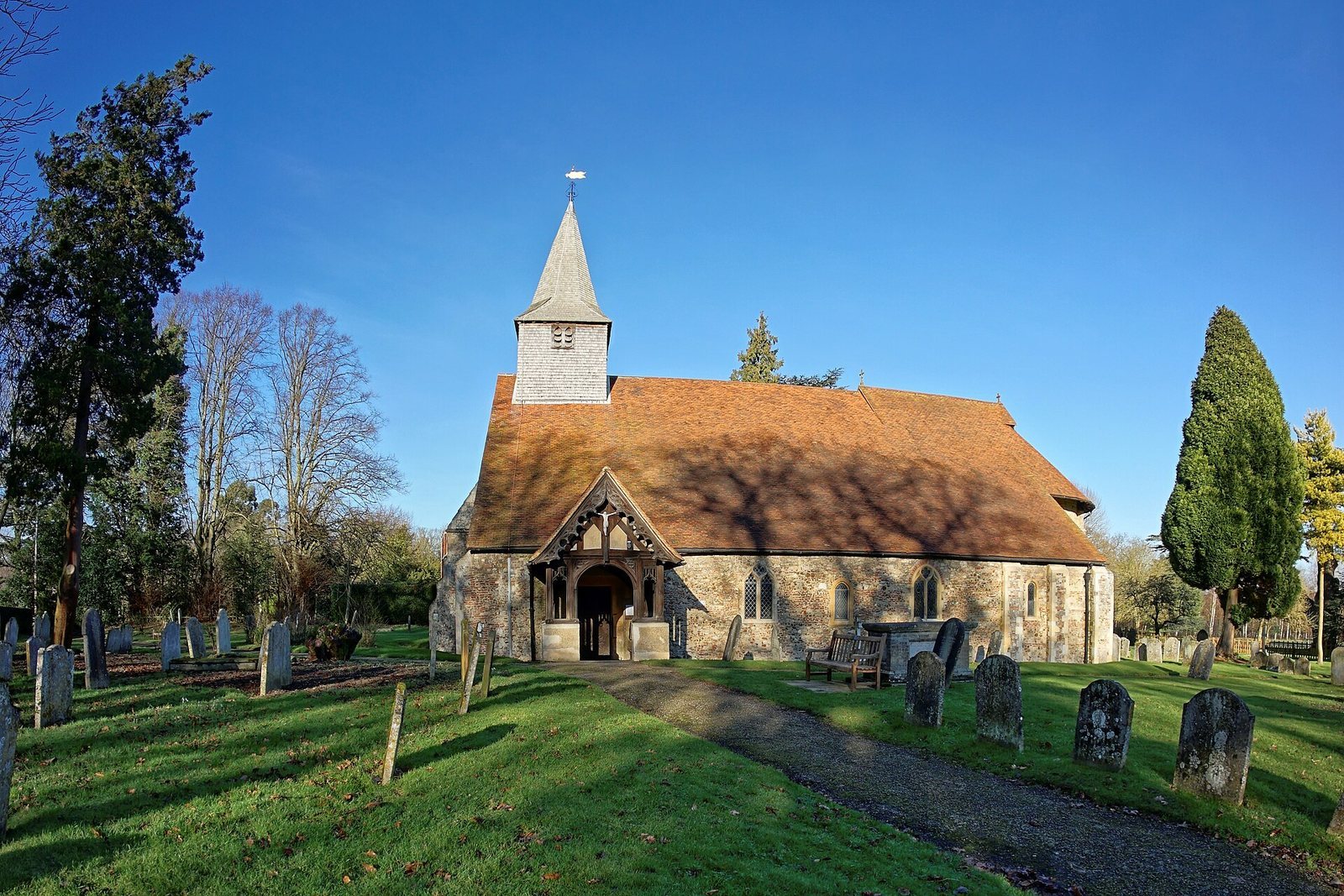
The Church of St Michael and All Angels in Copford is in Essex, England, and was built sometime after 1130 during the Norman period, which followed the Norman Conquest of 1066. Its early fabric reflects Romanesque architecture, with forms such as rounded arches and substantial masonry. The church probably began as a chapel serving the Norman manor at Copford Hall.
The Bishops of London received the manor of Copford in 995. During the Middle Ages they used the estate to administer the diocese and frequently held ordinations there. The church was first dedicated to St Mary, the mother of Jesus. Its dedication changed in the nineteenth century to St Michael and All Angels, referring to the archangel Michael and angels in Christian belief.
Reformation and later history
The estate remained with the diocese until 1559, when Edmund Bonner, Bishop of London, was ordered to resign. Elizabeth I had become queen the previous year. After the Reformation, the church’s wall paintings were covered with whitewash. They were uncovered in the late seventeenth century, then covered again. In 1871 the apse paintings were exposed and restored, and the nave paintings were restored in 1879. Further restoration of the paintings took place in 1931–32, the 1960s, and the 1990s.
The church is Anglican and belongs to the Diocese of Chelmsford, within the Archdeaconry of Colchester and the Deanery of Witham. It received Grade I listed status in 1965, the highest category of listed-building protection in England.
Remains
Plan and masonry
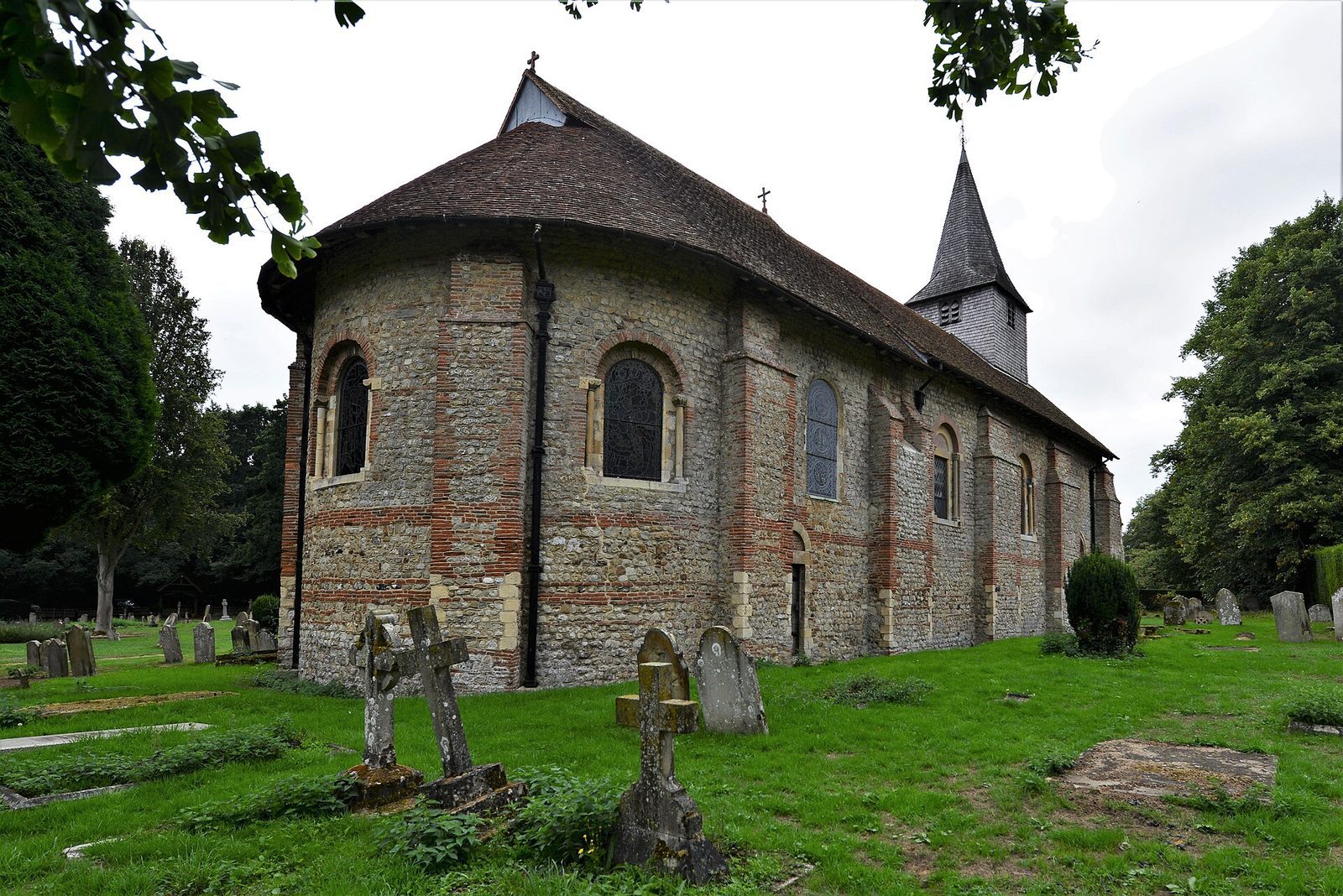
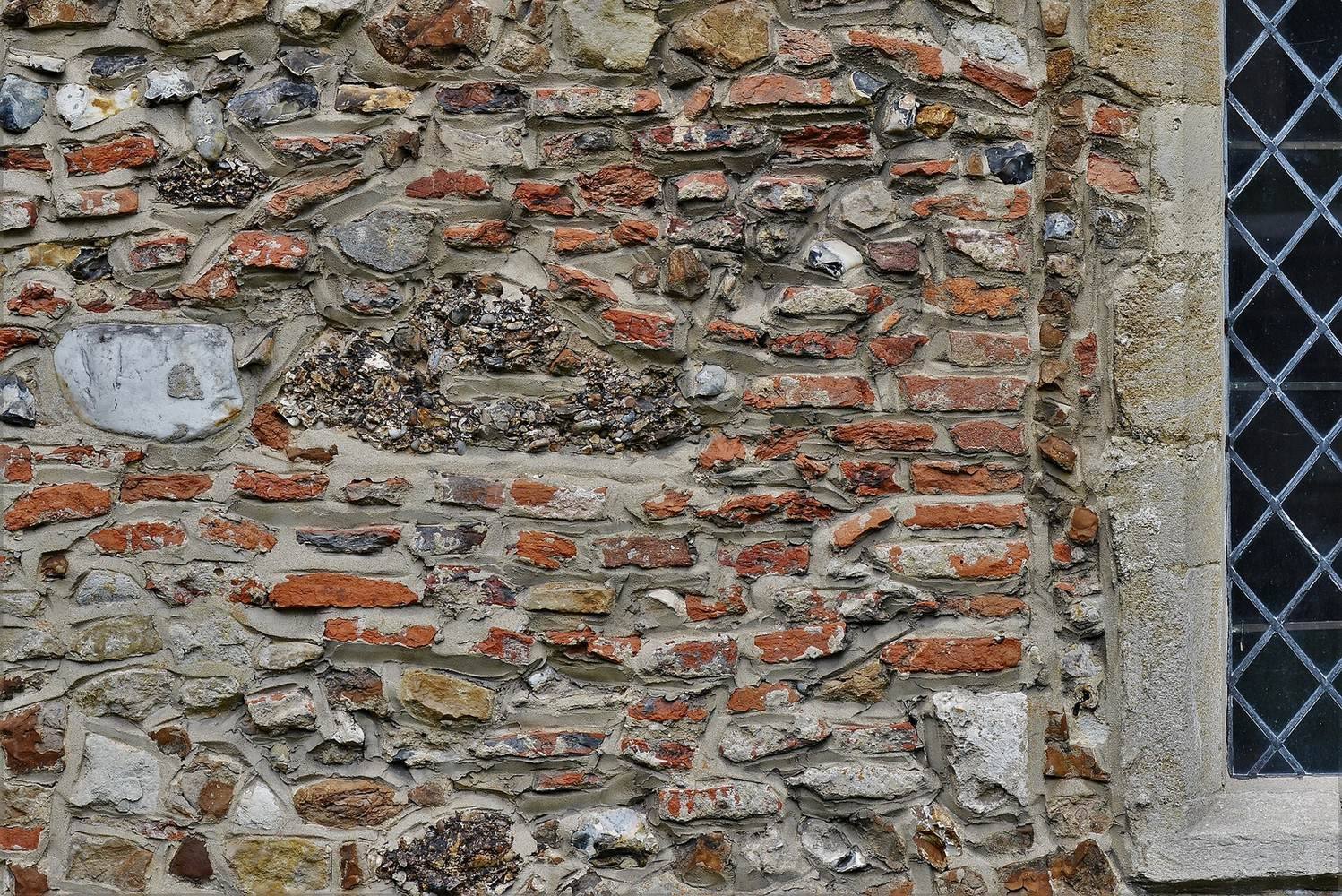
Much of the original Norman building survives, especially the apse and its stone semi-dome vault. The original plan included a semicircular chancel, the eastern part of the church around the altar, ending in an apse, the curved sanctuary end. The nave, the main space for the congregation, was arranged in three vaulted bays and originally had a barrel vault. The walls use roughly worked stone laid in regular horizontal courses, Roman bricks, and medieval bricks; the south side also contains stonework laid without regular courses.
A south aisle was added in the late thirteenth or early fourteenth century. Four arches in its south wall belong to different phases: one dates to the late twelfth century, another to the late thirteenth, a third may be fourteenth-century, and the fourth is modern.
Timber structures and screen
In the early fifteenth century, a timber structure replaced the nave’s original barrel vault. The western timber belfry, built in the late fourteenth century, has oak shingles and a spire. The south porch was reconstructed in the twentieth century. Inside, a Perpendicular-style rood screen separates the nave from the chancel. Perpendicular is a later English Gothic style distinguished by strong vertical lines, while a rood screen traditionally carries or supports a representation of the Crucifixion. The screen has five open divisions on each side of a central four-centred arch, an arch formed from four curves, with straightened, net-like tracery. Its cornice was restored in the nineteenth century.
Paintings, sculpture, and openings
The paintings in the vaulted apse show Christ within a mandorla, an almond-shaped halo, surrounded by angels and apostles. Painted figures extend across much of the nave and chancel. The apse arch carries zodiac signs, while other painted areas feature flowers, leaves, and scrollwork.
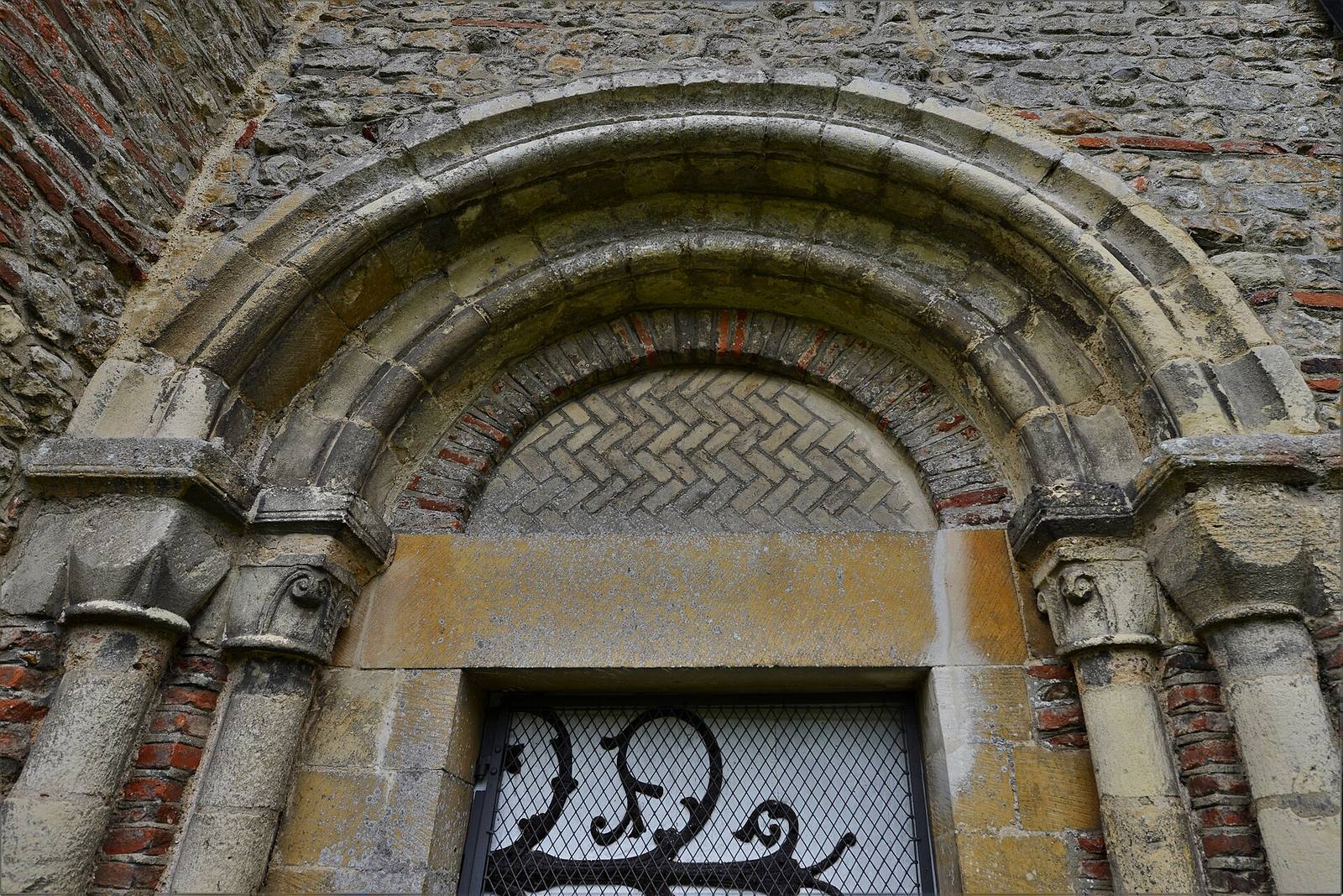
Romanesque sculpture appears around the two north doorways, the nave and apse windows, the apse arch, and the original stone baptismal font. The blocked north doorway retains several of its original hinges. A round-headed opening made with Roman bricks is set into the west wall. It may have provided access to an outside balcony used for a pulpit or for displaying relics.