Rittergut Bug: A Historic Manor Estate in Weißdorf, Germany
Site at a Glance
- Popularity
- Medium
- Country
- Germany
- Primary era
- Early Modern
- Eras represented
- Early Modern
- Civilizations
- Holy Roman Empire
- Site type
- Domestic
- Remains
- Castle
On this page12 sections
History
Rittergut Bug is a historic manor estate in Bug, now part of Weißdorf, Germany. Its early development is linked to fortified residences whose origins are uncertain, perhaps in the 12th century or later. These residences served lords responsible for clearing land, offering protection and displaying authority.
Fortified Origins
One castle stood on Bugberg, while another was located in the village. At Bug, the fortified sites may also have helped secure a long-distance road running via Weißdorf and Schwarzenbach an der Saale, as well as a ford across the Saale toward Wulmersreuth.
The village manor may have been destroyed either during a Hussite incursion in 1430 or in the Franconian War of 1523. The Hussite incursions were conflicts involving followers of the religious reformer Jan Hus; the Franconian War was a regional conflict in the early 16th century. The later unoccupied state of buildings and the devastation in the surrounding area are consistent with damage, but the cause is uncertain. The castle called Weytzndarff in woodcuts made by Wandereisen in 1523 may have been Rittergut Bug, though that identification remains unproven.
The Manor and Its Owners
The von Sparneck family held land at Bug from the early 14th century. The manor was rebuilt in the late 16th century, and a sheep farm was associated with it soon afterward. The Weißdorf branch of the family held extensive property there through 1590, repeatedly pledging the manor and its lands to the burgraves of Nuremberg, territorial rulers, and later to margraves, rulers of border territories. These arrangements led to temporary changes in who held the property.
In 1590, the related von Tettau family inherited the estate and nearby Burg Uprode, retaining them until the mid-17th century. The von Lindenfels and von Schönburg-Waldenburg families held the property in later periods.
The Castle and Nineteenth-Century Change
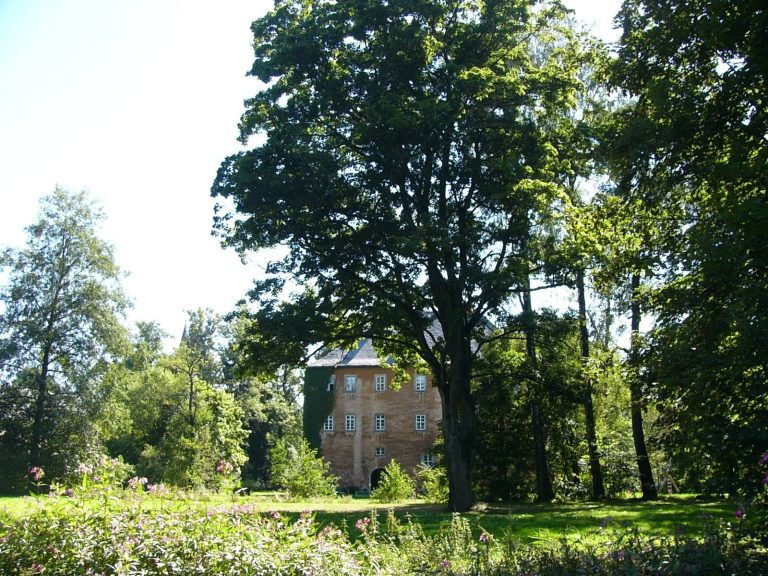
In 1783, Johann Georg August Friedrich von Lindenfels demolished the manor’s remains and built a castle nearby. Johann Wolfgang Döbereiner, a German chemist known for research on catalysis and early groupings of chemical elements, grew up there as the estate manager’s son.
By the early 19th century, the castle was dilapidated and divided into two halves, and its ownership changed. The property passed to the von Schönburg family in 1848. A fire destroyed the castle in 1884. Rather than rebuild it, the owners used the insurance payment to construct Jagdschloss Fahrenbühl, a hunting lodge. A treasure buried by the estate’s owners during the Thirty Years’ War, which lasted from 1618 to 1648, was found in 1881.
Wartime Enterprise and Later Use
During the Second World War, Otto Stritzel expanded an operation that combined sheep farming and weaving, employing as many as 300 people to produce high-quality textiles. His connections with the SS, a major Nazi organization, and its German Research Institute for Nutrition and Catering (DVA), which researched nutrition and food provision, contributed to the enterprise’s growth. Stritzel researched wool processing through the institute and held the SS officer rank of Obersturmführer.
With SS financial support, the estate became an SS model operation centered on a large craft weaving mill. Its work involved the re-bred Coburger Fuchs sheep and close contact with Franz Dreidax, an anthroposophist, or follower of a spiritual-philosophical movement, and a pioneer of biodynamic agriculture, a farming approach developed in connection with that movement. The operation closed for economic reasons in 1972. Lothar Ulsamer bought the estate in 1998 as its fortieth owner and incorporated it into a business that includes a neighboring sheep farm.
Remains
The physical remains and former sites extend across Bugberg, the village, and the present estate. They include the locations of early fortified residences, a surviving section of ditch, and later estate buildings with evidence of successive construction.
Early Fortified and Manorial Sites
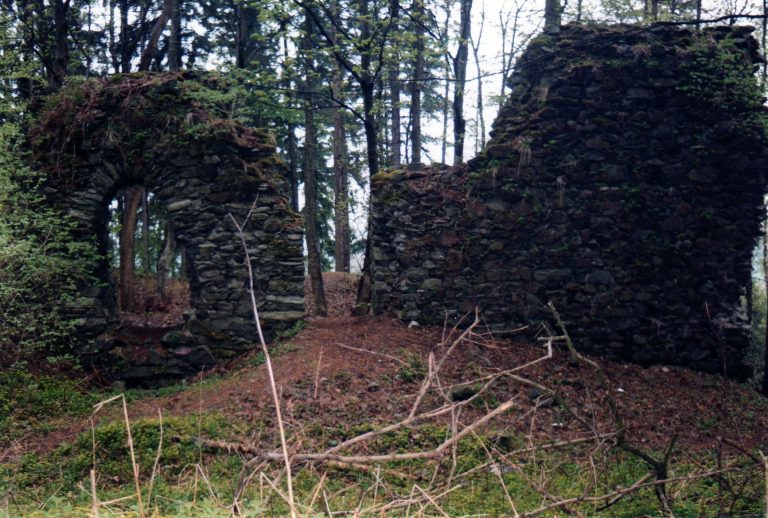
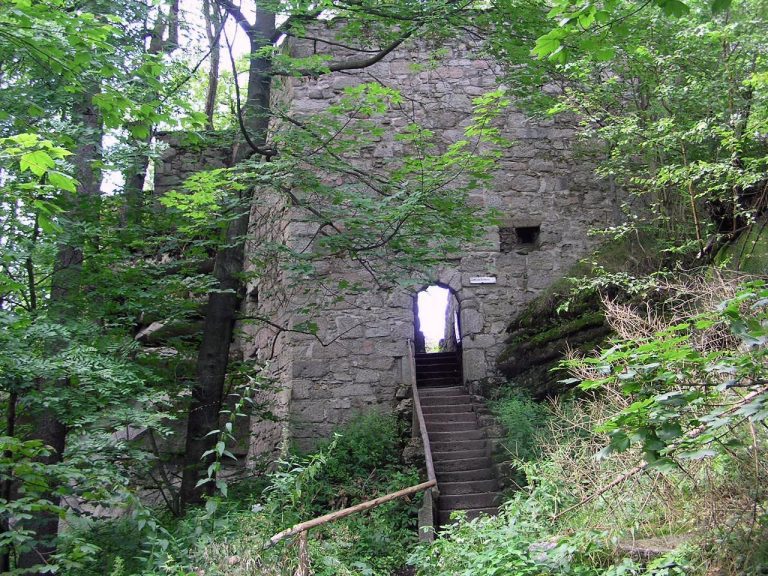
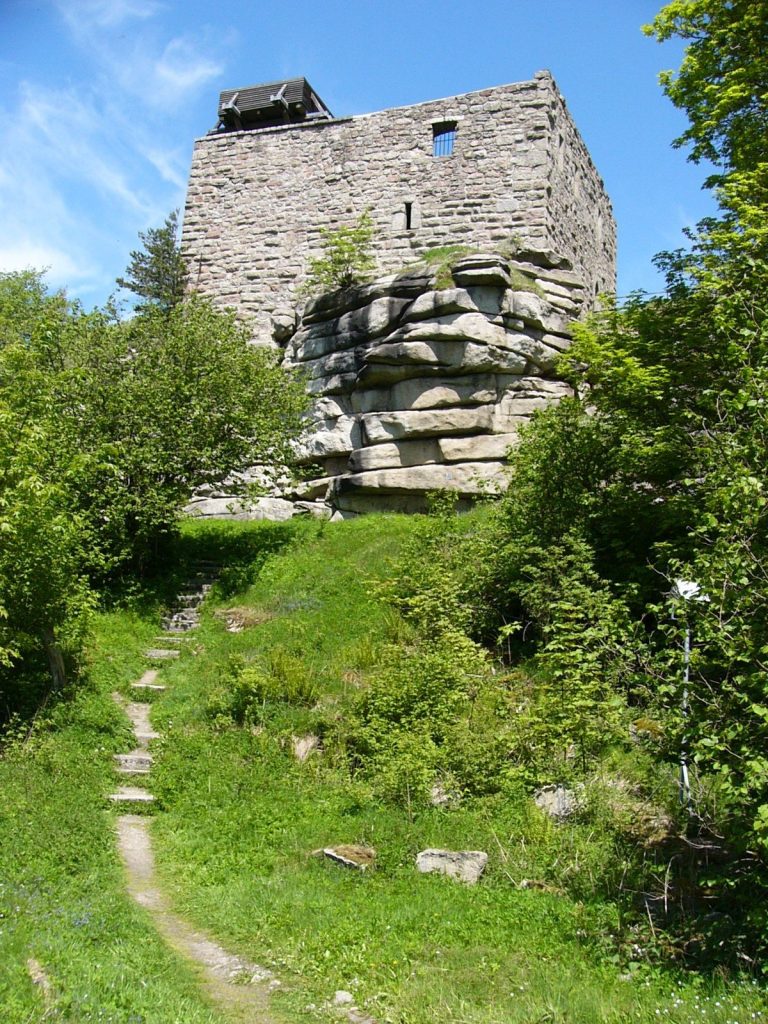
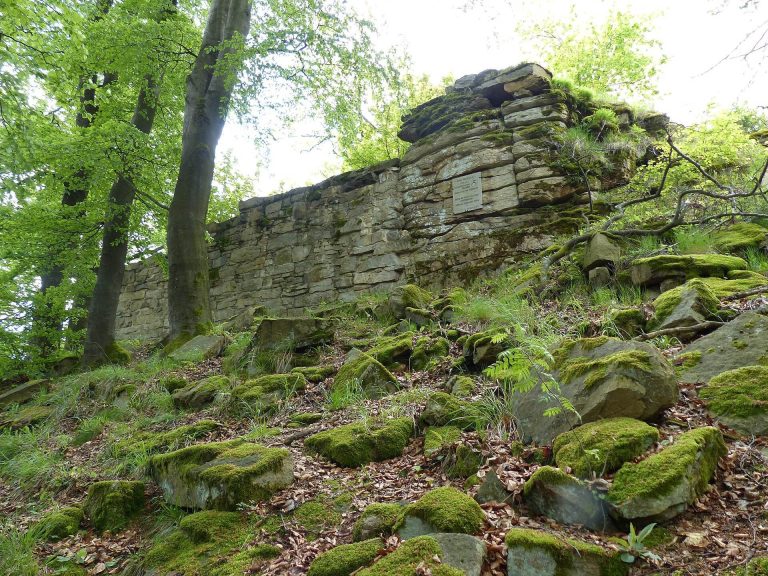
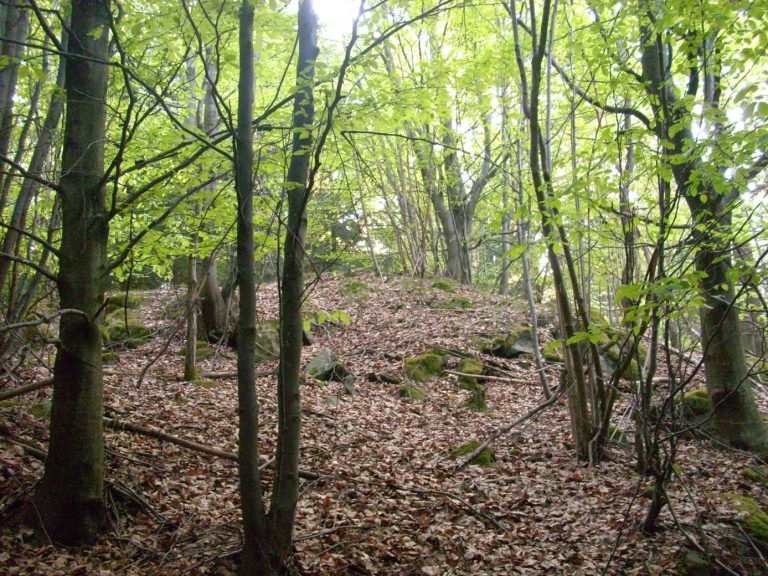
Motte Castle on Bugberg
The castle on Bugberg was a motte, a fortified residence built on a raised earth mound. Its date is uncertain; regional settlement history points to the 12th century or later.
Village Castle and Manor
The village castle stood across the road from the present estate. A playground was laid out on its former site in 1980, and a section of ditch survives to the northeast. The manor also lay across the road from the estate and comprised a farmstead and a mill. Its late-16th-century rebuilding reused stone from the earlier complex and from Burg Uprode.
A stone heated residence in the village, known as a Kemenate, was mentioned in 1502. The term refers to a heated residential room or building in a medieval stronghold.
Later Estate Buildings
Castle Remains
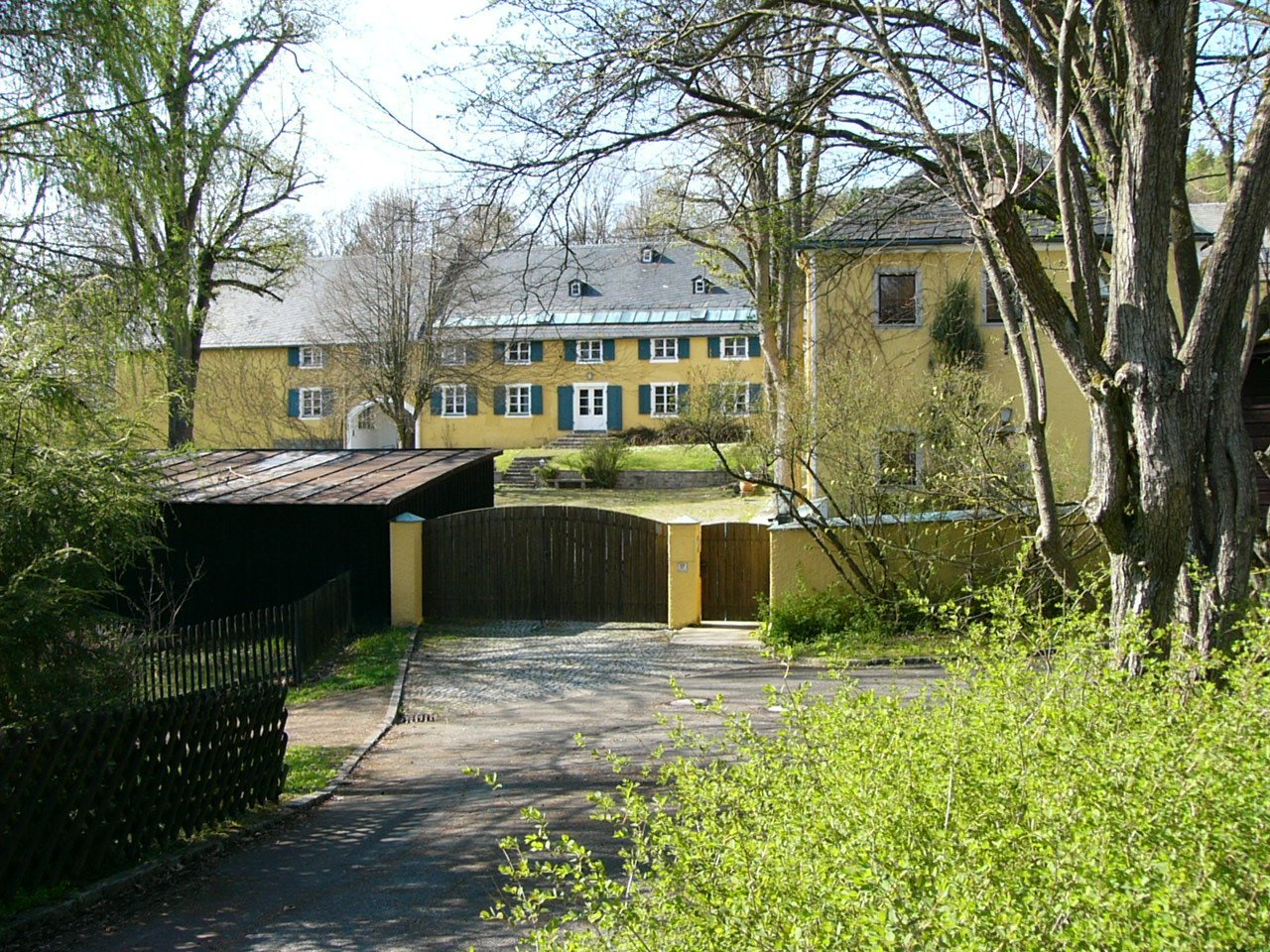
The late-18th-century castle stood close to the earlier manor site. Its south wing and a gatehouse remain; the gatehouse has since been structurally altered.
Outbuilding Vault
An outbuilding contains a cross-groin vault, formed by two intersecting barrel vaults resting on transverse arches. The vault was exposed in 1961 and dates to the 16th century. The estate continues as an extensive property.