Roman Baths of Amélie-les-Bains-Palalda: An Ancient Thermal Complex
Site at a Glance
- Popularity
- Medium
- Country
- France
- Primary era
- Classical
- Eras represented
- Classical
- Civilizations
- Roman
- Site type
- Sanitation
- Remains
- Baths
On this page10 sections
History
The Roman Baths of Amélie-les-Bains-Palalda are an ancient thermal complex in France, on the left bank of the Mondony. Human occupation appears to have begun in the Gallo-Roman period, and the baths were probably built after the first half of the first century CE. Their construction date remains uncertain. An earlier estimate, placing them between the reigns of Nerva and Commodus, is no longer accepted.
Roman baths and settlement
The baths were used during the Roman High Empire, the period before the crisis of the third century. They may have served a nearby settlement focused on bathing in the thermal waters. That settlement is thought to have stood lower in the Tech valley, where access was easier but the risk of flooding greater. The sulfur-rich spring water emerges at 63°C and was reputed to relieve rheumatism.
Among proposed identifications in ancient geography, Aquae Calidae, meaning “hot waters,” is considered the most plausible. A medieval geographical compilation places it between Ruscino, an ancient place-name, and the Pyrenees. The baths may have been abandoned in the third century, although the site seems to have remained in use during Late Antiquity, the transition from the Roman world to the early medieval period.
Monastery and church
A monastery was established within the baths’ precinct in 778. Dedicated to Mary, it was first called Santa Maria del Vallespir and later Santa Maria d’Arles. Benedictine monks, members of a monastic order, subsequently built a church there dedicated to Saint Quentin, a Christian martyr venerated as a saint. A charter issued by Charles the Bald, king of West Francia, refers to the church in 869.
The church was renovated in the eleventh and fourteenth centuries. It was demolished in 1932 to make way for the enlargement of the thermal establishment.
Later thermal use
The ancient baths were altered in the eighteenth century. After a long period of abandonment, reconstruction began in the nineteenth century, with major works starting in the 1830s. Alterations and expansions continued almost without interruption until 1940. The surviving remains were classified as a historic monument in 1905, and the thermal establishment remains in operation.
Remains
Two ancient rooms survive from the baths, the Great Roman Hall and the Pool Room. They stand above the Mondony’s narrow valley to the east and the wider Tech valley to the north, both about 30 metres below. The site is at an elevation of 250 metres, just upstream from the Mondony’s confluence with the Tech. Brick and limestone were used in the Great Roman Hall’s vault, while the pools had floors made of small bricks.
Surviving bathing rooms
Great Roman Hall
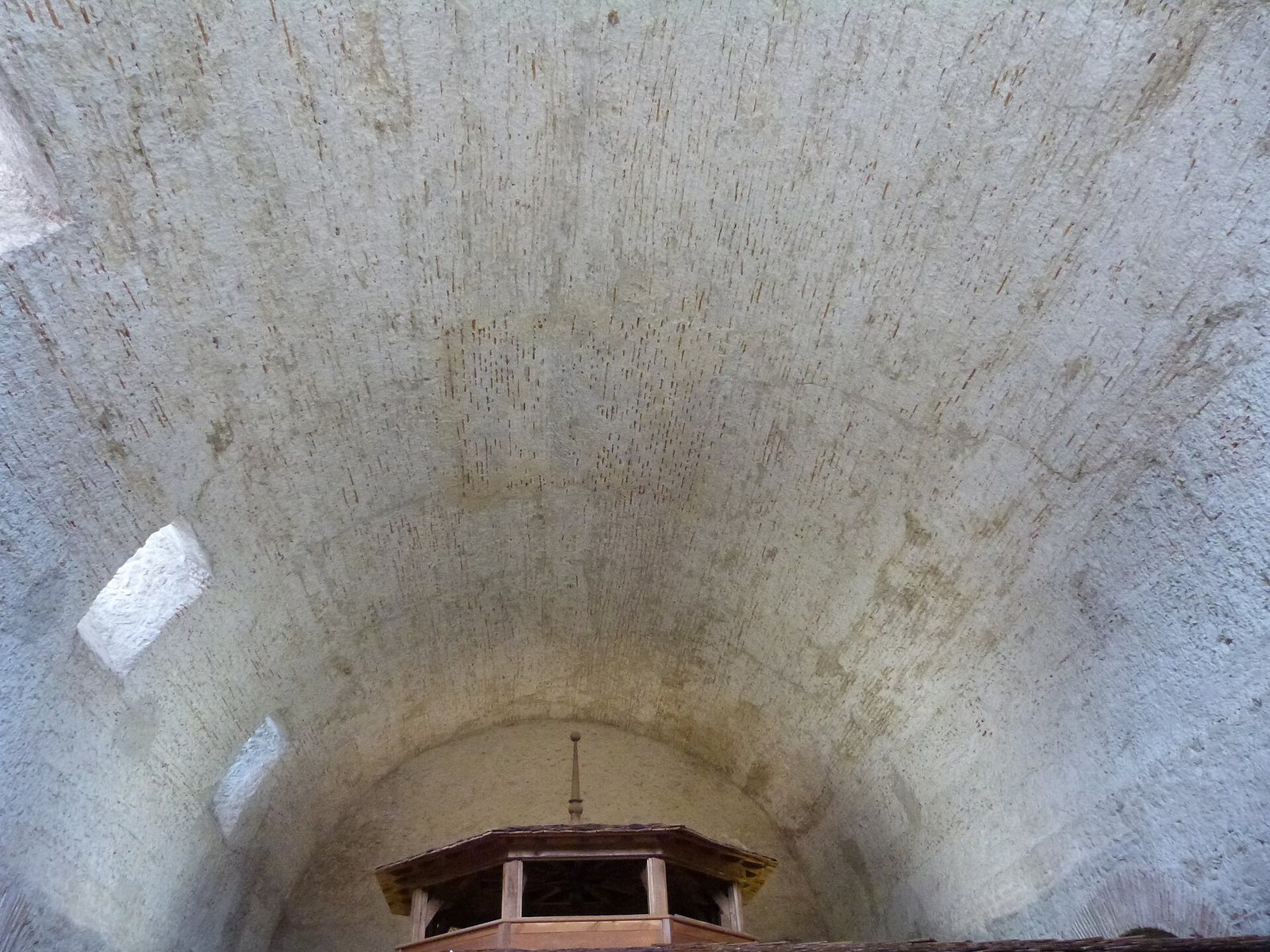
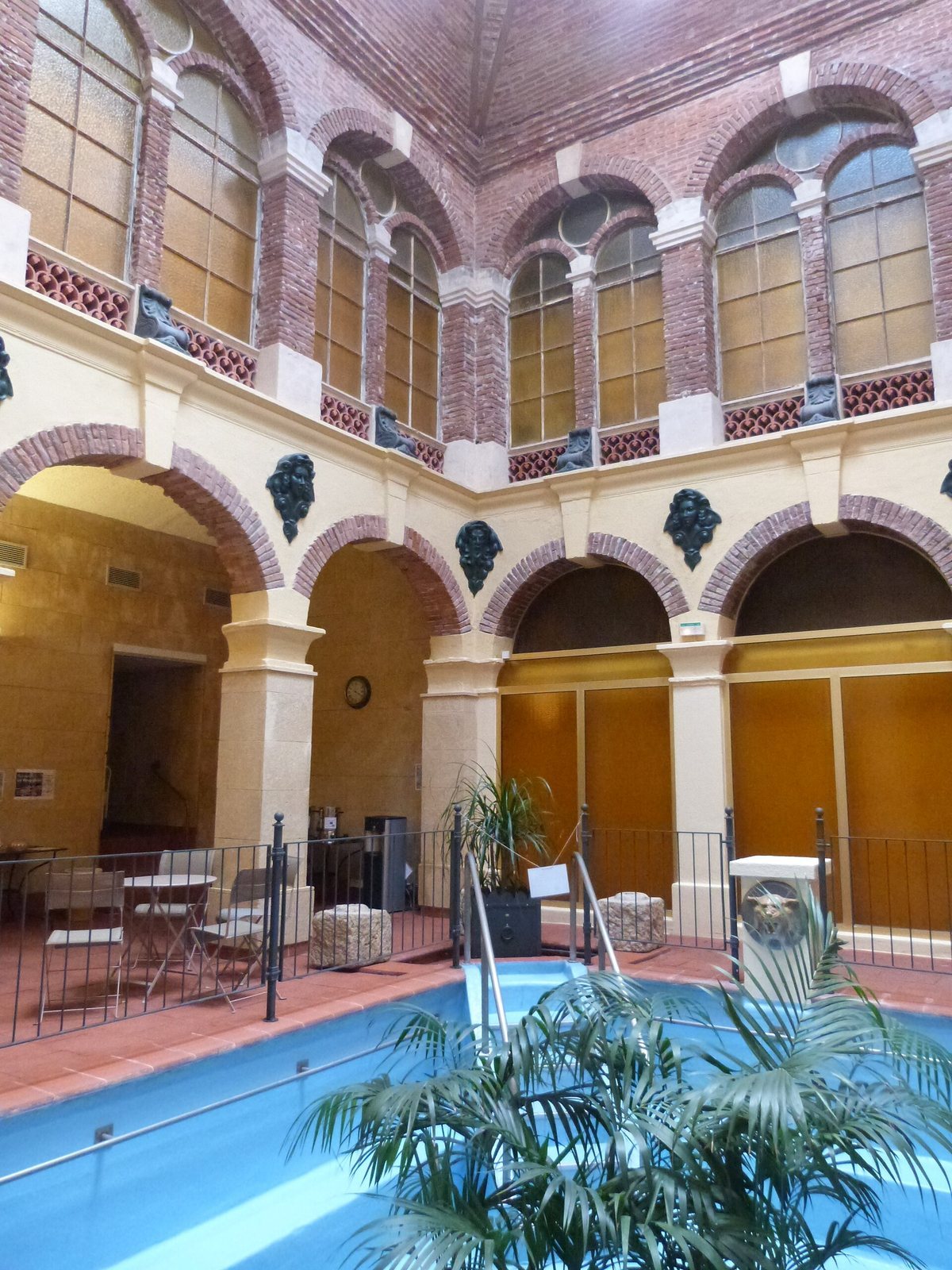
The Great Roman Hall measures 22.40 by 12 metres and rises 11.20 metres to the crown of its fully preserved barrel vault. Each long wall contains three niches, alternating between semicircular and rectangular shapes; their purpose is uncertain. Curved recesses also interrupt the short walls. Two entrances now face one another across the hall, although this may not reflect the original plan. The original doorway may instead have stood behind the rectangular niche on the north side.
A pool measuring 16 by 8.4 metres and two metres deep occupies the centre of the hall, though it has been filled in. Five steps led down into it and also served as benches. Its floor was laid with small bricks in a herringbone pattern.
Pool Room
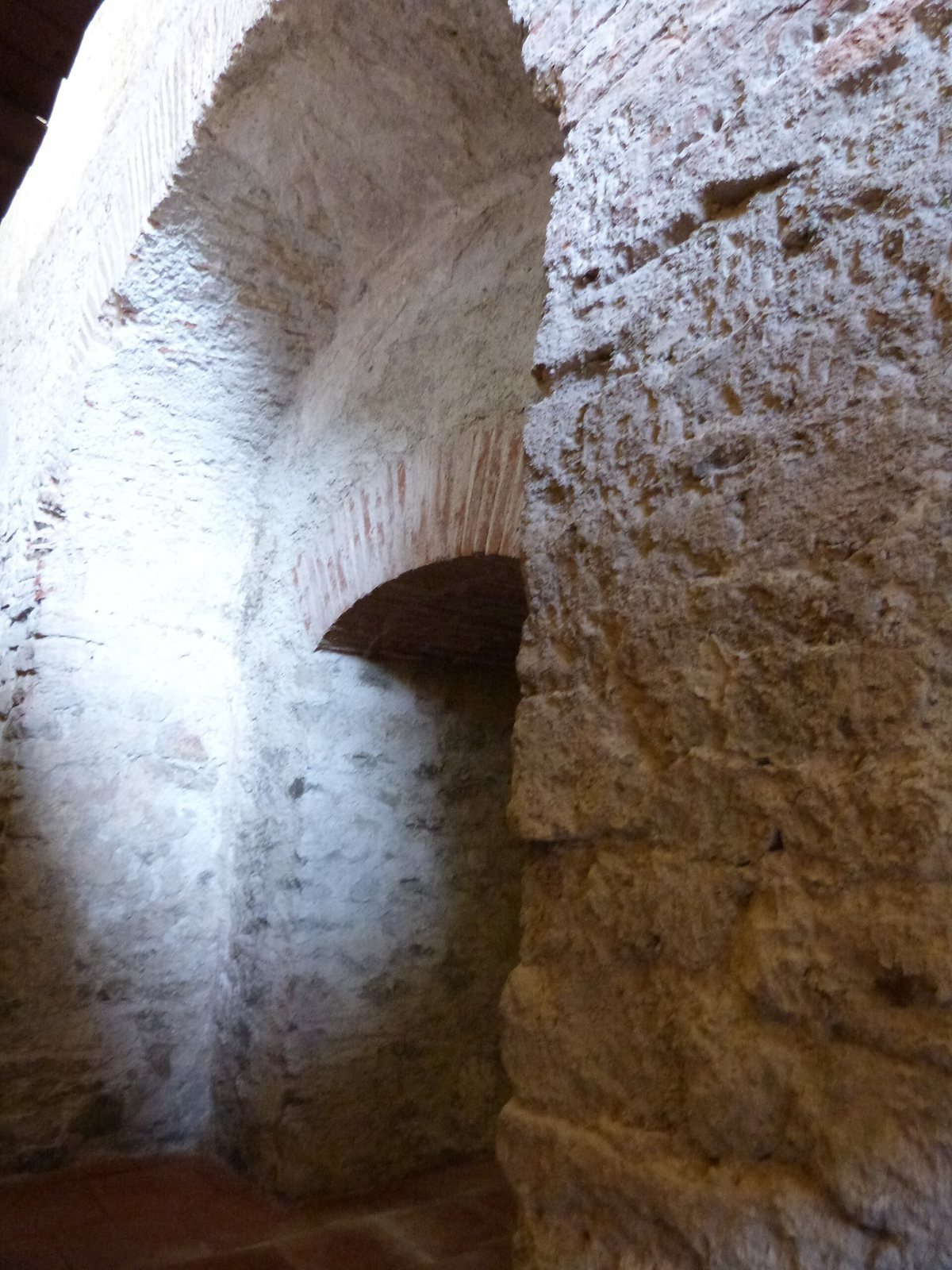
The Pool Room covers 122 square metres, excluding its peripheral annexes. Two doorways from the Great Roman Hall pass through small vestibules into the room. Its central pool covers 50 square metres and has a floor of small bricks. A gallery surrounding the pool contains 13 cells that may have served as individual treatment rooms. At least three, and possibly five, cells along the western end and northern side contain a bathtub or basin. One has a footbath at its entrance and two curved recesses.
The vault survives above the peripheral cells. Two openings in the eastern wall may have connected the room to another chamber in the area later occupied by the church of Saint Quentin.
Water supply and drainage
Hot water may have reached the baths from two wells tapping underground springs within the complex. Cold water seems to have been carried by aqueduct from a spring farther south. The drainage arrangement is known for the Pool Room’s small pool: a vaulted sewer carried its water to a collector running beside the wall between the two rooms. The collector may also have served other installations and probably emptied into the Mondony.
Proposed extensions
An unexcavated pool is thought to lie beneath Place Arago, northeast of the surviving rooms. Other ancient structures have also been proposed, suggesting that the bath complex extended across a larger area.