Bridgewater House: A London Residence in St James’s
Site at a Glance
- Rating
- 4.2
- Popularity
- Low
- Country
- United Kingdom
- Primary era
- Modern
- Eras represented
- Early Modern, Modern
- Civilizations
- British, English
- Site type
- Domestic
- Remains
- Elite Residence
On this page8 sections
History
Bridgewater House is a residence in St James’s, London, United Kingdom, whose present form was rebuilt to a design by Sir Charles Barry and completed in 1854. The house stands on a site first occupied by Berkshire House, built around 1626-1627 for Thomas Howard, the second son of the Earl of Suffolk. Howard served Charles I, then Prince of Wales, as Master of the Horse, a senior royal office responsible for the monarch’s horses and related arrangements. He later became Earl of Berkshire.
From Berkshire House to Cleveland House
During the English Civil War, the mid-seventeenth-century conflict between Royalist and Parliamentary forces, Parliamentary troops occupied the house. It later served as the Portuguese Embassy. After the Restoration, the monarchy’s return in 1660, Edward Hyde, 1st Earl of Clarendon, lived there. Barbara Villiers, a courtier and mistress of Charles II, also made it her home. When she became Duchess of Cleveland in 1670, the house took the name Cleveland House. She had the earlier building refaced and added wings.
The Egerton family and the galleries
After passing to a property speculator, the house was sold in 1700 to John Egerton, 3rd Earl of Bridgewater. It remained in the Egerton family for about a century. On John’s death in 1701, his son Scroop inherited the property. Scroop became the 1st Duke of Bridgewater after 1720; his sons John, the 2nd Duke, and Francis, the 3rd Duke, followed him. Francis built wealth through the Bridgewater Canal, developed mainly to carry coal. When he died without children in 1803, his estates passed to his nephew George Leveson-Gower, 2nd Marquess of Stafford, with the inheritance then destined for George’s younger son, Lord Francis Leveson-Gower.
The family opened its painting collection to visitors in 1803. During the summer, acquaintances and artists recommended by the Royal Academy, a British institution for promoting and exhibiting art, could attend on Wednesday afternoons. The visiting season initially lasted four months and was later shortened to three. While George lived at Cleveland House, he became Duke of Sutherland. In the late 1820s he acquired the leasehold of nearby York House, later known as Stafford House and then Lancaster House. Lancaster House served as the London residence of the senior male-line branch of the family until 1912.
Lord Francis inherited Cleveland House in 1833, became Earl of Ellesmere that year, and changed his surname to Egerton. In 1840 he commissioned Sir Charles Barry to redesign the residence. The rebuilding was completed in 1854, and the house became known as Bridgewater House.
War damage, restoration, and later ownership
The Ellesmere family continued to use Bridgewater House as its London home until 1948, when John Egerton, 5th Earl of Ellesmere, sold it to the Legal & General Assurance Society. A bomb in the street during the Second World War had badly damaged the building and stripped it of fittings. Robert Atkinson and Partners restored the house in 1948-1949, after which it was adapted for offices.
Yiannis Latsis bought the property in 1981 for £19 million and undertook extensive restoration. A thorough renovation in 1999 brought architectural features back into view after they had been obscured by the office conversion. Bridgewater House remains owned by the Latsis family. The house received Grade I listed status in 1958, the highest category of listed-building protection in England; its garden-front walls and terraces have separate Grade I listings.
Remains
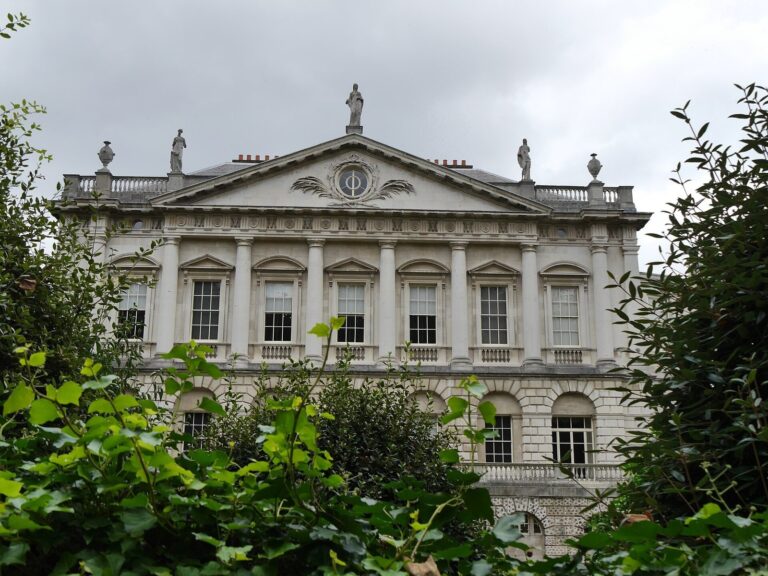
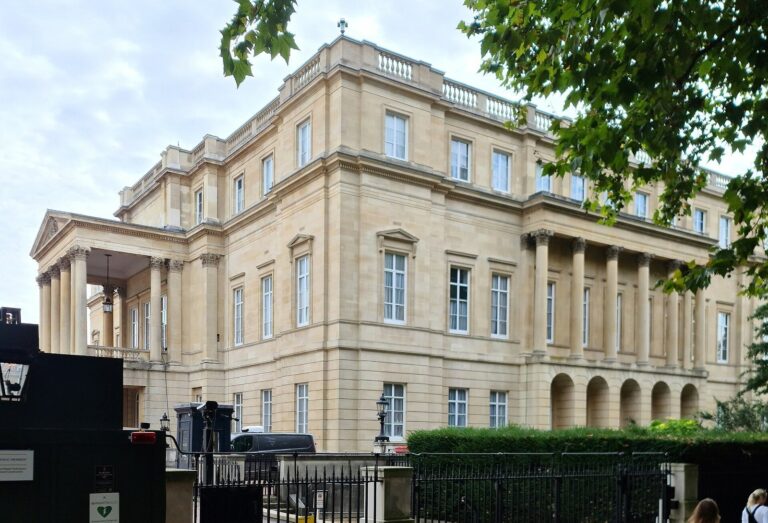
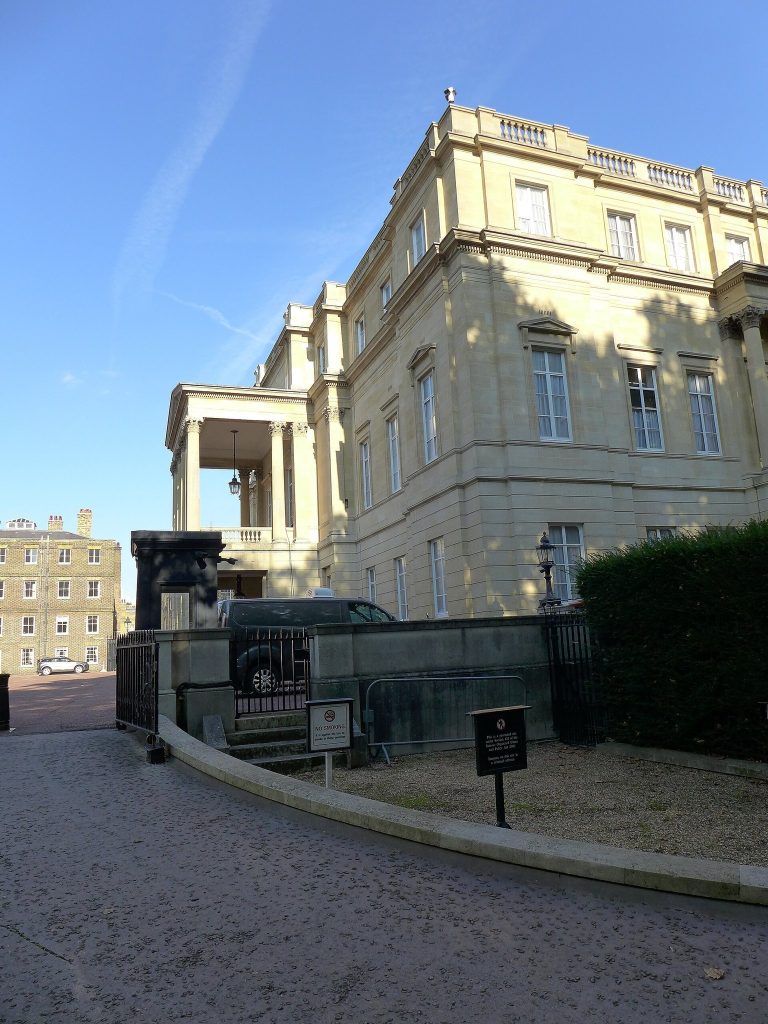
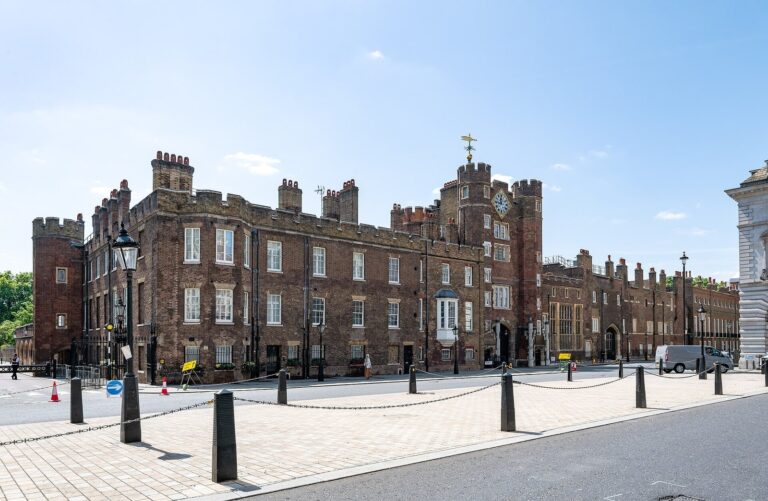
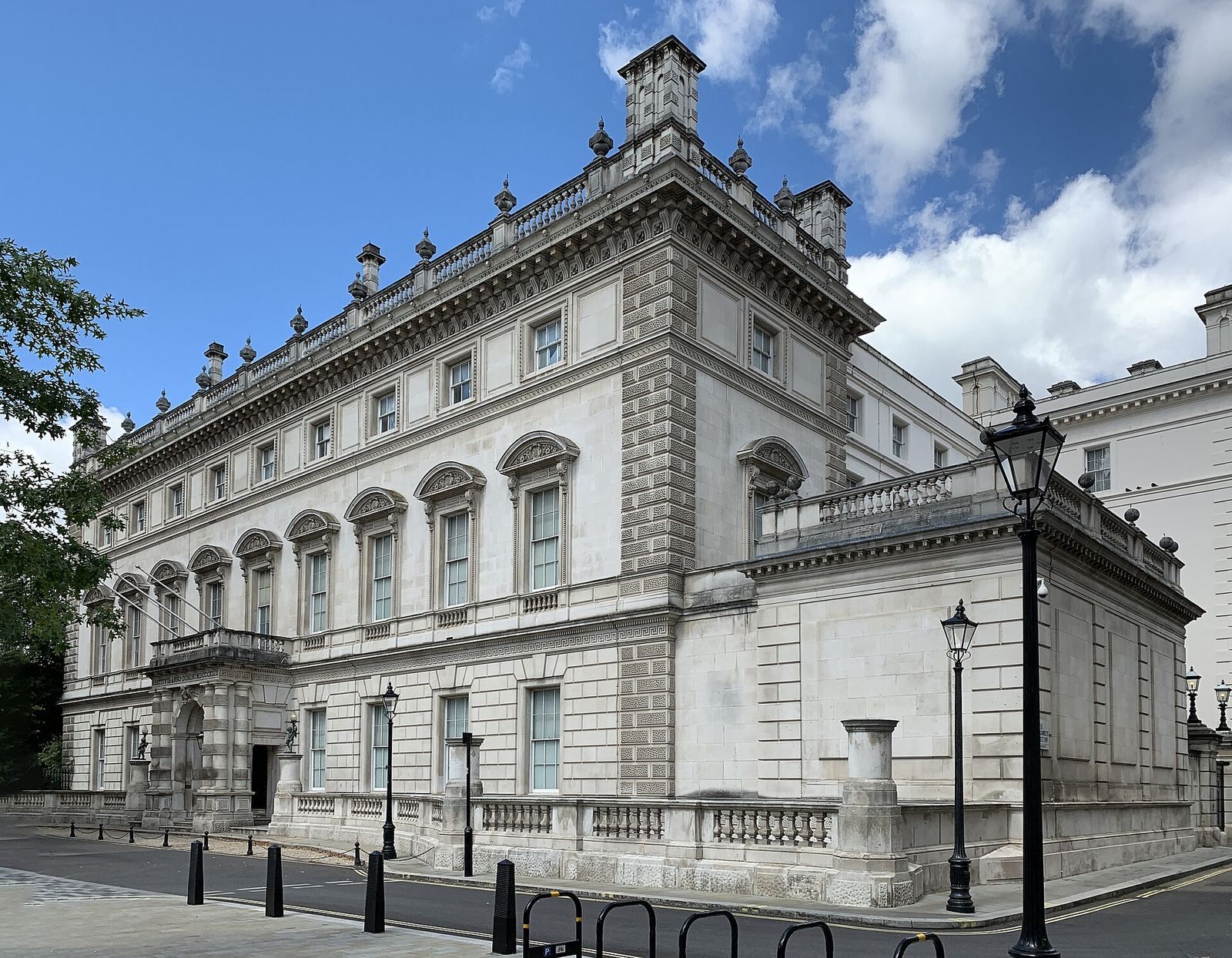
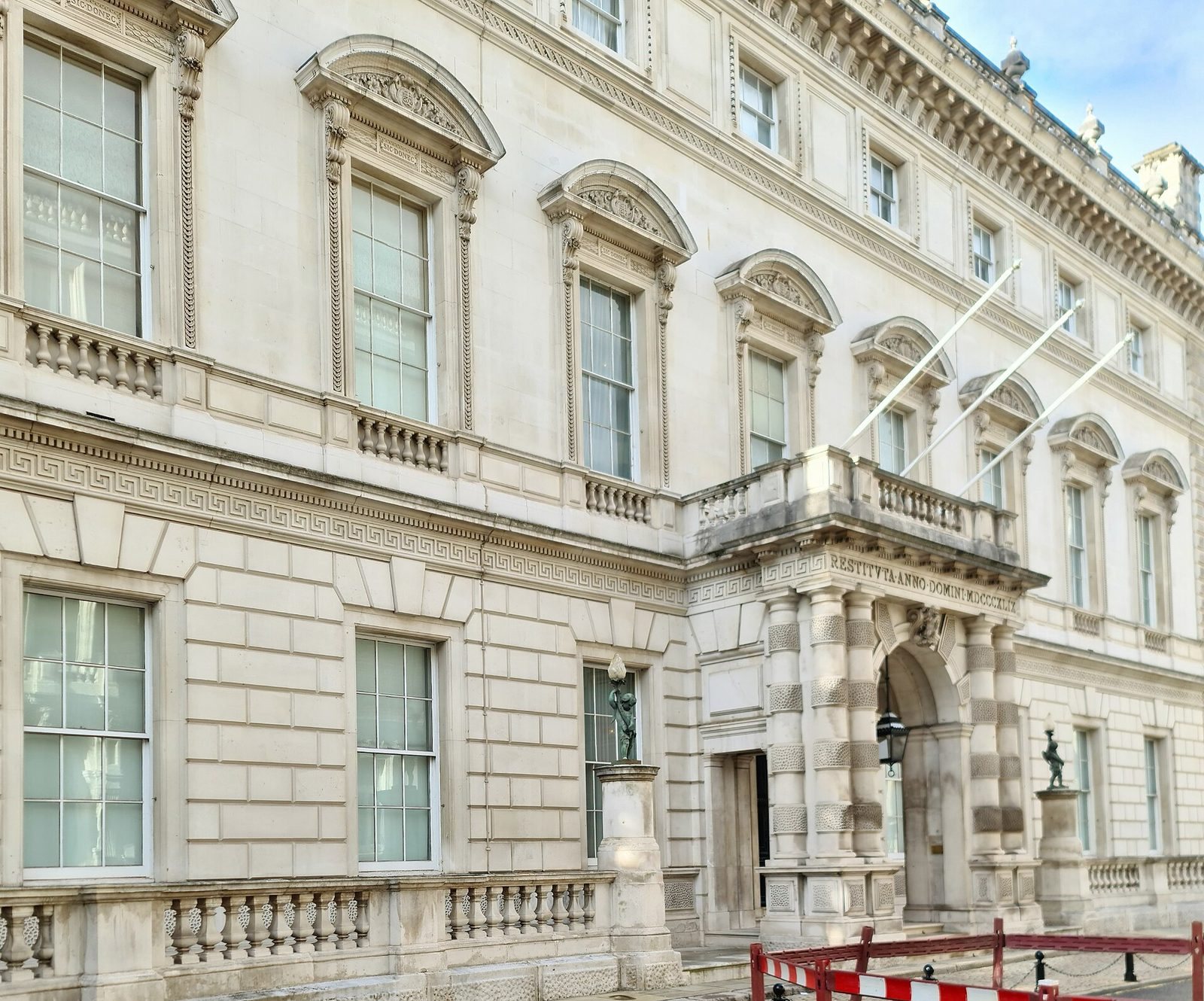
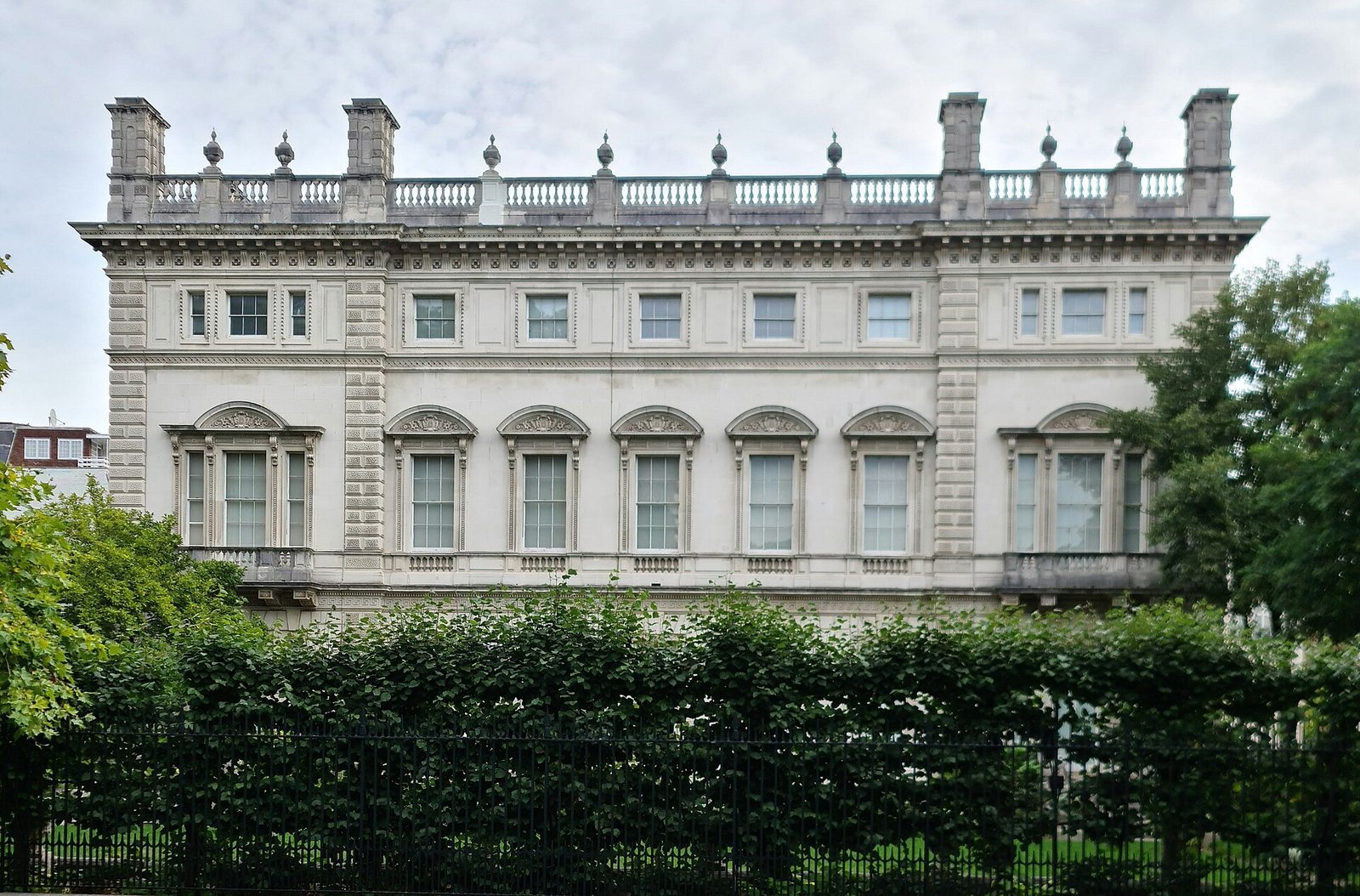
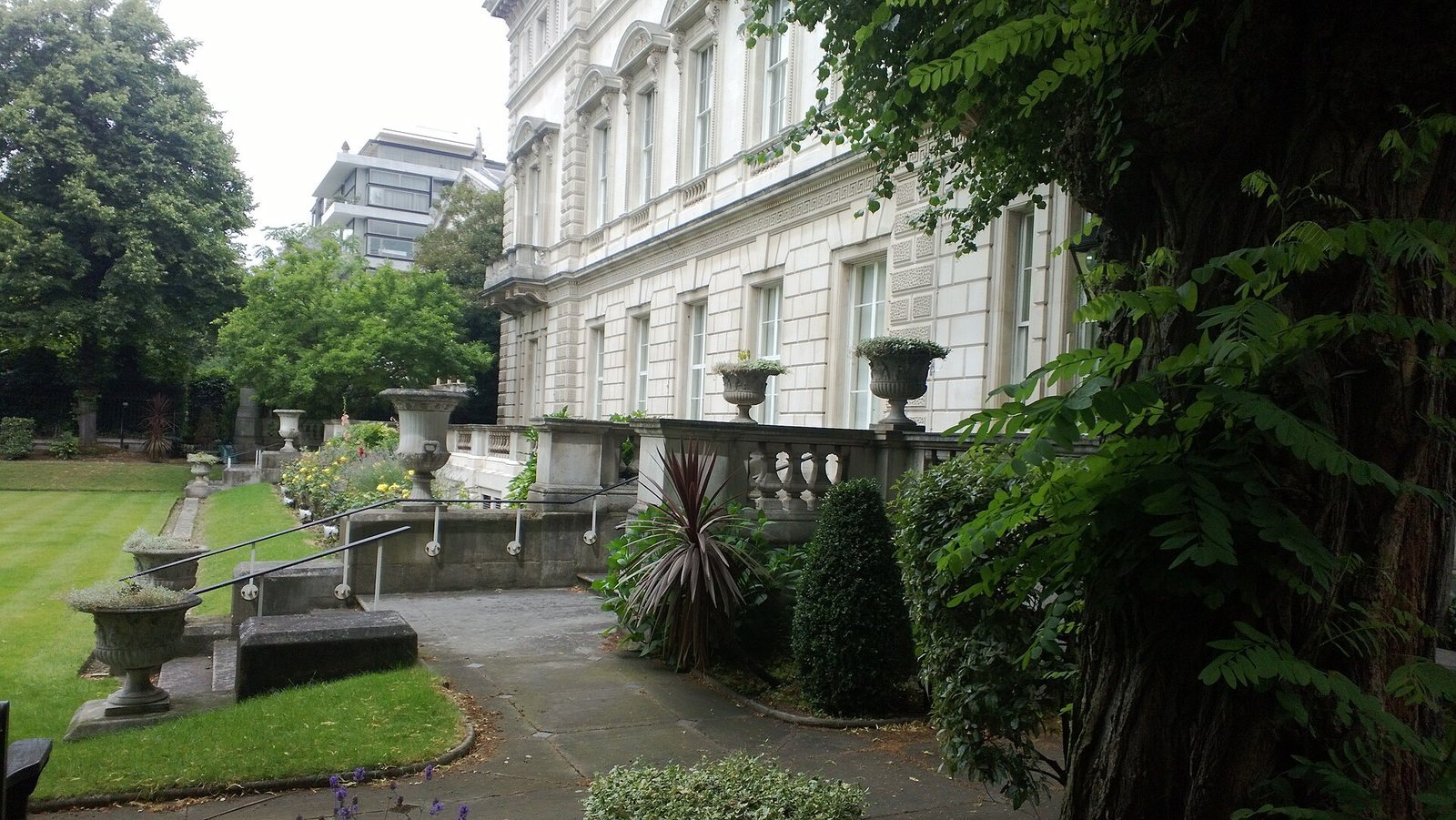
The house occupies a site between Little Street, Cleveland Row, and Little St James’s Street, beside St James’s Palace and overlooking Green Park. Its rebuilt form draws on Italian Renaissance palaces. The main building has three storeys above a basement, with Bath stone, a pale limestone quarried near Bath, and a slate roof. Two projecting sections flank the front, and a balustrade runs along the roofline. Roughly finished stonework marks the basement; other masonry carries irregular, wormlike carved patterns. On the first floor, window bays have curved pediments resting on projecting supports. The side sections contain two-bay window groupings arranged like a Serlian composition, with a central arch flanked by narrower openings, but with the central opening represented as a window rather than left open. Garden-front walls and terraces face Green Park.
Galleries and paintings
Stafford Gallery
The extension to Cleveland House made for George Leveson-Gower in 1803-1806 was designed by Charles Heathcote Tatham to accommodate the Stafford Gallery. It provided space for paintings belonging to the family.
Bridgewater Gallery
Paintings were also displayed at Bridgewater House in the Bridgewater Gallery. The collection included about 70 works from the Orleans Collection, assembled by the French Orléans family; some are now part of the Sutherland Loan, a group lent to the National Gallery of Scotland. Charles I Insulted by Cromwell’s Soldiers, a painting thought lost in a Second World War air raid, was rediscovered in 2009.