Castrum Argamum: An Ancient Greek Settlement and Roman Coastal Fort in Romania
Site at a Glance
- Rating
- 4.5
- Popularity
- High
- Country
- Romania
- Primary era
- Classical
- Eras represented
- Iron Age, Classical
- Civilizations
- Ancient Greek, Byzantine, Roman
- Site type
- Settlement
- Remains
- City
On this page12 sections
History
Greek foundation and written record
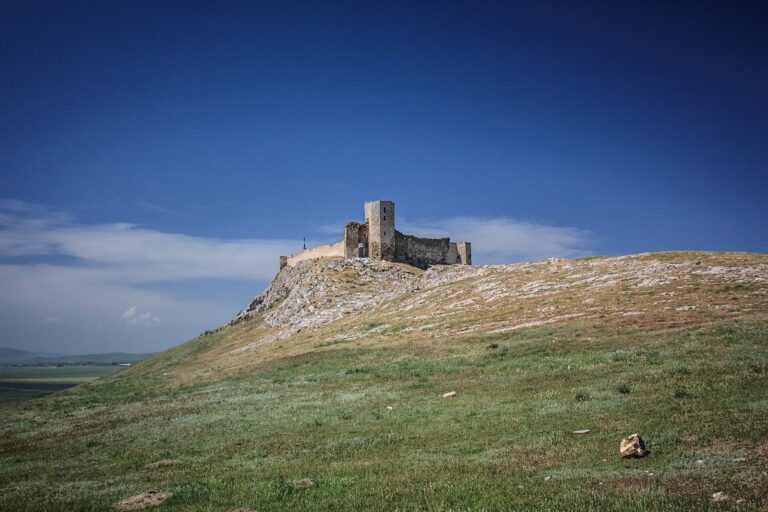
Castrum Argamum is the archaeological site of an ancient Greek settlement and later Roman coastal fort at Cape Dolosman in Romania, founded by Greek colonists around the middle of the seventh century BCE. Its Greek name was Orgamè, while Argamum was the Latin form. Argamon appears in Byzantine usage, and Orgame in Genoese usage. A fragment by Hecataeus of Miletus, an ancient Greek writer and geographer, names the settlement in the early sixth century BCE. It is identified as the earliest settlement in present-day Romania attested in an ancient written source.
Greek legend associated the place with the Argonauts’ return voyage after winning the Golden Fleece. In the story, they passed the site while pursued by the fleet of Aeetes, the mythical king of Colchis and father of Medea.
Roman rule and maritime role
The settlement came under Roman rule in the first century CE and became a port of call on the sailing route between Byzantium, later known as Constantinople, and Tyras, an ancient city on the Black Sea coast. It prospered and developed for about five centuries. A nearby coastal fort belonged to Moesia, a Roman province in the Balkans.
Fifth-century decline
The settlement ceased to exist in the fifth century CE. Invasions by Goths, Huns, Avars, and Slavs added to insecurity. A coastal barrier known as the Island of Wolves also closed the Gulf of Argamon, turning it into a lagoon unsuitable for larger ships. The inhabitants are thought to have moved south, toward Histria, Tomis, Callatis, or Constantinople.
Identification and investigation
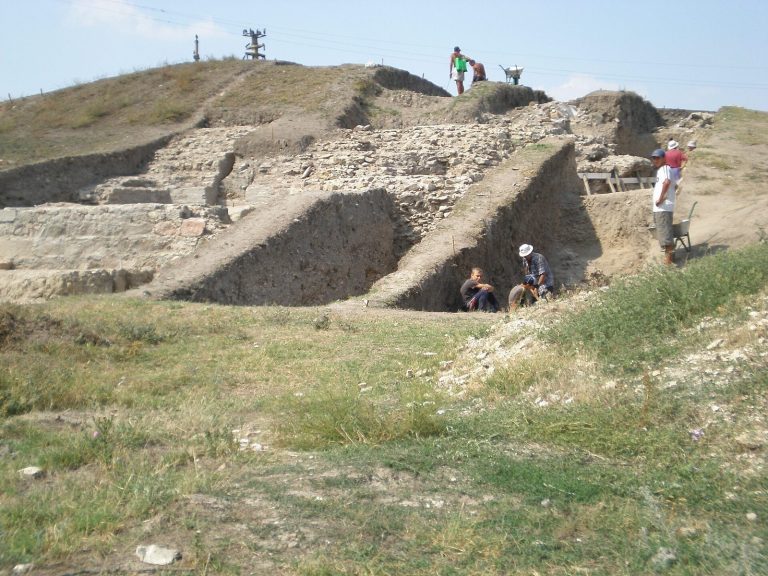
Romanian historian Vasile Pârvan identified the site in 1916. Archaeological investigations began in 1926 under historian Paul Nicorescu and continued under other historians and archaeologists.
Remains
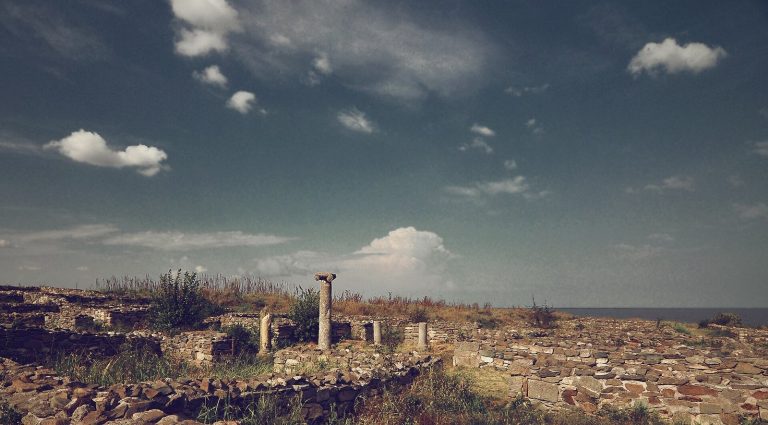
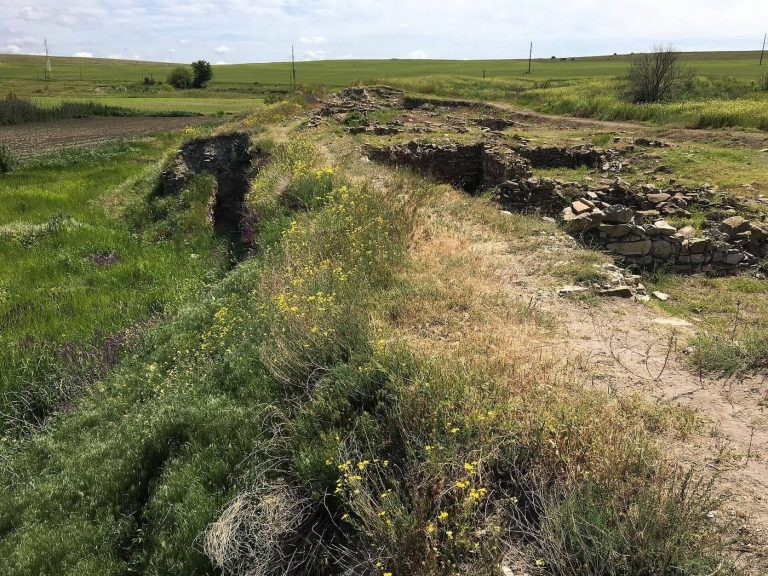
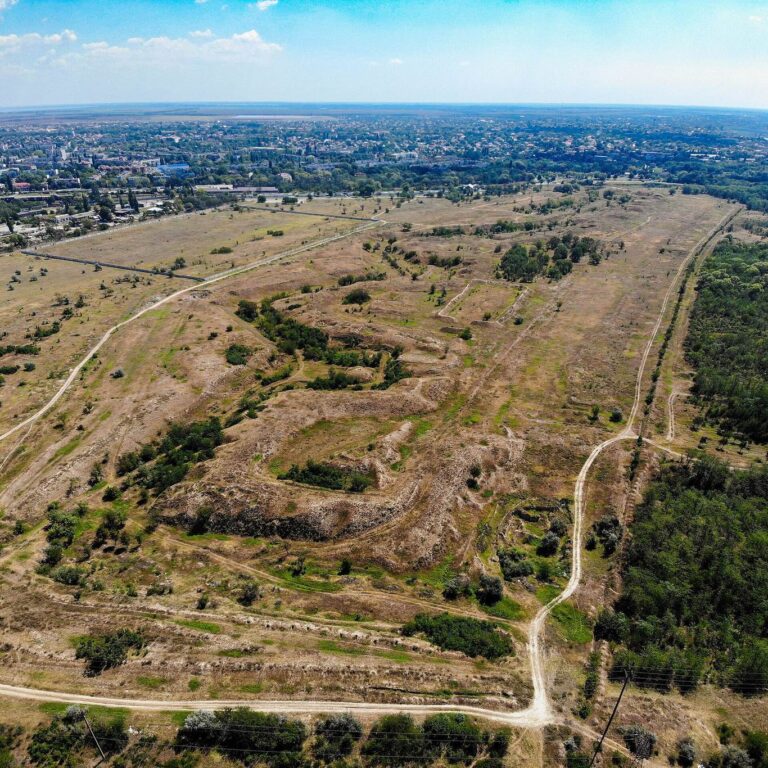
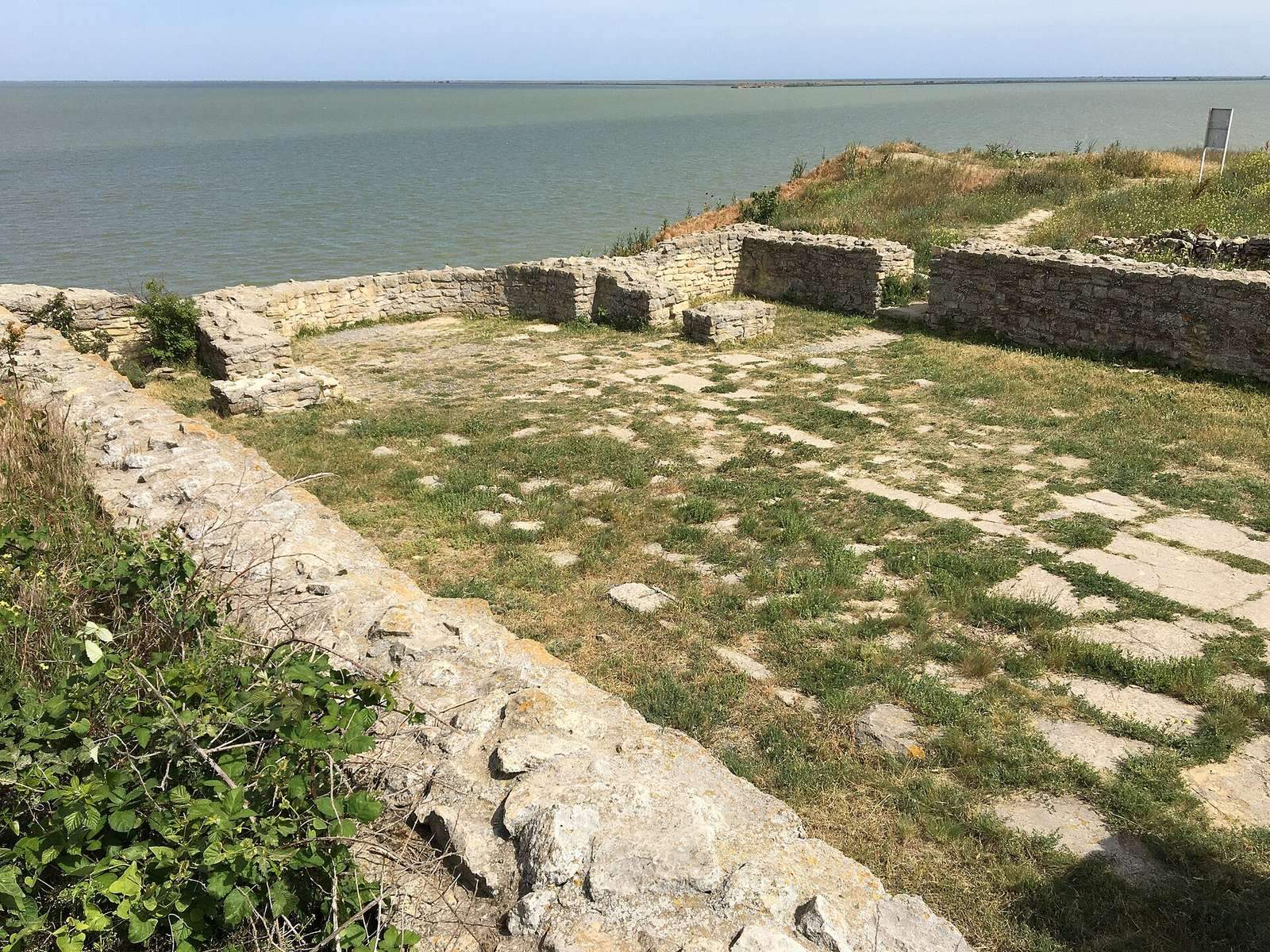
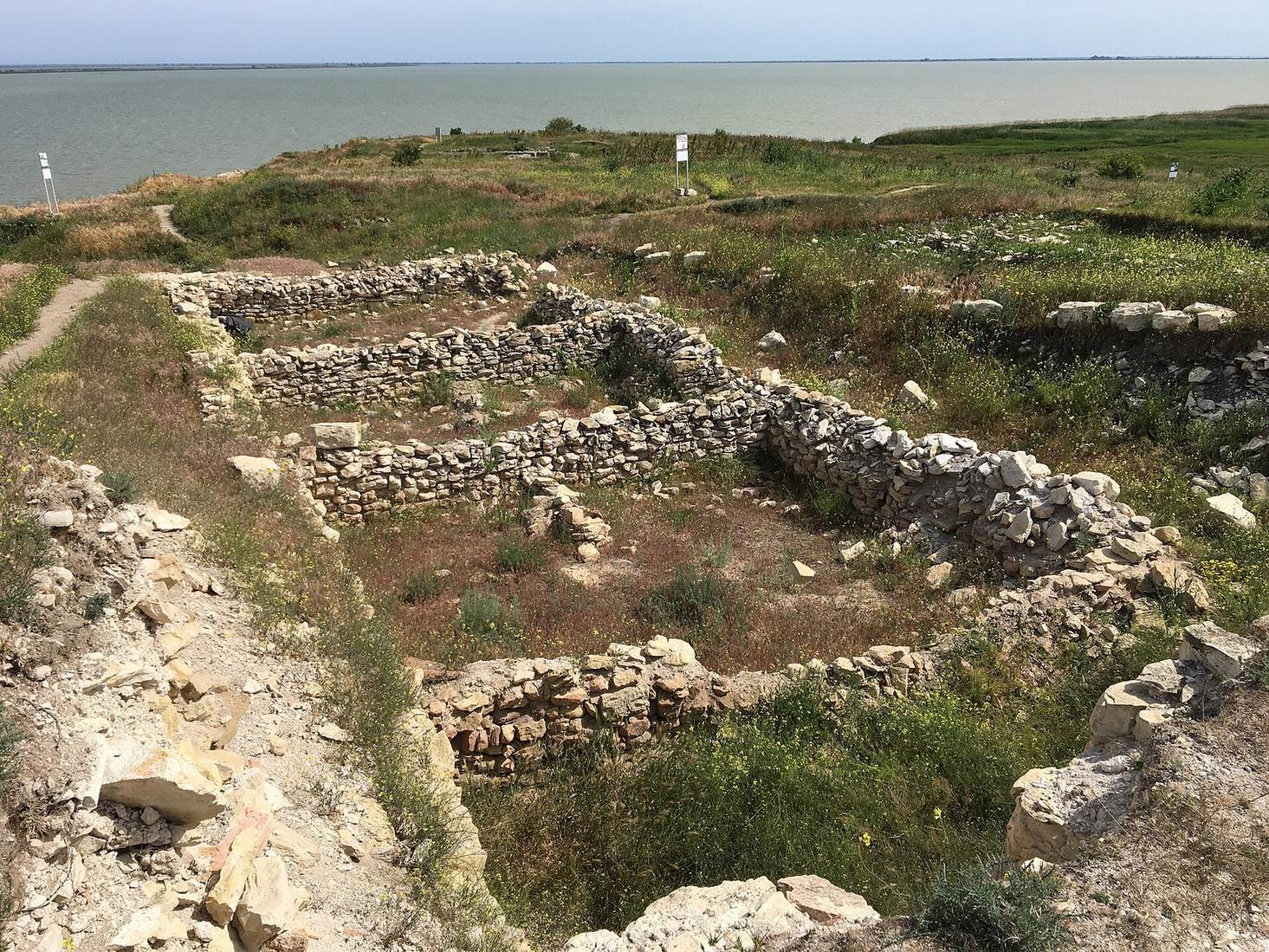
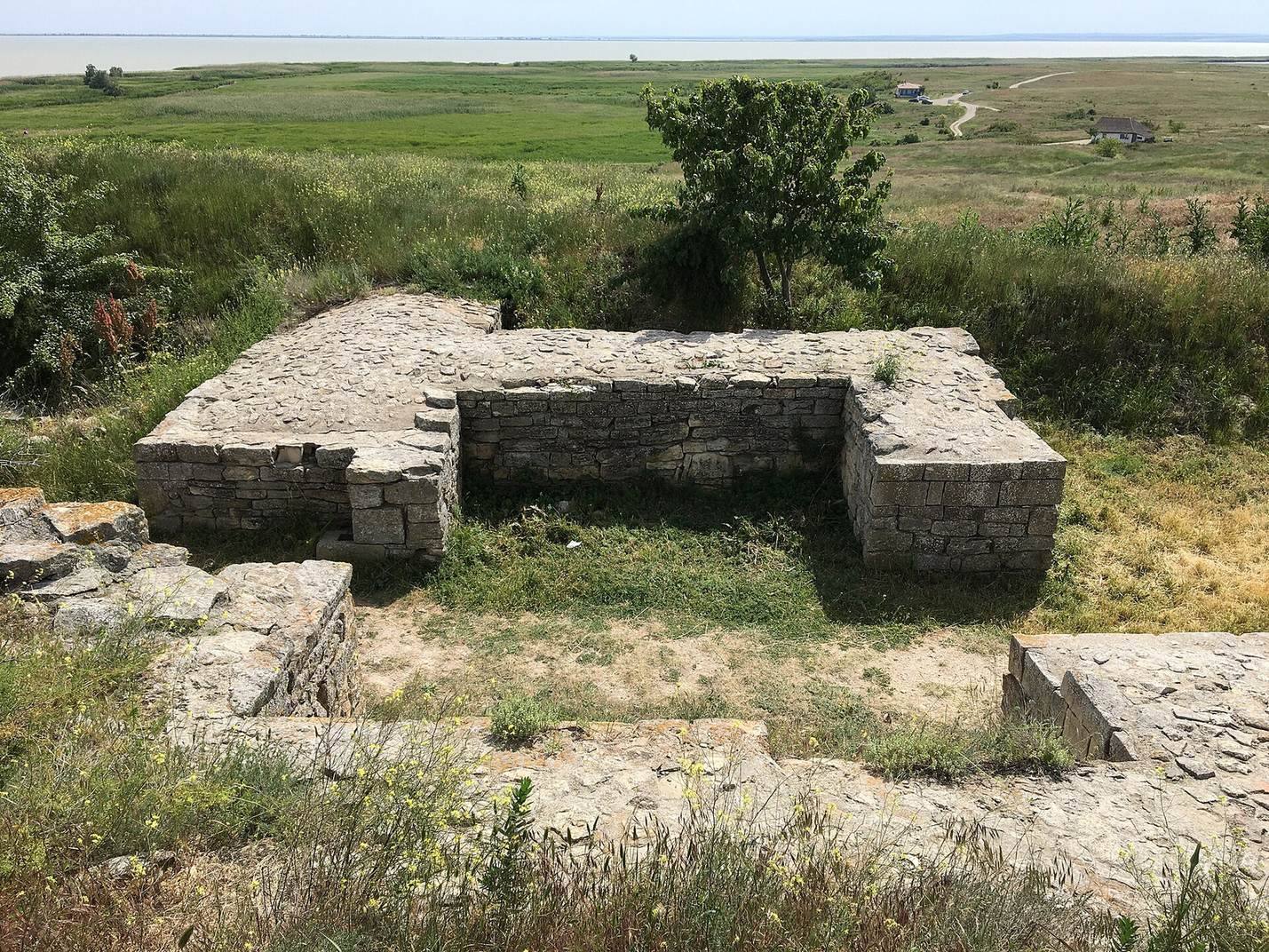
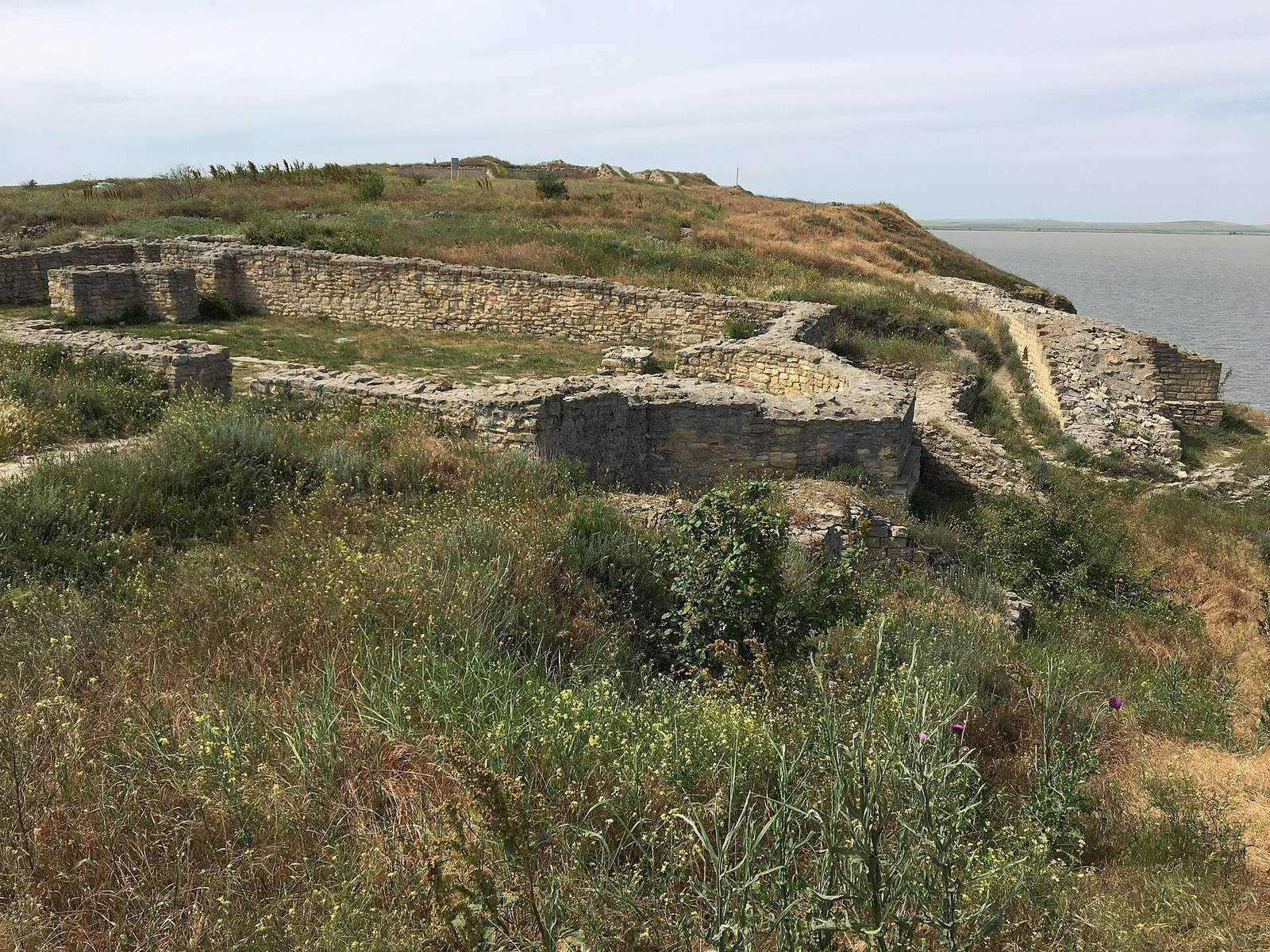
The archaeological site covers about 100 hectares where the Babadag Plateau meets Razim Lagoon. Its remains include streets, earthworks, a defensive wall and gates, early Christian basilicas, and features from several ancient periods. A basilica is a large rectangular building used for Christian worship. Much of the site remains buried beneath the ground.
Archaic-period remains
Remains from the Archaic period include a large cemetery, traces of dwellings on the eastern part of the cliff, and pottery kilns.
Classical-period remains
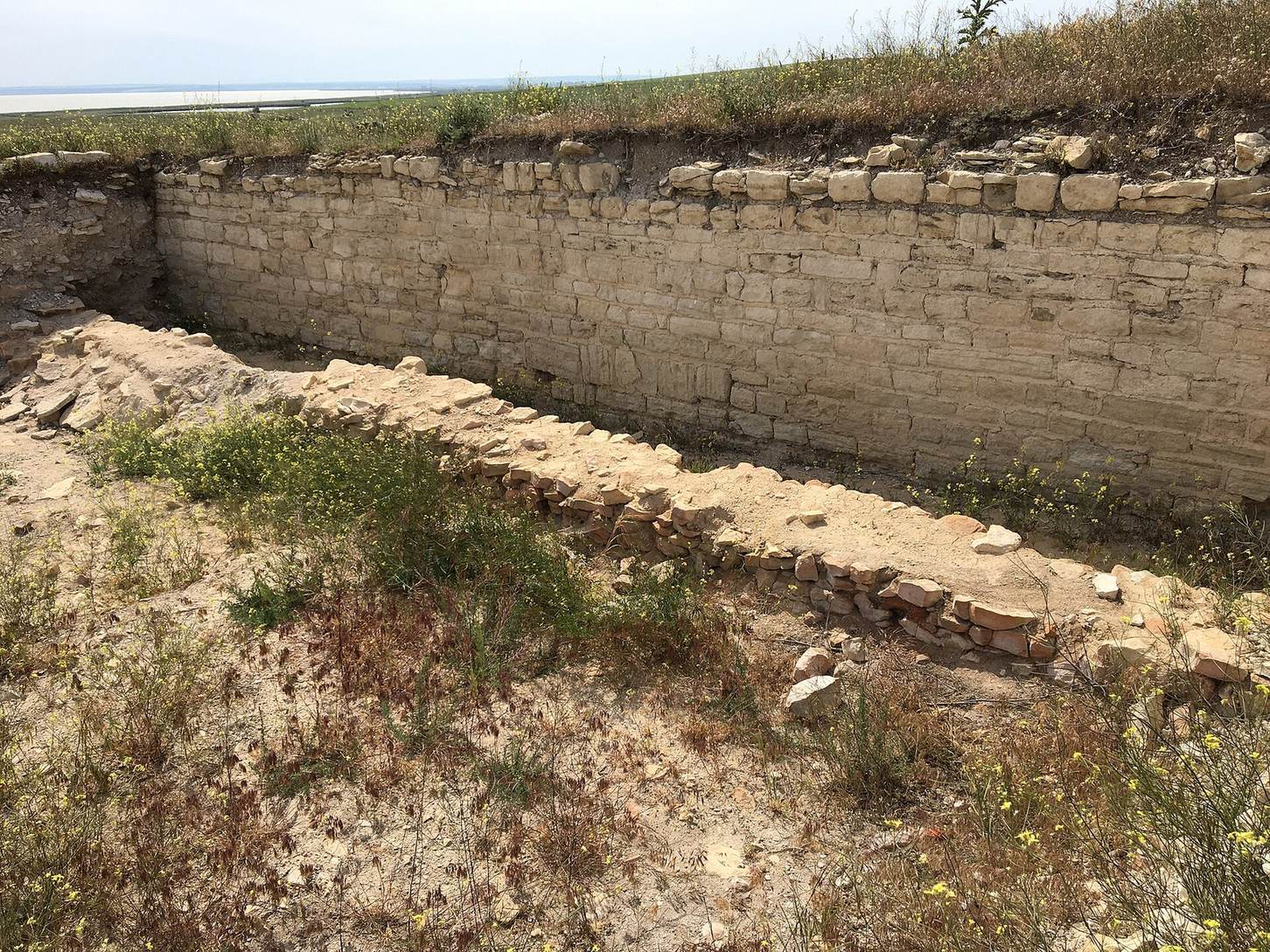
Classical-period features include a stretch of the enclosure wall, buildings and additional kilns toward the promontory, and groups of burial mounds. Excavations also revealed walls, a fortified acropolis, meaning the settlement’s defended high area, and tombs.
Roman and late antique remains
Defensive enclosure
The Roman-Byzantine defensive enclosure covered about 2.5 hectares and appears to have had a triangular plan. Its recorded features include eight towers and six projecting defensive structures. Two principal gates stood on the west and south sides, with a smaller gate also on the south.
Remains beyond the enclosure
Late Hellenistic and early Roman remains lie beyond the Roman-Byzantine defensive system.
Portable finds
Finds of uncertain date include coins, bronze arrowheads, bronze objects known as Olbian dolphins, and ingots shaped like marine mammals. The dolphin-shaped objects served as exchange currency and were first minted at Olbia Pontica, an ancient Greek colony on the northern Black Sea coast. Both the dolphins and arrowheads also had magical and religious associations and were used as offerings.