Norwich Guildhall: A Medieval Civic and Judicial Building
Site at a Glance
- Rating
- 4.4
- Popularity
- Medium
- Country
- United Kingdom
- Primary era
- Medieval
- Eras represented
- Medieval, Early Modern, Modern
- Civilizations
- British, English
- Site type
- Civic
- Remains
- Town Hall
On this page8 sections
History
Norwich Guildhall is a civic building on Gaol Hill in Norwich, England, United Kingdom. After King Henry IV granted the city autonomy from Norfolk in 1404, Norwich commissioned the building, and construction took place from 1407 to 1413. The Guildhall became the city’s meeting place and seat of municipal government. Although its construction predates the Tudor period of English history (1485–1603), it is described as Tudor in style and is the largest surviving medieval civic building outside London.
Foundation and civic use
Norwich’s first mayor, William Appleyard, contributed a large tree to the building project. By 1412, prisoners were being held in the Guildhall’s cellars, while its chambers served the city’s civic business.
Damage and judicial use
The Council Chamber roof collapsed in 1511, destroying the building’s north and south towers. Restoration work began in 1537. Thomas Bilney, an English Protestant reformer regarded by Protestants as a martyr, was imprisoned in the dungeon before being burned at the stake in August 1531.
The Great Chamber also served as a court, first hosting quarter sessions, local courts that met four times a year, and later magistrates’ courts. Judicial work continued there into the late twentieth century, until the courts moved to new Law Courts at Bishopgate. Prisoners continued to be held in the Guildhall until 1980.
Twentieth-century changes and preservation
King George VI and Queen Elizabeth visited on 29 October 1938 and saw the Council Chamber. That day, the chamber ceased to be the seat of local government as the royal couple went on to open the new City Hall. Civic business had been based at the Guildhall since the early fifteenth century.
In 2008, the Guildhall joined Norwich 12, an initiative bringing together twelve historic city buildings as a heritage group. Work to restore and strengthen its clock tower followed in 2010. In 2014, the Norwich Heritage Economic and Regeneration Trust took a 25-year lease intended to improve public access. The Guildhall is a Grade I listed building, England’s highest listed-building category, used for buildings of exceptional interest.
Remains
Layout and rooms
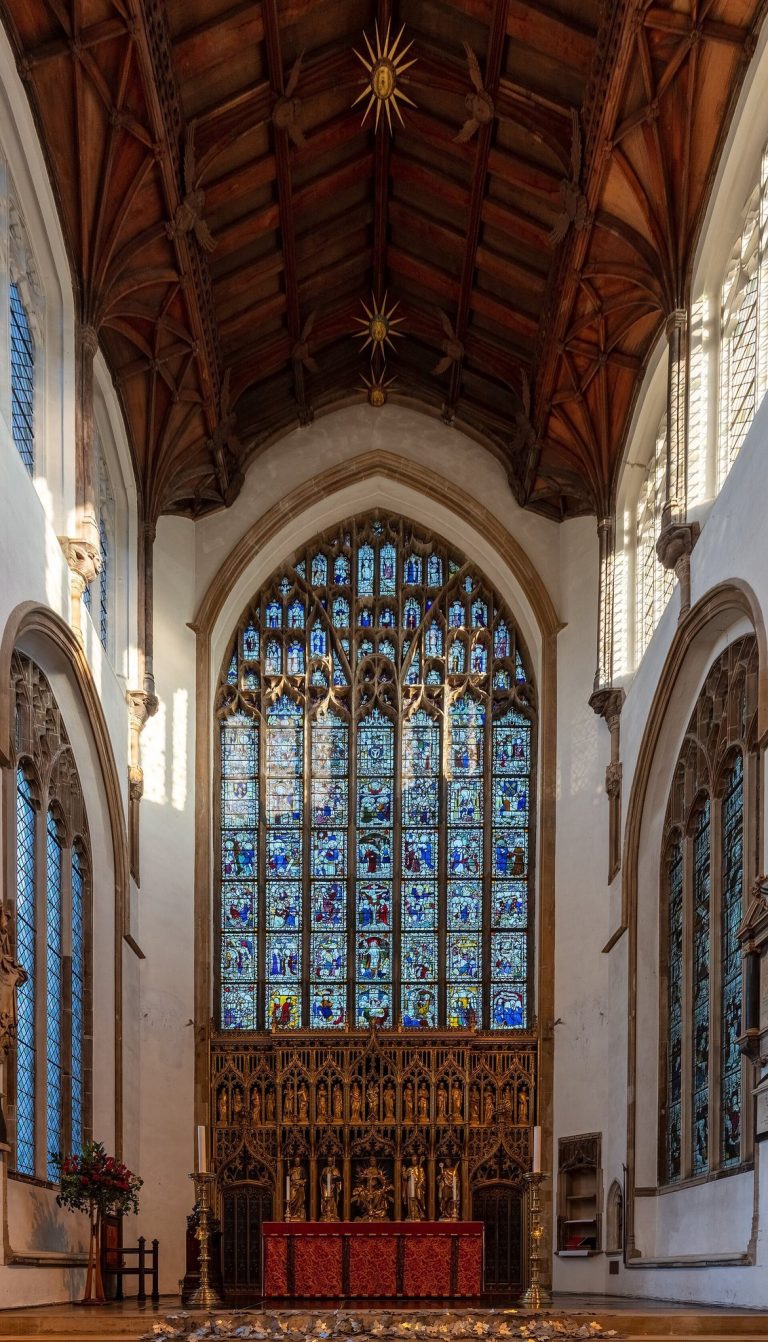
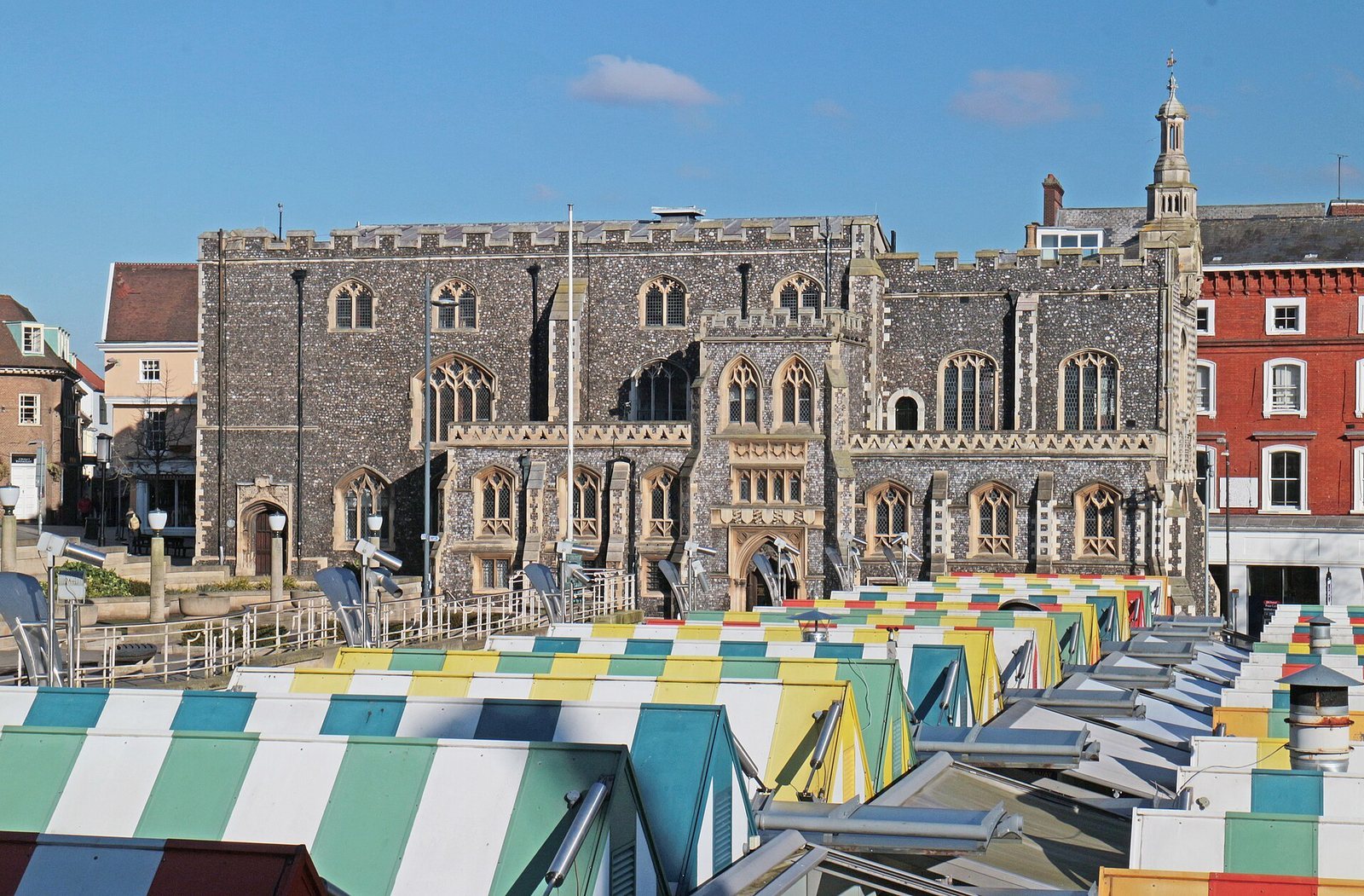
The surviving building contains the Council Chamber and the Great Chamber. Its former dungeon is now an undercroft, a space beneath the building.
East facade and south porch
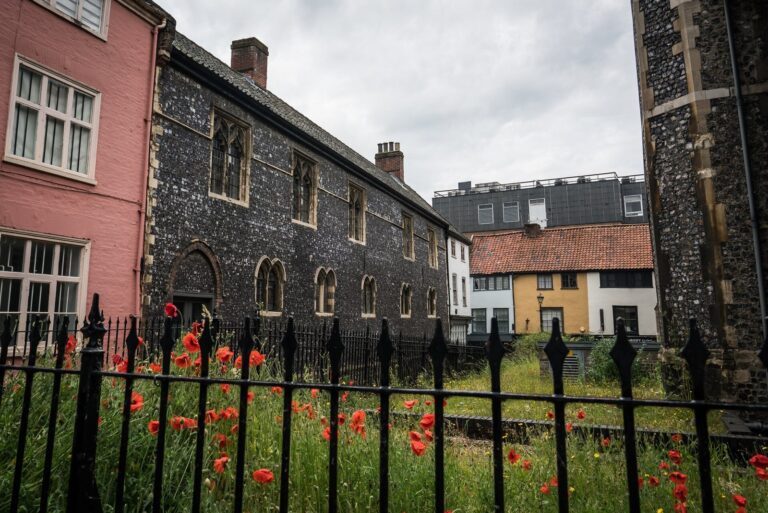
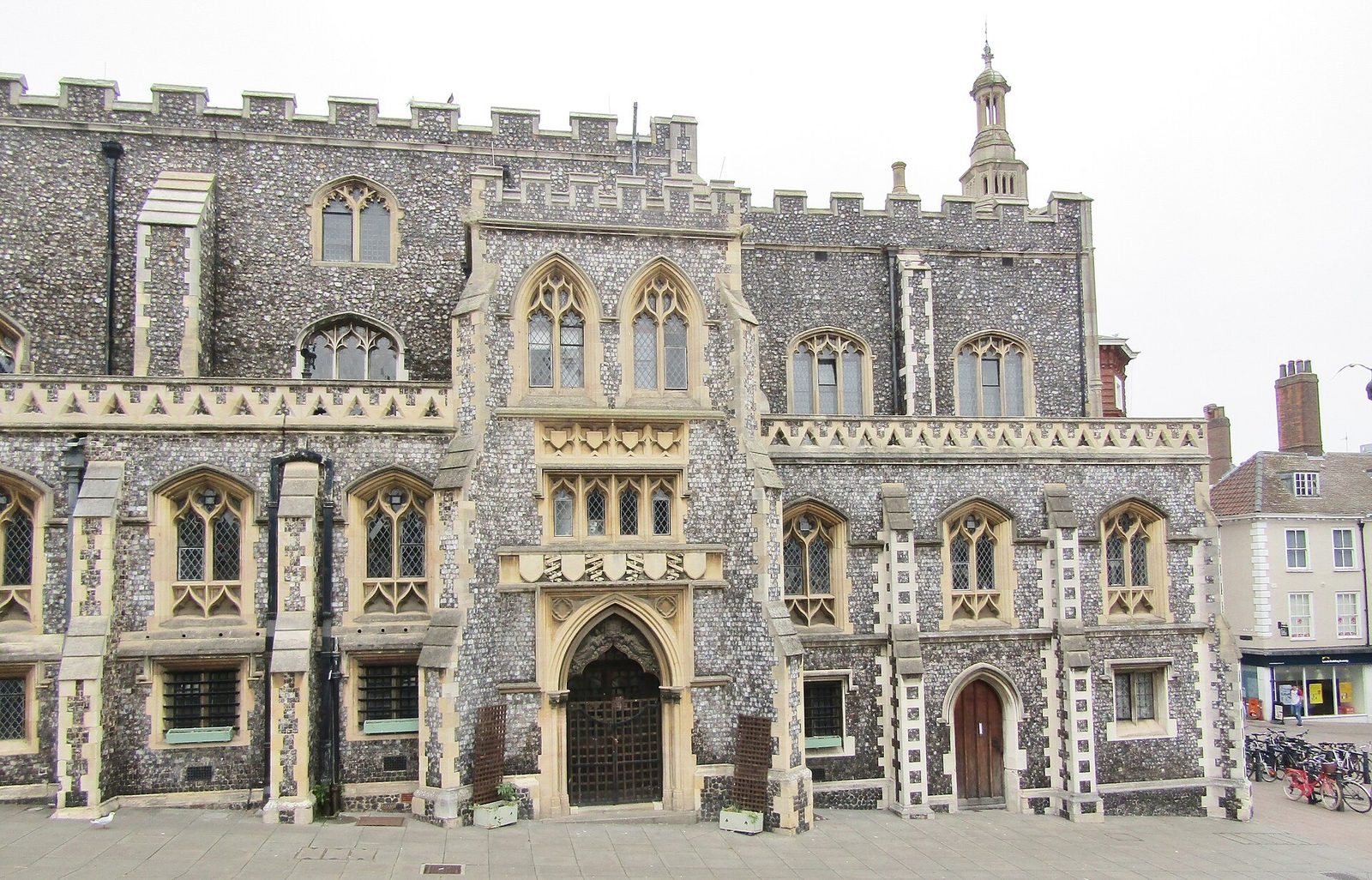
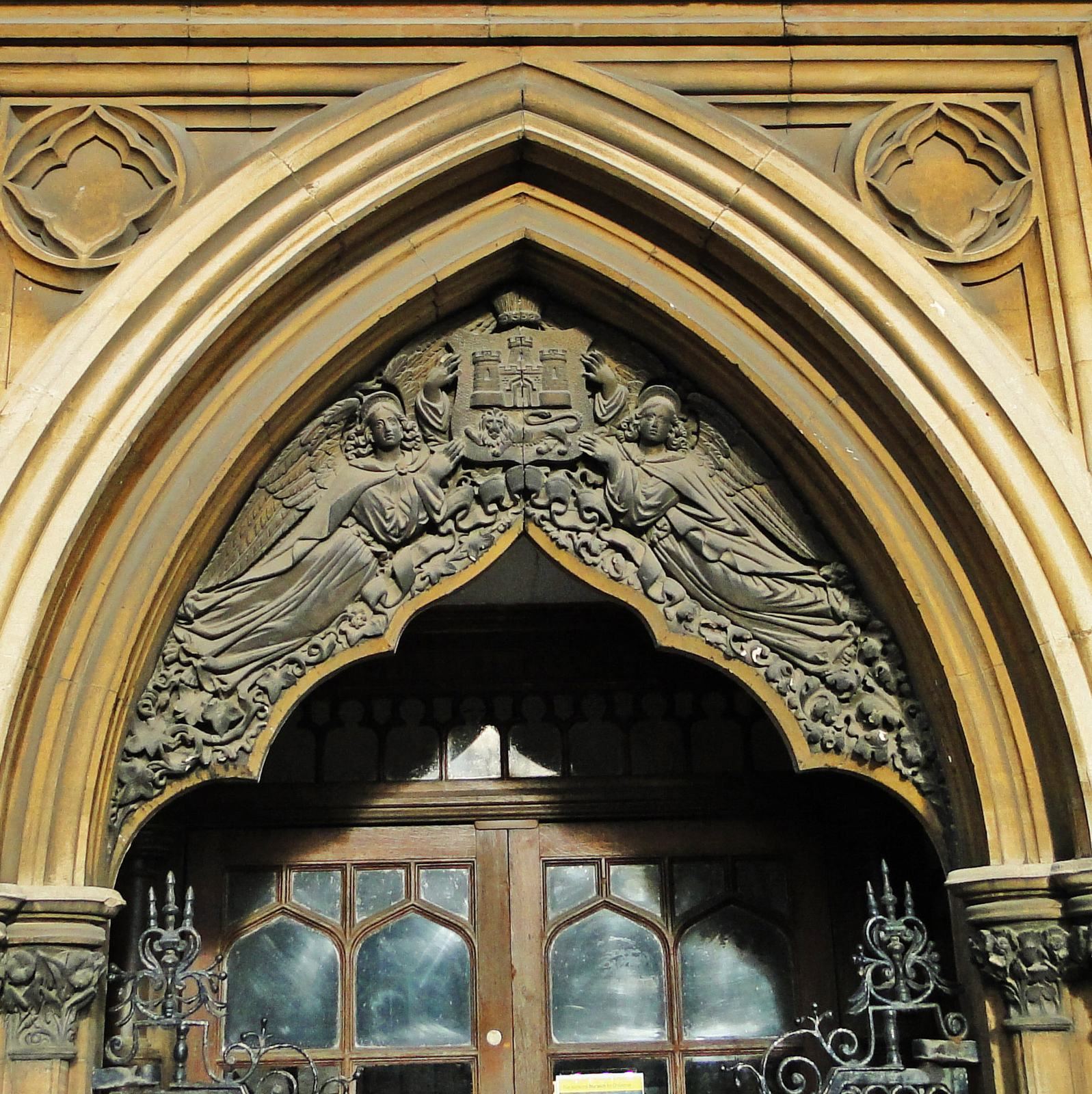
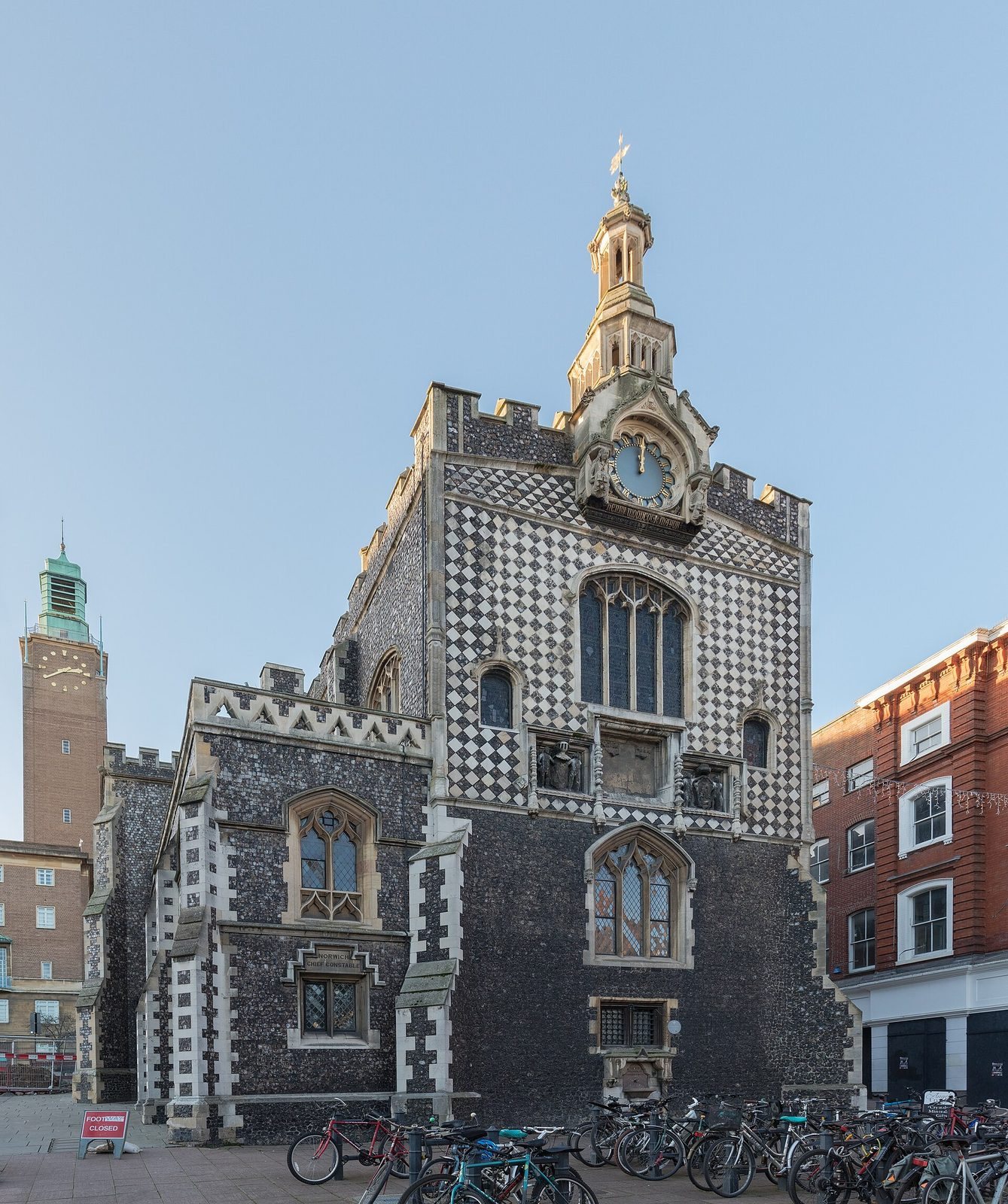
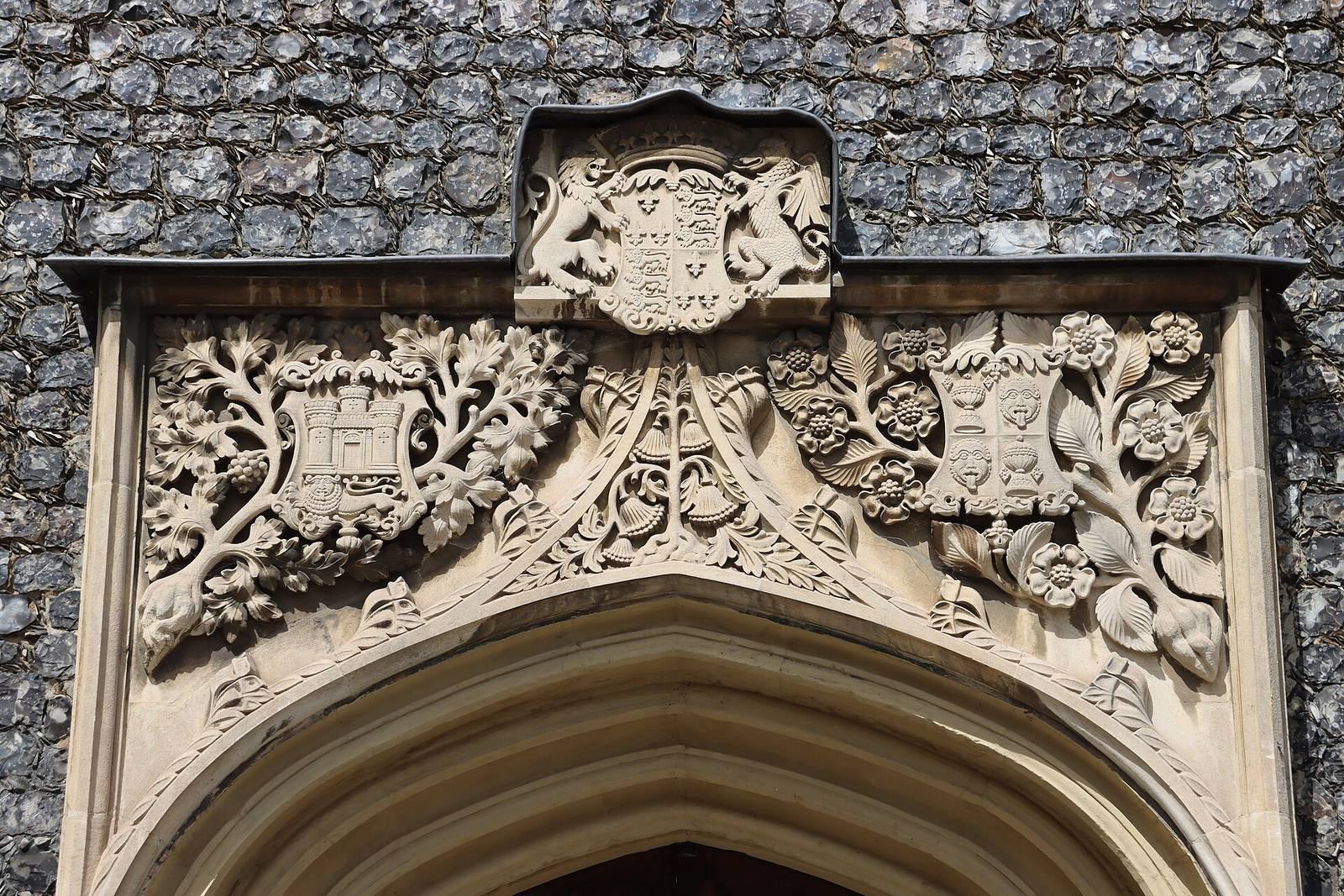
The east side of the facade is clad in mottled flint pebbles and stone. Its central panel displays the arms of Henry VIII, flanked by the arms of Norwich and the Society of St George. A large porch on the south side formed part of the building’s enlargement in 1861.
Clock tower
The clock tower holds a clock made by John Moore & Sons of Clerkenwell, London. Norwich mayor Henry Woodcock gave the clock to the Guildhall in April 1850.