Acaray: A Fortified Settlement in Peru’s Huaura River Valley
Site at a Glance
- Popularity
- Medium
- Country
- Peru
- Primary era
- Classical
- Eras represented
- Iron Age, Classical
- Civilizations
- Unclassified
- Site type
- Military
- Remains
- Fort
On this page7 sections
History
Acaray is a fortified archaeological settlement in Peru’s Huaura River Valley, in the Norte Chico region. Its construction date and cultural affiliation remain uncertain. It was occupied continuously during the Early Horizon and intermittently during the Late Intermediate Period, two distinct periods in Andean prehistory.
Occupation and use
Offerings and ceremonial deposits associated with rebuilding and periodic returns suggest that local communities used Acaray as a refuge when they faced the threat of warfare. Its destruction is dated to AD 1000, while its abandonment is placed between AD 1000 and 1470.
The site’s cultural identity is difficult to establish. Some finds have been interpreted as indicating an association with Wari, a major Andean empire and cultural tradition.
Archaeological research
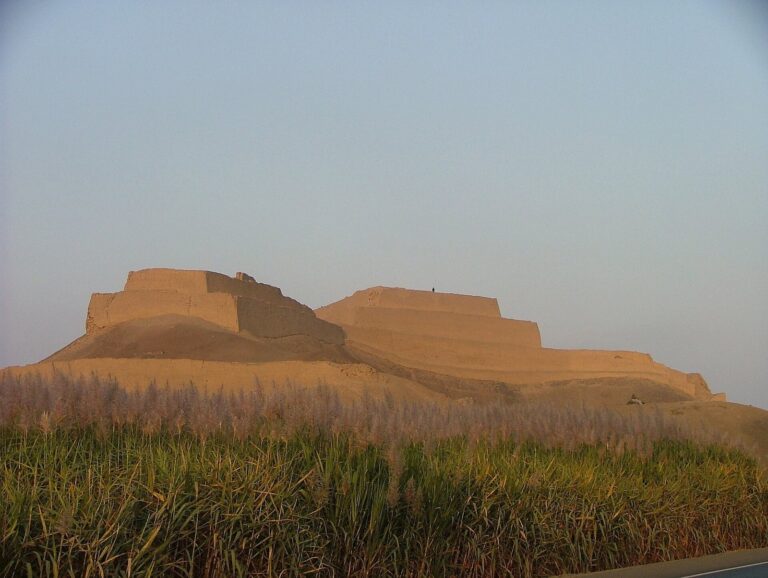
German archaeologist Hans Horkheimer brought Acaray to wider attention in a 1962 article, calling it the “Fortress of Huaura.” He argued that its defenses made it a genuine fortress, unlike nearby Paramonga, a site associated with Chimú culture, a pre-Columbian Peruvian culture, whose defensive role he questioned.
In the 1970s, Mercedes Cárdenas of the Riva-Agüero Institute excavated at Acaray as part of research into past marine-resource use along the Peruvian coast and the collection of radiocarbon dates. Her team also surveyed the Huaura Valley. Around the same time, archaeologist Arturo Ruiz Estrada and engineer Domingo Torero prepared a detailed account of Acaray’s architecture. In 2004, Margaret Brown Vega began a two-year program of intensive mapping, surface analysis, and excavation.
Remains
The hilltop fortress
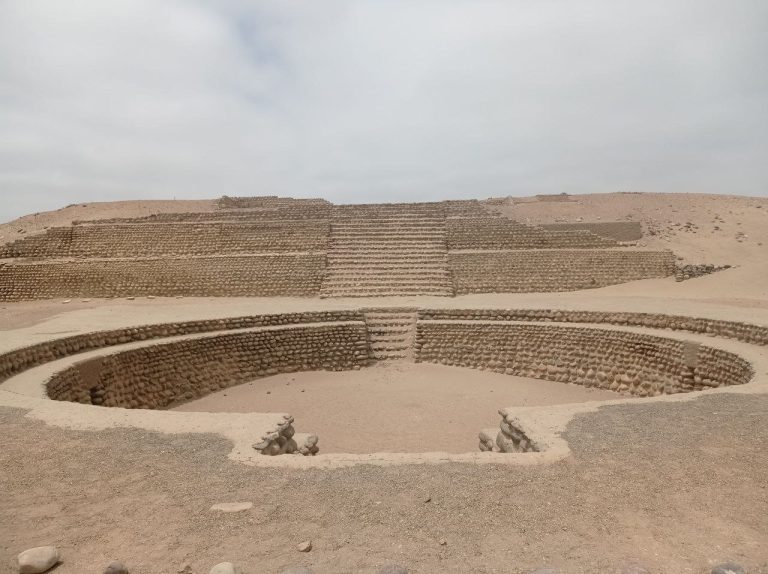
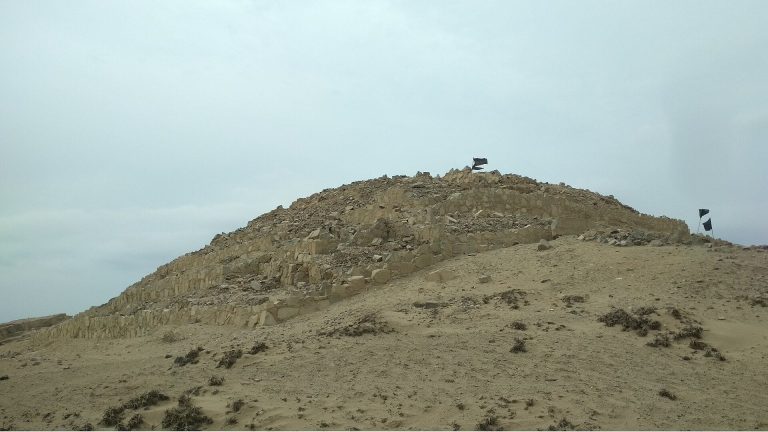
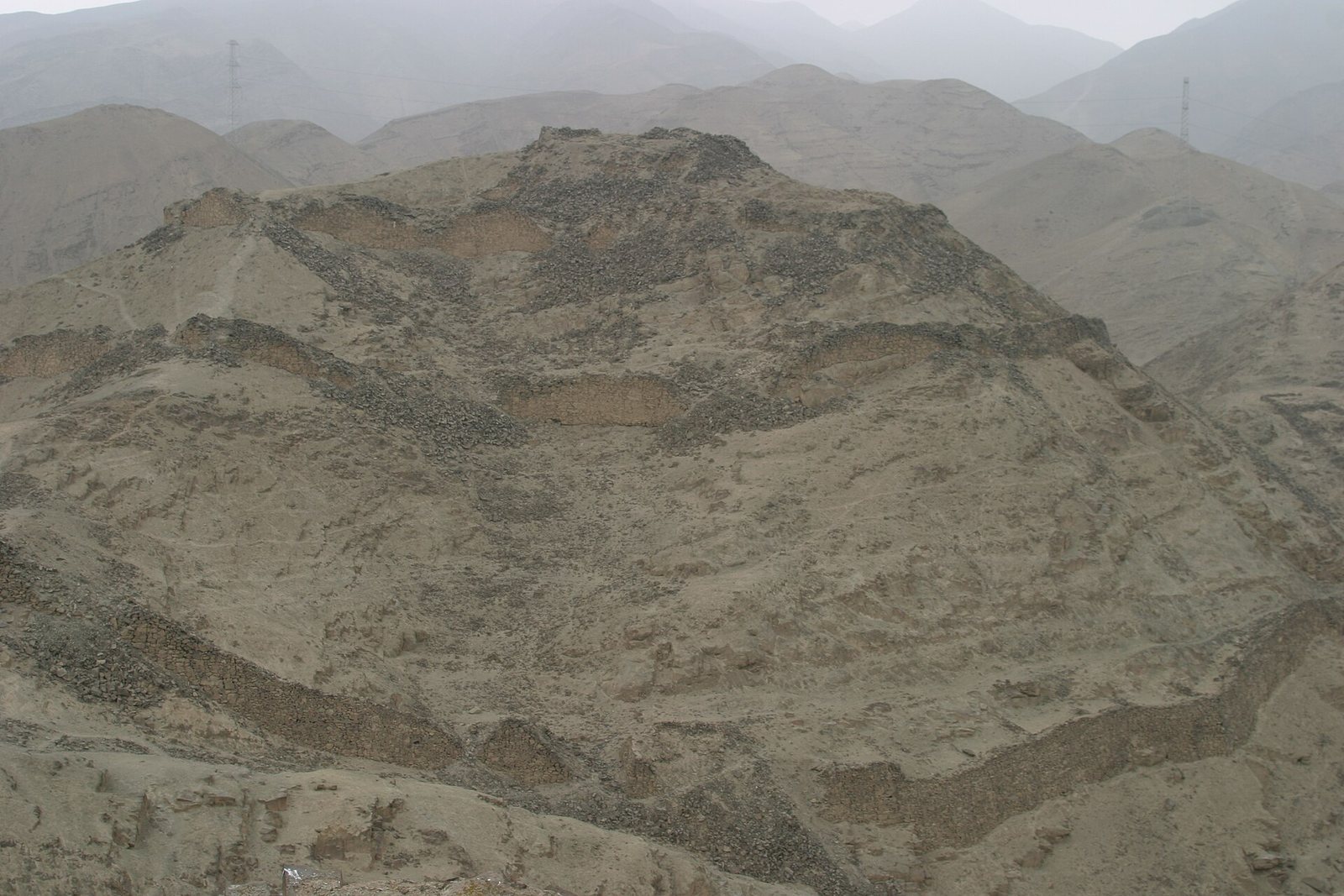
Acaray covers 23 hectares. Its fortified core occupies three hilltops, each surrounded by several defensive walls with raised protective edges and projecting defensive platforms. Ceremonial structures also stood on the hilltops. The fortress includes megalithic walls, built with large stones. Brown Vega considered these potentially comparable to walls at Chankillo, a Peruvian complex with a fortified ceremonial center and solar observatory.
Surrounding settlement and cemeteries
Occupied areas and extensive cemeteries lie around the hilltop fortress. The lower areas have been heavily looted, as have the cemeteries.
Surface finds
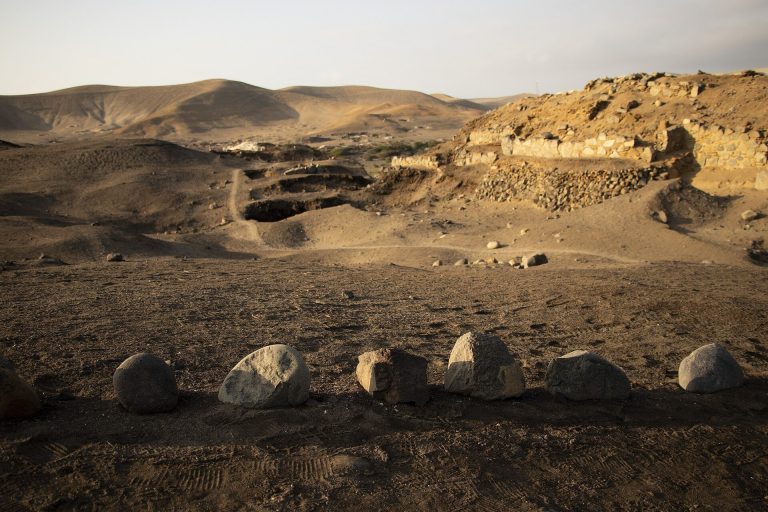
River-rounded cobbles occur across the site and were probably used as projectiles or slingstones. Large quantities of black-and-red pottery associated with Chancay, a pre-Columbian Peruvian culture, have also been found at the fortress.