Deur Kothar: An Early Buddhist Stupa Complex in India
Site at a Glance
- Rating
- 4.3
- Popularity
- Medium
- Country
- India
- Primary era
- Iron Age
- Eras represented
- Stone Age, Bronze Age, Iron Age
- Civilizations
- Mauryan
- Site type
- Religious
- Remains
- Stupa
On this page12 sections
History
Deur Kothar is a Buddhist archaeological site in Rewa district, Madhya Pradesh, India, whose stupas, Buddhist monuments associated with relics and remembrance, are attributed to Ashoka, the Mauryan emperor of the third century BCE. Its early Buddhist remains belong to the period when Ashoka’s rule was associated with the spread of Buddhism.
An Ashokan-era Buddhist site
Deur Kothar lay on a southern route connecting Kaushambi with Ujjain, an ancient city in the region of Avanti. During Ashoka’s era, Buddhist relics were distributed and stupas erected in the Vindhya region. The route may help explain the construction of stupas here. They are said to predate those at Bharhut.
The remains have also been interpreted as evidence that the Vindhya region was a center of Buddhist learning. Monks may have used Deur Kothar for teaching, study, and religious practice. The site’s early Buddhist remains and inscriptions provide evidence for the presence and activities of Buddhist communities in the region.
Inscriptions and Buddhist lineages
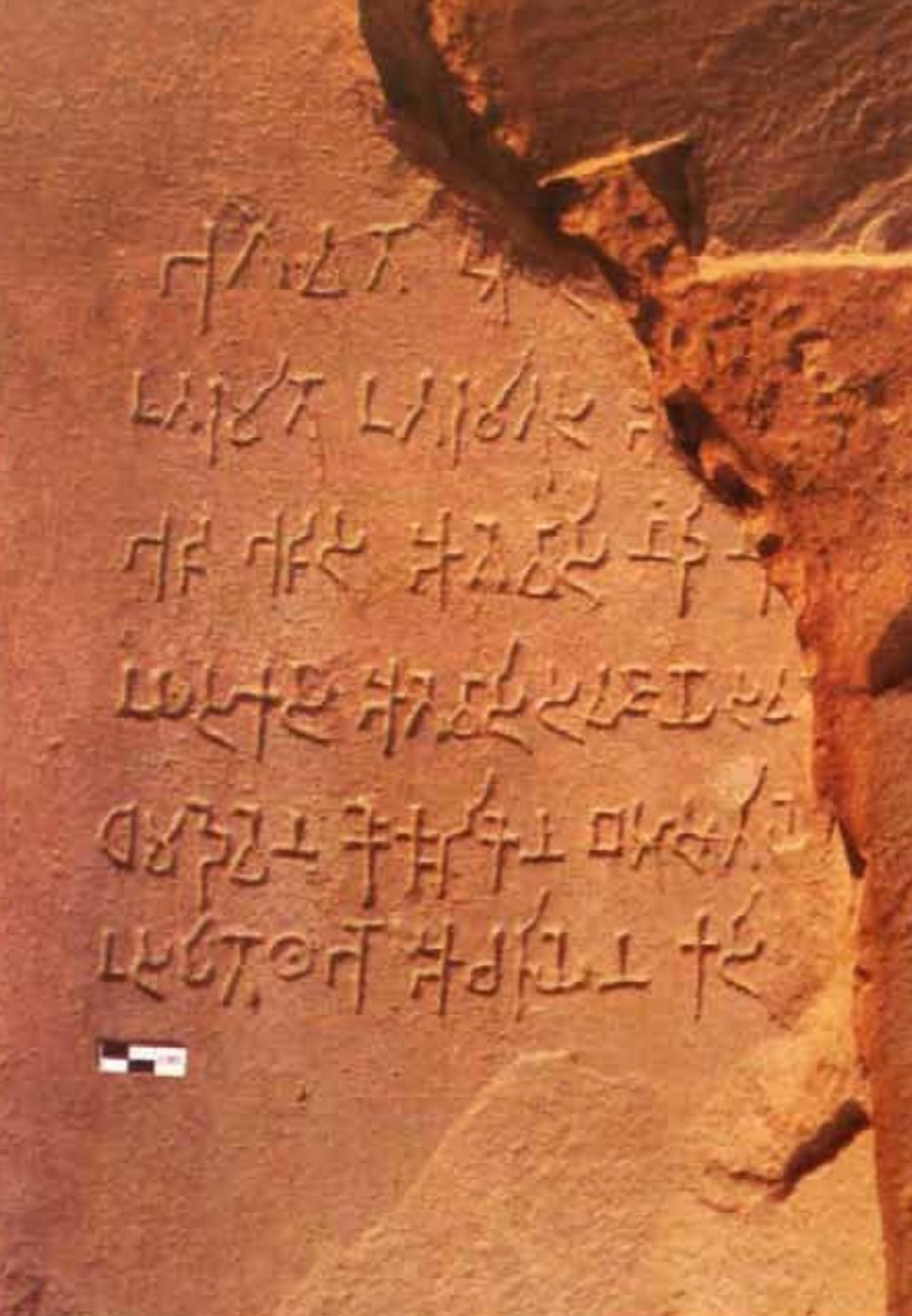
Inscriptions at Deur Kothar are written in Prakrit, an ancient group of Middle Indo-Aryan languages, using early Brahmi script. Dating based on the development of the writing is tentative, placing them around 200 BCE or later in the second century BCE. They record successions of Buddhist teachers extending back to the Buddha. One names Dhammadeva, a teacher and donor; a damaged second succession includes Anuruddha, known in Buddhist tradition as a disciple of the Buddha. Estimates suggest that the broken text named between nine and twelve people, with eight or eleven teachers preceding Dhammadeva in that lineage.
The inscriptions also offer early evidence for the Bahusrutiya, an early Buddhist school. They have sometimes been presented as an early mention of the Buddha, but name him as the first teacher in a lineage rather than establishing his historical existence. Buddhist studies scholars Peter Skilling and Oskar von Hinüber tentatively inferred from the generations in the lineages that the Buddha’s death could not have occurred earlier than about 400 to 380 BCE. Richard Salomon and Joseph Marino later undertook further study of the inscriptions.
Discovery and archaeological investigation
Archaeologist P.K. Mishra of the Archaeological Survey of India and Ajit Singh, the village head of Barhat, discovered Deur Kothar in 1982. The Government of India declared it a monument of national importance in 1988, and the Survey’s Bhopal office became responsible for its preservation and conservation.
Controlled excavations in 1999 and 2000 brought stupa remains and other archaeological material to light. Interpretations of the finds suggest that the complex may have been as extensive and developed as the Buddhist sites of Bharhut and Sanchi.
Remains
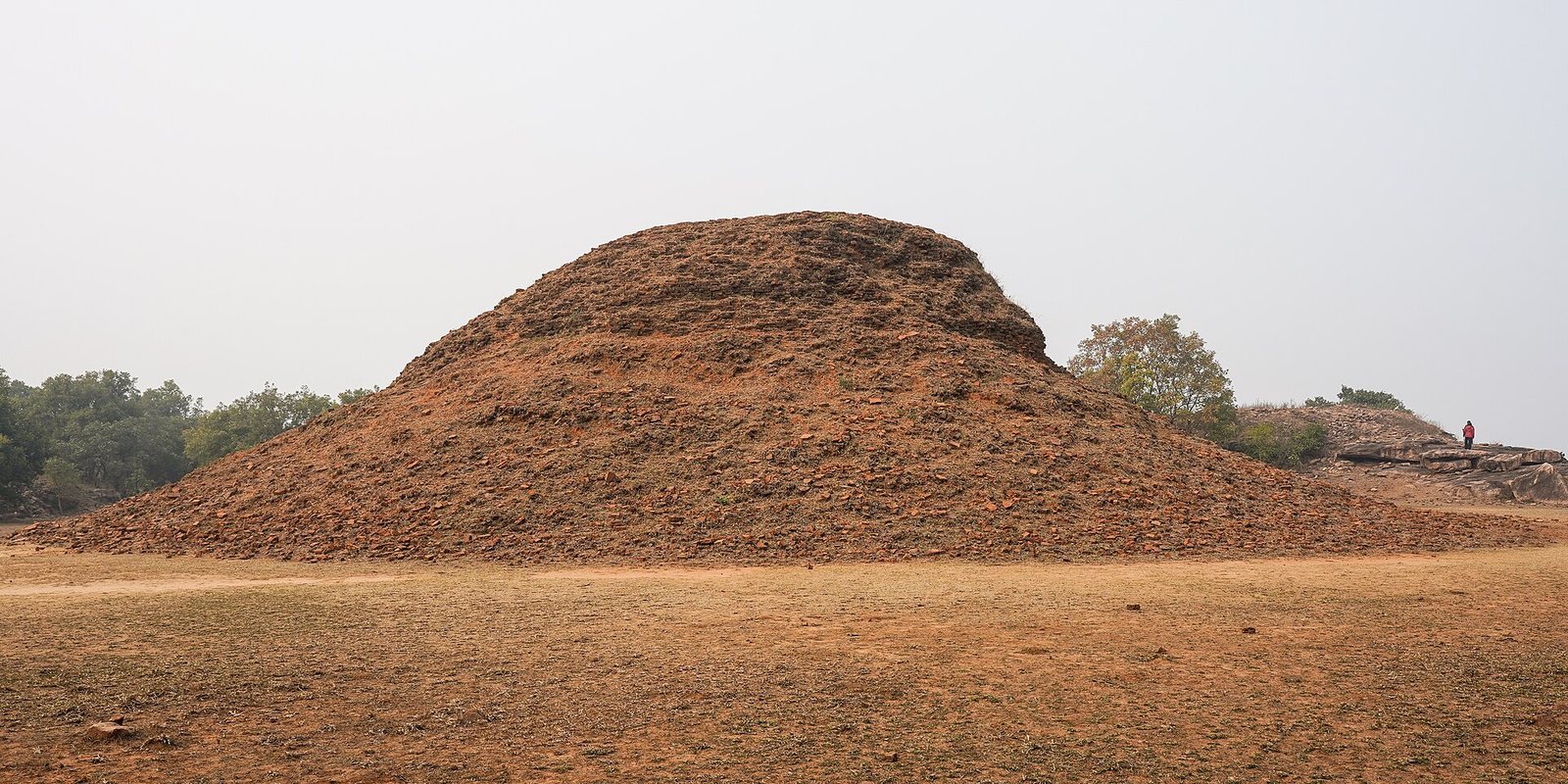
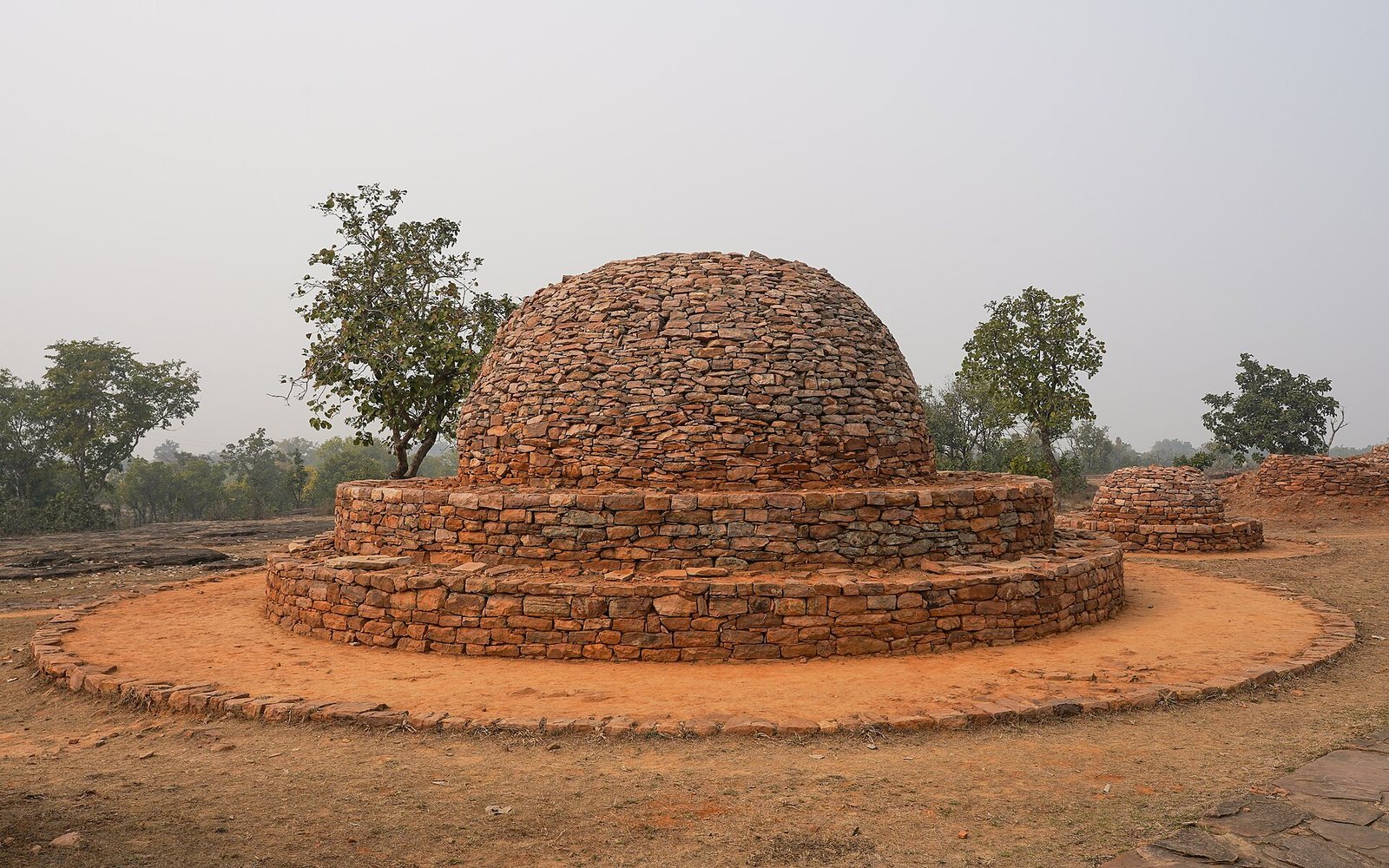
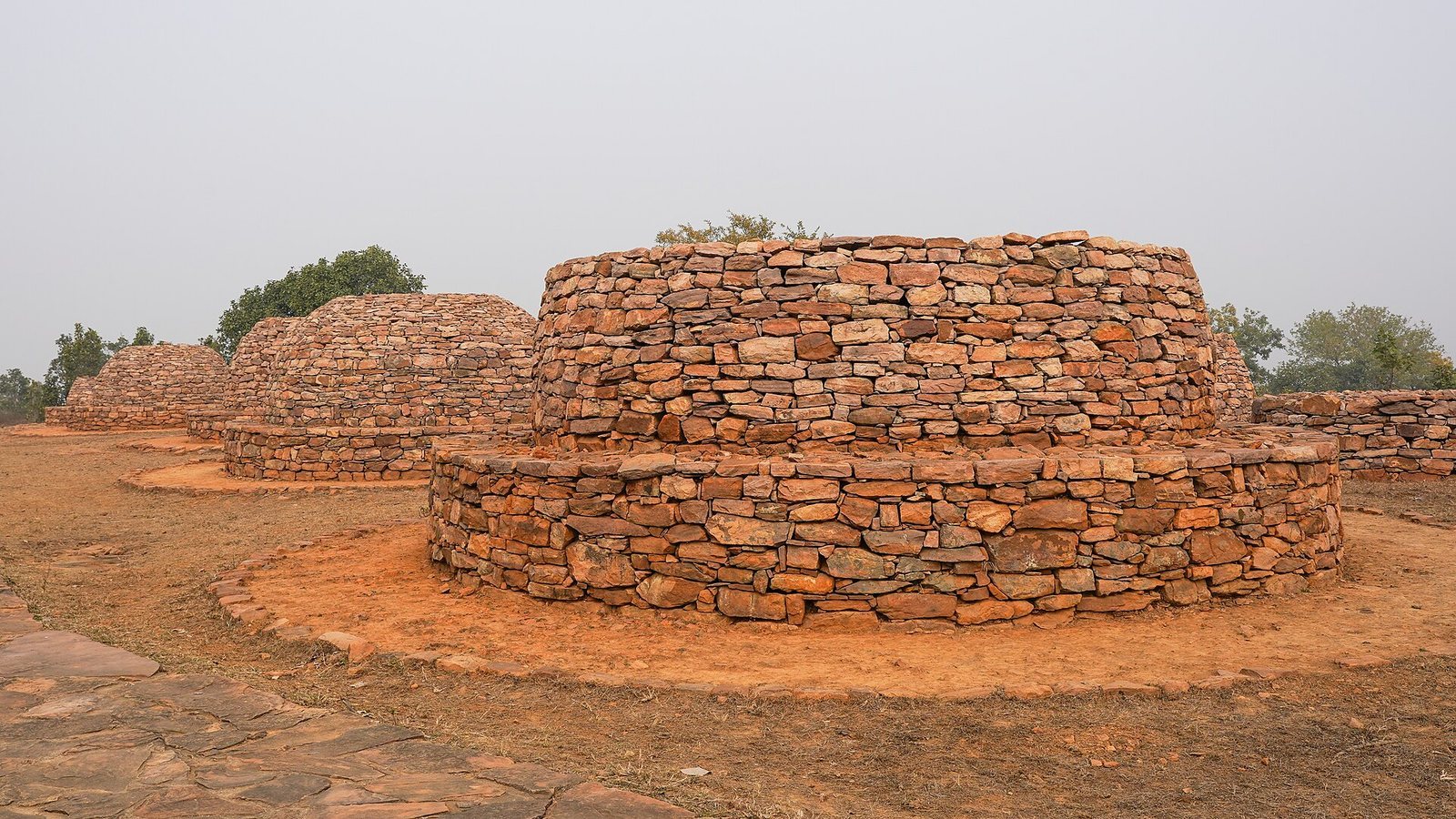
Four stupa mounds mark the site, while rock shelters containing paintings lie in the surrounding area. The stupas were built of brick or stone, and excavation has exposed additional stonework and pottery.
Stupas
Descriptions distinguish large mud-brick stupas of the Mauryan period from numerous smaller stone stupas. Stupas 1 and 2 have been excavated, and Stupa 1 stands about 9 metres high.
Rock shelters and prehistoric finds
Paintings
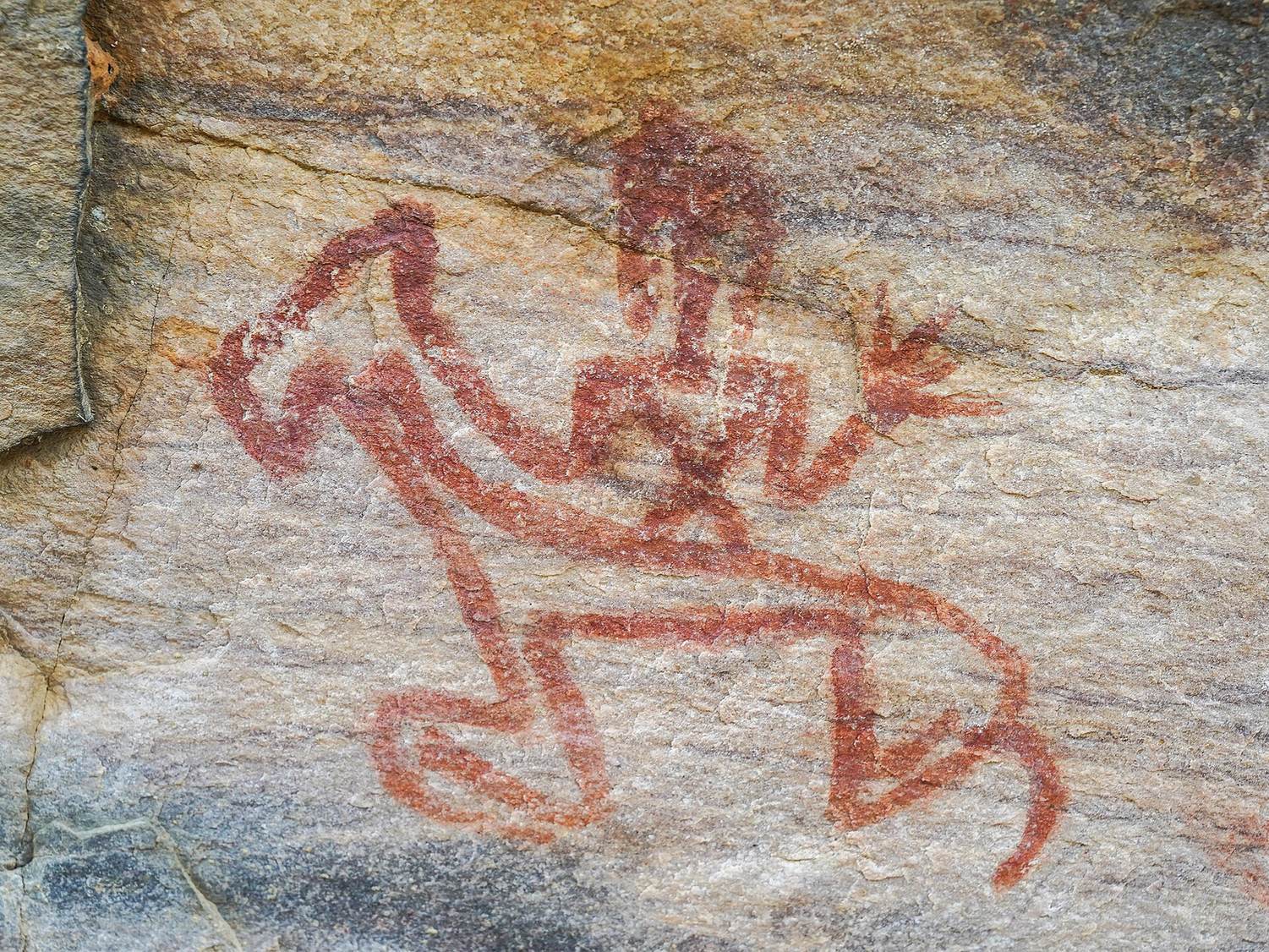
The surrounding area contains 63 painted rock shelters. The art is assigned to both prehistoric and historic periods, with some paintings given an age of roughly 5,000 years. Subjects include people and animals, handprints, geometric and decorative patterns, horse riders, chariots, birds, people riding elephants, and stupas. Painted and incised inscriptions also appear among the rock art. Geometric designs recurring on some ceilings have been tentatively linked to the Upper Paleolithic or Mesolithic, two prehistoric periods.
Stone tools
Small stone tools found nearby include blades, shorter blades, and points. These implements are associated with the Mesolithic period.
Inscriptions and excavated stonework
Pillar inscriptions and gateway remains
A principal inscription, six lines long, is carved on a broken pillar shaft. It records a Buddhist teacher succession and the erection and dedication of a pillar to the Buddha. Fragments of a second major inscription preserve another succession and refer to making a gateway and erecting a pillar. Excavations also exposed gateway remains, stone slabs, pillars, and pottery fragments.
Shelter inscriptions
Other early Brahmi inscriptions in nearby rock shelters record donors’ names, adding evidence of religious giving at the site.