Allahabad Fort: Mughal Stronghold at Prayagraj
Site at a Glance
- Rating
- 4.3
- Popularity
- Very High
- Country
- India
- Primary era
- Early Modern
- Eras represented
- Classical, Early Modern, Modern
- Civilizations
- Mauryan, Mughal
- Site type
- Military
- Remains
- Fort
On this page16 sections
History
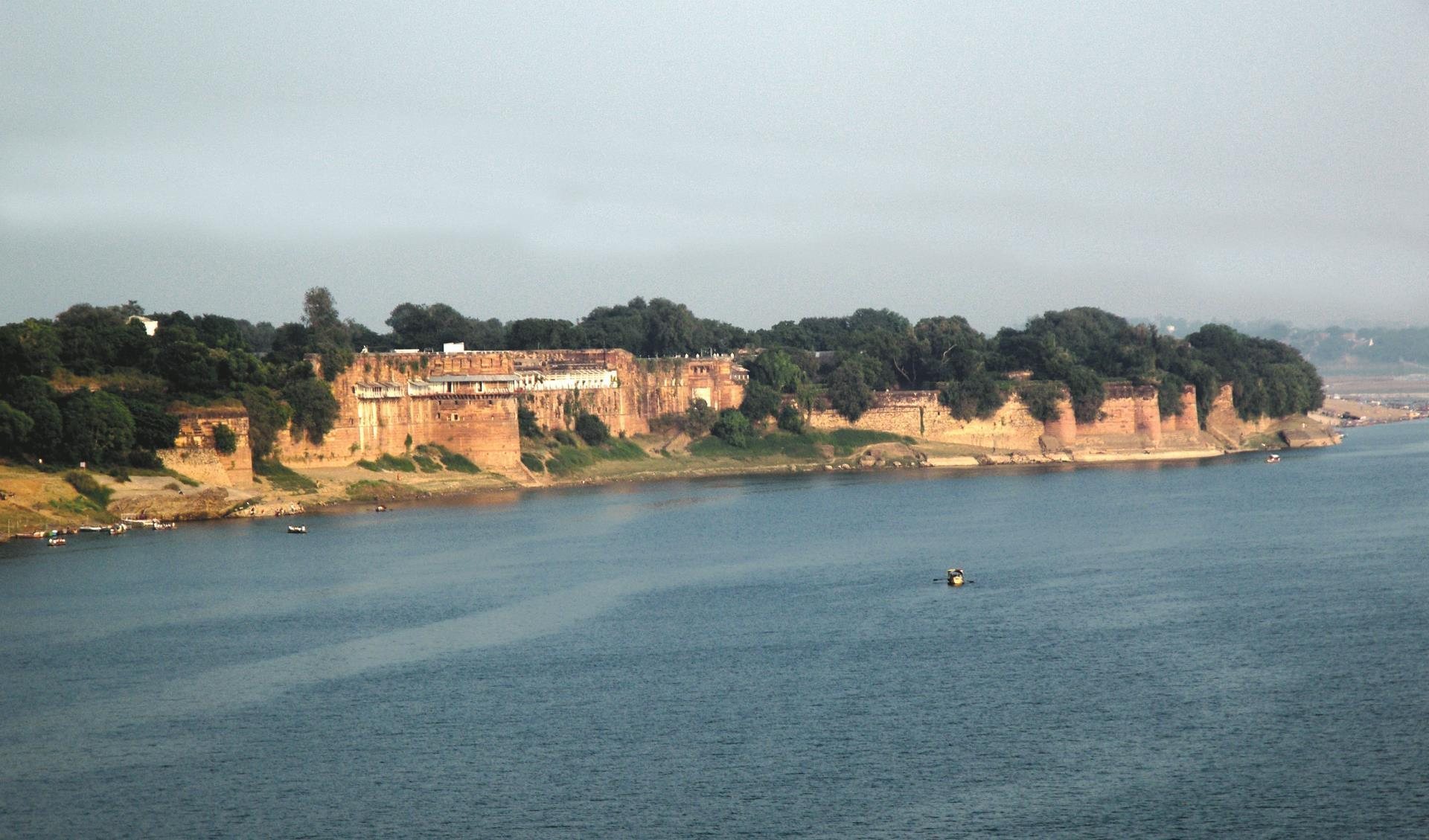
Allahabad Fort is a Mughal fort in Prayagraj, India, built by the emperor Akbar in 1583. Akbar established it at Prayag, where the Ganges and Yamuna meet, and named the settlement Illahabas, meaning “blessed by Allah.” The name later developed into Allahabad. The fort became an important stronghold at a revered Hindu pilgrimage site and occupied a strategically valuable position near the confluence.
Akbar’s Foundation
Akbar, the third Mughal emperor of India, sought to establish a major city and fort at Prayag. The project has been connected with uprisings in eastern India and with the need to control an important location. The idea that the fort was built to tax pilgrims is unlikely, since Akbar had abolished existing pilgrimage taxes in 1563.
The fort was built around the Akshaya Vat, a banyan tree associated with immortality and salvation. The reason for enclosing the tree remains uncertain. One tradition links it with people seeking salvation through suicide, while another says that the fort was meant to prevent such acts. Local Prayagwal Brahmins preserve a different foundation legend, in which the foundations repeatedly sank into the sand until a Brahmin offered himself in sacrifice. The story says that Akbar then granted the Brahmin’s descendants exclusive rights to serve pilgrims at the Triveni Sangam, the confluence traditionally understood as that of the Ganges, Yamuna, and invisible Sarasvati.
Another local tradition identifies Akbar in a previous life with the Hindu ascetic Mukunda Brahmachari. It presents the fort as the consequence of a sin followed by rebirth as a non-Hindu ruler. This is a religious tradition rather than an established historical account. The fort itself is described as the largest of Akbar’s fortifications. William Finch reported that between 5,000 and 20,000 workers from different communities built it over forty years.
Prince Salim’s Rebellion
In 1600, Prince Salim, the future emperor Jahangir, rebelled against Akbar and established his own court at Allahabad Fort. Salim controlled little territory and was reconciled with his father soon afterward. He later ruled as Jahangir, the Mughal emperor from 1605 to 1627.
Company and Awadh Control
British East India Company troops first occupied the fort in 1765 under the Treaty of Allahabad. Concluded after the 1764 Battle of Buxar, the agreement strengthened Company political and military power in northern India. Robert Clive, Mughal emperor Shah Alam II, and Nawab Shuja-ud-Daula of Awadh were involved in the treaty. The garrison was initially intended to protect Shah Alam, but he left for Delhi in 1772 and tried to transfer Allahabad to the Maratha Empire.
The Company later nullified Shah Alam’s claim and recognized Shuja-ud-Daula as the fort’s sole owner. After Shuja-ud-Daula died in 1775, the fort remained under the Nawabs of Awadh despite Company efforts to obtain it. Following the death of Asaf-ud-Daula in 1787, his disputed heir was deposed by Saadat Ali Khan I. Saadat Ali ceded the fort to the Company in February 1798 and transferred the Allahabad district to the British in 1801. The fort then became a major depot for military supplies.
Modern Historical Role
Allahabad Fort remains in use by the Indian military, with a small part open to the public. The Archaeological Survey of India recognizes it as a monument of national importance. Within the fort grounds, Swaraj Bhawan preserves a later chapter of the site’s history. Built in the 1920s, it was given to the Indian people by Motilal Nehru and served for a period as the headquarters of a Congress committee. Indira Gandhi, later Prime Minister of India, was born there.
Remains
Defensive Enclosure
Allahabad Fort stands on the bank of the Yamuna shortly before the river meets the Ganges, at approximately 100 metres above sea level. Its extensive defensive enclosure has several angular projections on the landward side that resemble European-style bastions, or projecting defensive platforms. This arrangement has been described as unusual within India.
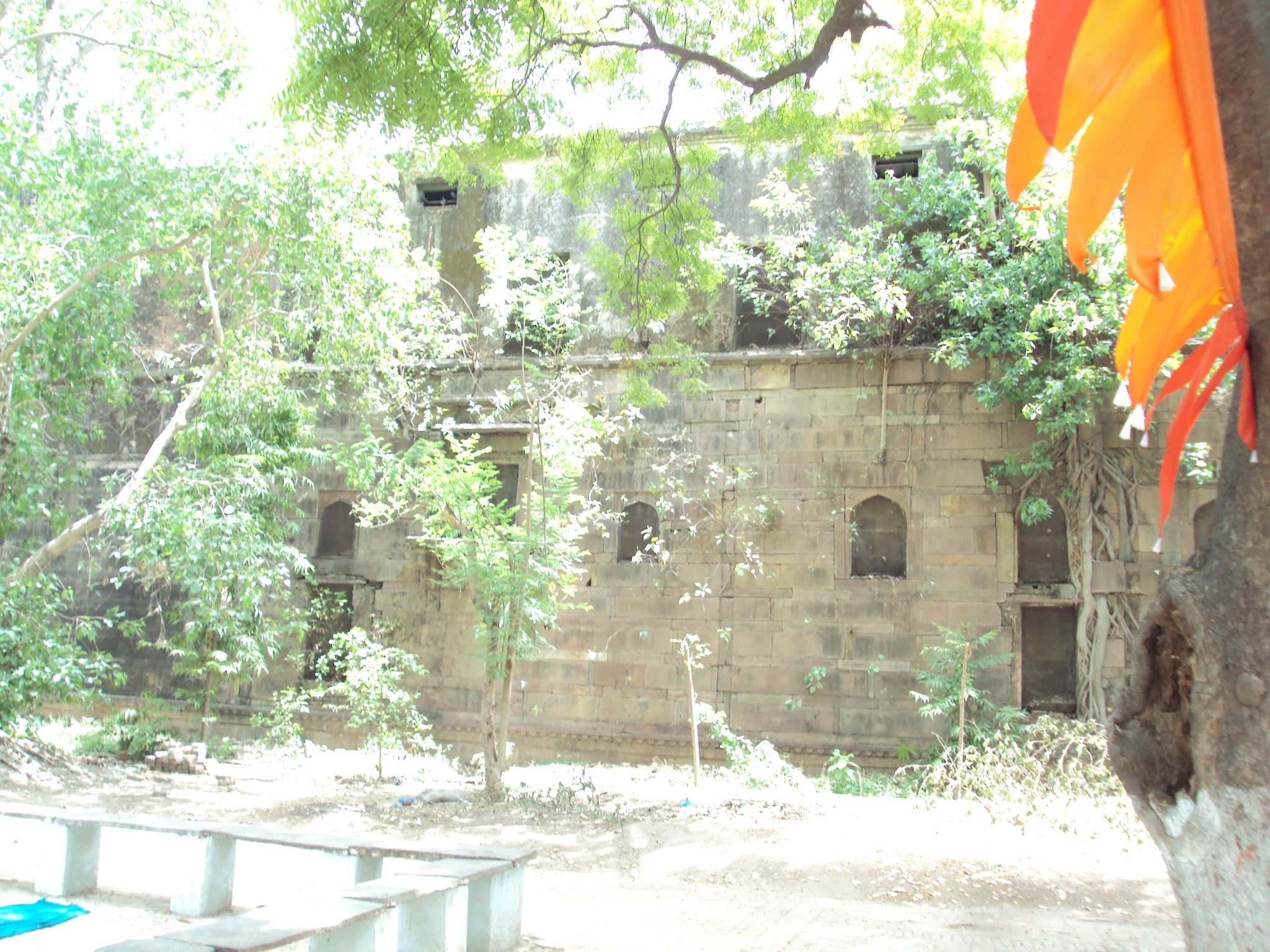
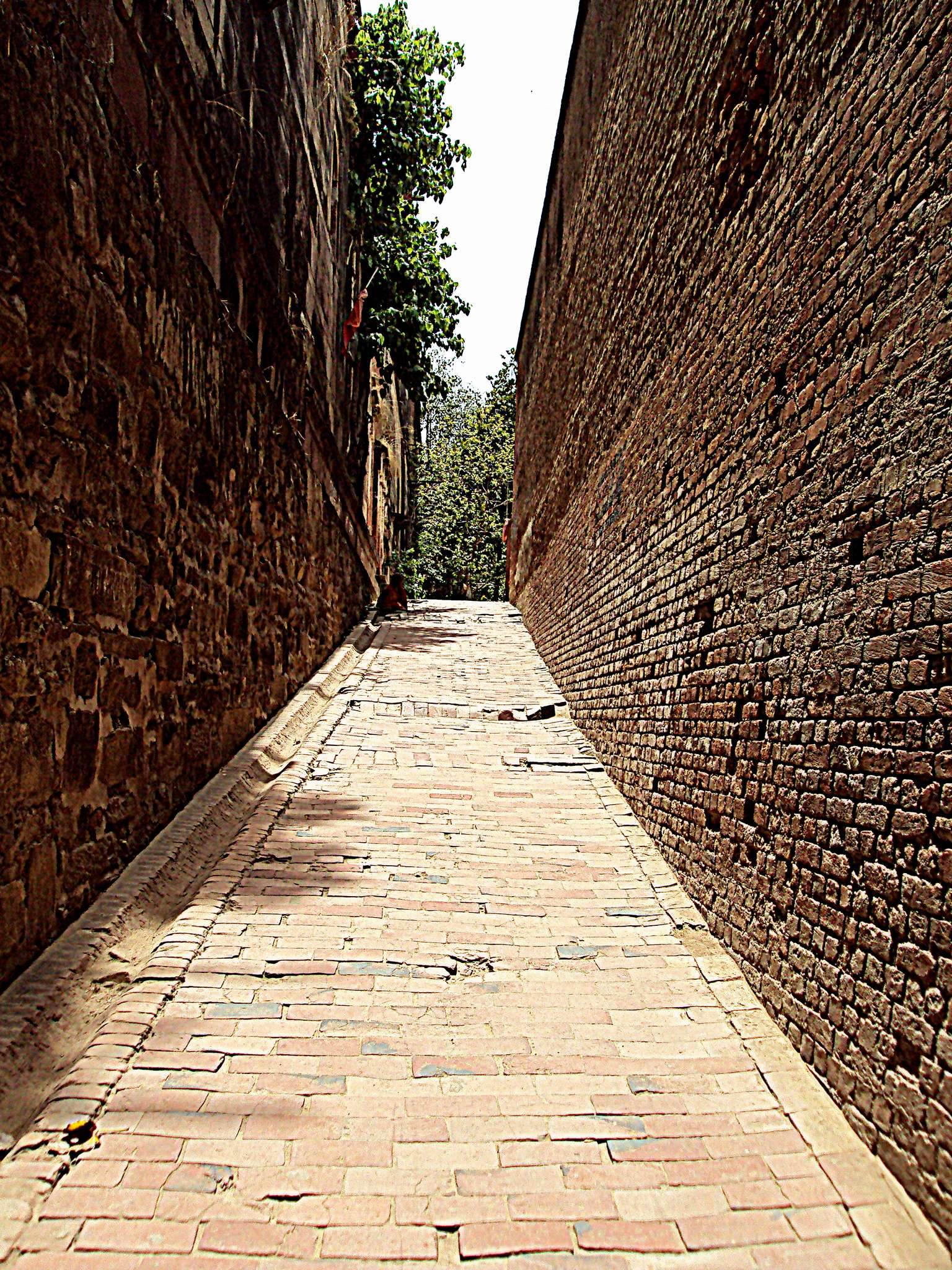
Three large defensive walkways run through the fort, flanked by high towers. The representative buildings near the river are now severely deteriorated. Broad open spaces inside the walls served military drills and shooting exercises, as well as exercise areas for horses, elephants, and other animals.
Royal and Religious Features
Jodhabai Palace and Zenana
The interior includes Jodhabai Palace and the zenana, the segregated domestic quarter reserved for women in a South Asian royal or elite residence. These buildings form part of the fort’s palace and residential remains.
Patalpur Temple
The Patalpur Temple is also located within the fort. Its presence belongs to the site’s continuing religious character alongside the fort’s military and royal functions.
Saraswati Koop and Akshaya Vat
Saraswati Koop, a well within the fort, is regarded by Hindu devotees as the source of the mythical Sarasvati River. Near the southern rampart, among trees visible from outside, stands the Akshaya Vat, a banyan associated with immortality and salvation. Laypeople are not permitted to see the tree.
Earlier Monumental Remains
Ashoka Pillar
An Ashoka pillar dating to around 230 BC stands within the fort area. Approximately 10.60 metres high, it bears edicts associated with Ashoka, the Mauryan emperor who ruled much of the Indian subcontinent in the third century BC. A later addition in Persian script was made under the Mughal emperor Jahangir.
Foundation Inscription
A stone inscription in the fort gives 1583 as the foundation year. It is also associated with Ashoka and is described as having been brought from Kosambi. The relationship between this foundation inscription and the earlier Ashokan material is not clearly established.
Modern Built Fabric
Swaraj Bhawan
Swaraj Bhawan is a separate early twentieth-century building within the fort grounds. Its association with Motilal Nehru, the Congress committee, and the birth of Indira Gandhi adds a modern political and national history to the fort’s Mughal, Mauryan, and religious remains.