Edington Priory: A Medieval Augustinian Religious House
Site at a Glance
- Rating
- 4.7
- Popularity
- Medium
- Country
- United Kingdom
- Primary era
- Medieval
- Eras represented
- Medieval, Early Modern, Modern
- Civilizations
- British, English
- Site type
- Religious
- Remains
- Monastery
On this page14 sections
History
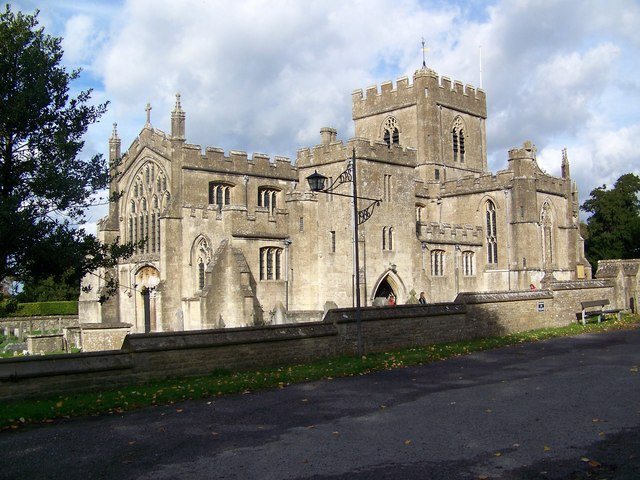
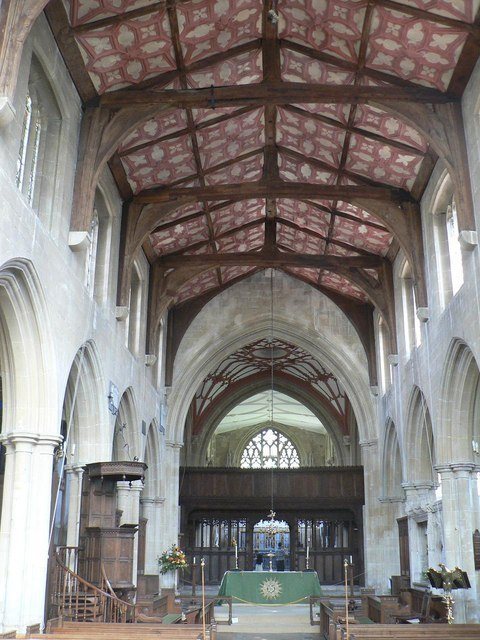
Edington Priory was a medieval religious house in the United Kingdom, founded in 1351 as a college of chantry priests, an endowment supporting clergy who prayed for named benefactors. Its church represents a transition between the Decorated and Perpendicular phases of English Gothic architecture, successive styles of the medieval period.
Before the priory
In 1086, Edington belonged to Romsey Abbey, a house of Benedictine nuns who provided a church for their tenants. North Bradley then depended on Edington as a chapelry, a subordinate chapel serving a district.
Foundation and growth
William Edington, bishop of Winchester and England’s treasurer, a senior officer responsible for royal finances, established the college and endowed it to support prayers for himself, his parents, and his brother. He transferred the church from Romsey Abbey and added funds and property in later years. In 1358, the college became a house of the Bonhommes, an Augustinian community following the Rule of Saint Augustine and modelled on Ashridge Priory. Its property passed to the new house, which William and other benefactors further endowed with manors.
John de Aylesbury, brought from Ashridge, became the first rector, the cleric responsible for the religious house. The church was consecrated in 1361. When William Edington died in 1366, the community had eighteen brethren.
Late medieval community
John Rous gave the nearby manor of Baynton to fund prayers for himself and his first wife; he was buried in the church’s south aisle. During Jack Cade’s Rebellion, an uprising against Henry VI’s government in 1450, William Ayscough, bishop of Salisbury and the king’s spiritual adviser, fled Salisbury and sought refuge at Edington church. On 29 June, he was found during Mass, dragged from the high altar, and murdered in nearby fields. Around 1463, William Wey entered the monastery and wrote accounts of his pilgrimages to Spain, Jerusalem, and Palestine.
Dissolution and later history
Paul Bush, the house’s last provost, or head, oversaw its peaceful dissolution in 1539 during the Crown’s suppression of English monasteries under Henry VIII. The brethren received pensions for life. Sir Thomas Seymour acquired most of the estates in 1541, while the property called The Priory passed to the Paulets, Marquesses of Winchester.
Late-Norman church remains, from the later phase of Romanesque architecture in England, were found during nineteenth-century restoration. Charles Ponting restored the church from 1888 to 1891. After Imber was evacuated in 1943, the parishes and benefices of Imber and Edington were united in 1951; a benefice is a church office with responsibilities and associated income. The Edington Festival of Music within the Liturgy has been held each August since 1956.
The monastery site is a scheduled ancient monument, an archaeological site protected by law. Historic England recognizes five surviving structures in addition to the church; all except the fish-pond are Grade I listed, the highest category for historic buildings in England. The church received Grade I listing in 1968.
Remains
The former monastic grounds extend north and northeast of the church, while the Ladywell spring lies about 400 metres to the southwest. The complete fourteenth-century church is the principal surviving building. Its varied skyline and extensive battlements were likened by architectural historian Nikolaus Pevsner to those of a fortified mansion.
Parish church
Church fabric and interior
The church of Saint Mary, Saint Katharine and All Saints remains in use as the parish church. Its interior was enhanced in the seventeenth century and contains medieval glass and burial monuments to local notable people. Tombs from the church of St Giles at Imber were moved here in the early 1950s.
Bells and organ
In 1965, the church had six bells, including one dated 1647 and three from the eighteenth century. Four higher-pitched bells were added in 1968, completing a peal of ten, a sequence of changes rung on the bells. The church also has a sanctus bell, a small bell traditionally rung during the Eucharistic service. Harrison and Harrison installed a new organ in 2014.
Buildings and gardens north of the church
House and gardens
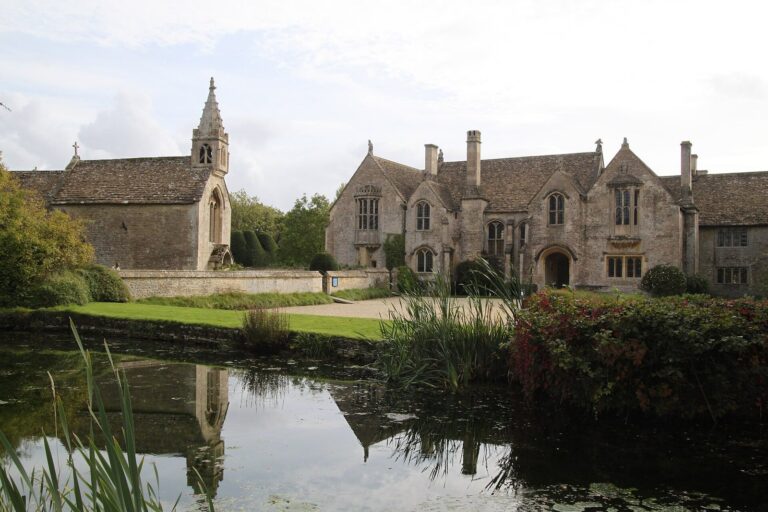
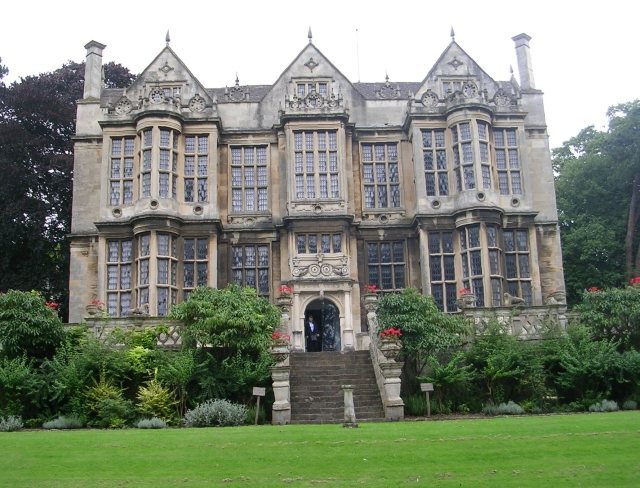
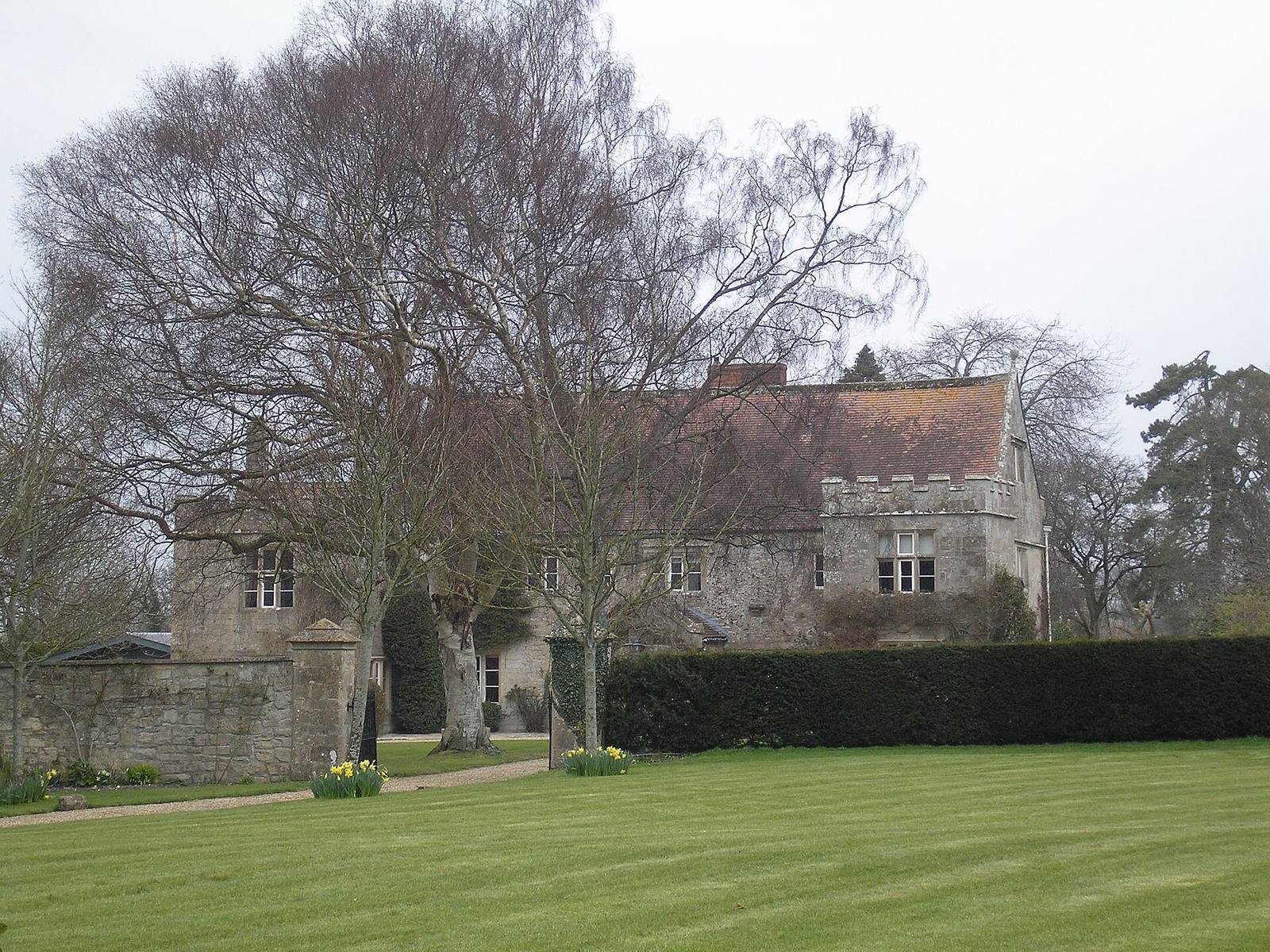
A late-medieval house immediately north of the church may incorporate parts of the monastery buildings. Two large rectangular gardens lie north and east of the church, enclosed by walls about 3 to 4 metres high. Their arrangement may reflect the former monastic grounds. Architectural historian Orbach attributes the gardens’ features to Jacobean pleasure gardens, associated with the period of James I’s rule, and dates the niches with shell-shaped decoration to about 1600.
The Monastery Garden and fish-pond
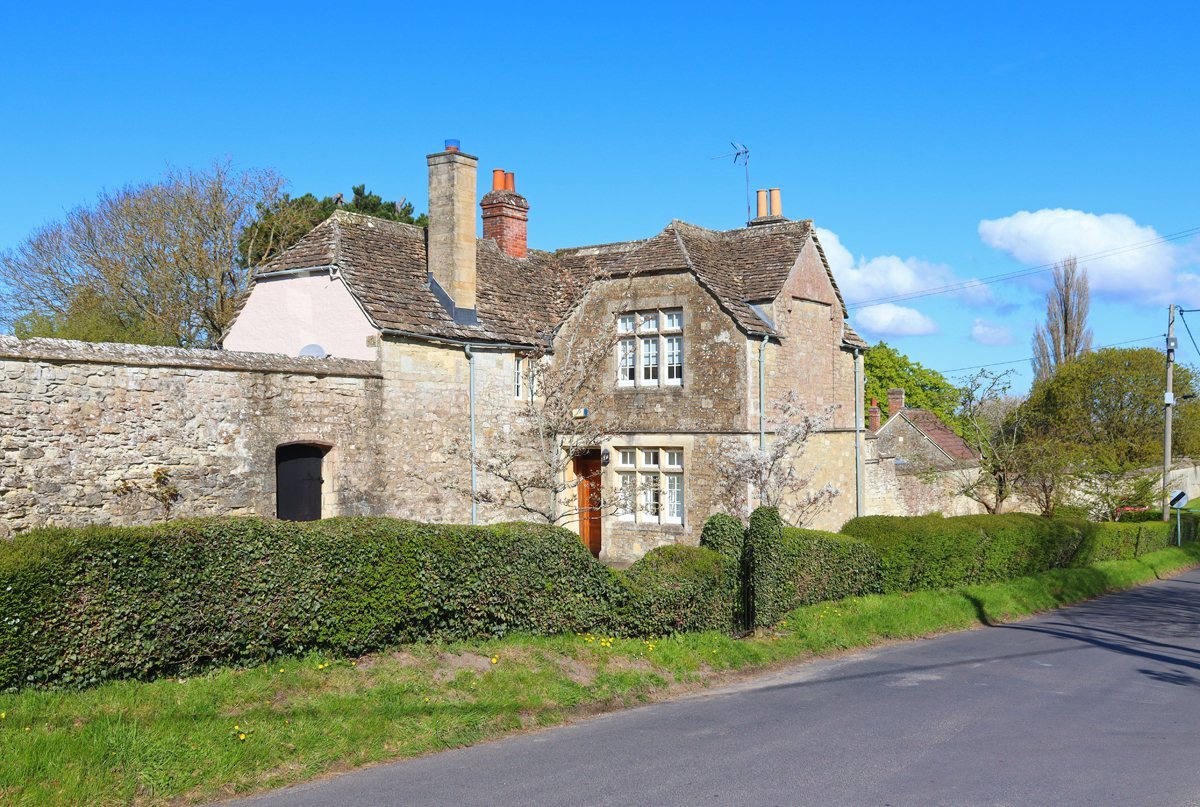
Northeast of the church, beside the road toward Steeple Ashton, the possibly sixteenth-century cottage called The Monastery Garden is built into a stretch of wall that may have monastic origins. A large rectangular fish-pond north of the church may also have belonged to the monastery.
Ladywell and water supply
About 400 metres southwest of the church, a small fourteenth-century building stands over the Ladywell spring, with stone water troughs beside it. A channel carried water from the spring to the monastery.
Churchyard cross
The churchyard contains a limestone cross that may date from the early nineteenth century. Charles Ponting restored it during his work at the church from 1888 to 1891.