St Giles-without-Cripplegate: A Medieval Parish Church in London
Site at a Glance
- Rating
- 4.7
- Popularity
- Medium
- Country
- United Kingdom
- Primary era
- Medieval
- Eras represented
- Medieval, Early Modern, Modern
- Civilizations
- British, English
- Site type
- Religious
- Remains
- Church
On this page13 sections
History
Medieval origins and religious change
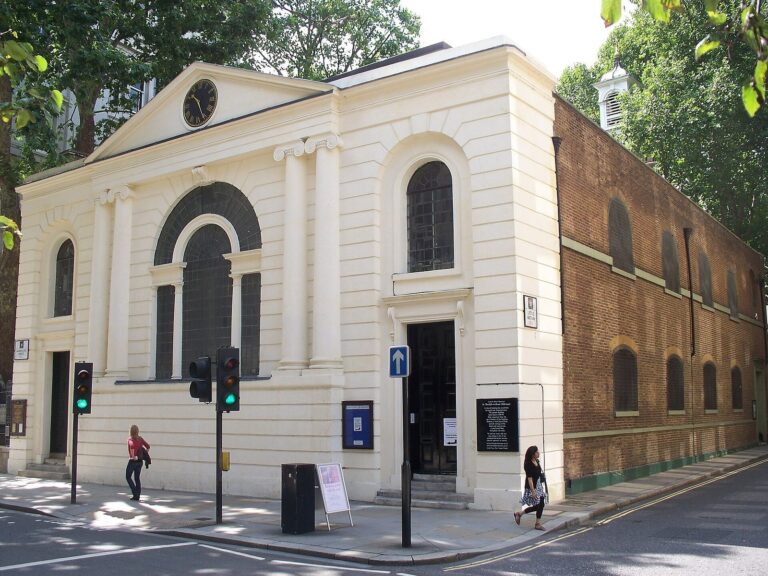
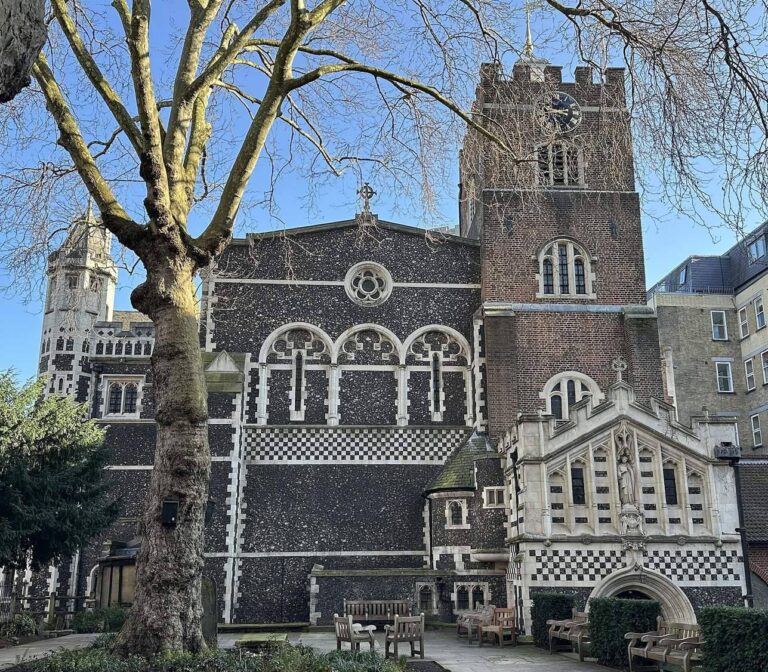
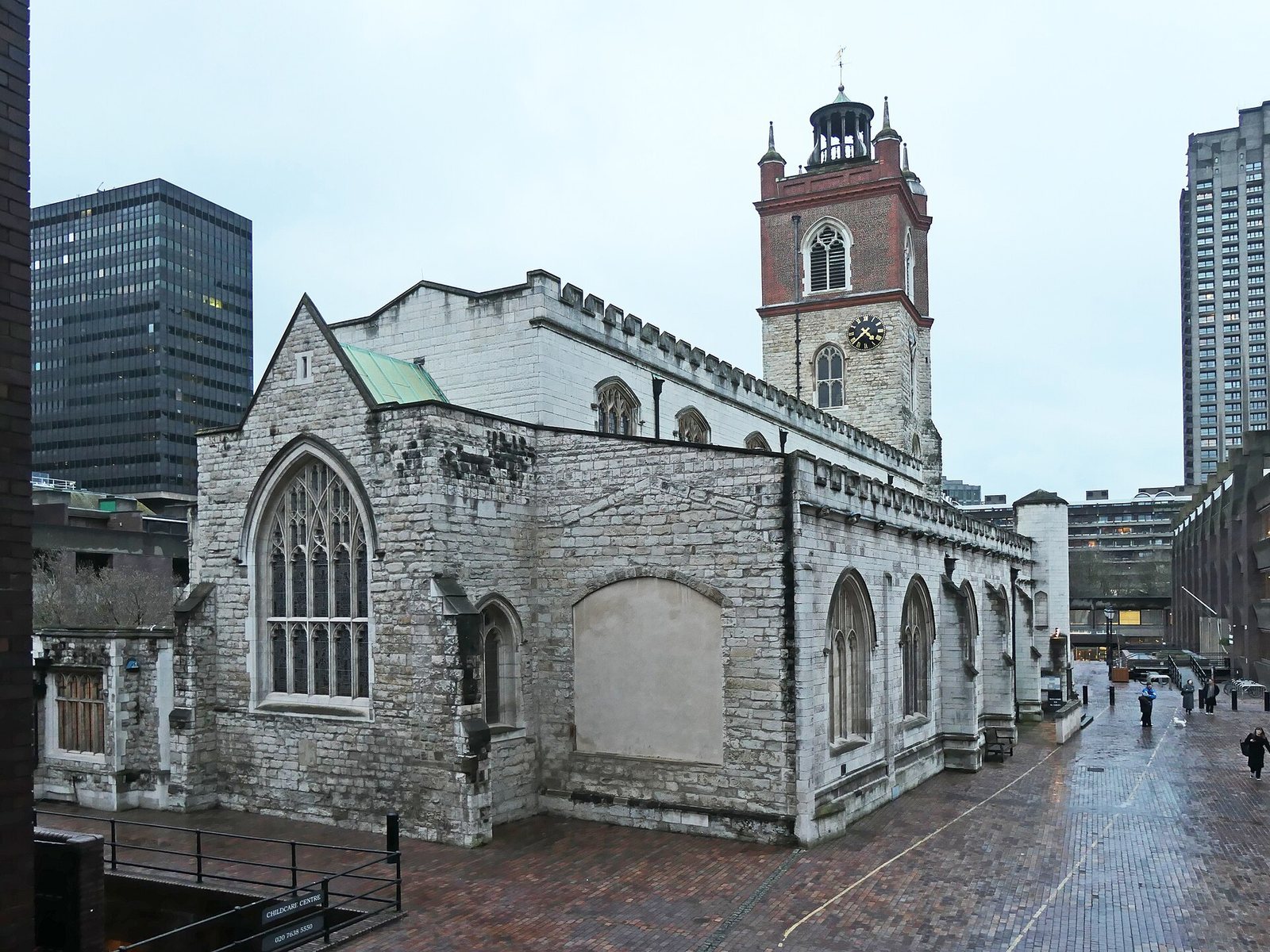
St Giles-without-Cripplegate is a Church of England parish church in the City of London, United Kingdom, built on the site of an Anglo-Saxon church that stood by the 11th century. A Norman church, in the Romanesque style associated with England after the Norman Conquest, replaced it around 1090. The church was rebuilt in 1394, during the reign of Richard II, in the Perpendicular Gothic style, an English Gothic form marked by vertical lines.
The church stood outside London Wall near Cripplegate, the gate that gave the district its name. It is dedicated to St Giles, a Christian hermit revered as patron saint of beggars and disabled people. The church was Roman Catholic until 1534 and is now part of the Church of England, England’s Anglican church.
Parish life and notable associations
Around 1565, John Foxe, author of The Book of Martyrs, served as deputy to Robert Crowley, a Protestant rector. Crowley was buried at the church in 1588, and Lancelot Andrewes, later an English bishop and theologian, succeeded him as rector. John Field served as a curate, an assistant member of the clergy, around 1570.
Thomas Deloney, a novelist and ballad writer, had a son baptised at the church in 1586. Roger Townshend was buried there in 1590, Sir Martin Frobisher, an English sea captain and explorer, in 1594, and industrialist and coalowner Sir Francis Willoughby in 1596. Nathaniel Eaton, later the first schoolmaster of Harvard College, was baptised there in 1610.
Oliver Cromwell married Elizabeth Bourchier at the church in 1620. Cromwell later became a military commander in the English Civil War and Lord Protector of the Commonwealth, England’s republican government from 1649 to 1660. Actor Nicholas Tooley was buried at the church on 5 June 1623, author John Speed in 1629, and Henry Welby, an English gentleman known for living as a recluse, on 20 October 1636.
John Milton was buried at the church in 1674. John Bunyan, an English preacher and writer best known for The Pilgrim’s Progress, attended it, while Daniel Defoe died in the parish in 1731. Naturalist and artist Mark Catesby was also a parishioner; several of his children were baptised at the church.
Fire, war and rebuilding
Fires caused serious damage in 1545 and 1897. One fire began at 4 a.m. on 12 September and left only the walls, steeple and bells intact. The church survived the Great Fire of London in 1666 and remains one of the few medieval churches in the City of London. German bombs gutted it during the Second World War’s Blitz.
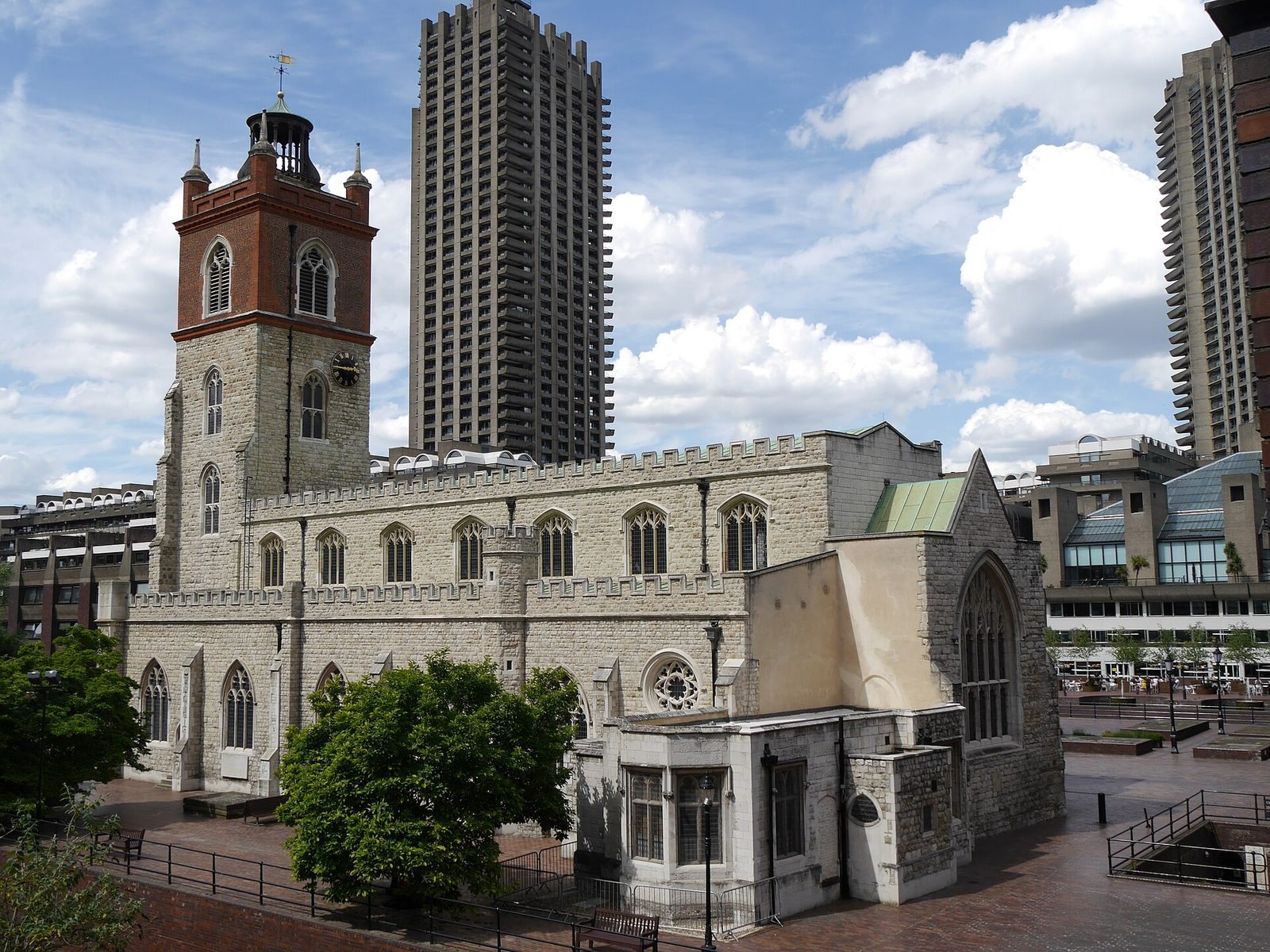
The church was listed as a Grade I building on 4 January 1950, the highest listed-building category in England, reserved for buildings of exceptional interest. St Luke’s Old Street closed in 1959, and its parish was joined with St Giles’s. Restoration after wartime bombing was completed in 1966 using plans from the rebuilding after the 1545 fire. The church now stands within the Barbican Estate, developed during the 1960s and 1970s on land devastated by the Blitz.
Remains
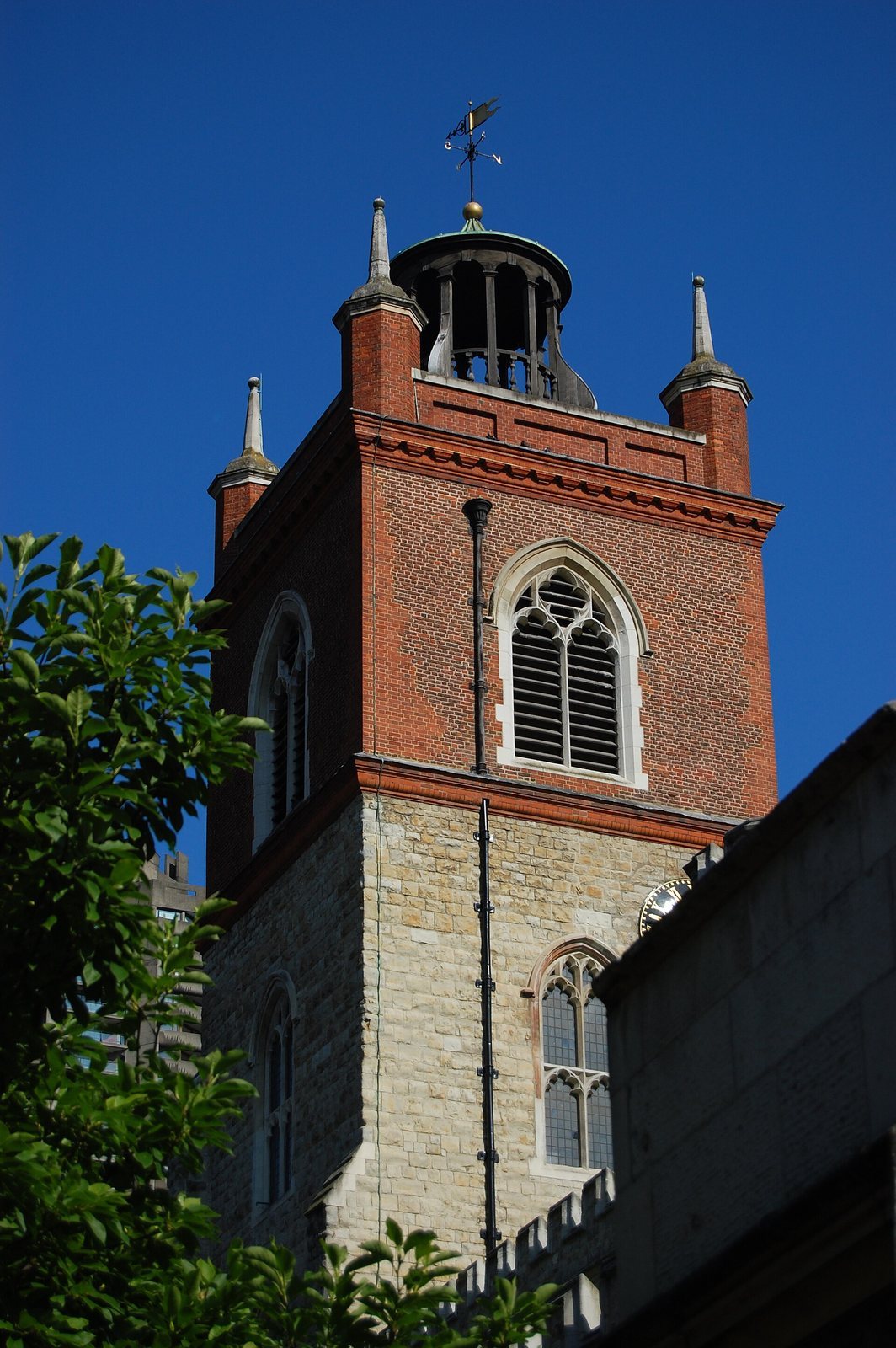
The surviving church combines medieval fabric with later additions, including a sandstone tower at its west end. Its furnishings and commemorative features reflect both the medieval building and later changes to the parish.
Church fabric and windows
Medieval fittings and tower
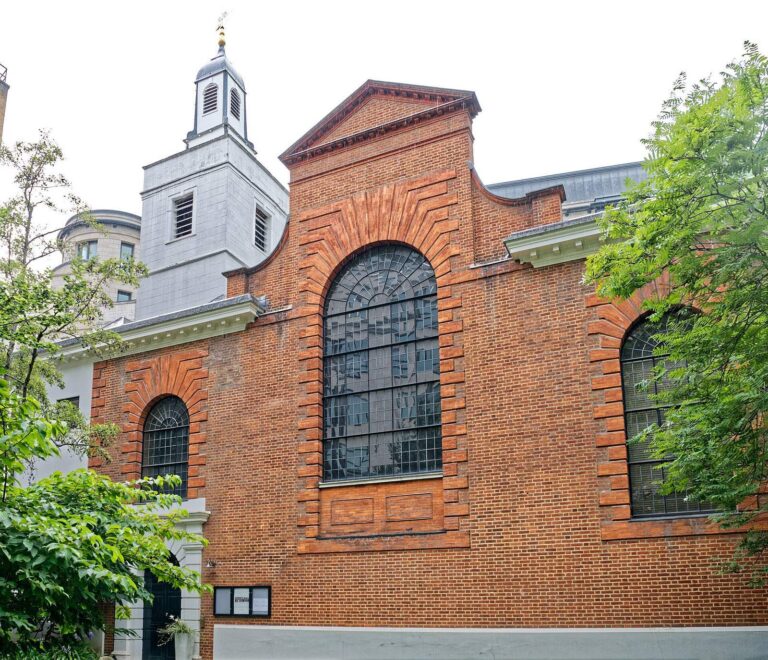
The medieval church is in the Perpendicular Gothic style. Its surviving sedilia (seats for clergy) and piscina (a basin for disposing of water used in church services) are medieval fittings. A sandstone tower was added at the west end in 1682.
Windows
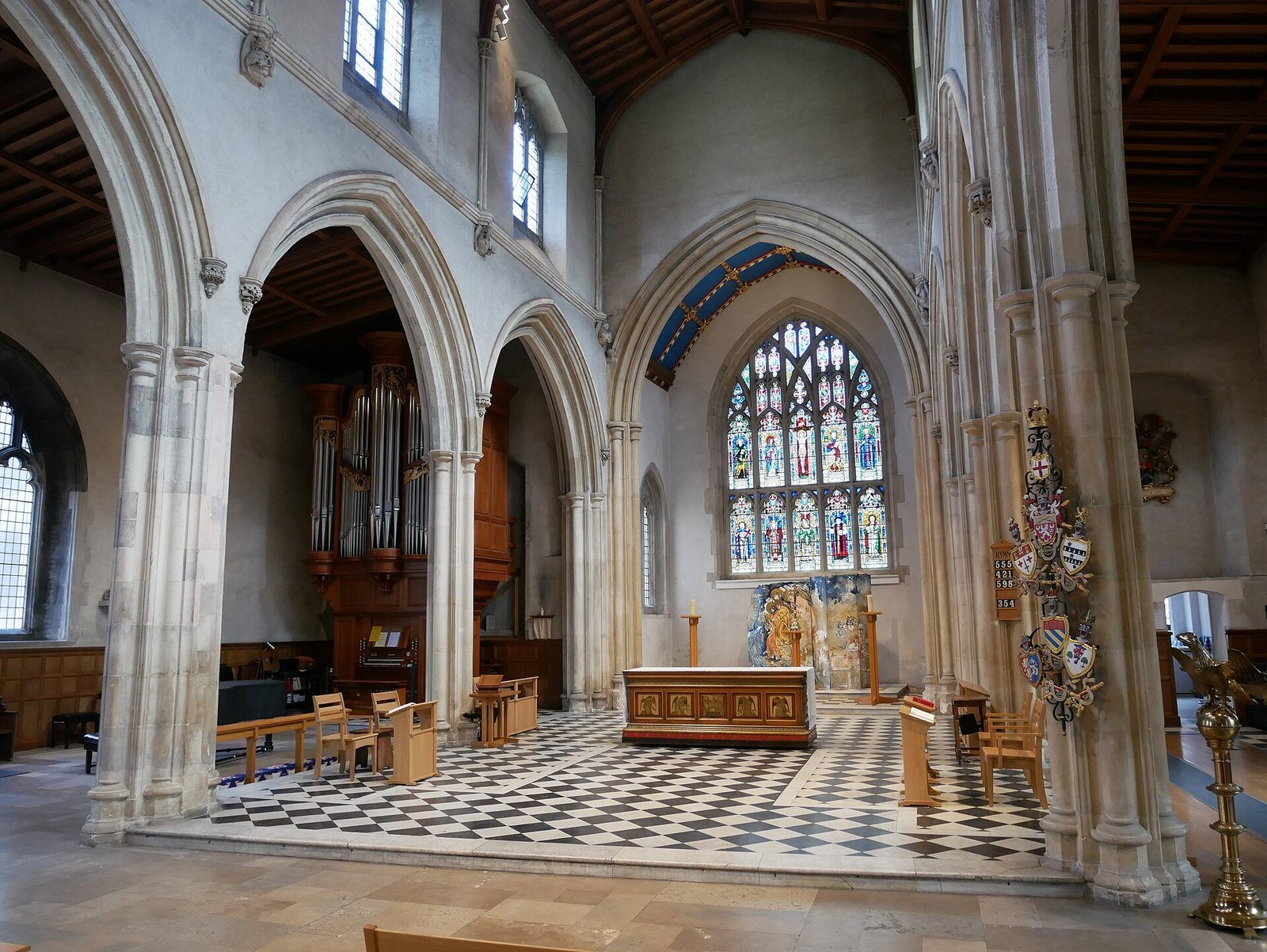
Installed in 1960, the east window was designed by Gerald Smith of Nicholson Studios to follow the pattern of the original medieval window. The west window displays the coats of arms of the Archbishop of Canterbury, the Bishop of London, John Milton, Oliver Cromwell and Martin Frobisher. The Cripplegate Window commemorates the centenary of the Cripplegate Foundation.
Memorials and transferred furnishings
Memorials and burials
John Milton and John Foxe are buried in the church. A plaque commemorates Martin Frobisher, and the church contains a bust of John Speed and a statue of Milton by Horace Montford. Busts depict Daniel Defoe, Milton, Oliver Cromwell and John Bunyan. A portrait depicts Dr William Nicholls, the first rector of St Luke’s Church and a vicar of St Giles’s; a bust commemorates Sir William Staines, Lord Mayor of London in 1801. Several children of Mark Catesby are buried in the churchyard.
Furnishings from St Luke’s Old Street
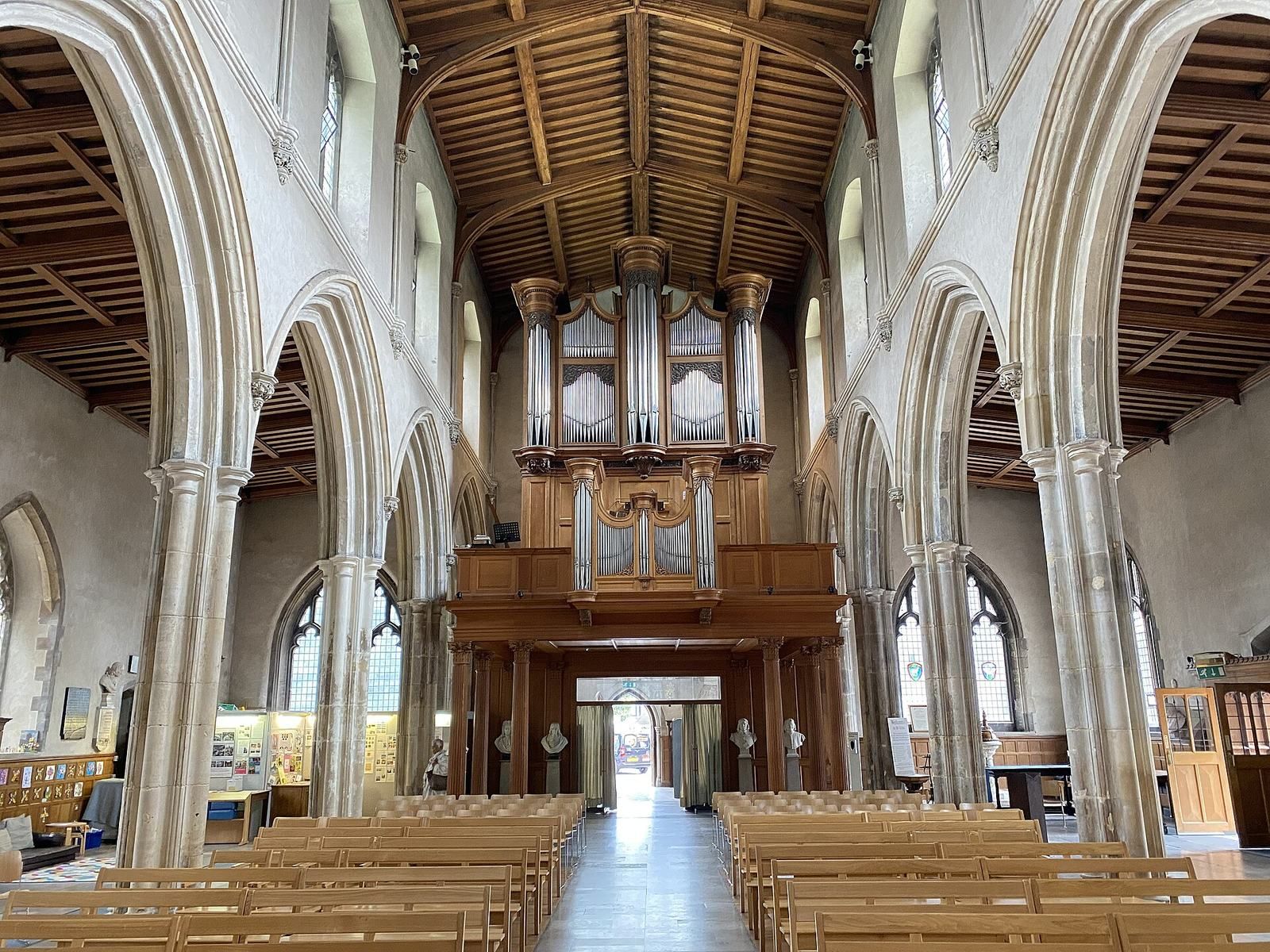
The altar, font, historic pews and organ were transferred from St Luke’s after its closure and the 1959 parish merger. Subsidence led to the altar’s dismantling during the 1960s.
Organ
Jordan and Bridge built the organ for St Luke’s in 1733. Organ builder Fr Willis substantially revised it in 1863, and N. P. Mander installed and enlarged it at St Giles’s in 1971. The original 1733 case came from St Luke’s; a case for the organ’s rear division (a section positioned behind the organist) was added in 1971. The instrument has 42 stops (controls that select sets of pipes), three manuals (keyboards played by the hands) and a pedal keyboard played by the feet. Its electro-pneumatic action uses electrical controls and air-powered mechanisms.
Bells
Mears and Stainbank cast a ring of 12 bells, a coordinated set for controlled bell-ringing, in 1954. The Whitechapel Bell Foundry added a sharp second bell in 2006 to augment the ring.