Velika Remeta Monastery: A Fruška Gora Monastery Dedicated to Saint Demetrius
Site at a Glance
- Rating
- 4.9
- Popularity
- Very High
- Country
- Serbia
- Primary era
- Early Modern
- Eras represented
- Medieval, Early Modern, Modern
- Civilizations
- Habsburg, Habsburg Austria, Hungarian, Ottoman
- Site type
- Religious
- Remains
- Monastery
On this page12 sections
History
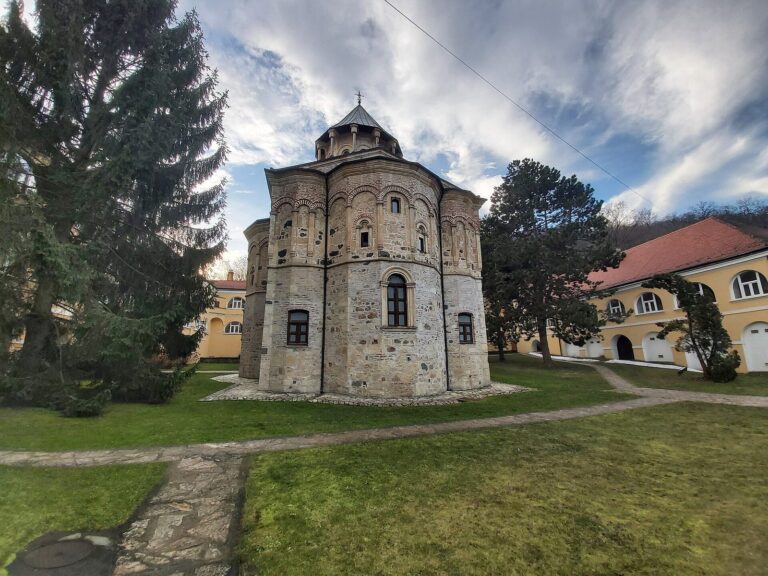
Velika Remeta Monastery is a Serbian Orthodox monastery on the southern slope of eastern Fruška Gora in Serbia, dedicated to Saint Demetrius. It is among the oldest of the mountain’s 16 monasteries and belongs to the Eparchy of Syrmia, the Serbian Orthodox Church’s diocesan jurisdiction in the region. Its foundation is uncertain, though it is generally placed in the 15th century, with another proposed dating in the late 15th or early 16th century. The church’s original design followed the Raška school, a medieval Serbian church-building tradition, before 18th-century work gave the complex a Baroque character, a European artistic and architectural style prominent in the 17th and 18th centuries.
Foundation and early records
Tradition credits the foundation to Stefan Dragutin, a medieval Serbian king. According to the story, Dragutin fell from his horse while hunting, was left permanently lame, and transferred rule to his brother Milutin, also a king. Written evidence places a monk acting as envoy for Despotess Angelina Branković at a monastery dedicated to Saint Demetrius in 1509. In 1543, Ottoman sultan Suleiman I issued a decree regulating the monastery’s land relations with neighbouring sipahis, Ottoman cavalry landholders associated with military service.
The monastery appears under the name Velika Remeta in an official record from 1562. A record six years later mentions the production of liturgical books there. Documents from the 16th and 17th centuries also describe land sales and purchases. In 1721, the Serbian monk and writer Jerotej Račanin stayed at the monastery and wrote about his 1705 journey to Jerusalem. His account is the first travelogue in Serbian literature. During the 17th and 18th centuries, monks also travelled to Russia to seek spiritual and material assistance.
Eighteenth-century reconstruction
The monastery suffered serious damage in 1716 during the Ottoman withdrawal, and fire destroyed part of its library and archive. In 1720, the brotherhood began collecting materials to rebuild quarters destroyed by Ottoman forces. Archbishop Vikentije Popović became a patron in 1722, when three monastic cells, two kitchens, and vaulted basement rooms were built on the north side. Further construction followed in 1724 and 1732, with the wider rebuilding completed between 1764 and 1771.
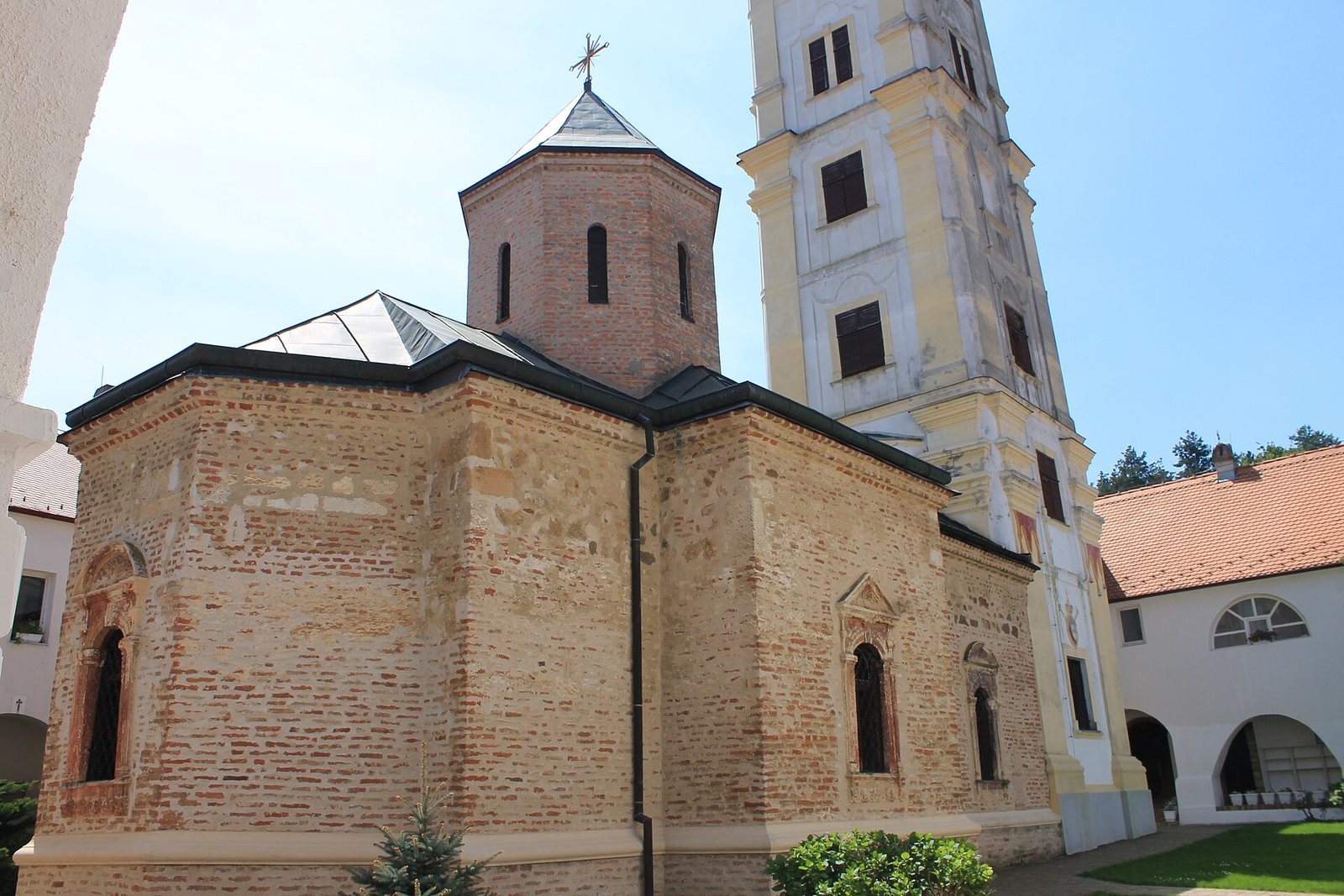
Extensive work during the 18th century changed the church from its earlier Raška-school character to a fully Baroque appearance. Its façade was adapted to the style between 1733 and 1753. From 1733 to 1735, the German builder Johanes Vilhelm constructed a Baroque bell tower and a chapel dedicated to the Nativity of Saint John the Baptist. The tower was added to the church complex in 1735. The project was commissioned by the postmaster brothers Jakov and Andrej Andrejević of Karlovci.
From dependent monastery to wartime destruction
In 1865, Velika Remeta became a dependent branch of Grgeteg Monastery, which was headed by an archimandrite, a senior monastic title in Eastern Orthodox Christianity. During the Second World War, after Yugoslavia was occupied, Srem and the monastery came under the administration of the Independent State of Croatia, an Axis-aligned state ruled by the Croatian fascist Ustaše movement.
Ustaše units occupied the monastery until the spring of 1943, plundering and damaging it. On 10 September 1941, a commission from Zagreb’s Museum of Arts and Crafts, led by curator and art historian Vladimir Tkalčić, removed about 60 objects from the church, treasury, and library, as well as two portraits from the salon. Many valuables had already been stolen or destroyed. Serbian liturgical books and manuscripts were among the items taken, while the archive and other holdings were stolen, destroyed, or lost. As Ustaše forces withdrew in spring 1943, they set fire to the monastery. The church’s dome and roof collapsed, its interior was devastated, and its wall paintings were painted over. The west wing of the monks’ quarters was razed, and the other quarters were heavily damaged.
Recovery and modern status
Objects removed from the monastery remained in Zagreb. In 1946, a Serbian state-church commission travelled there to inventory and recover cultural property taken from Serbian Orthodox churches and monasteries in the Independent State of Croatia. That year, remaining objects formed the Museum of Serbs in Croatia as a department within the Museum of Arts and Crafts. The department became part of the Historical Museum of Croatia in 1963, and its objects later entered other collections of the Croatian History Museum. On 29 May 1984, objects retained in Zagreb were returned to the Diocese of Syrmia; two portraits went back to the monastery.
Two restoration campaigns followed the wartime destruction. The monastery community was re-established in 1973 under Abbot Danilo Zdravković, who led it until 2000, when Abbot Stefan Vučković succeeded him. In 1990, Velika Remeta was designated a Monument of Culture of Exceptional Importance and is protected by the state.
Remains
Setting and layout
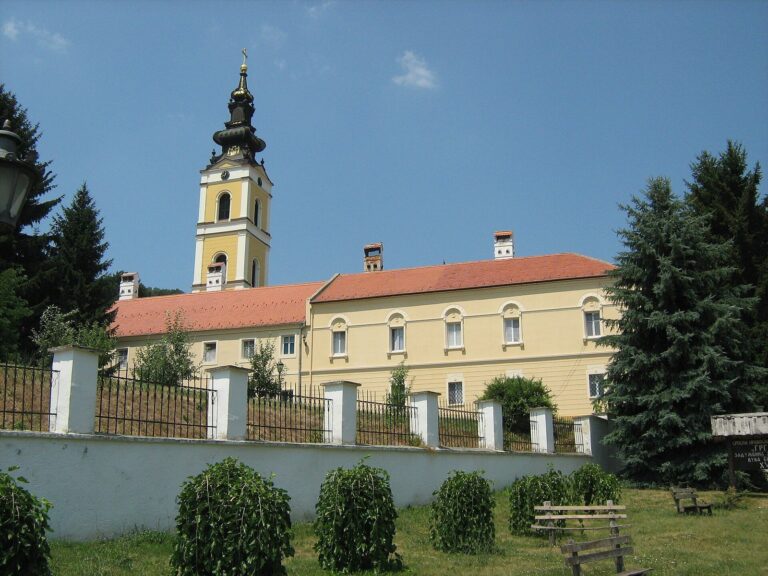
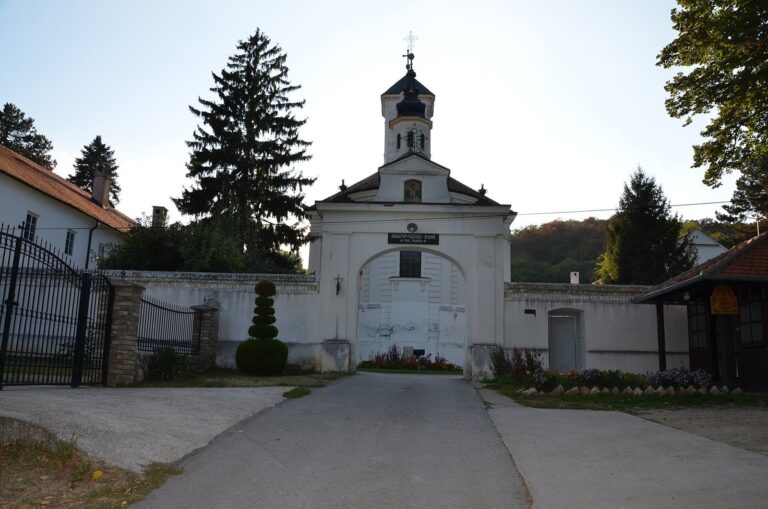
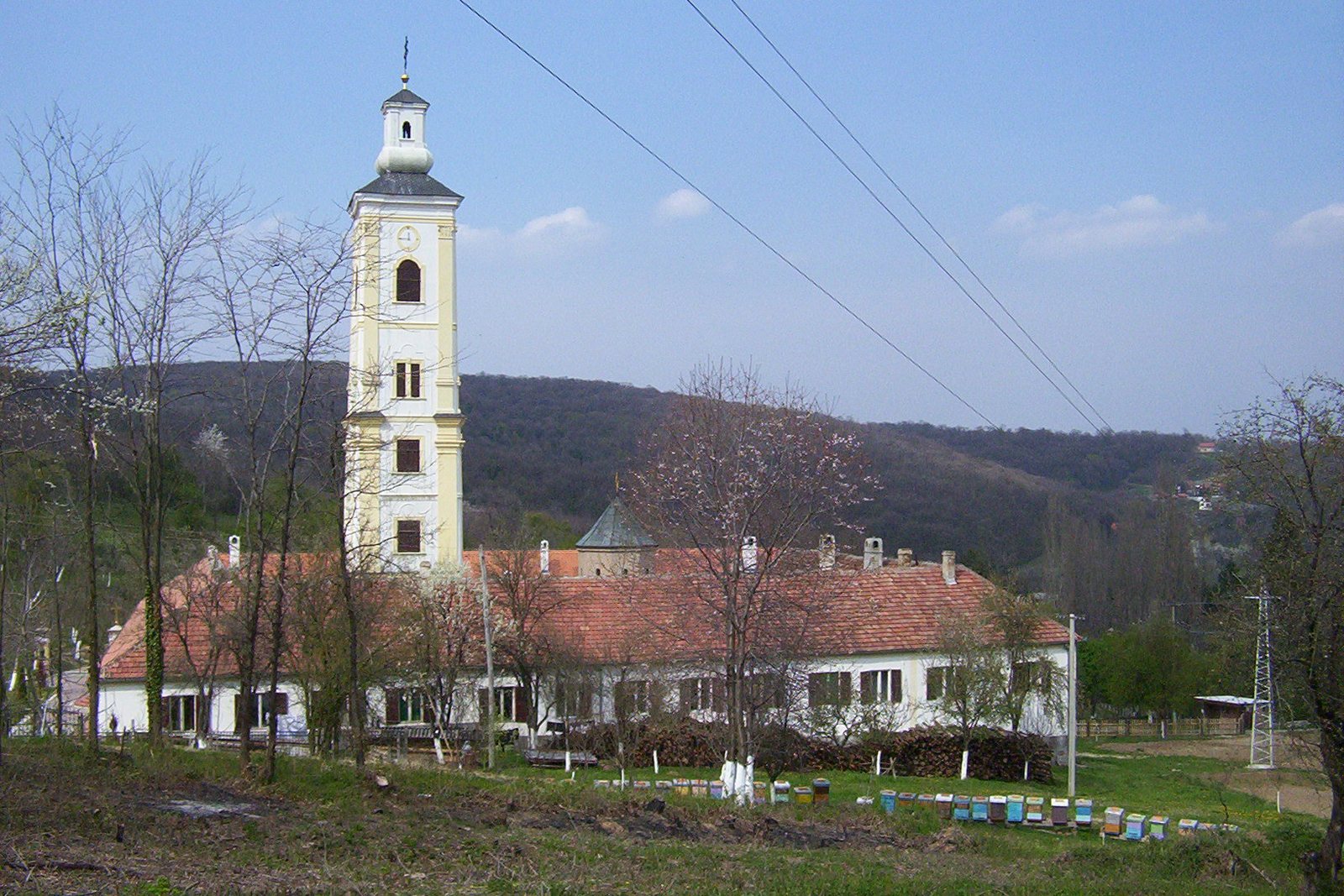
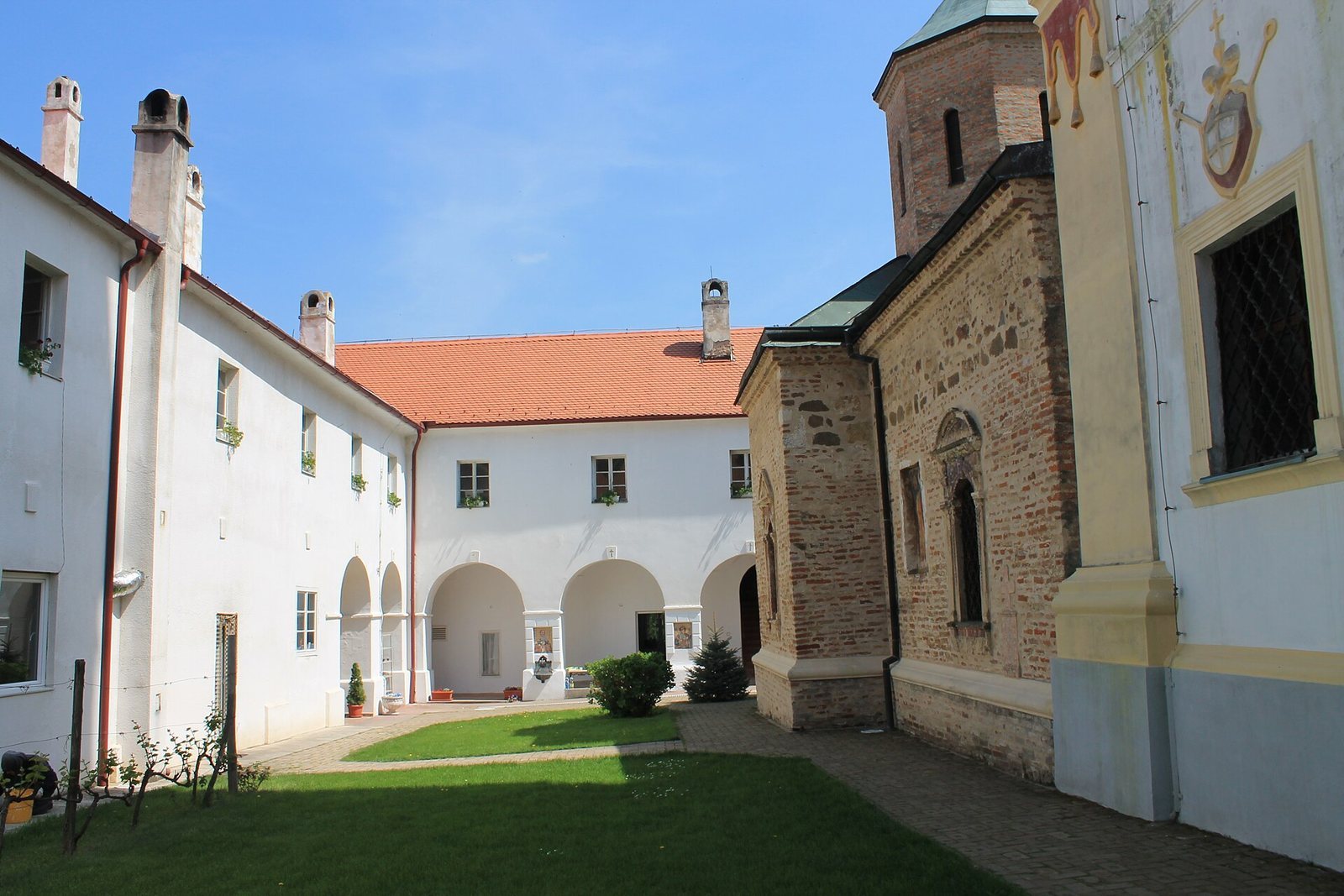
The monastery stands at an elevation of about 270 metres on Fruška Gora’s southern slope, in the mountain’s eastern part. It lies northwest of the settlement of Velika Remeta, within the settlement’s territory, and is administratively part of Irig municipality. Monks’ residential buildings enclose the church on all four sides. Built of stone and brick, the quarters predate the bell tower and were later adapted to its Baroque architecture, giving the complex a fortress-like appearance.
Church and interior
Church plan and wall paintings
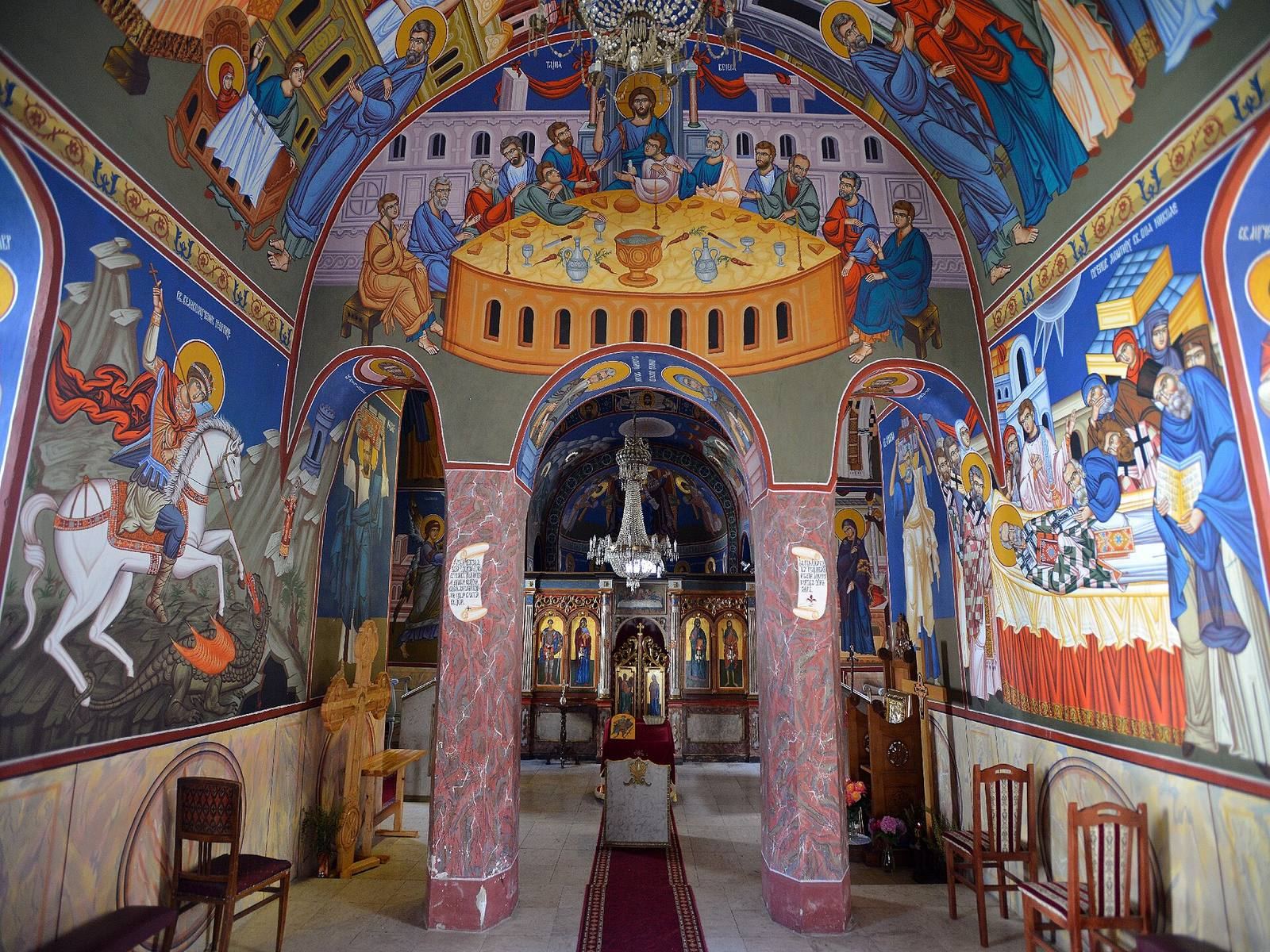
The church has a cross-shaped plan, with one main worship space, rectangular side extensions for the choir, an outer entrance vestibule, and a dome. Its sanctuary end is rounded inside and has three sides on the exterior. Wall paintings once covered both the interior and exterior. Surviving sections remain inside around the altar and in parts of the sanctuary ends; outside, they survive in a niche above the north doorway and on the south side. The niche on the south façade was painted in 1568.
Iconostasis and portraits
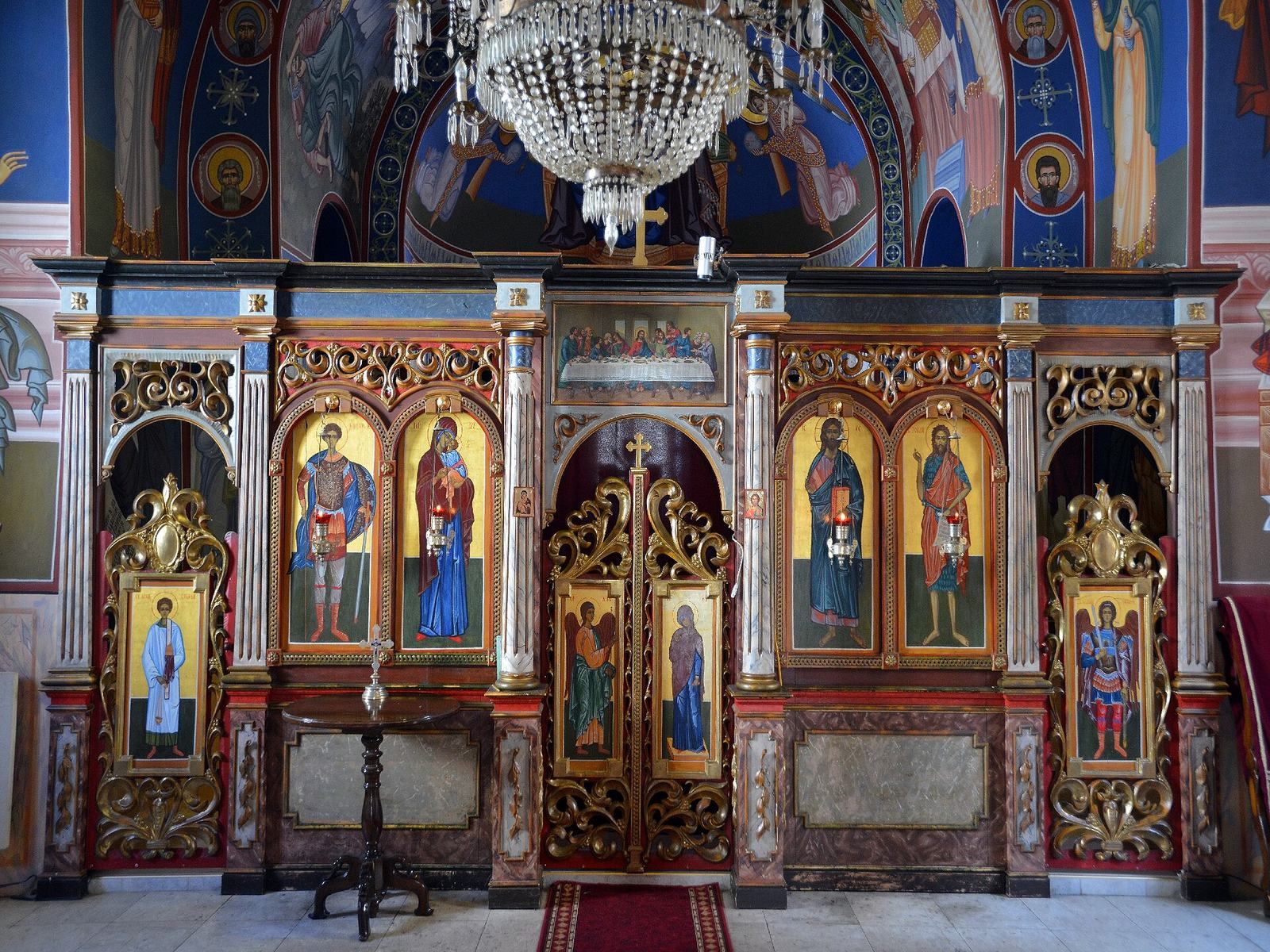
The former iconostasis, a screen of icons separating the sanctuary from worshippers, combined works from different periods. A carved and painted cross from the 17th century stood at its top. Its 17th-century throne icons were made in a Russian imperial workshop in 1687 by Tihon Ivanov, Spiridon Grigorev, Jovan Maksimov, and Leontije Stefanov. They came to Velika Remeta from Rakovica Monastery during the 1739 Second Migration of Serbs, a movement northward from Ottoman-controlled lands. The icons were a Russian gift associated with diplomatic services during the era of the Peace of Karlowitz, the 1699 treaty between the Ottoman Empire and a Habsburg-led coalition. Artists whose names are unknown painted additional icons for the screen in the first half of the 18th century. The iconostasis was dismantled and dispersed during the Second World War. Three of its most valuable icons are now in the Matica Srpska Gallery, and an icon by Tihon Ivanov is in the monastery’s winter chapel. Two portraits from the monastery salon depict Peter the Great and Andrej Andrejević.
Bell tower
The 38.6-metre Baroque bell tower is the tallest in Srem and forms the church’s western entrance. Its chapel is dedicated to the Nativity of Saint John the Baptist.
Chapels, museum, and burial
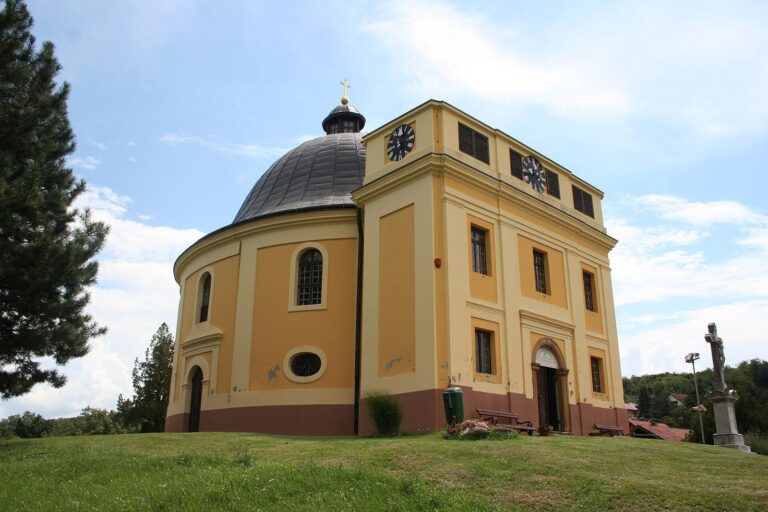
The complex also includes an 18th-century chapel dedicated to Saint John the Baptist and a chapel dedicated to the Dormition of the Virgin Mary, built in 1970. A small museum of old Serbian music was established at the monastery by musicologist Dimitrije Stefanović, director of a musicological institute. Stefan Metohijac, one of the early metropolitans of Karlovci, a senior bishop, is buried there. The monastery is in good condition.