King Ezana’s Stele: A Royal Aksumite Monument in Ethiopia
Site at a Glance
- Popularity
- High
- Country
- Ethiopia
- Primary era
- Classical
- Eras represented
- Classical
- Civilizations
- Aksumite
- Site type
- Burial
- Remains
- Tomb
On this page6 sections
History
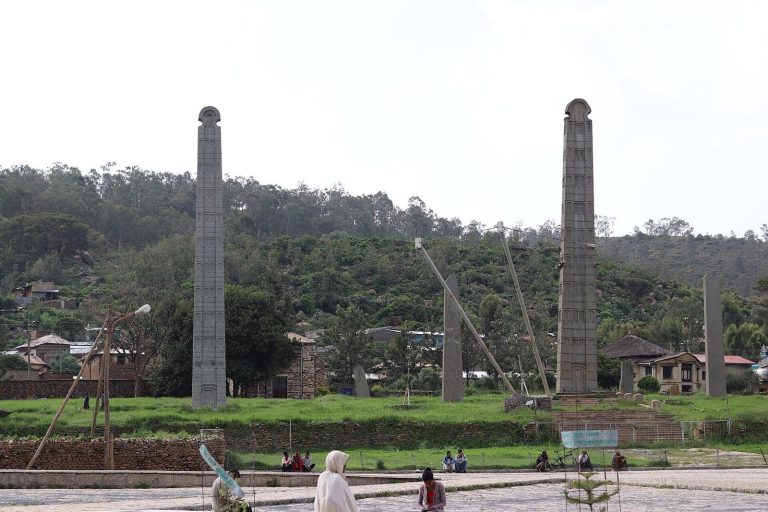
King Ezana’s Stele is a fourth-century stone monument in the Northern Stelae Park, Ethiopia, carved by subjects of the Kingdom of Aksum, an ancient state centered in the highlands of present-day Ethiopia and Eritrea. It was probably the last stele raised in the park. Aksumite stelae are thought to have marked underground burial chambers: the largest were associated with royal burials, while smaller, less decorated examples were linked to the nobility.
The monument takes its name from Ezana, king of Aksum around AD 300–350. Though born into the pagan faith, he adopted Christianity after receiving instruction from his childhood tutor, Frumentius, an early Christian missionary and church leader. The Ethiopian Orthodox Church traces its origins to Ezana’s conversion. The Aksumite practice of raising burial stelae ended after the adoption of Christianity under his rule.
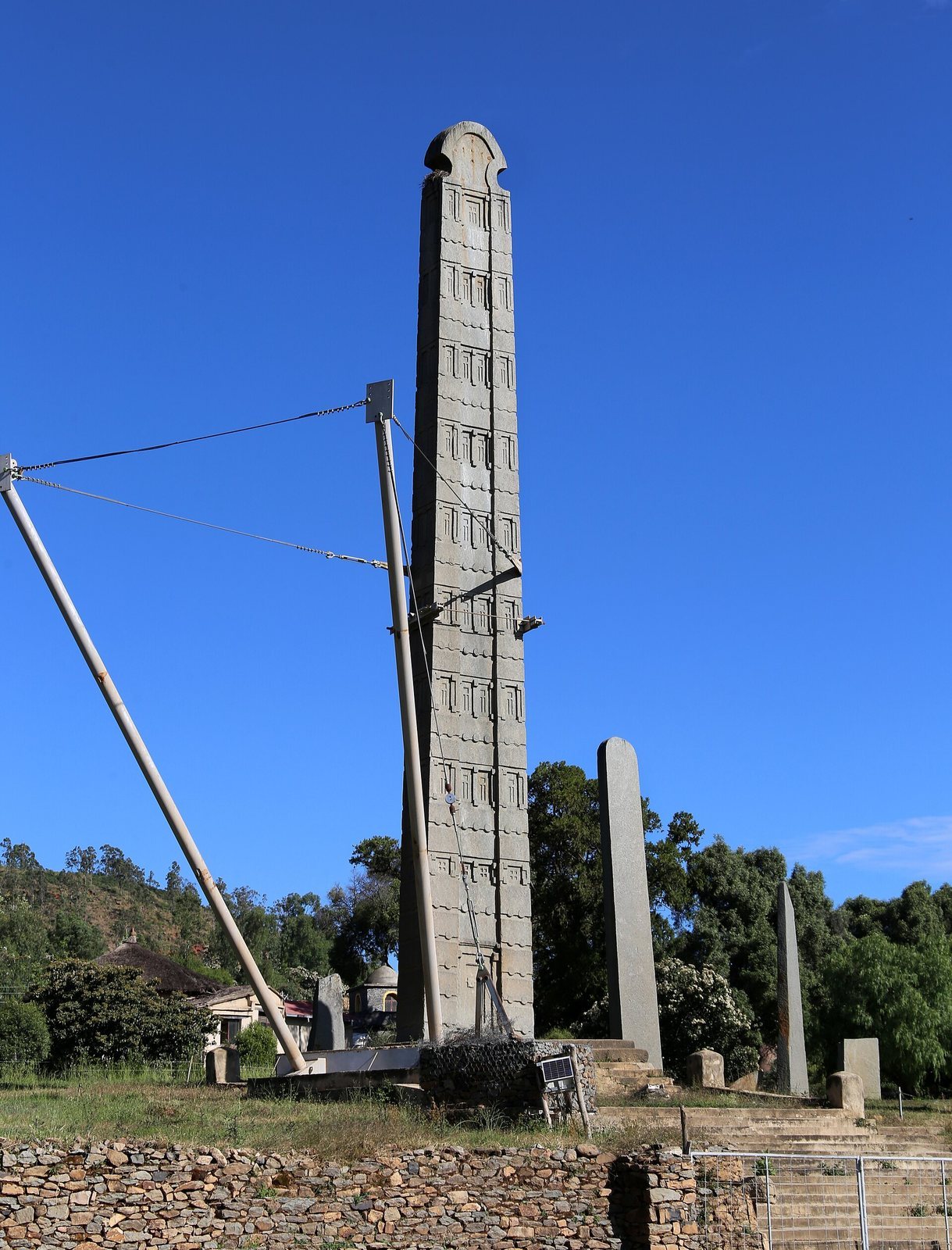
In 2007–2008, engineers led by Giorgio Croci structurally consolidated the stele while the Obelisk of Axum was being reassembled. That monument had been taken to Italy in 1937 and returned to Ethiopia in 2005. King Ezana’s Stele is part of the Aksum UNESCO World Heritage property, inscribed in 1980.
Remains
The stele
Position and scale
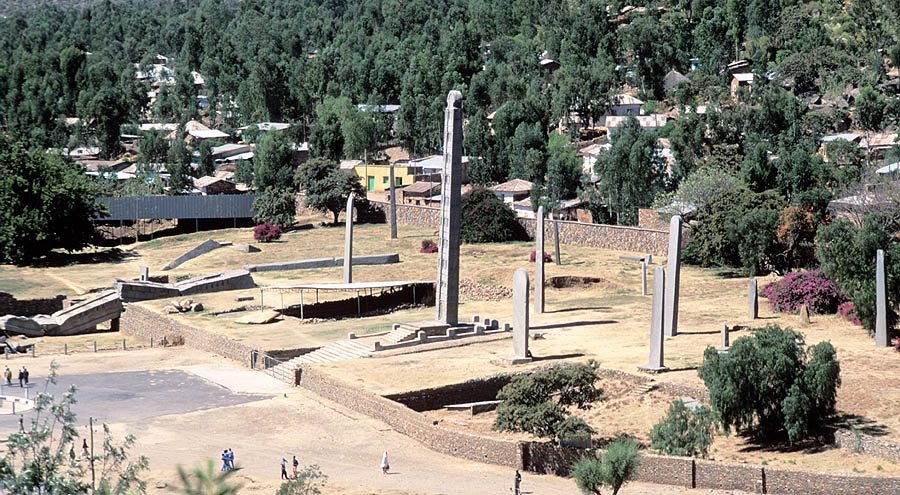
Standing at the center of the Northern Stelae Park among hundreds of smaller, less decorated stelae, the monument is 21 metres tall. It is the largest stele in the park that remains unbroken and the only one of its three major royal obelisks never to have broken. The fallen Great Stele measures 33 metres, while the Obelisk of Axum is 24 metres tall.
Carved openings
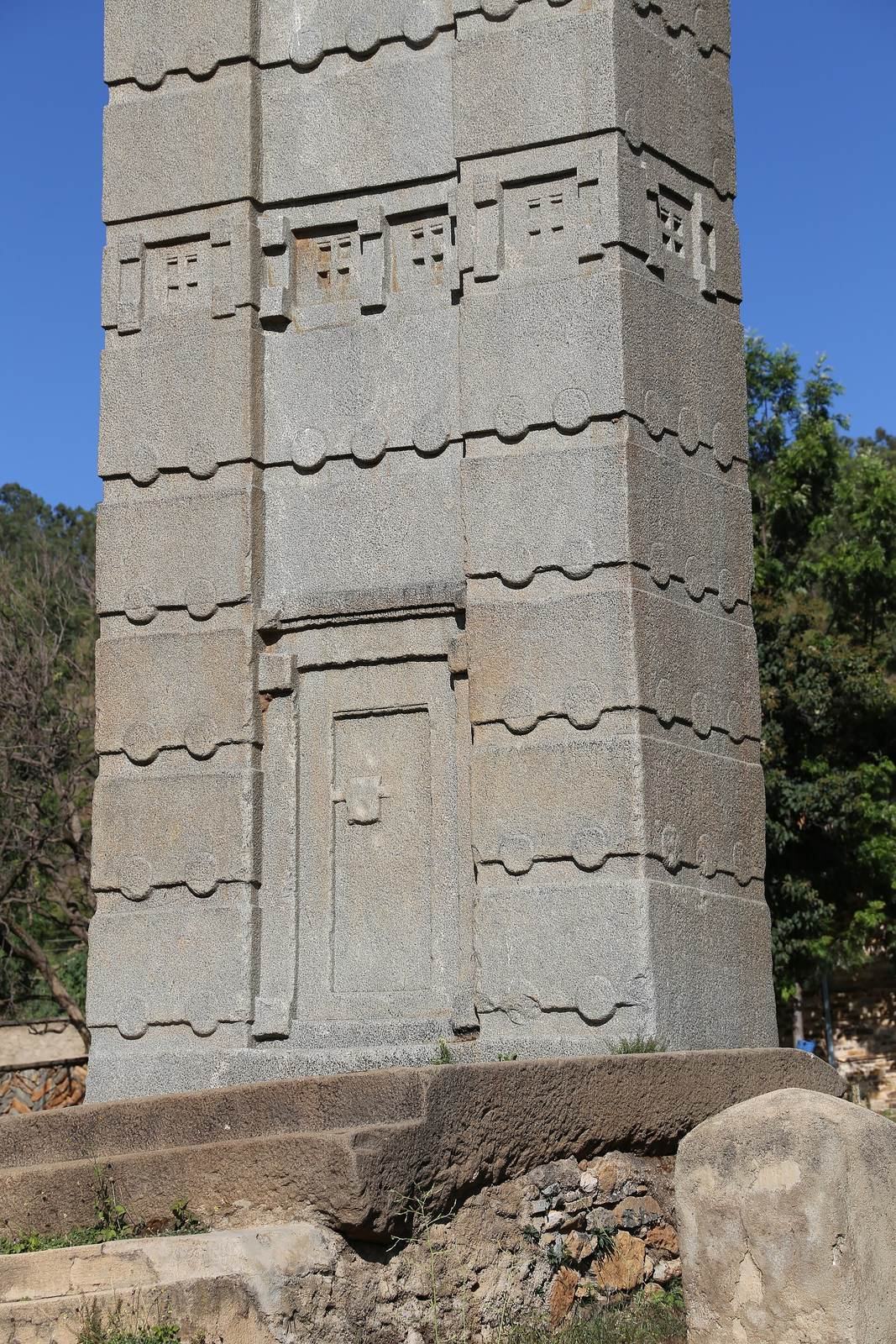
A false door, an imitation rather than a usable entrance, is carved at the base, and nine false windows appear higher on the stone. These features are thought to represent the doorway and nine chambers of a royal tomb.
Stone and transport
The monument was cut from a single block of local granite and is estimated to weigh between 160 and 180 tonnes. The stone came from a quarry about four kilometres away and was probably dragged to the park by elephants.