Sestroljin Monastery: A Serbian Orthodox Monastic Complex
Site at a Glance
- Rating
- 4.8
- Popularity
- Medium
- Country
- Serbia
- Primary era
- Modern
- Eras represented
- Modern
- Civilizations
- Serbian
- Site type
- Religious
- Remains
- Monastery
On this page6 sections
History
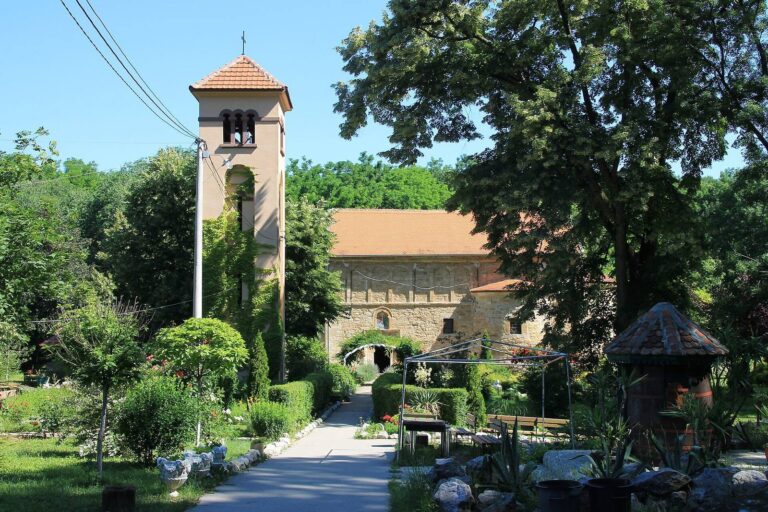
Sestroljin Monastery is a Serbian Orthodox monastery at the entrance to Poljana, in the territory of Požarevac, Serbia. Its foundation is dated to the 14th century, and a local tradition connects its origins with events in 1375.
The tradition, also recalled in a folk song, tells of two Serbian noble brothers who were falsely told by one brother’s jealous wife that their sister had killed her child. The brothers tied their sister to horses and pulled her apart in four directions. In remorse, they founded four monasteries where her body, beard, eyes, and hand were said to have fallen. Sestroljin is associated with the place where her eyes fell.
Sestroljin belongs to the Diocese of Braničevo, a territorial diocese within the Serbian Orthodox Church. Its church is protected in Serbia as an immovable cultural property and cultural monument.
Remains
Church complex
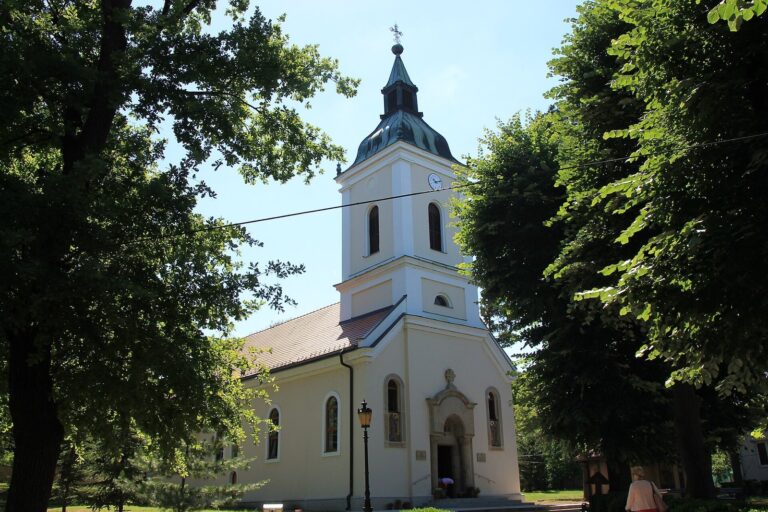
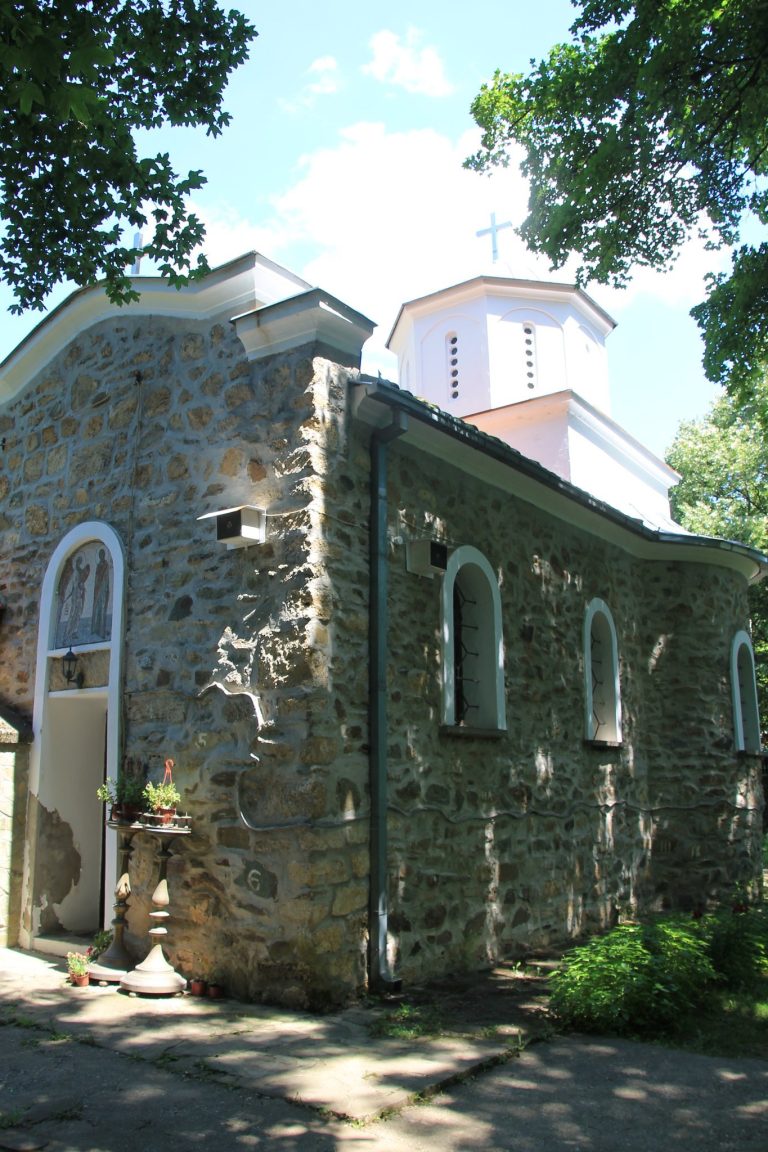
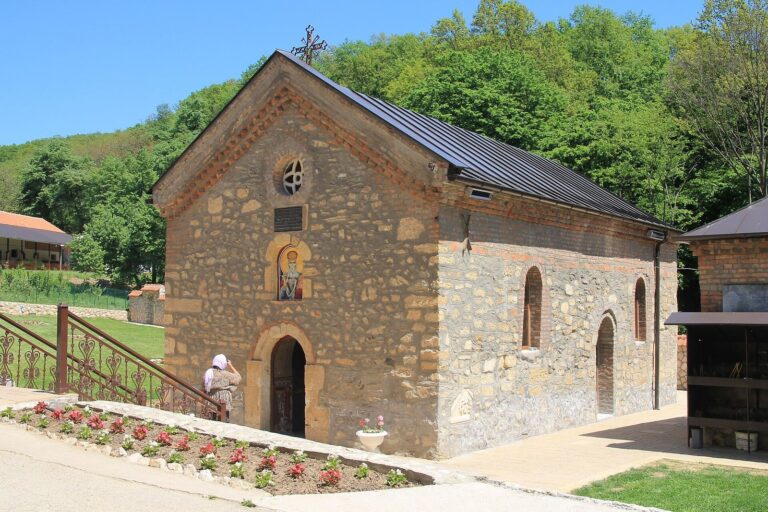
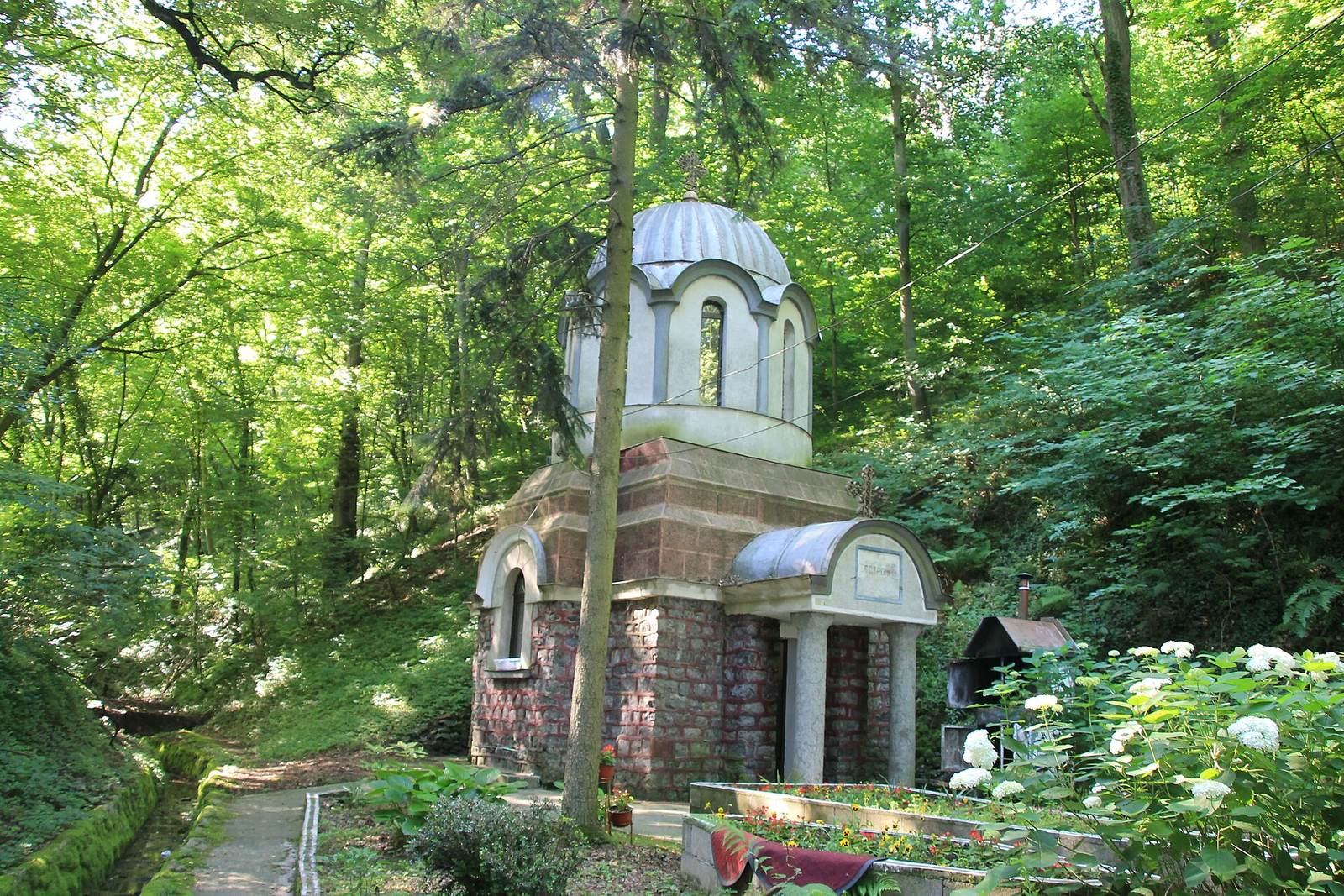
The complex includes the Church of the Ascension of Christ, built in 1893, and a nearby chapel above a spring regarded as having healing water. The monastery takes its name from the spring.
Plan and interior
The church is a rectangular, single-nave building without a dome. At its eastern end, a spacious altar apse, a projecting altar end, is flanked by two smaller choir conches, shell-shaped recesses. Inside, a barrel vault, a continuous tunnel-shaped ceiling, rests on the side walls.
Exterior and entrance
The church has a double-pitched roof that was once covered with beaver-tail tiles, a type of roofing tile; the covering was later changed. Its simply finished façades include a profiled cornice along the roofline. On the west side, stepped sections frame the entrance, above which a decorative stone rosette displays a central floral design and eight lilies.
Iconostasis
The iconostasis, an icon-bearing screen separating the altar from the nave, dates to the church’s construction. It combines a Classical-style design with rich Baroque woodcarving. Its 28 icons are arranged in three tiers, follow the Romantic style, and are attributed to a single painting workshop.