Tellicherry Fort: A British Coastal Stronghold in Kerala
Site at a Glance
- Popularity
- High
- Country
- India
- Primary era
- Early Modern
- Eras represented
- Early Modern
- Civilizations
- British
- Site type
- Military
- Remains
- Fort
On this page6 sections
History
Tellicherry Fort is a British coastal fort in Tellicherry, Kerala, India, built to protect British trade on the Malabar Coast. The town became an important outlet for spices, timber, and other products from the hinterland.
British trade and fortification
The French were the first Europeans to trade at Tellicherry and established a stronghold at Mahé, a coastal enclave about five kilometres to the south. Toward the end of the seventeenth century, the British opened a factory, or trading post, north of Tellicherry. In 1708, they secured a site from Vadakkelamkur, the effective ruler of Kolathunad, a regional polity in northern Kerala, and established a trading post there.
The Udayamangalam branch of the Kolathiri ruling family and the local chieftain Korangoth Nair opposed the British presence and attacked, seriously damaging English property. With the support of the Kolathiri ruler, the British built the fort to protect their trade. After the French occupied Mahé in 1725, the British strengthened it as a coastal stronghold.
Military role and later history
The British took possession of Dharmadam Island in 1736 and maintained a substantial military presence at Tellicherry from 1776 to 1784. In 1781, Hyder Ali, ruler of the South Indian kingdom of Mysore, unsuccessfully attempted to capture the fort during his campaign to control Malabar. His successor, Tipu Sultan, was compelled to cede the Malabar District to the British in 1792.
The fort became a nucleus of Thalassery’s development. Cricket matches between European and local teams near the seashore drew large crowds. Since 1921, the Archaeological Survey of India, India’s national agency for archaeological research and monument protection, has protected the fort as a centrally protected monument.
Remains
The main fort
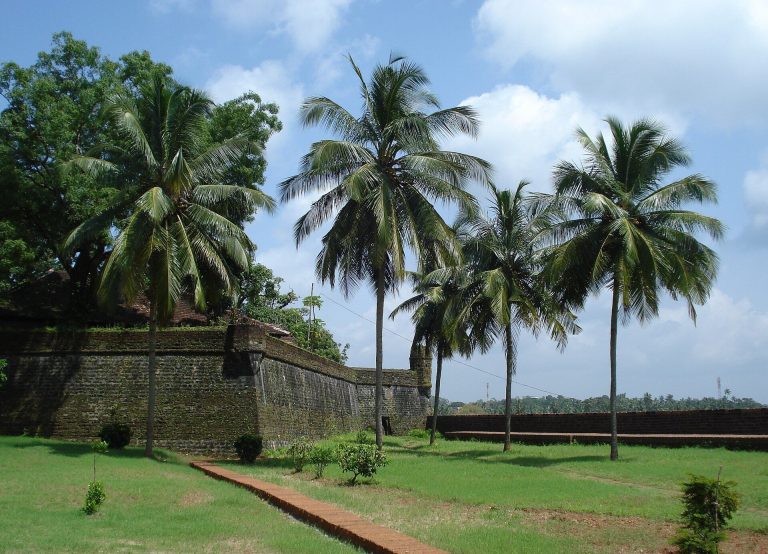
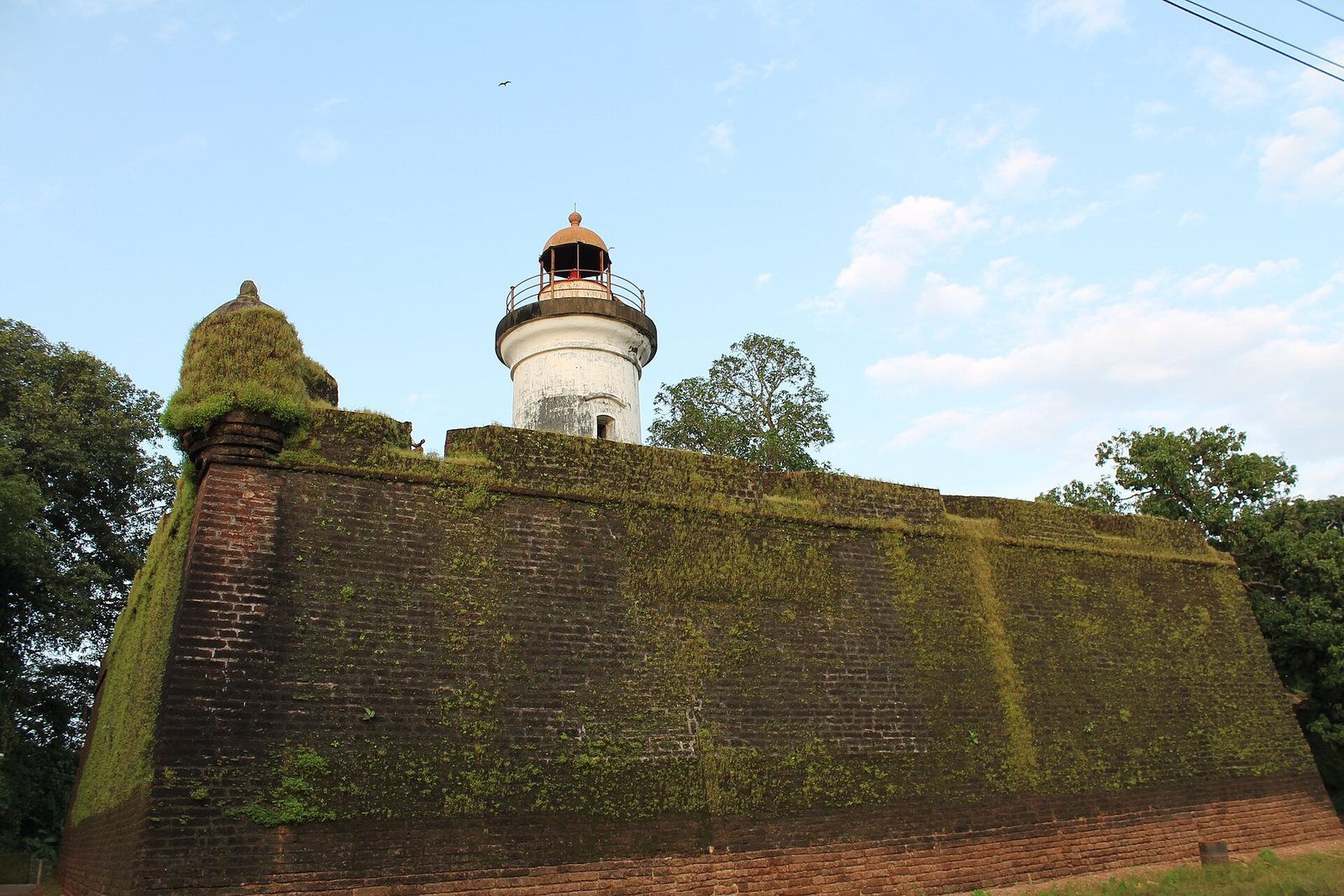
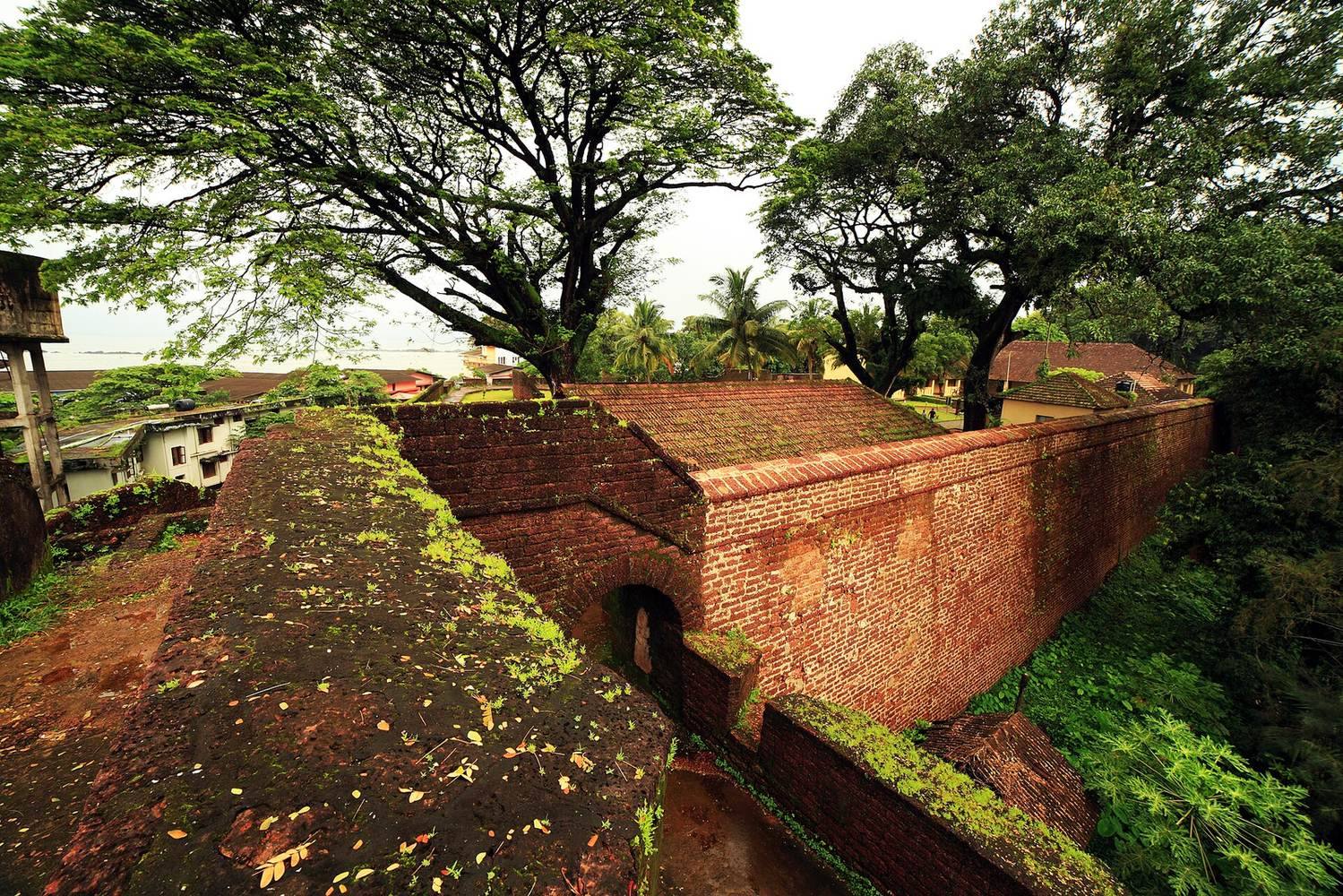
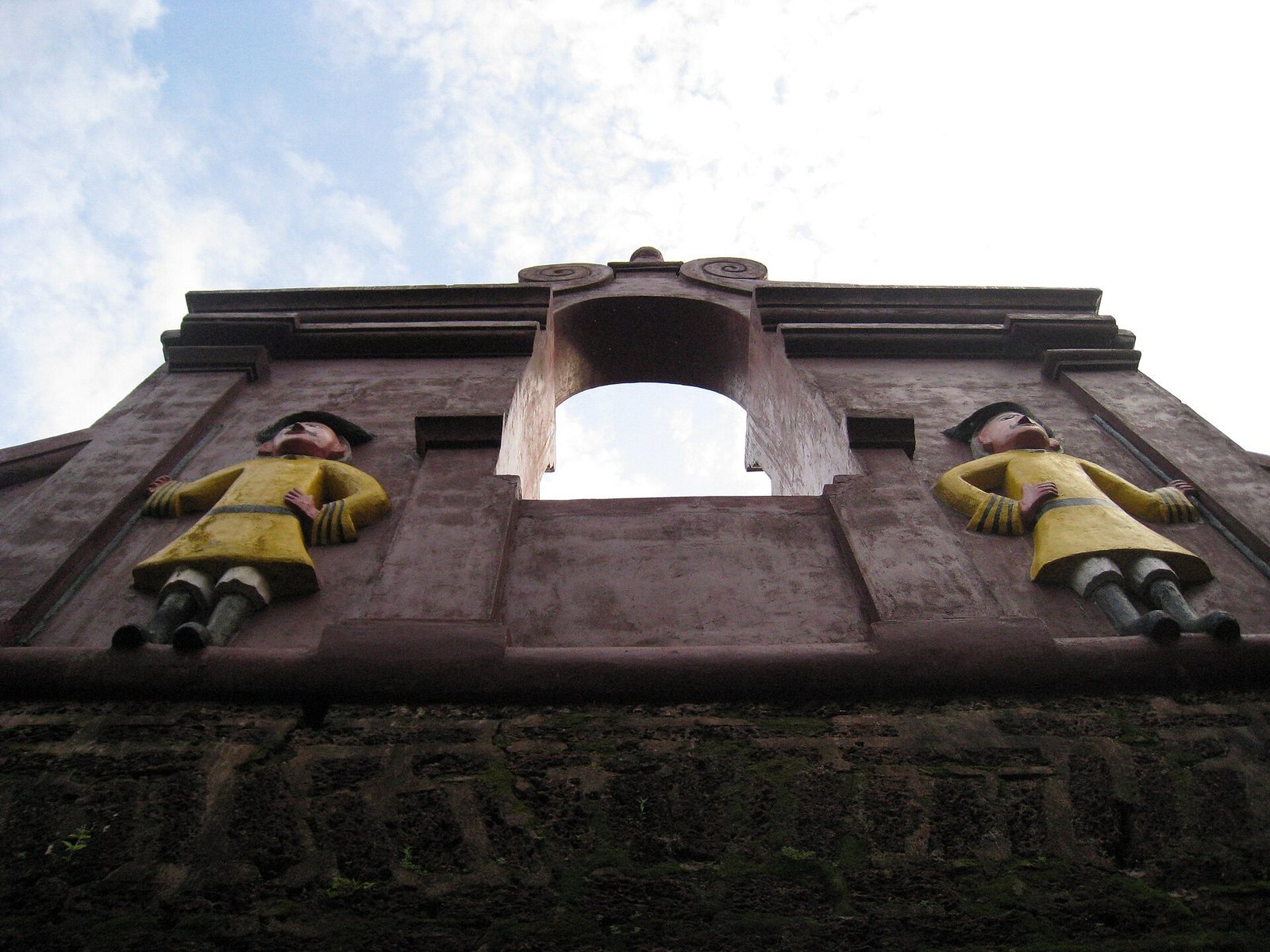
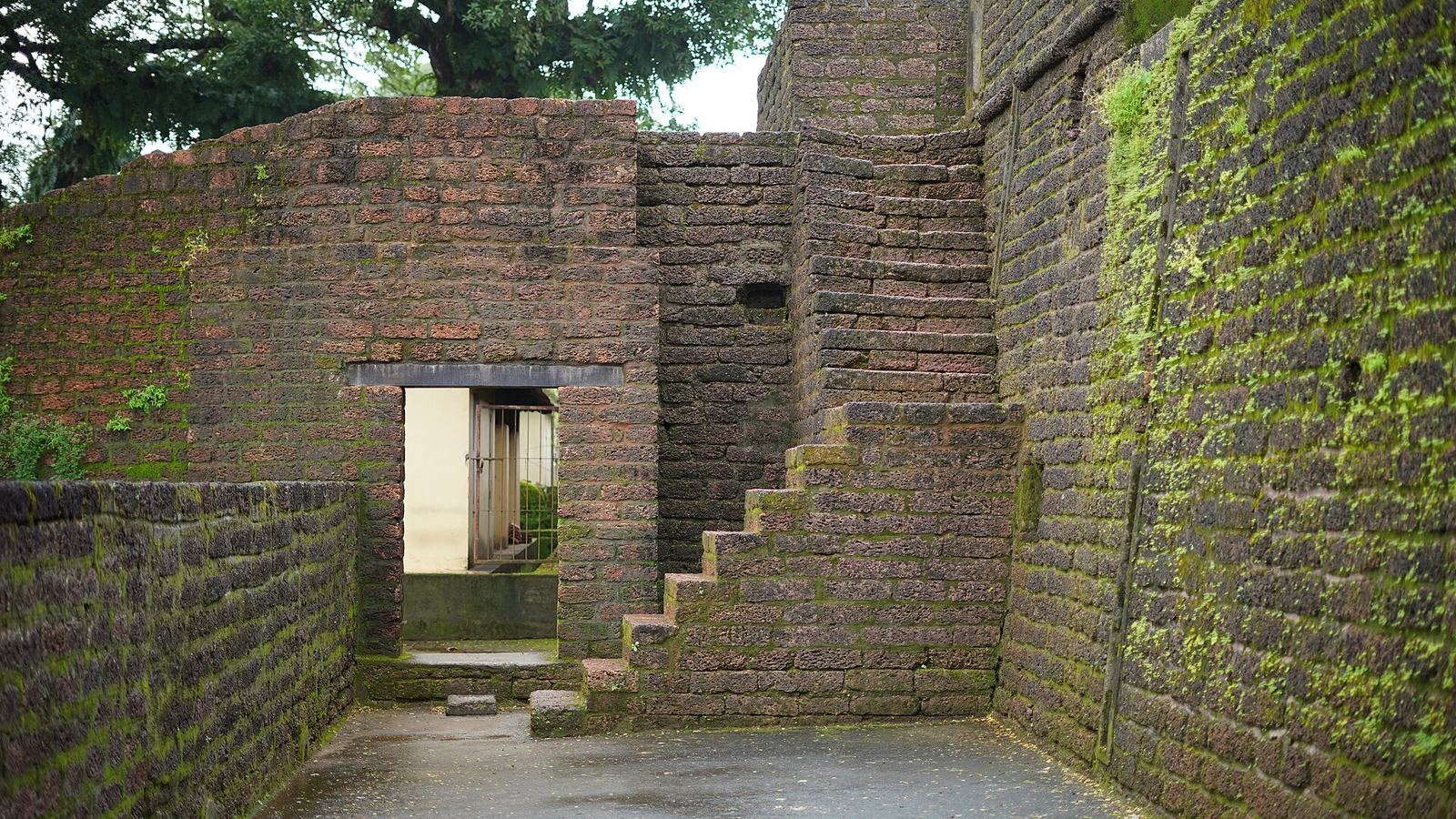
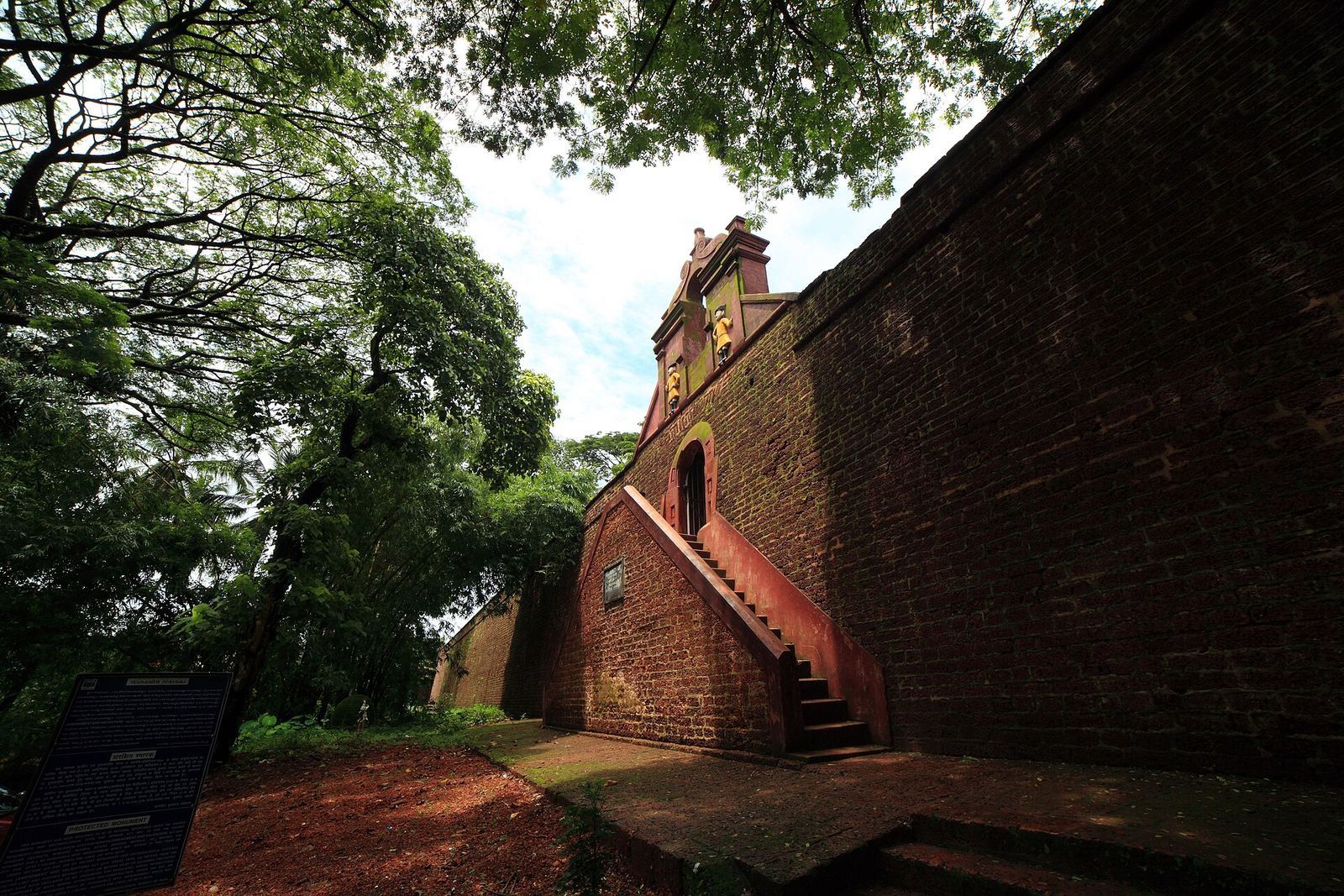
The fort occupies low hills that slope toward the sea, with natural waters providing protection. Built from laterite, an iron-rich building stone, it rises about ten metres. Its plan is described as both oblong and square. Massive, high walls contain round openings and are reinforced by projecting bastions, defensive structures extending outward from the walls. Large doors carry intricate carving, and secret tunnels lead toward the sea. The fort is in fair condition.
Outlying defenses
A lighthouse marks the site of an old redoubt, a small enclosed defensive work, on one of the hills outside the main fort.