Al-Ukhdud: An Ancient South Arabian Trading City in Saudi Arabia
Site at a Glance
- Popularity
- High
- Country
- Saudi Arabia
- Primary era
- Classical
- Eras represented
- Classical, Medieval
- Civilizations
- Unclassified
- Site type
- Settlement
- Remains
- City
On this page12 sections
History
Al-Ukhdud is an ancient South Arabian trading city in the Najran region of Saudi Arabia, southeast of modern Najran. Its emergence as a town is placed broadly between 1000 and 300 BCE; its history reaches back at least to 500 BCE, and its principal settlement phase continued into the middle of the first millennium CE. The Arabic name Al-Ukhdud means “trench,” “ditch,” or “pit.” It is associated with the Qur’anic account of the People of the Ditch, which tells of believers persecuted beside a fire-filled trench.
Early settlement and belief
During Late Antiquity, the period of transition from the ancient world to the medieval era, Najran’s inhabitants practiced South Arabian polytheism, the worship of multiple deities, and venerated a large tree. The Christian preacher Phemion spread Christianity in the region. His disciple Abdullah ibn Thamir may have helped establish the faith more firmly, and Najran developed a Christian community.
Christian community and Himyarite rule
In the 470s, Sharhabil Yakkuf, a ruler of the ancient South Arabian Himyarite kingdom, ordered the execution of the Christian priest Azqir. Azqir had built a chapel or church in the ancient city. The king sent two governors, Dhu Tha’laban and Dhu Qaifan, to destroy the building. His actions may have been intended to limit Byzantine influence rather than to oppose Christianity on religious grounds.
In the 520s, the last Himyarite king, Dhu Nuwas, invaded Najran. His reasons are uncertain: the city may have refused to pledge allegiance to him, or he may have acted against its Christian population after learning that many inhabitants had adopted Christianity. People who would not give up their faith and accept Judaism were massacred, and churches and chapels were burned. The persecution is linked to the Qur’anic account of the People of the Ditch. After the Kingdom of Aksum, an ancient kingdom in the Horn of Africa, defeated Dhu Nuwas after 530 CE, Christianity flourished again in Najran.
Islamic period and archaeological investigation
A mosque was built in Najran during the early Islamic period and is the oldest in Najran Province. In the 620s, Najran’s inhabitants moved to a different location, now occupied by the modern city. The ancient settlement lost its regional prominence, and habitation there declined further in later Islamic centuries. Finds from the Umayyad and Abbasid periods show that activity continued at the site.
Excavations by the Saudi Ministry of Culture began in 1979. Work in 1997 uncovered ancient tombs and Islamic-period graves. In 2016, the French National Centre for Scientific Research joined the Saudi government in further excavation and research. Archaeological work has continued to reveal evidence of the city’s different periods of occupation.
Remains
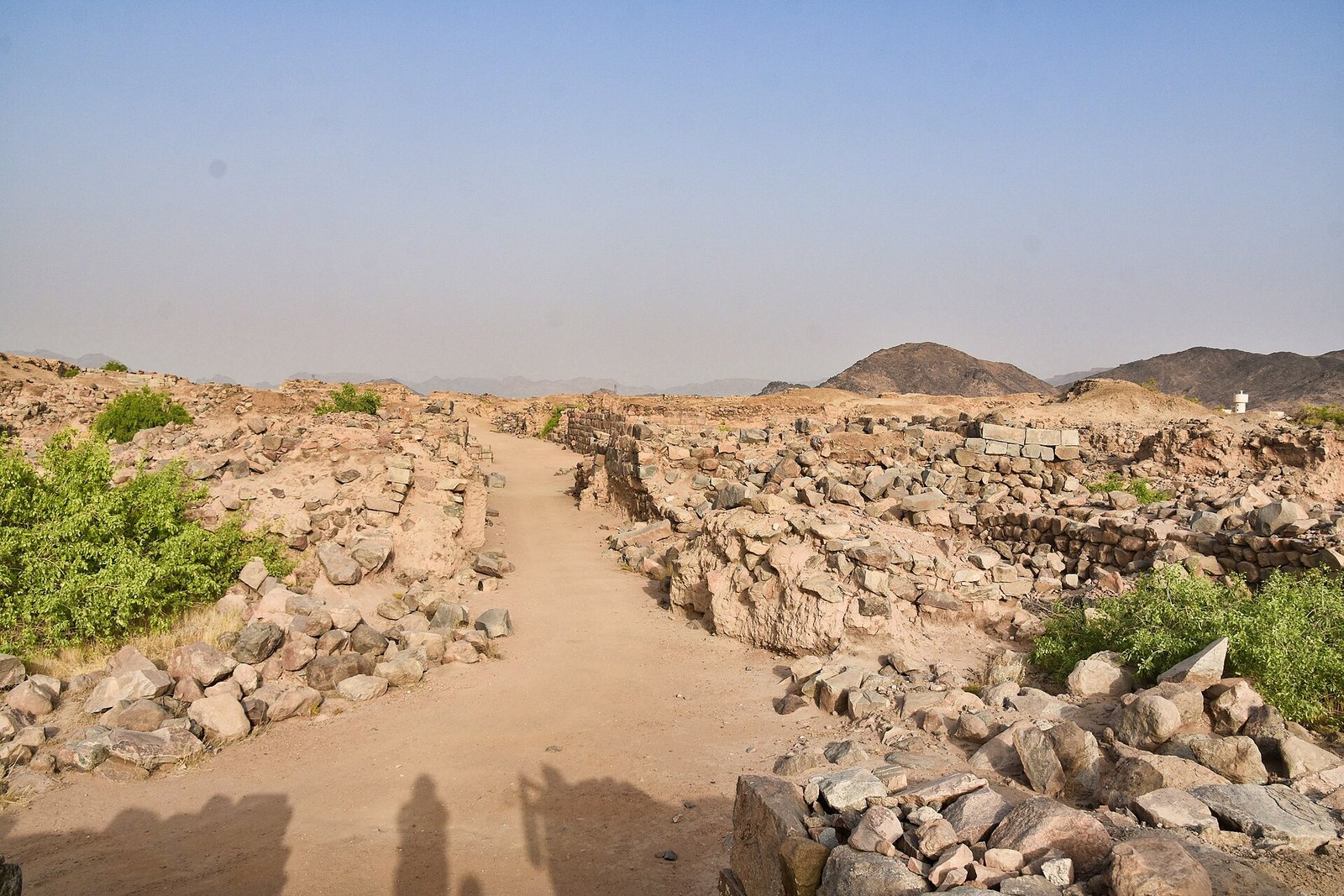
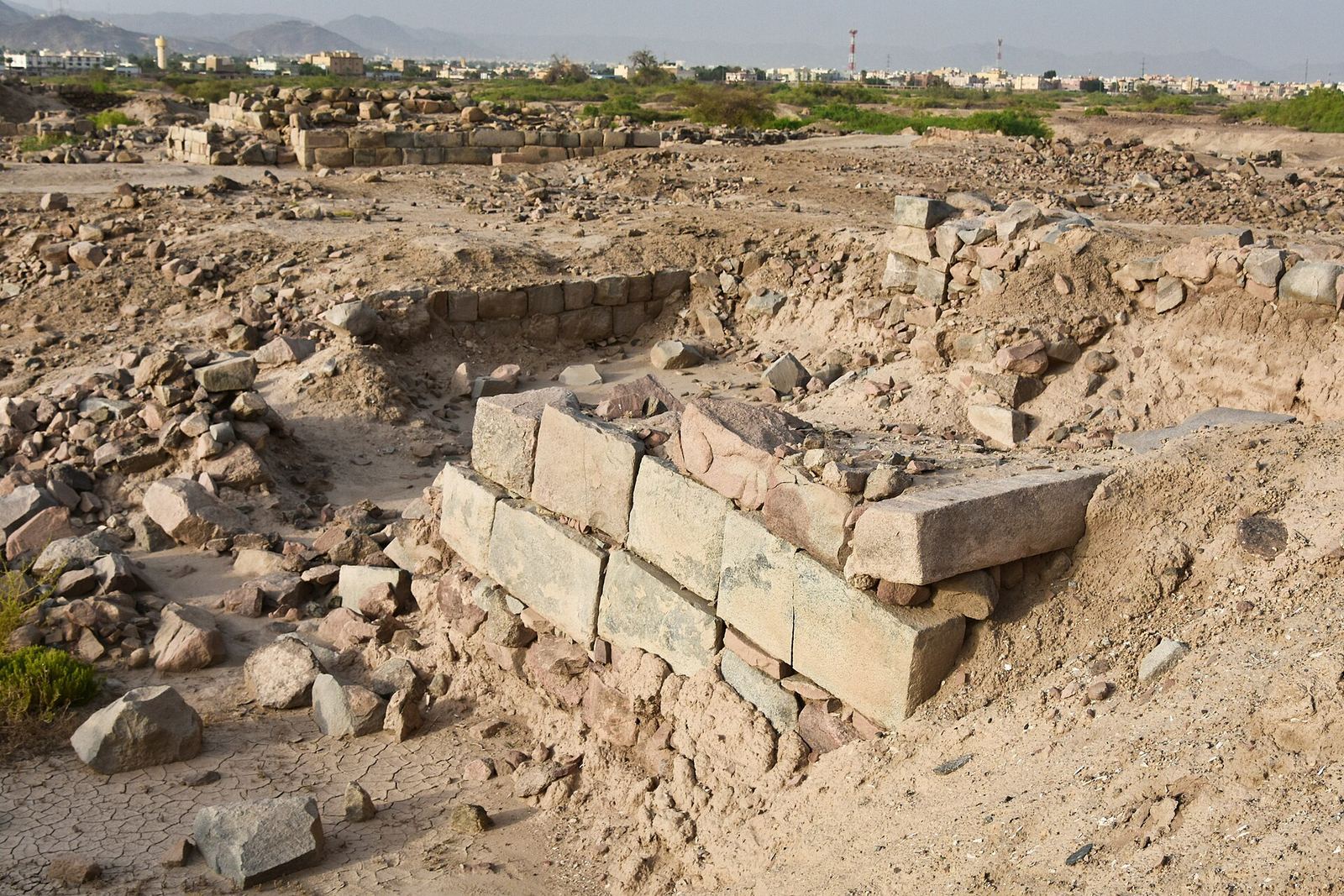
The site covers roughly four square kilometres along the southern side of the Najran Valley, about 25 kilometres southeast of modern Najran and near Bir Hima, between two villages. A stone wall enclosed the city, with decoration along its upper part and an entrance gate. Arak trees, small desert trees also known as toothbrush trees, grow beyond the gate before the ruined fortress.
Enclosure and fortress
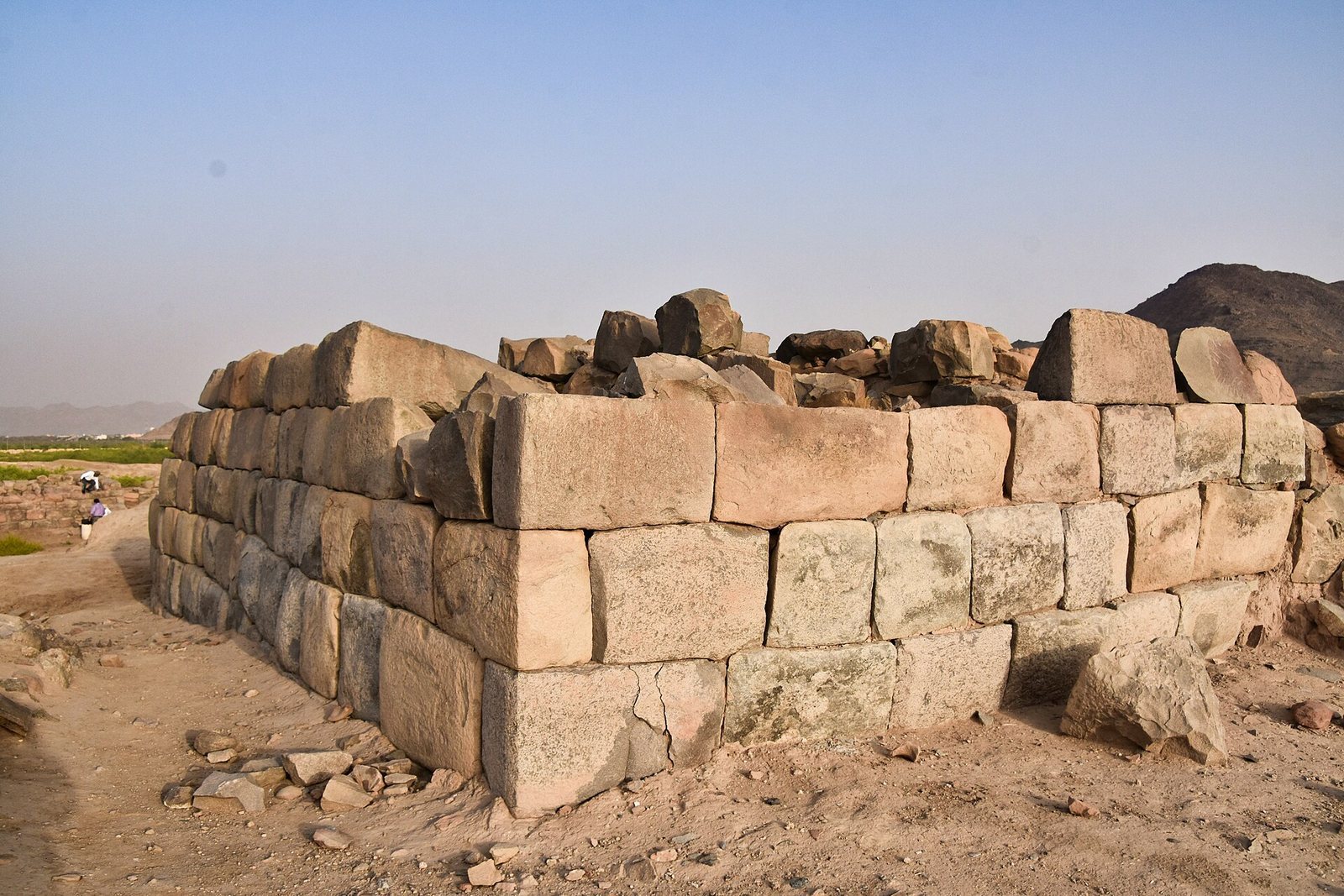
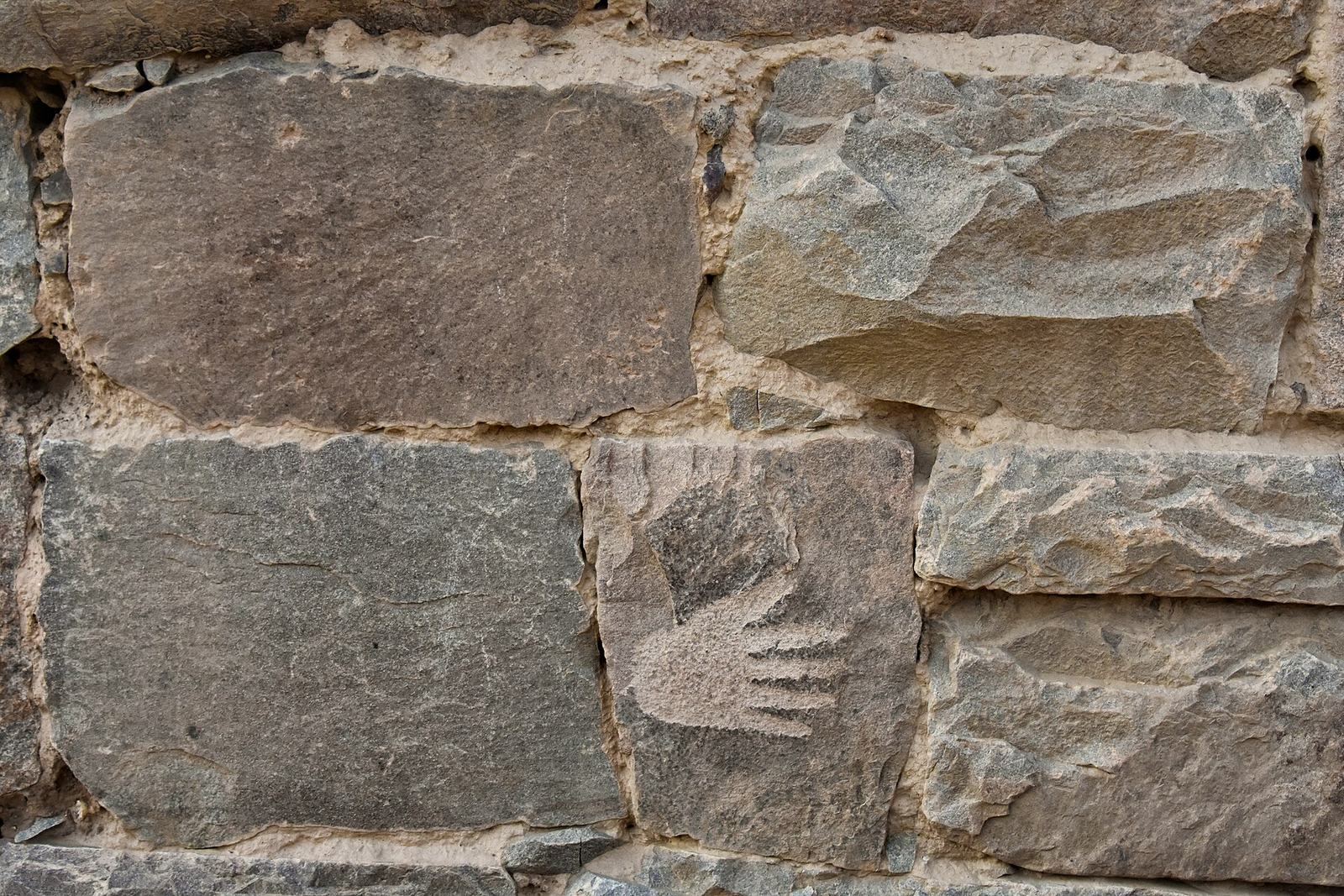
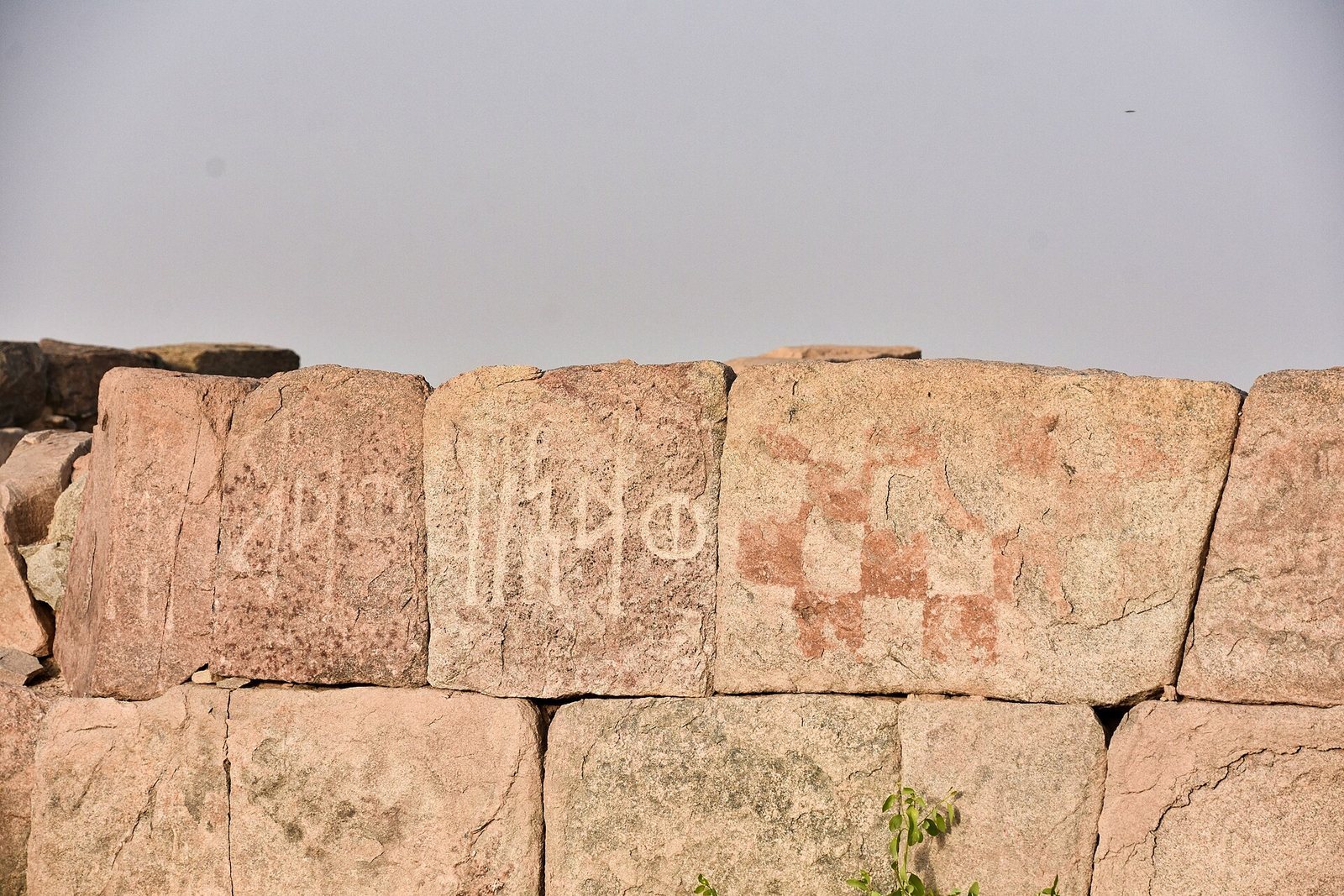
The fortress was the largest structure in the settlement. Dated to the first century BCE, it was built from stone and mud bricks. Animal and human figures, personal names, and inscriptions are carved into its ruined walls. Its construction belongs to the wider settlement and fortress phase, which extended from about 500 BCE into the middle of the first millennium CE.
Settlement remains and burial grounds
Many buildings survive as foundations and sections of wall. Large stone blocks, a market area, and the remains of walls and palaces are also present. The southern part of the site includes sections of the enclosure and palace ruins with artistic designs and inscriptions. Burials have been found in this part of the city. Islamic-period occupation and graves are also present in the northern area and south of the tombs; some grave markers carry the deceased person’s name and date of death.
Mosque
A mosque dating to the first Islamic century was found in the northern part of the city. It is the oldest mosque in Najran Province.
Evidence of burning
Ash and charred bones are scattered across the site.
Excavated finds
Inscriptions and carved objects
Inscriptions at Al-Ukhdud include Minaean and Sabaean, ancient South Arabian languages, as well as Kufic, an early Arabic script. Metal plaques bear religious inscriptions in Musnad, an ancient South Arabian script. An upright stone slab found among stones in the centre of the fortress carries religious symbols. A 2023 excavation uncovered a large, one-line commemorative inscription cut into granite. It measures 230 centimetres long and 48 centimetres high, with letters up to 32 centimetres tall, making it the longest Musnad inscription found at Al-Ukhdud. The same excavation also uncovered three rings and a bronze bull’s head.
Tools, coins, and ritual objects
A large granite millstone used to grind grain came from northeast of the city, in an area thought to have been an ancient market. A pottery jar containing silver coins dates to the first century CE and the reign of a king of Qataban, an ancient South Arabian kingdom. It was the first discovery of this type in the Arabian Peninsula. Other finds include pottery and jewelry in silver, copper, and gold; granite incense burners, some inscribed with names of incense types; pottery vessels; altars shaped with animal heads; and statues.