Right-bank Tsimlyansk Hillfort: A Khazar Fortress in Russia
Site at a Glance
- Popularity
- Medium
- Country
- Russia
- Primary era
- Medieval
- Eras represented
- Medieval
- Civilizations
- Unclassified
- Site type
- Military
- Remains
- Fort
On this page10 sections
History
The Right-bank Tsimlyansk Hillfort was a medieval fortress near the present settlement of Sarkel in Russia. It belonged to the Khazar Khaganate, a polity ruled by a sovereign called a khagan that existed from 650 to 969.
Bronze Age and Khazar fortress
People had inhabited the site during the Bronze Age, long before it became a Khazar fortress. Its location and defenses made it part of the Khaganate’s fortified landscape.
Capture in the early ninth century
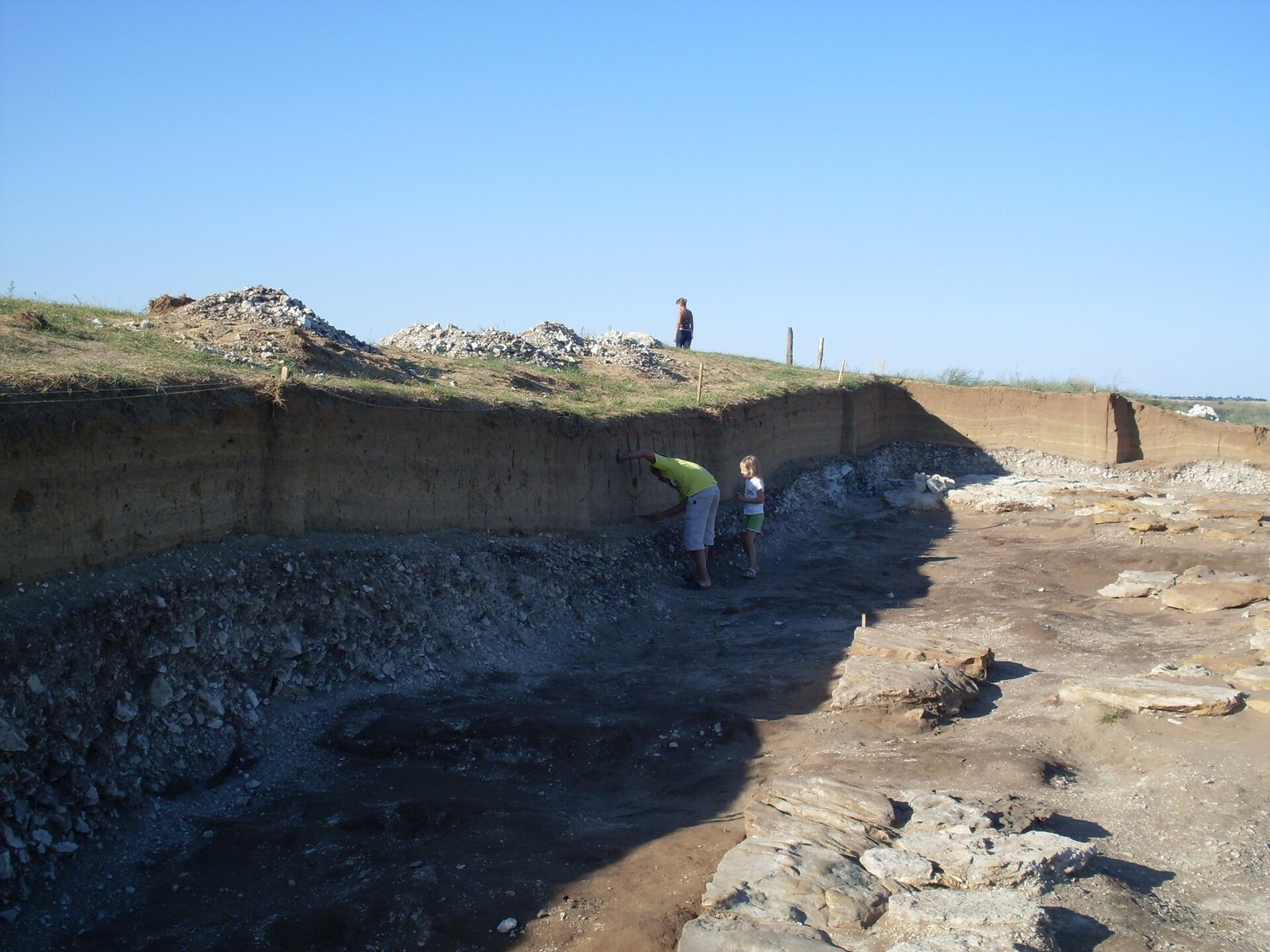
Enemies of the Khaganate captured the fortress in the early ninth century. Its dwellings were burned, and inhabitants were killed. Coins recovered from the destruction layer help date the attack: the latest were minted between 809 and 813.
Dismantling and protection
The fortress’s white-stone blocks remained in place until 1744, when the walls were taken apart and their stone reused to build Starocherkassk Fortress. The hillfort is now designated an archaeological monument of federal significance.
Remains
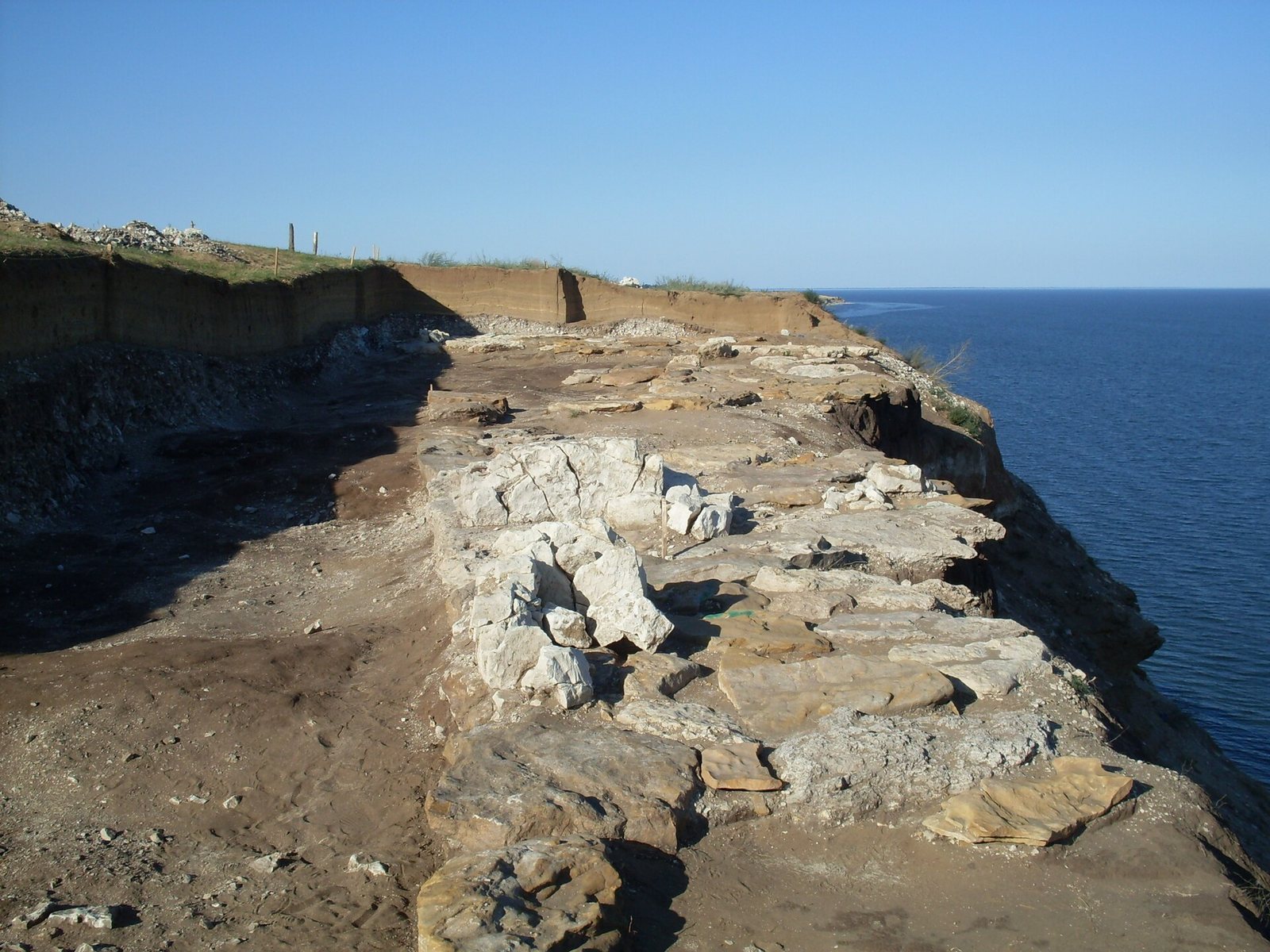
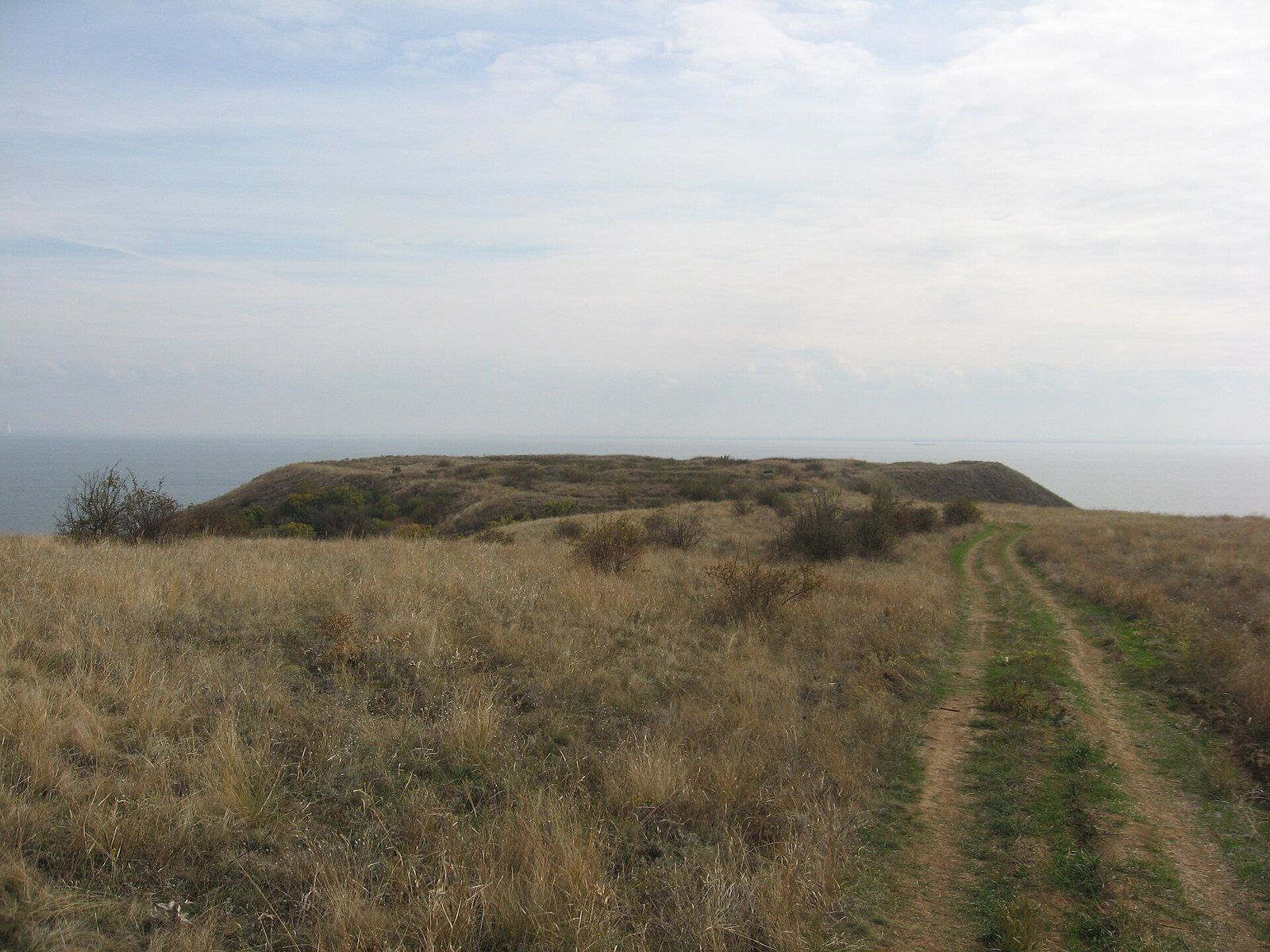
The hillfort occupies the high right bank of the Tsimlyansk Reservoir, near Sarkel. In the eighteenth century, it stood beside a riverbank about 70 metres high. Deep ravines and steep slopes, together with a precipice facing the Don, formed a triangular enclosure. The Khazars cut through the narrow land connection to the bank and made the slopes steeper.
Walls and towers
The white-stone walls extended for about 365 metres, were roughly 4 metres thick, and reached up to 6 metres in height. Towers were built from blocks measuring 0.6 by 0.3 by 0.4 metres. Rows of logs around 15 centimetres thick, set into the ground, linked the towers; rubble and clay filled the spaces between them. The towers formed the first line of watch and defense toward the steppe. A chain of tower remains could still be seen at the end of the nineteenth century, while only isolated stones survive today.
Settlement and excavated evidence
Dwellings
Within the walls stood dwellings of different sizes, shaped like yurts, round tent-like homes. Better-off residents covered them with felt, while others used reeds or straw.
Tools, weapons, and equipment
Excavated metalworking tools included anvils, hammers, metal-cutting shears, tongs, and small hammers used by jewellers. Agricultural implements included scythes, sickles, and a short, curved knife for growing grapes. Weapons included a small battle axe, spears, arrowheads, and hooks for quivers. Horse equipment comprised stirrups, bits, and girth buckles. Household finds included knives, fishhooks, pieces of iron cauldrons joined with rivets, part of a fork, and spiked iron attachments for walking on ice.
Ceramics and human remains
Pottery finds included fragments of wheel-thrown cooking pots made from clay mixed with river sand, as well as pieces of amphorae, large ceramic transport jars. Excavations uncovered mainly the skeletons of women and children. The dead had not been buried, but hastily covered with earth. Dirhams, coins used across parts of the medieval Islamic world, lay near the feet of one skeleton. A coin apparently concealed in the boot of one of the women was also found.