Zelve Village: A Rock-Cut Settlement and Monastic Center in Cappadocia
Site at a Glance
- Popularity
- Medium
- Country
- Turkey
- Primary era
- Medieval
- Eras represented
- Medieval, Modern
- Civilizations
- Byzantine, Ottoman
- Site type
- Settlement
On this page16 sections
History
Settlement and Christian center
Zelve village is a rock-cut settlement in Cappadocia, Turkey. Human occupation of its caves began at an unknown date. Settlement may have existed in Roman times and is certain by the Byzantine period, when the eastern Roman Empire ruled the region. The valleys were later occupied by Seljuks, Greeks, and Ottomans. Greek Christians and Turkish Muslims lived there together until 1923.
From the ninth to the thirteenth centuries, Zelve was an important Christian religious center. Its monastic complex predates the period of iconoclasm, opposition to religious images, especially in worship. The settlement is associated with some of Cappadocia’s earliest seminaries, schools for training clergy, and is considered one of the region’s oldest monastic settlements. It was also among the last to be abandoned. Zelve’s monks may have rejected religious images before such views became more widely established.
Relocation and preservation
Rockfalls killed two people, while earthquakes and erosion continued to cause dangerous cave collapses. Residents were gradually moved, with state assistance, to a newly built settlement about two kilometres north between 1949 and 1954. Called Yeni Zelve, the new village is now Aktepe. Zelve became an open-air museum in 1967. A rock collapse in 2002 led to the closure of parts of the site.
Remains
Valley layout and cave network
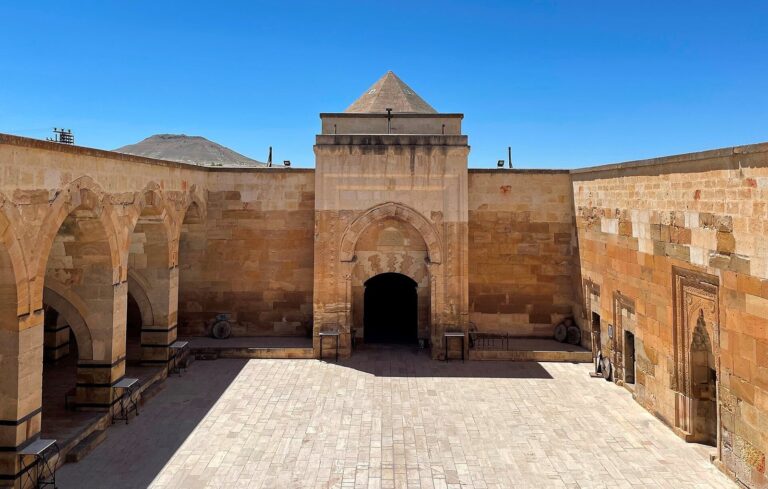
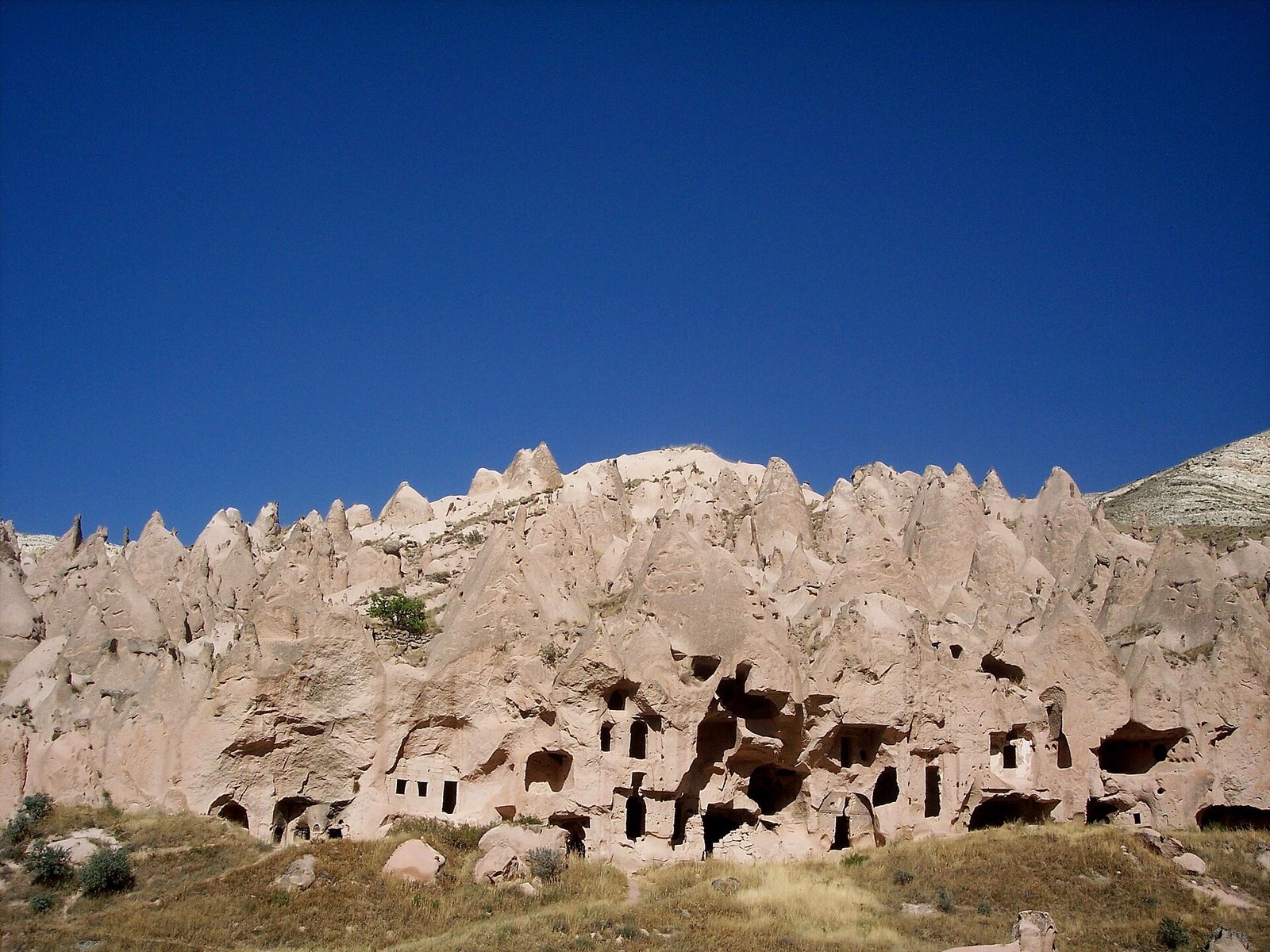
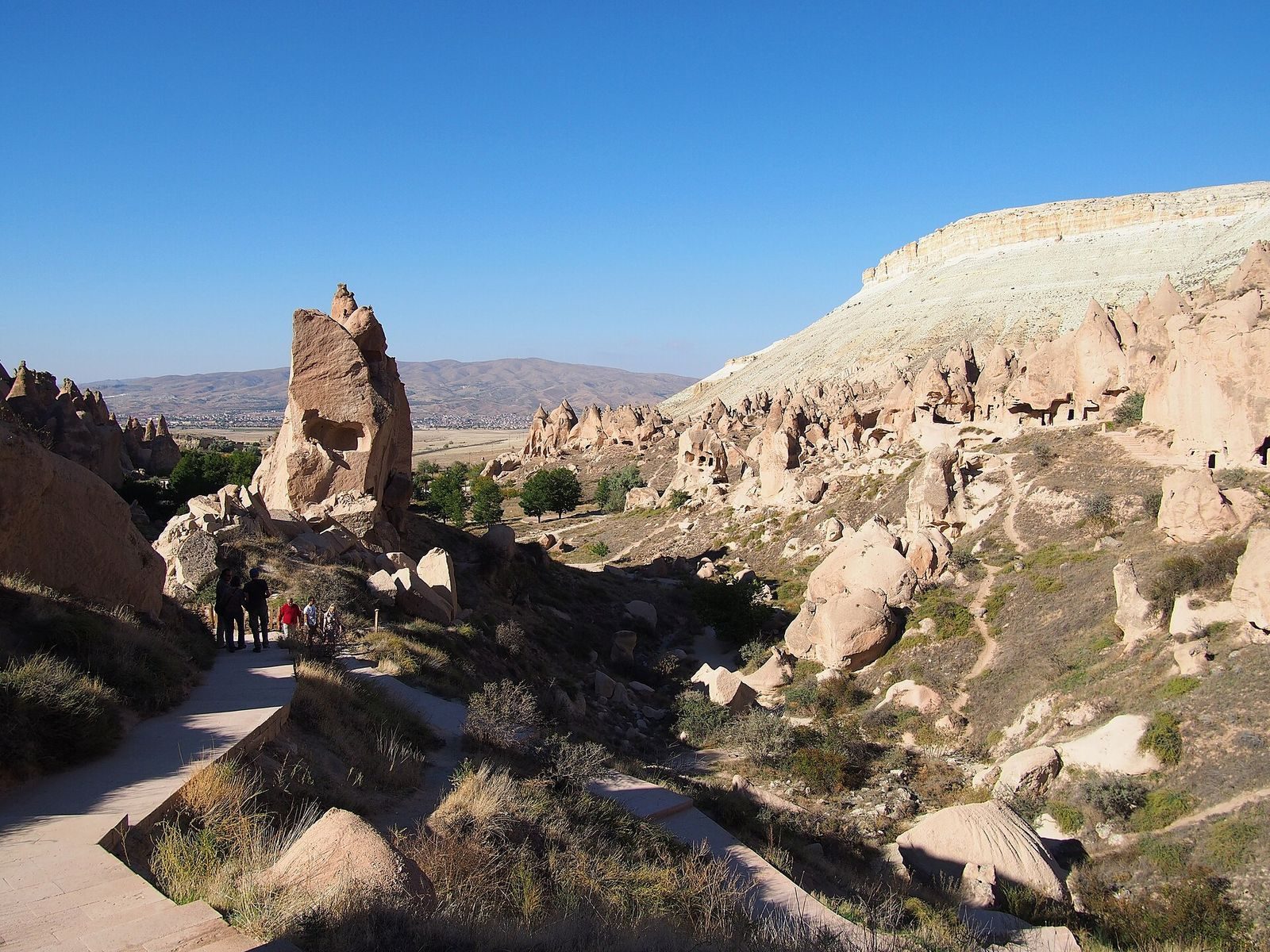
Zelve’s remains extend across three valleys on the steep northern slopes of Aktepe. A single entrance leads into this naturally enclosed area, where reddish rock and a dense concentration of fairy chimneys, tall formations shaped by erosion and often narrower at the top, define the landscape. One valley is almost bare of vegetation. Natural openings and rooms cut into the soft tuff, a porous rock formed from volcanic ash, honeycomb the valley walls. The complex includes dwellings, utility rooms, stables, storehouses, churches, a monastery, a windmill, a small mosque, and pigeon houses.
Dwellings and passages
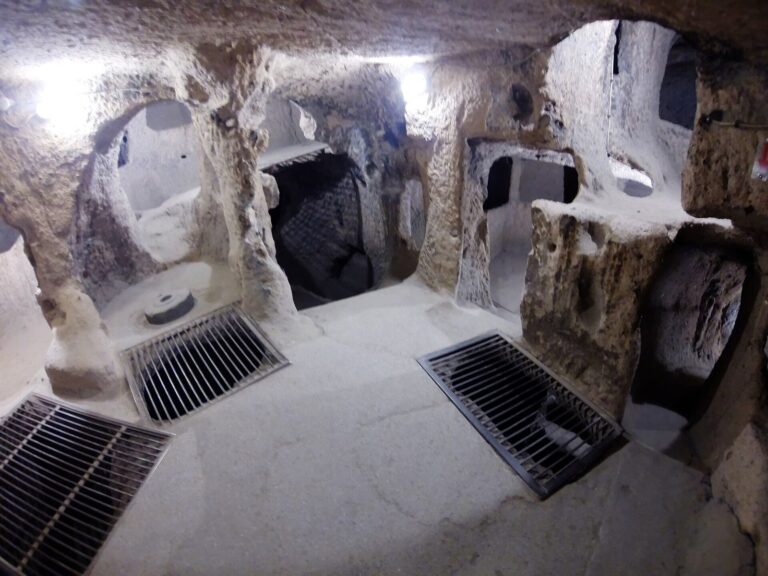
Most dwellings connect through tunnels and stairways cut into the rock. Some routes climb near-vertical surfaces using handholds and footholds, while interior passages can be narrow and steep. Rolling stones could be used to close some passageways.
A walkable tunnel about 100 metres long passes through the rock between the southern first valley and the middle valley. It links these parts of the settlement within the larger network of rock-cut routes.
Communal and religious buildings
Monastery
The monastery’s common rooms are cut into a rock wall about 10 metres above the southern entrance valley, opposite the mosque. Small chambers connect by narrow, winding passages that form a labyrinth.
Mosque
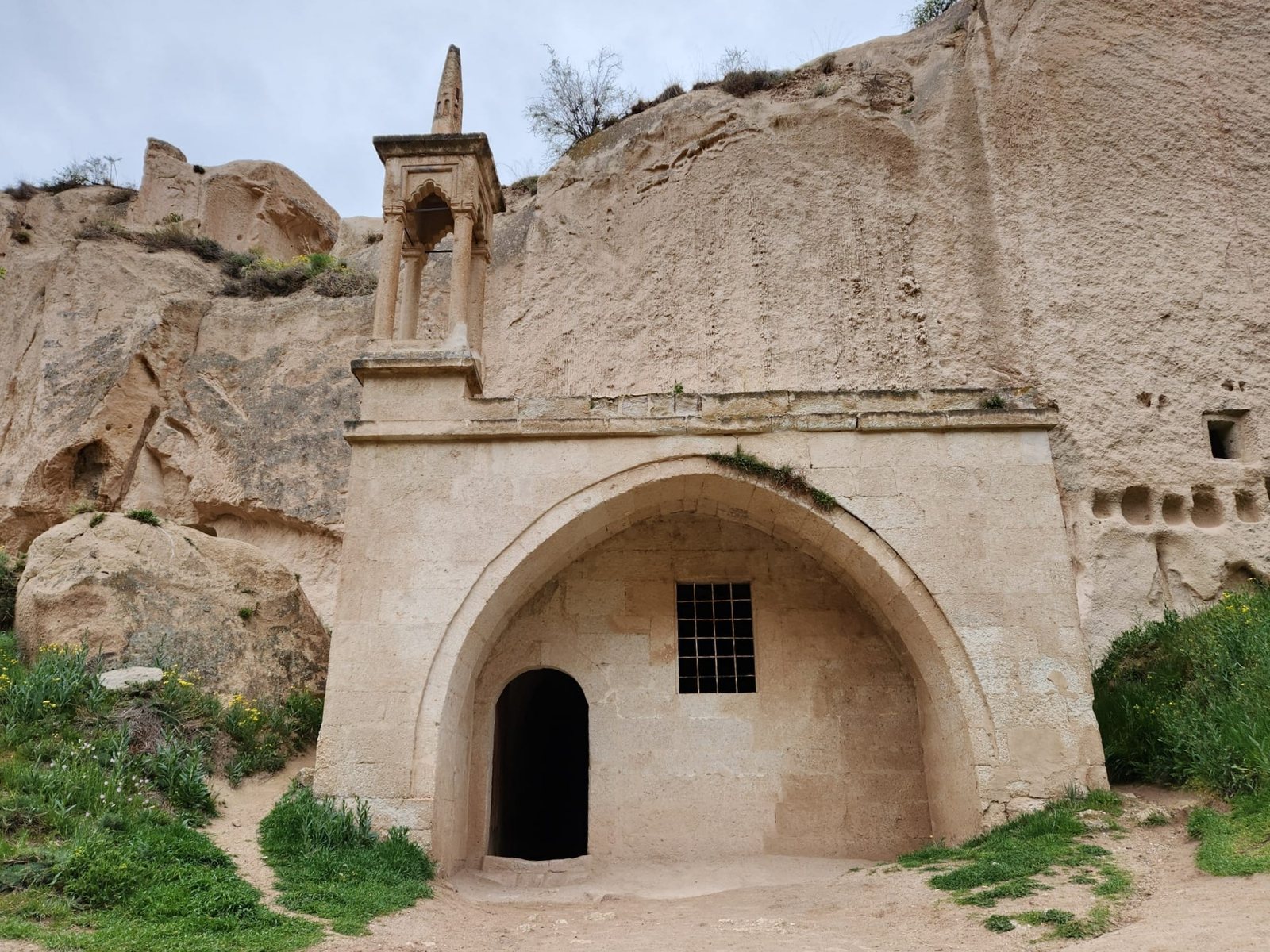
The mosque’s prayer space is carved into the rock and has a barrel-vaulted ceiling, a curved ceiling shaped like half a cylinder. Its projecting façade and small minaret are built of masonry and brick. The minaret has four columns and pointed caps, forming a canopy-like design associated with an early Ottoman style.
Churches
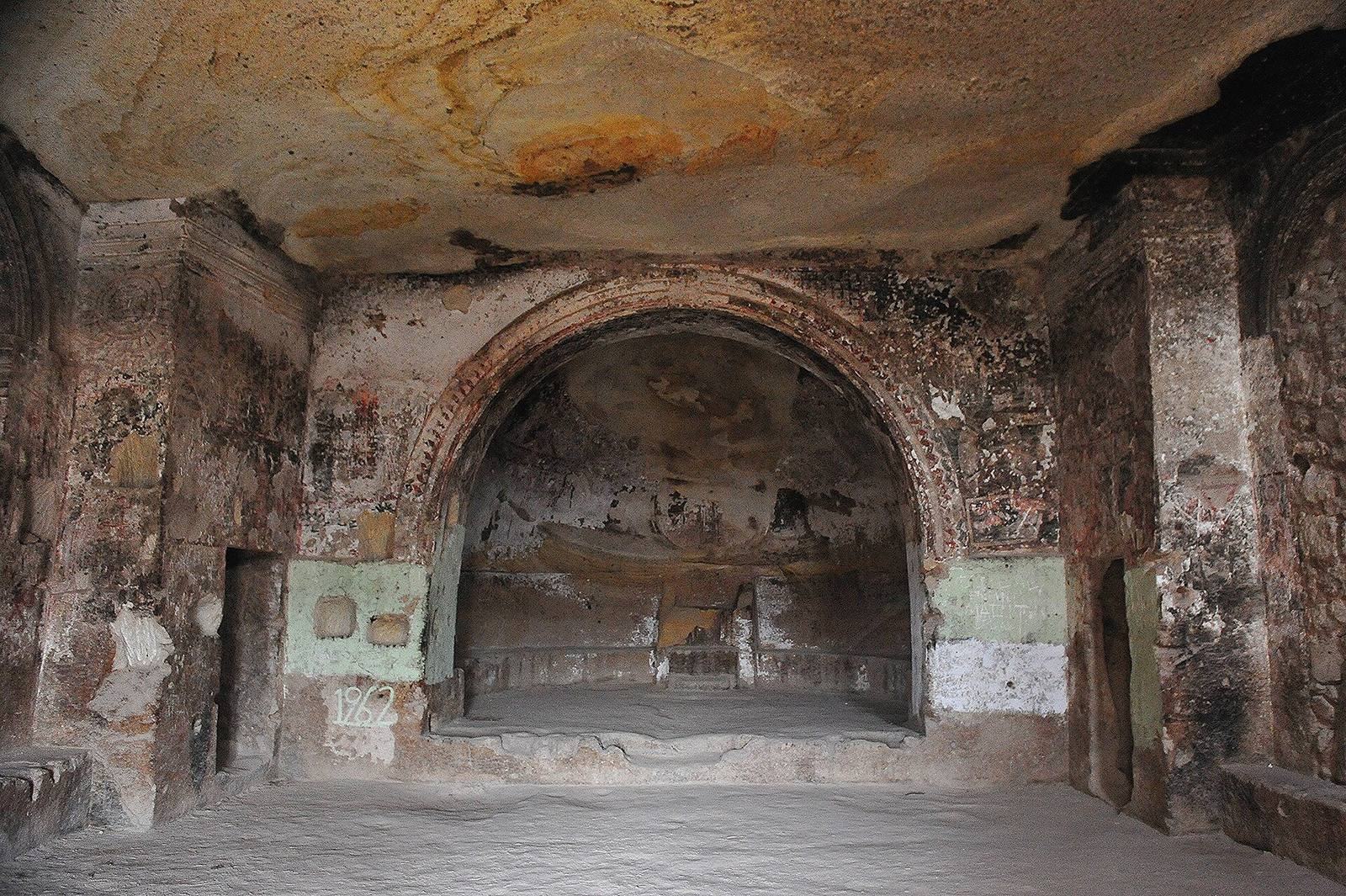
Zelve’s churches are generally plainer in decoration than richly ornamented churches elsewhere in Cappadocia. Abstract designs, sometimes shaped to follow the rock, and carved crosses are common; a few churches in the northern valley have paintings.
Deer Church
Deer Church, or Geyikli Kilise, stood in a large rock block between the first and second valleys. The block has collapsed. The church ceiling had a carved cross, and a figure thought to depict a deer probably represented a lamb.
Baptismal Church
Baptismal Church, or Vaftızlı Kilise, is in the middle valley. Its walls contain blind niches, shallow recesses that do not open into another space, and two crosses are carved on the rear wall.
Grapevine Church
Grapevine Church, or Üzümlü Kilise, forms a double-church group with Fish Church in the northern, third valley. Its surviving paintings include grapevine designs in red and green, the Virgin and Child, and the archangels Gabriel and Michael above the entrance. The Virgin and Child shows Mary with Jesus.
Fish Church
Fish Church, or Balıklı Kilise, has three apses, rounded recesses at the ends of church spaces, and a cross carved in relief on the ceiling. A wall medallion shows a cross between two fish.
Column Church
Column Church, or Direkli Kilise, stands at the foot of the slope in the northern valley. It is heavily damaged, and its principal decoration consists of crosses carved in high relief, projecting prominently from the surface.
Other structures
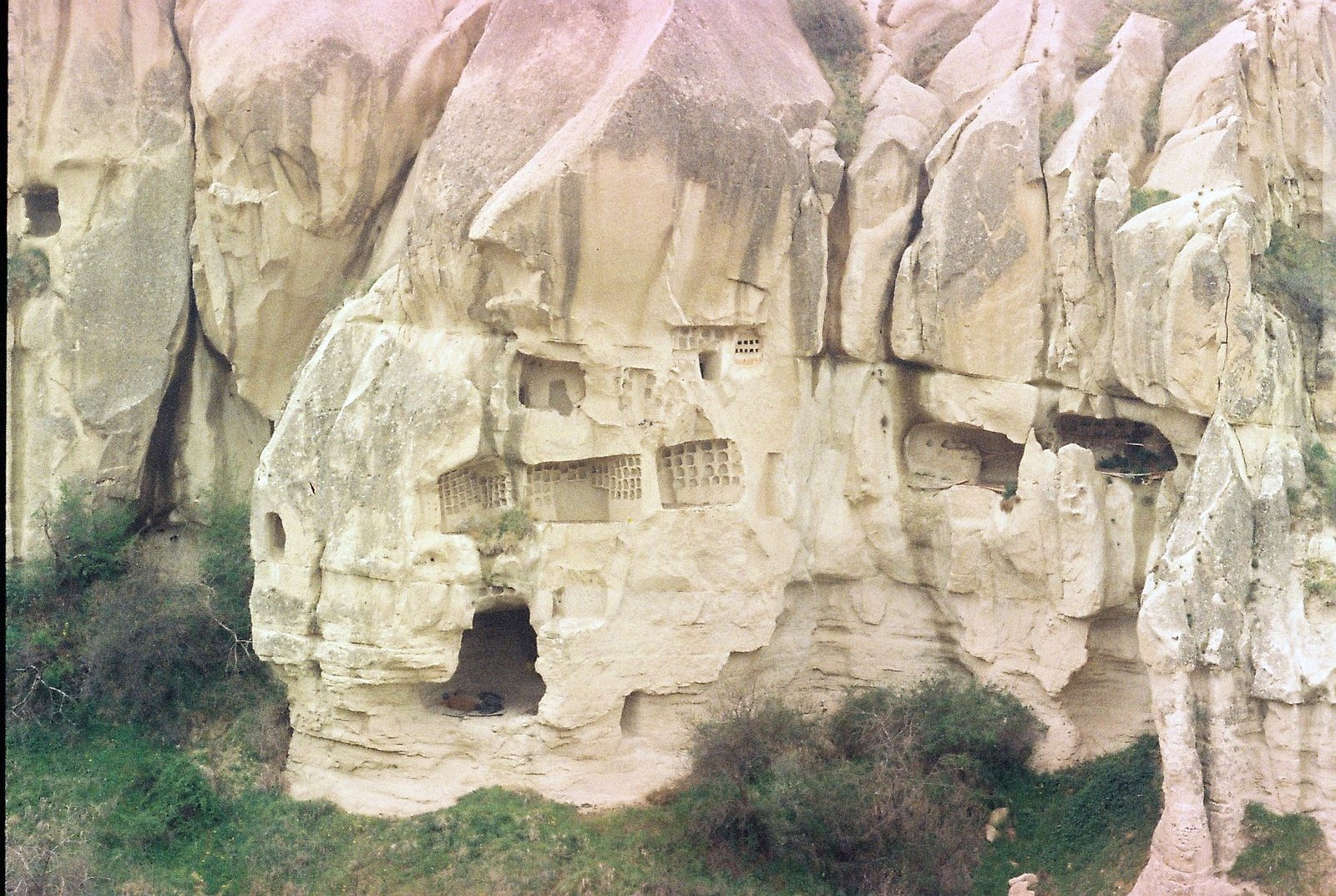
Pigeon houses cut into high cliffs were mostly made in the nineteenth or early twentieth century to collect pigeon manure. Their façades have painted entrance holes and decorative motifs, including pomegranates, wheel designs, and trees of life. The windmill, another feature of the settlement, survives without its sails.