Church of Santa Eulalia, Paredes de Nava: A Parish Church and Sacred Art Museum
Site at a Glance
- Popularity
- Medium
- Country
- Spain
- Primary era
- Medieval
- Eras represented
- Medieval, Early Modern
- Civilizations
- Crown of Castile, Habsburg, Habsburg Spain, Kingdom of León, Spanish
- Site type
- Religious
- Remains
- Church
On this page16 sections
History
Foundation and dedication
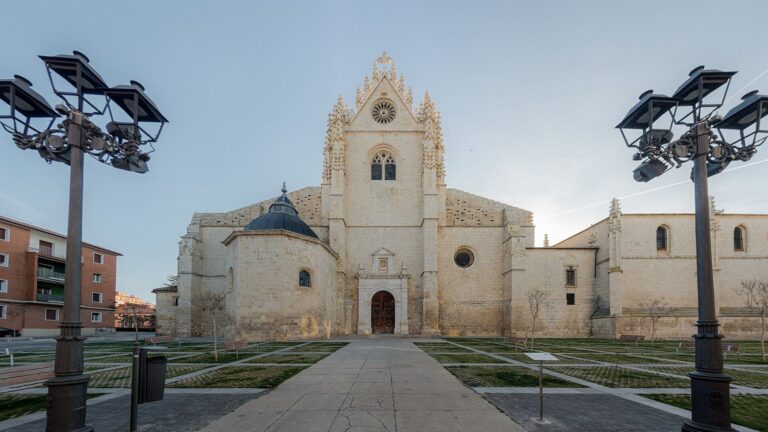
The Church of Santa Eulalia is a Catholic parish church in Paredes de Nava, Spain. Founded in the 12th century, it was built over several centuries, from the 12th through the 16th. A Gothic church replaced an earlier Romanesque building. The church was first dedicated to Our Lady of the Assumption, then rededicated to Saint Eulalia of Mérida during the 12th century.
The change of dedication is linked to a local tradition that the remains of Eulalia, a Christian martyr of the third century, passed through the area on their way to Oviedo. The story inspired devotion to her among local people.
Expansion and artistic renewal
In the middle of the 16th century, the church was enlarged at its sanctuary end, where a new apse (the rounded end of the sanctuary) replaced the Gothic one. The former Gothic altarpiece was too small for the expanded space, prompting the creation of a new main altarpiece. This work continued the church’s transformation across successive architectural and artistic periods.
Parish life and museum
Paredes de Nava had four parishes during the 15th to 17th centuries, when the town was important. It now has one parish served by Santa Eulalia and Santa María. In the previous century, the churches of Saint John and Saint Martin closed for worship and were deconsecrated amid declining parish numbers, major repair needs, and difficulty obtaining donations. Their artworks were transferred to Santa Eulalia.
The parish museum opened on 13 September 1964, becoming Spain’s first parish museum of sacred art. The church was declared a National Monument in 1962. Religious celebrations continue alongside catechesis and the display and contemplation of sacred art.
Remains
Architecture and tower
Church and tower
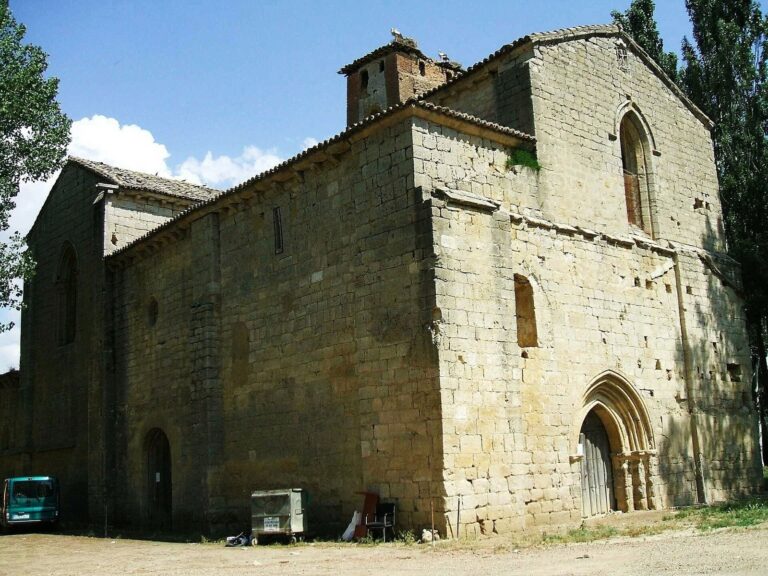
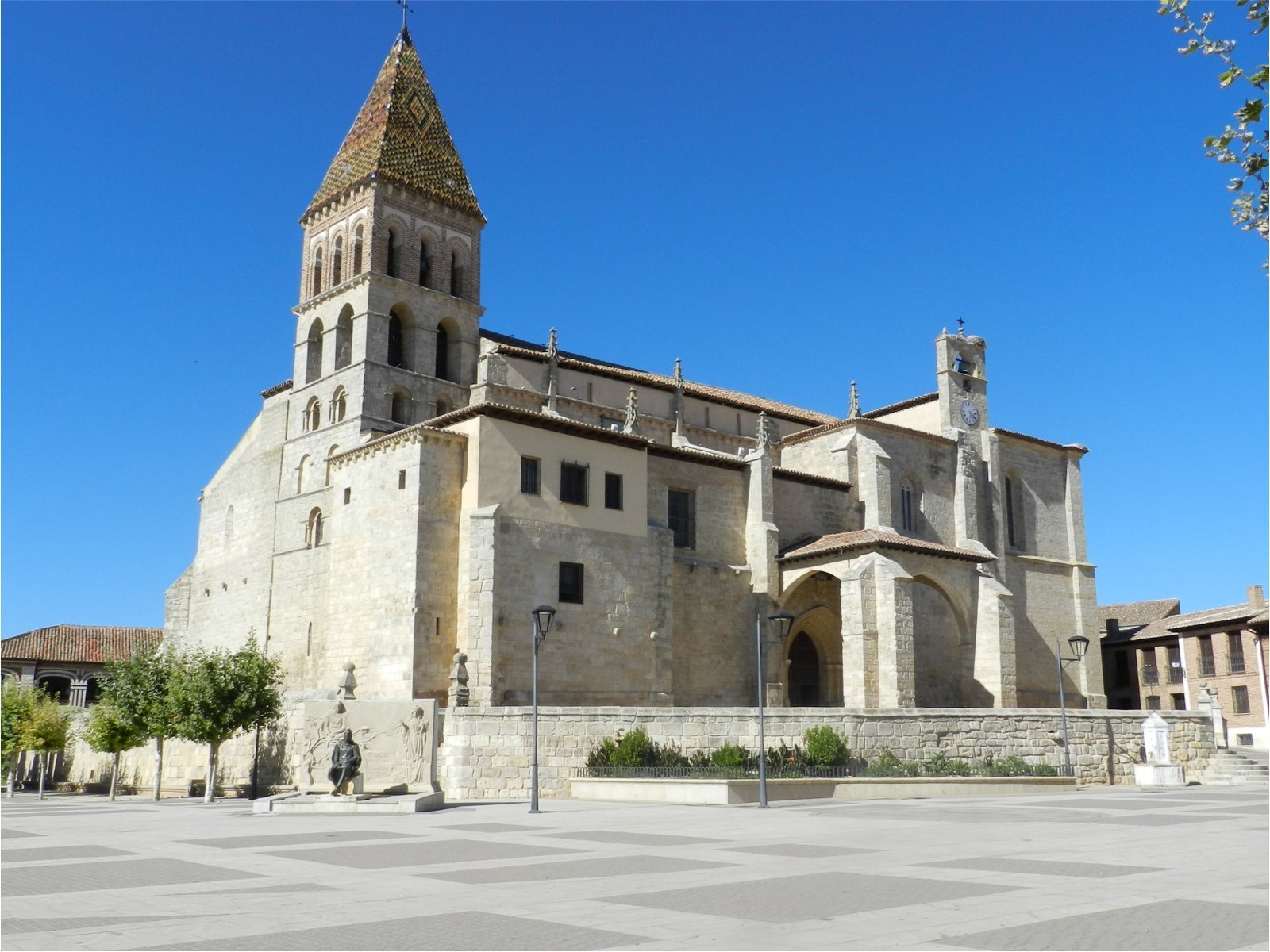
The church brings together Romanesque, Gothic, Mudéjar (Christian Iberian art drawing on Islamic-period techniques), Renaissance, and Baroque features. Its tower rises nearly 45 metres, while the main vault is about 20 metres high. The tower developed between the 12th and 15th centuries. Its four lower storeys belong to the Romanesque structure, later enclosed within the Gothic church. A section marking the transition from Romanesque to Gothic construction lies between the vault and roof; the two upper sections remain visible outside. A pyramidal cap decorated with coloured glazed tiles crowns the tower. This Mudéjar feature dates to the 16th century.
Apse
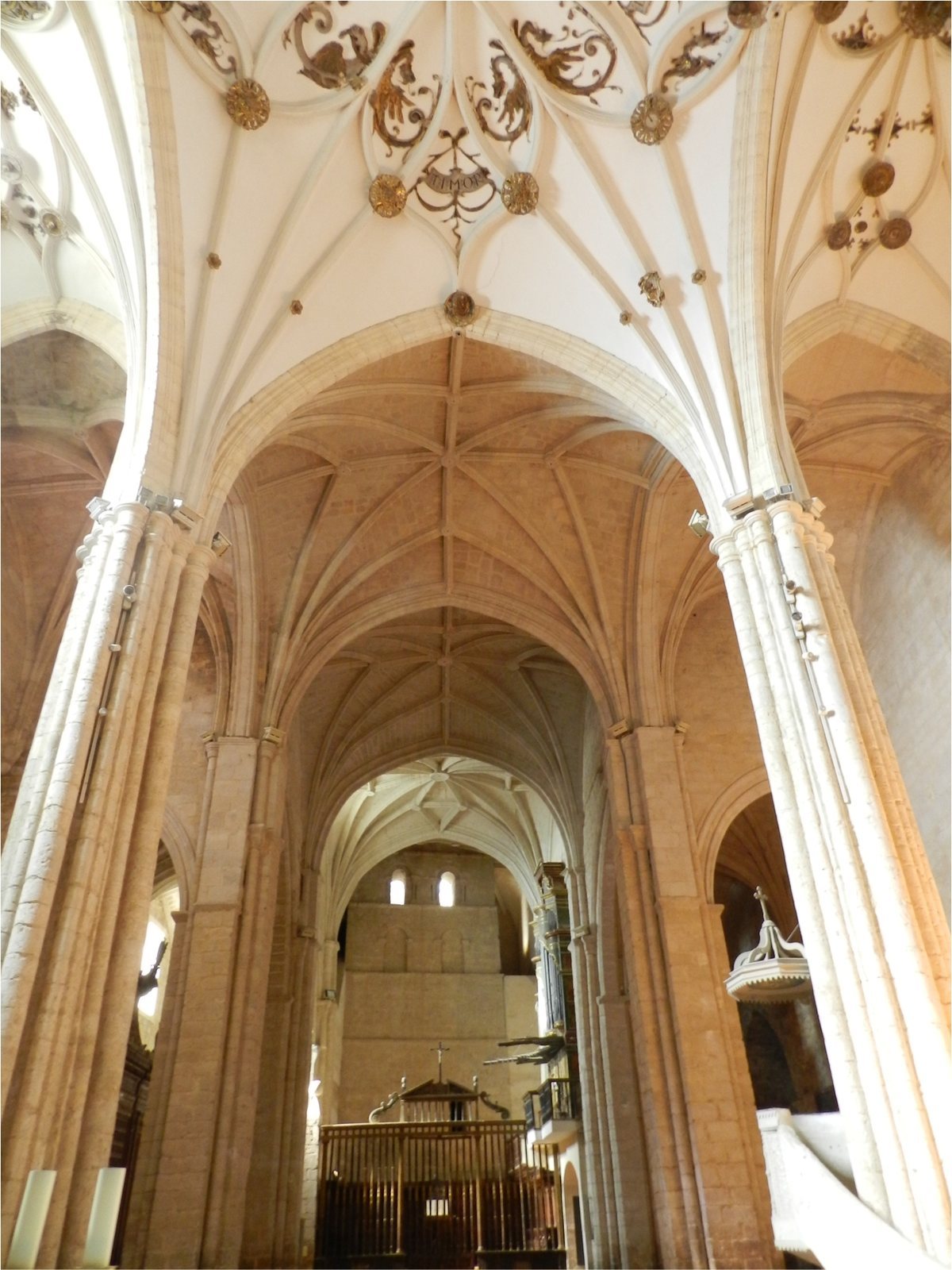
The apse has a more elaborate arrangement of pillars and vaulting than the rest of the church. Its Flamboyant Gothic character is expressed in this complex stonework, a late Gothic style known for flowing, flame-like patterns. The apse vault reaches nearly 19 metres.
Altarpieces and sculpture
Main altarpiece
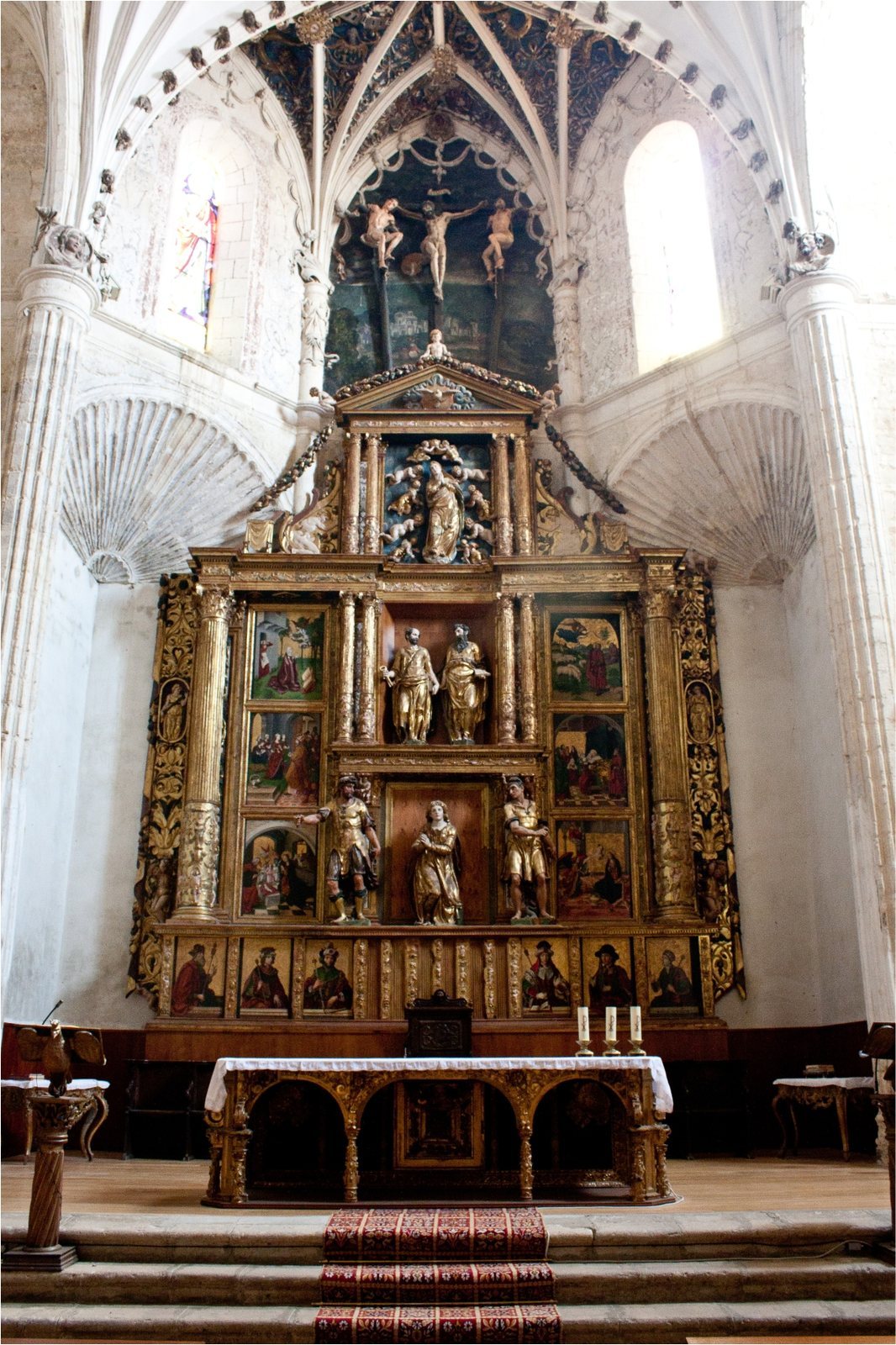
The Renaissance main altarpiece, dated to around 1560 and commissioned in 1561, was designed by Inocencio Berruguete and Esteban Jordán. Its painted wooden figures include the martyrdom of Saint Eulalia with her executioners in the central lower register. Above them stand Saint Peter, carrying keys, and Saint Paul, holding a sword; all three figures are by Jordán. The Virgin of the Assumption occupies the upper register. This image represents the Christian belief that Mary was taken bodily into heaven, and is by Berruguete. At the top, a Calvary scene shows Christ with the two thieves and is attributed to the school of Alonso Berruguete.
Paintings from the earlier altarpiece
Twelve oil paintings by Pedro Berruguete, made around 1490 for the earlier Gothic altarpiece, were incorporated into the later work. Their teaching sequence begins with Joachim and Anne, Mary’s parents, drawing on the early Christian apocryphal text Protoevangelium of James, which recounts traditions about Mary’s parents and birth. The scenes continue through Mary’s birth and the presentation of suitors, then turn to the Gospel stories of the Annunciation and Jesus’ birth. The lower predella, the bottom section of an altarpiece, depicts Israelite kings and prophets beginning with King David. In the Nativity scene, an inscription reads, “My Lord and my God!”
The paintings also show people, clothing, buildings, and customs of the late 15th century. King Hezekiah appears as a Castilian nobleman of Berruguete’s own time. In the scene of the suitors, women sew on cushions placed over a gloria, a Roman-origin heating system customary in the region. The parish museum displays a carved group of Joachim and Anne embracing, made for the earlier altarpiece by Alejo de Vahía.
Other altarpieces
The church’s three oldest altarpieces are in the apse. Late-16th-century side altarpieces by Juan de Medina Argüelles, of the Medina de Rioseco school, include one with figures of Saint Martin of Tours and Saint Bonaventure, together with reliefs of Christ’s Passion. Another combines a 17th-century Immaculate Conception attributed to the workshop of Gregorio Fernández with a carving of Saint Raymond Nonnatus; its reliefs depict the Evangelists and the Resurrection.
Two more altarpieces stand in the right-hand side aisle. The one near the apse, dedicated to Saint Anthony Abbot, dates to the late 16th century and has a construction similar to Medina Argüelles’s works. It includes figures of Saint Sebastian and Saint Anthony Abbot, as well as paintings of the saint’s life and temptations.
Furnishings and museum collection
Pulpit and choir
The pulpit dates to the late 15th century and is decorated with Mudéjar plasterwork, a technique used in the region at the time. The walnut choir stalls and wooden grille were made in 1586. Commemorative plaques place their creation during the papacy of Sixtus V, the reign of Philip II, and the tenure of Antonio Manrique de Lara as Count of Paredes. The work is attributed to the local París family workshop.
Organ
Tadeo Ortega made the organ in 1780. It follows the Iberian Baroque style, the distinctive organ-building tradition of the Iberian Peninsula during the Baroque period, and remains in working order.
Parish museum collection
The parish museum holds nearly 300 paintings, sculptures, and metalwork pieces in Romanesque, Gothic, Hispano-Flemish, Renaissance, and Baroque styles. The works include pieces associated with Alejo de Vahía, Pedro, Alonso and Inocencio Berruguete, Esteban Jordán, Juan Tejerina, Juan de Medina, Alonso del Portillo, Juan de Colonia, Antonio de Vega, and Tadeo Ortega, as well as the Masters of Villamediana and Paredes. Workshops linked to the collection include those of Gregorio Fernández, Felipe Bigarny, the Sierra family, and the París family. Its works reflect artistic schools from Burgos, León, Castile, Madrid, Granada, Catalonia, France, and Germany, as well as influences from Italy, Flanders, and the Philippines.