Withypool Stone Circle: A Prehistoric Monument on Exmoor
Site at a Glance
- Popularity
- Medium
- Country
- United Kingdom
- Primary era
- Bronze Age
- Eras represented
- Stone Age, Bronze Age
- Civilizations
- Unclassified
- Site type
- Civic
- Remains
- Megalithic Monument
On this page9 sections
History
Withypool Stone Circle is a prehistoric stone monument on Exmoor in the United Kingdom, dated to the Late Neolithic or Early Bronze Age. It is one of the two known prehistoric stone circles on Exmoor, the other being at Porlock.
The stone-circle tradition
Stone circles were built across much of Britain, Ireland, and Brittany between about 3300 and 900 BCE, with most construction taking place from about 3000 to 1300 BCE. The Late Neolithic was the final phase of the Stone Age, followed by the Bronze Age, associated with the use of bronze. Around 3000 BCE, circular monuments such as henges, timber circles, and stone circles became more common in parts of England. They followed earlier forms including long barrows, or elongated burial mounds, causewayed enclosures marked by interrupted ditches, and cursus monuments, long narrow earthworks.
The purpose of Withypool Stone Circle is unknown. Some interpretations associate stone with the dead and wood with the living in Neolithic Britain. Other proposals suggest that stones represented ancestors or supernatural beings, including deities. Because some circles show little evidence of activity after their construction, archaeologists have also considered whether they were left without later uses that produced visible traces.
Exmoor’s prehistoric landscape
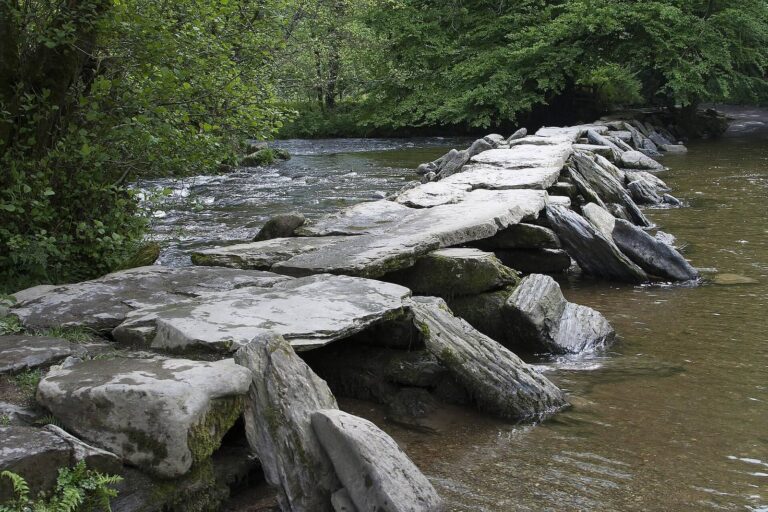
The circle’s small stones may partly reflect local geology. Exmoor has no natural granite, and its Devonian slates and Hangman Grits tend to break into smaller pieces. Yet larger local stones were used at Tarr Steps and the Long Stone at Challacombe, suggesting that choosing smaller stones for the circles may also have been deliberate. Dartmoor, by contrast, has more than seventy known stone circles.
Exmoor has a varied prehistoric landscape, including a henge near Parracombe, a circular or oval earthwork enclosure, and an estimated 300 to 400 round barrows, or burial mounds. Standing stones, stone rows, and other stone settings also occur across the moor. The stones at Almsworthy Common were once interpreted as a possible circle, but later assessments identify them as a stone setting. Many surviving prehistoric monuments lie in moorland that escaped medieval and later cultivation, so their present distribution may not reflect the original extent of settlement and monument building.
Rediscovery and investigation
Archibald Hamilton came upon the circle in 1898 after his horse stumbled on a stone while he was riding across Withypool Heath. Farmers later burned vegetation on the heath, and Hamilton returned to find further stones. He informed Colonel Bramble, a vice-president of the Somerset Archaeological and Natural History Society, who put him in contact with archaeologist Harold St George Gray.
Gray surveyed the circle with Hamilton in August 1905 and published his findings the following year. He proposed that cremations had taken place there and that the cremated remains were buried in nearby barrows. On a return visit in August 1915, he judged the circle’s condition largely unchanged, although the ling and whortleberry bushes around it were more stunted. Martin J. F. Fowler visited between 1982 and 1985, and his catalogue of Exmoor’s prehistoric stone monuments appeared in 1988. The circle received scheduled-monument protection in 1925, a status now governed by the Ancient Monuments and Archaeological Areas Act 1979.
Remains
The stone circle and its setting
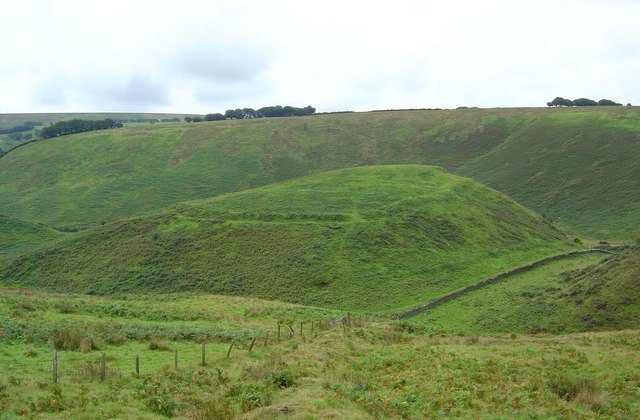
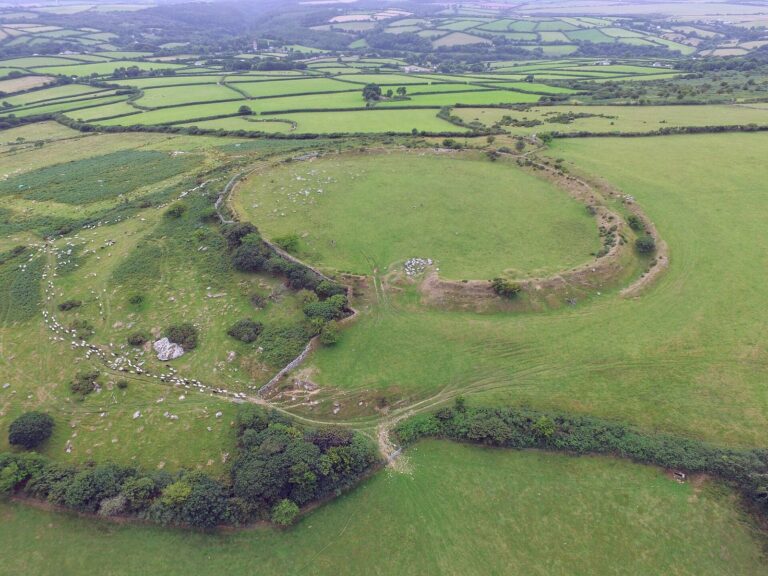
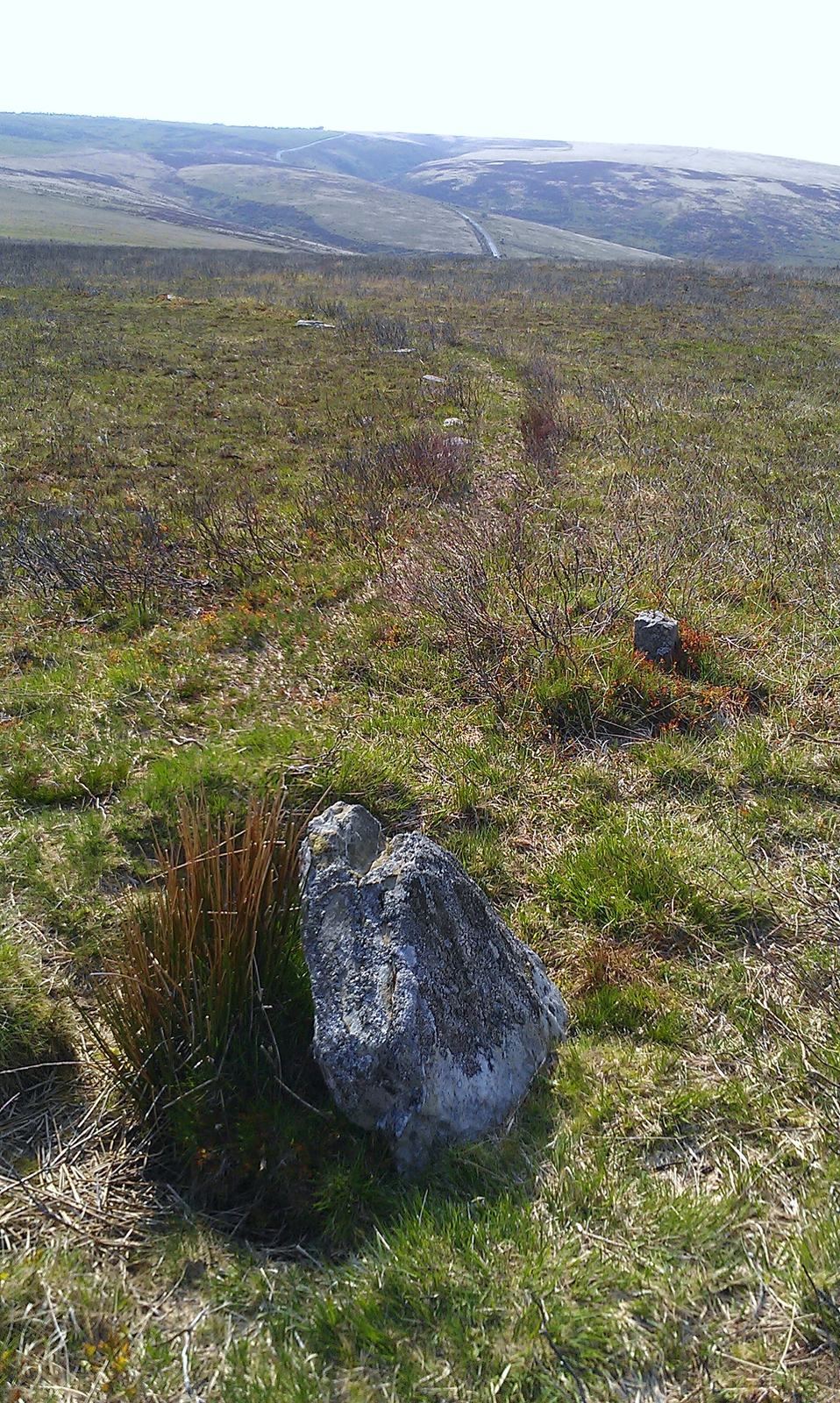
The circle occupies the south-west slope of Withypool Hill, at 381 metres above sea level. The heathland ground falls from east to west, with peaty soil covered by heather. The ring measures about 36.4 metres across. Roughly thirty small gritstone blocks survive, while estimates suggest the original circle may have held about 100 stones spaced roughly a metre apart. Noticeable gaps occur on the north and west sides, and depressions in the ground indicate places where stones were removed. Some may have been taken for road-making.
Recorded counts have varied. Gray noted 37 stones in 1905. A report in 1915 described one stone as removed and three others as newly found. Fowler counted 29 by 1988, while a count in 1989 recorded 30, of which 27 were standing and three had fallen. The stones average about 10 centimetres high, 30 centimetres wide, and 10 centimetres thick; the largest rises about half a metre above ground. Most are incomplete and may have broken after the circle was erected. A sampled stone was identified as hard, pale-grey gritstone, probably from the nearby Pickwell Down grits, and many stones have visible quartz veins.
Nearby prehistoric features
Barrows
A Bronze Age round barrow lies 262 metres north-east of the circle, on the summit of Withypool Hill. It is heavily eroded. Three Brightworthy Barrows lie to the north-west. Other barrows visible from the circle include Green Barrow, Old Barrow, the Twitchen Barrows, the three Wam Barrows on Winsford Hill, and the barrow on Sherdon.
Other stone groups
At Westwater Allotment, more than thirty stones, each up to half a metre long, are visible; two were reported standing in 1988. Elsewhere on Withypool Common, six stones form an irregular circle. They may belong to another stone circle or may be the surviving stone edging of a destroyed round burial mound.