Church of Saint Elian: An Eastern Orthodox Church in Homs
Site at a Glance
- Popularity
- Medium
- Country
- Syria
- Primary era
- Classical
- Eras represented
- Classical, Medieval, Modern
- Civilizations
- Byzantine, Ottoman
- Site type
- Religious
- Remains
- Church
On this page7 sections
History
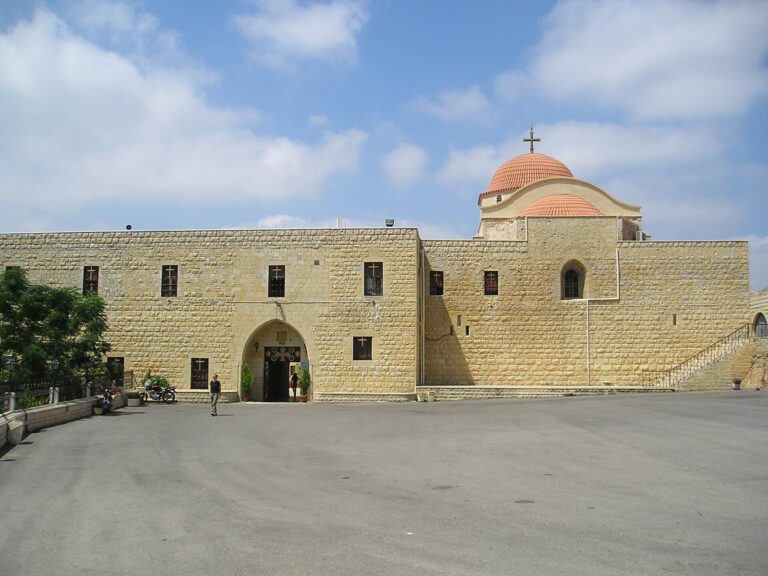
The Church of Saint Elian is a Byzantine-style Eastern Orthodox church in Old Homs, Syria, founded in AD 432 at a place believed to be where Elian was martyred. Its architectural tradition is associated with the Byzantine Empire and its cultural sphere. The church belongs to the Archdiocese of Homs, a regional jurisdiction within the Patriarchate of Antioch and All the East, an Eastern Orthodox body led by a patriarch.
Foundation and relics
Elian, also known in English as Julian, was a Homs native and a physician credited with healing miracles. He was martyred around 284–285 after refusing to renounce Christianity. Roman soldiers carried out his death, and his father was a Roman officer.
In 451, Bishop Paul of Homs moved Elian’s remains from a cave outside the city to the church and enlarged the building at his own expense. The church was founded at a place believed to be the site of Elian’s martyrdom.
Medieval and early modern history
The church continued through the medieval period, though major sections may have been demolished in the ninth century. At that time, Abbasid caliph al-Mutawakkil ordered the destruction of Homs’s churches.
An icon of Elian dated 1598 was given to the Monastery of Saint Elian by Joachim VI, formerly bishop of Homs and later patriarch of Antioch. The icon is now in Paris. A French traveler who visited Homs in May 1658 described the church and its sarcophagus.
Enlargement and restoration
By the nineteenth century, the church consisted of a room measuring 9 by 6 metres that was too small for worshippers. Its priest and congregation began enlarging it in 1843, completing the work in 45 days.
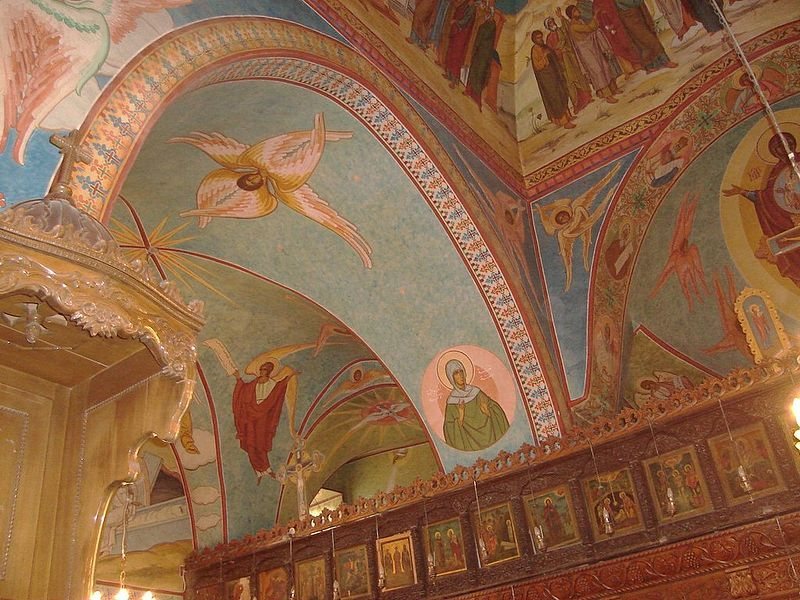
Restoration began in 1969 under the metropolitan of Homs, a senior bishop overseeing a regional church jurisdiction. Wall paintings uncovered during the work were conserved by Damascus’s Directorate of Antiquities and Museums beginning in May 1970. A new screen of icons separating the sanctuary from the main worship space arrived from Romania as a gift from the Romanian patriarch.
The annual feast of Saint Elian is held on 6 February and draws many pilgrims. Two hymns honor him, and a prayer associated with the saint is used to bless oil for anointing the sick.
Remains
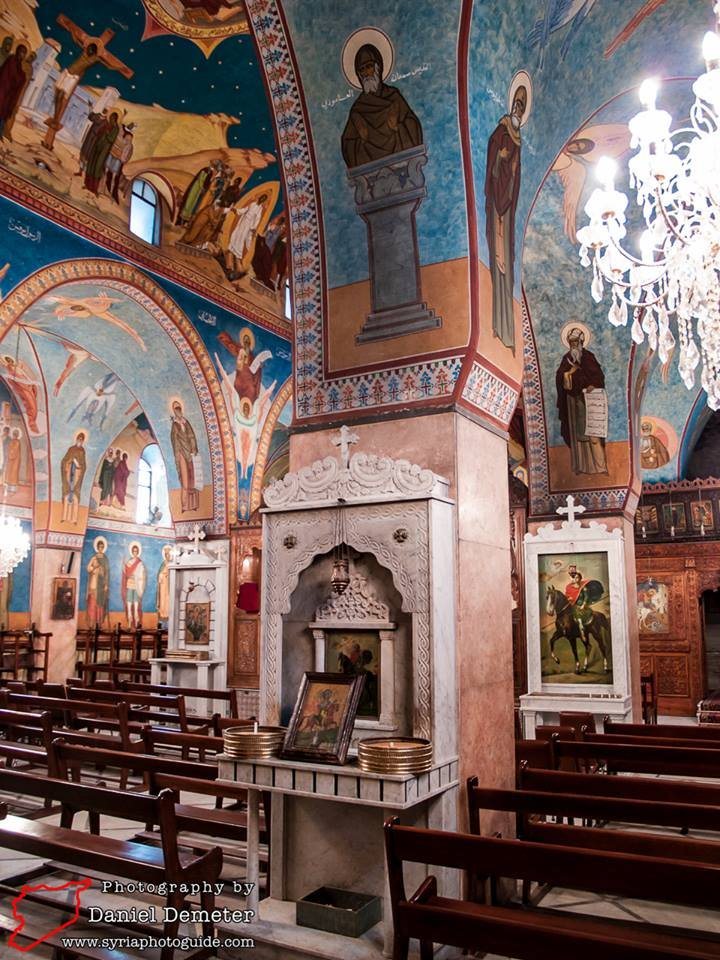
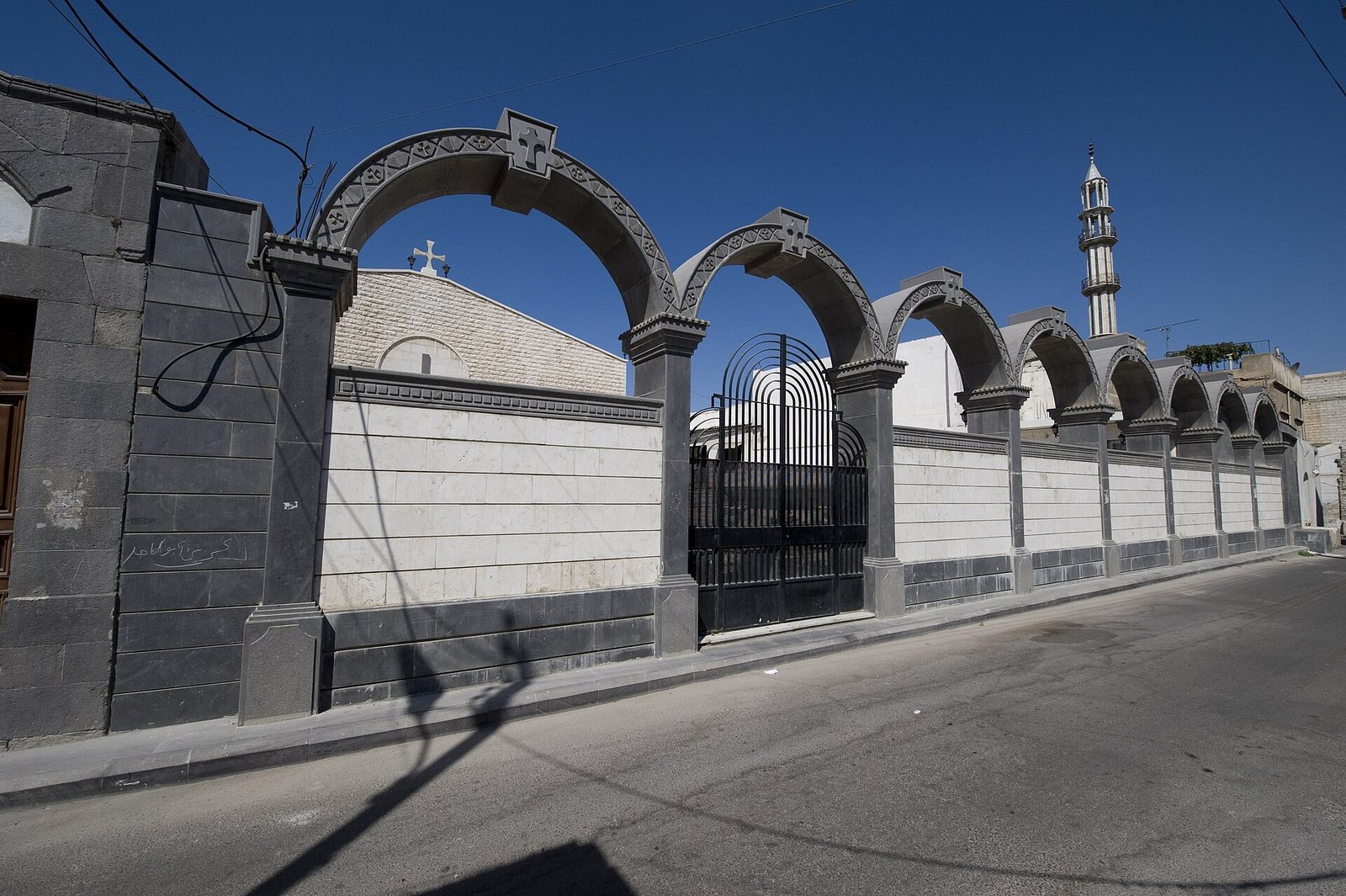
The church stands on Tarafa ibn al-Abd Street in Old Homs, near the Gate of Palmyra. Marble columns decorate the building. Its nave, or main body, has side aisles, and an iconostasis, a screen of icons, separates the nave from the sanctuary. The complex also includes a crypt, a chamber beneath a church, and a small chapel.
Wall paintings
Earlier frescoes, paintings made on wet plaster, depict Jesus, Mary, the twelve Apostles, and prophets. They date at least to the twelfth century, though some historians attribute them to the sixth. They are considered the oldest surviving church paintings in Syria. A separate group painted in 1973 by two Romanian artists fills the nave and side aisles with episodes from Elian’s life.
Chapel and sarcophagus
Elian’s relics are kept in a large sarcophagus in the chapel. Its lid is pyramidal, and 11 raised crosses decorate its sides and lid. The sarcophagus measures approximately 2.3 metres long, 1.35 metres wide, and 1.6 metres high.