Skardu Fort: A Maqpon Stronghold in Pakistan
Site at a Glance
- Popularity
- High
- Country
- Pakistan
- Primary era
- Early Modern
- Eras represented
- Early Modern
- Civilizations
- Unclassified
- Site type
- Military
- Remains
- Fort
On this page9 sections
History
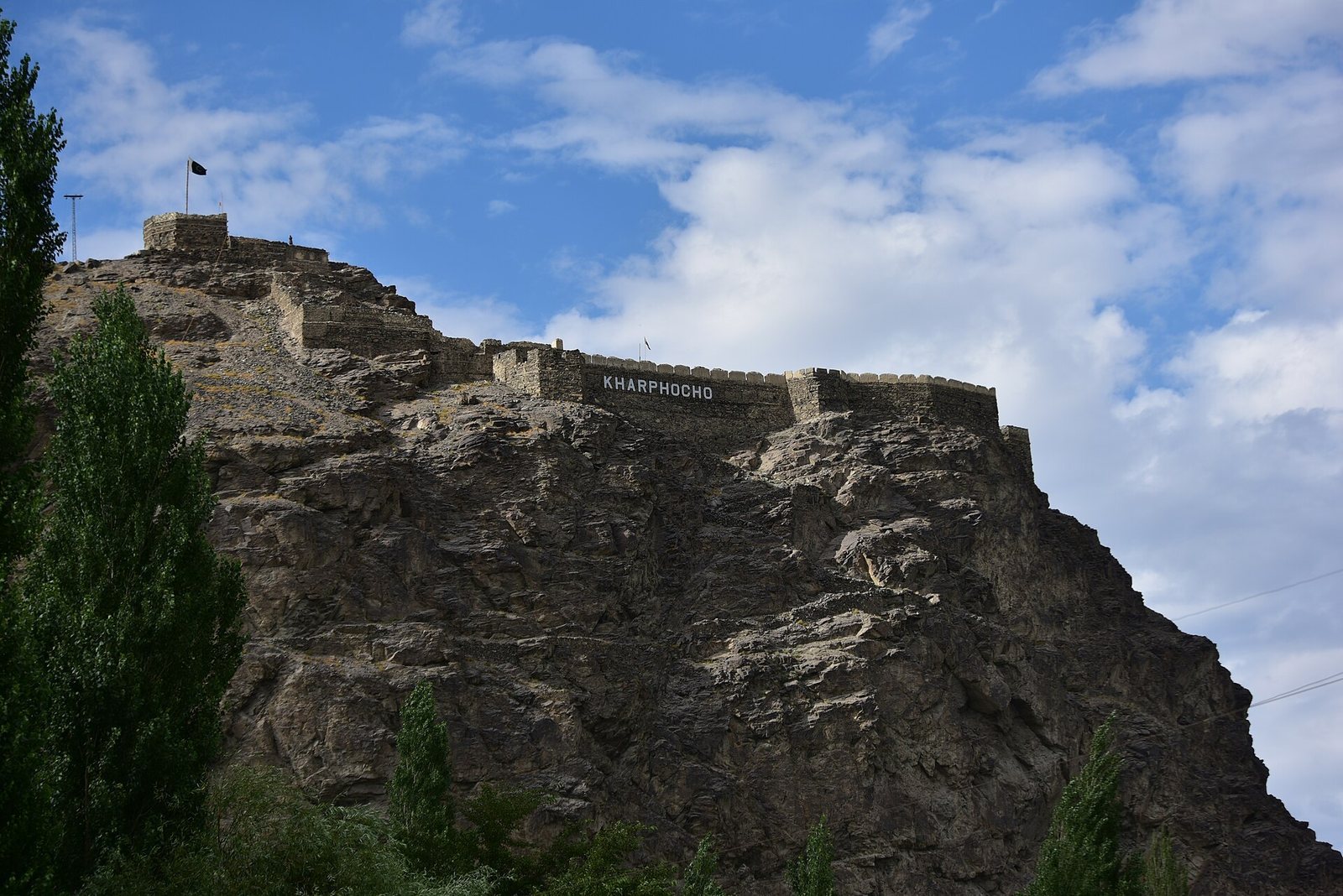
Skardu Fort, also called Kharpocho, is a ruined stronghold above Skardu in Pakistan, built around 1600 under Ali Sher Khan Anchan of the Maqpon dynasty. Kharpocho means “the king’s fort.” The Maqpon were the ruling house of historical Baltistan, and Skardu was the principal center of their realm. The fort served as a military stronghold and strategic lookout.
Maqpon rule and Dogra campaigns
Ali Sher Khan Anchan is credited with uniting Baltistan into a kingdom that extended to Ladakh. Mughal emperor Aurangzeb also tried, unsuccessfully, to capture the fort. In the 19th century, the Dogras, a Rajput ruling group associated with Jammu, defeated Maqpon monarch Ahmad Shah as they sought to annex Baltistan to the princely state of Jammu and Kashmir, a semi-autonomous monarchy under British paramountcy before Indian independence.
In 1835, English traveler Godfrey Thomas Vigne described the fort as strongly defended and intended more for military protection than comfortable residence. In 1840, Dogra general Zorawar Singh stormed and occupied it. Singh served Maharaja Gulab Singh, ruler of Jammu and Kashmir, and had another fort built on level ground beside Kharpocho Hill. The fort’s near-total destruction in 1857 is attributed to Ranbir Singh, then ruler of Kashmir.
The siege of 1947–48
During the First Indo-Pakistani War, fought in 1947–48 in part over control of Kashmir, Jammu and Kashmir State Forces under Lieutenant Colonel Sher Jung Thapa held the fort. Their besiegers included the Gilgit Scouts and rebel state troops aligned with Pakistan, as well as the Ibex Force and Chitral Scouts commanded by Colonel Mata ul-Mulk. After a six-hour battle, the attackers withdrew on 11 February 1948. They returned on 14 February and began harassing the defenders with gunfire.
The siege continued for more than six months. When ammunition and food supplies ran out, the defenders left in small groups on 13 August, and the fort fell the next day. The invaders apparently killed all the men remaining there except Thapa and his Sikh aide, who were taken prisoner. Skardu subsequently became part of Pakistan-controlled Kashmir, which was renamed Gilgit-Baltistan.
Remains
Hilltop setting and defenses
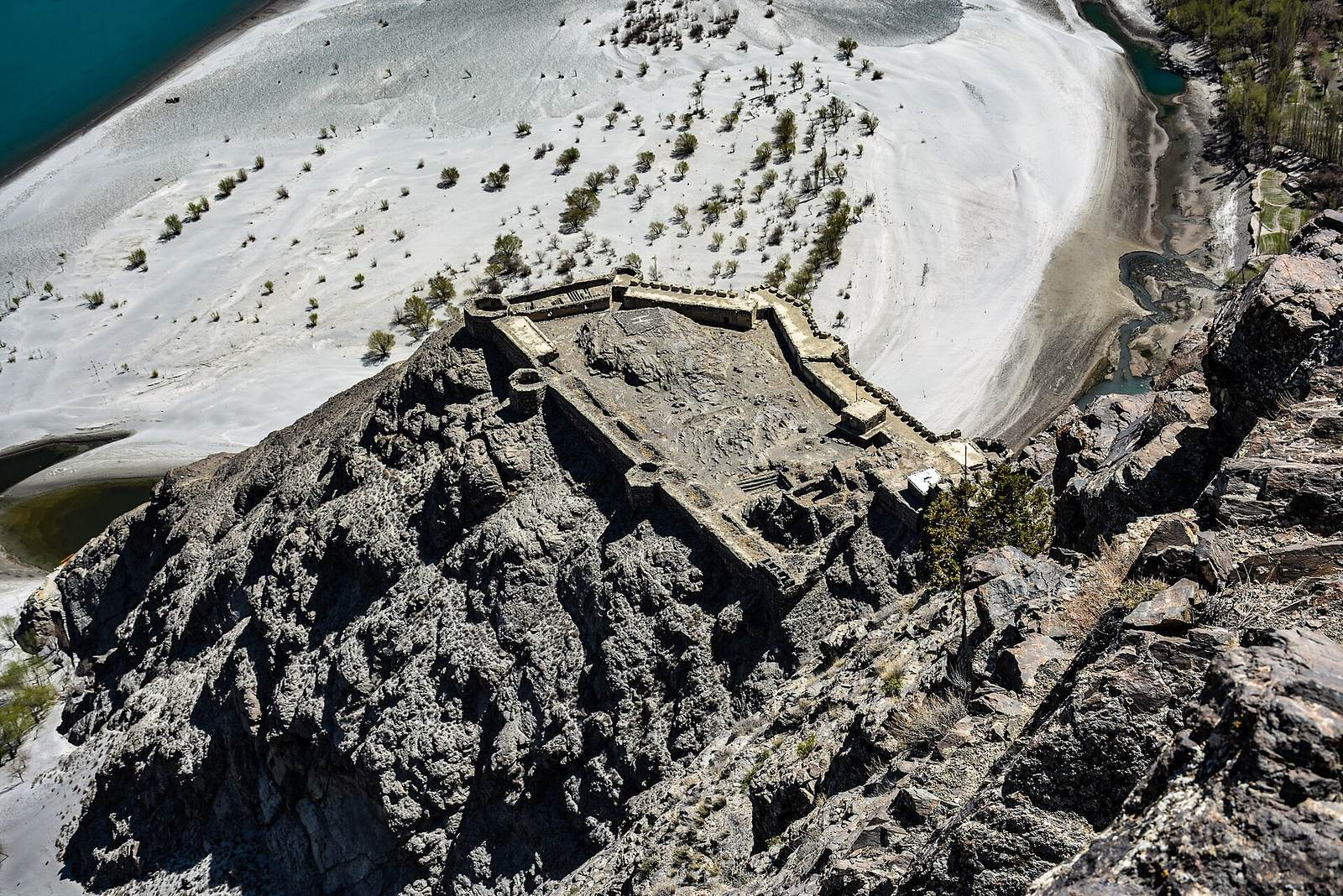
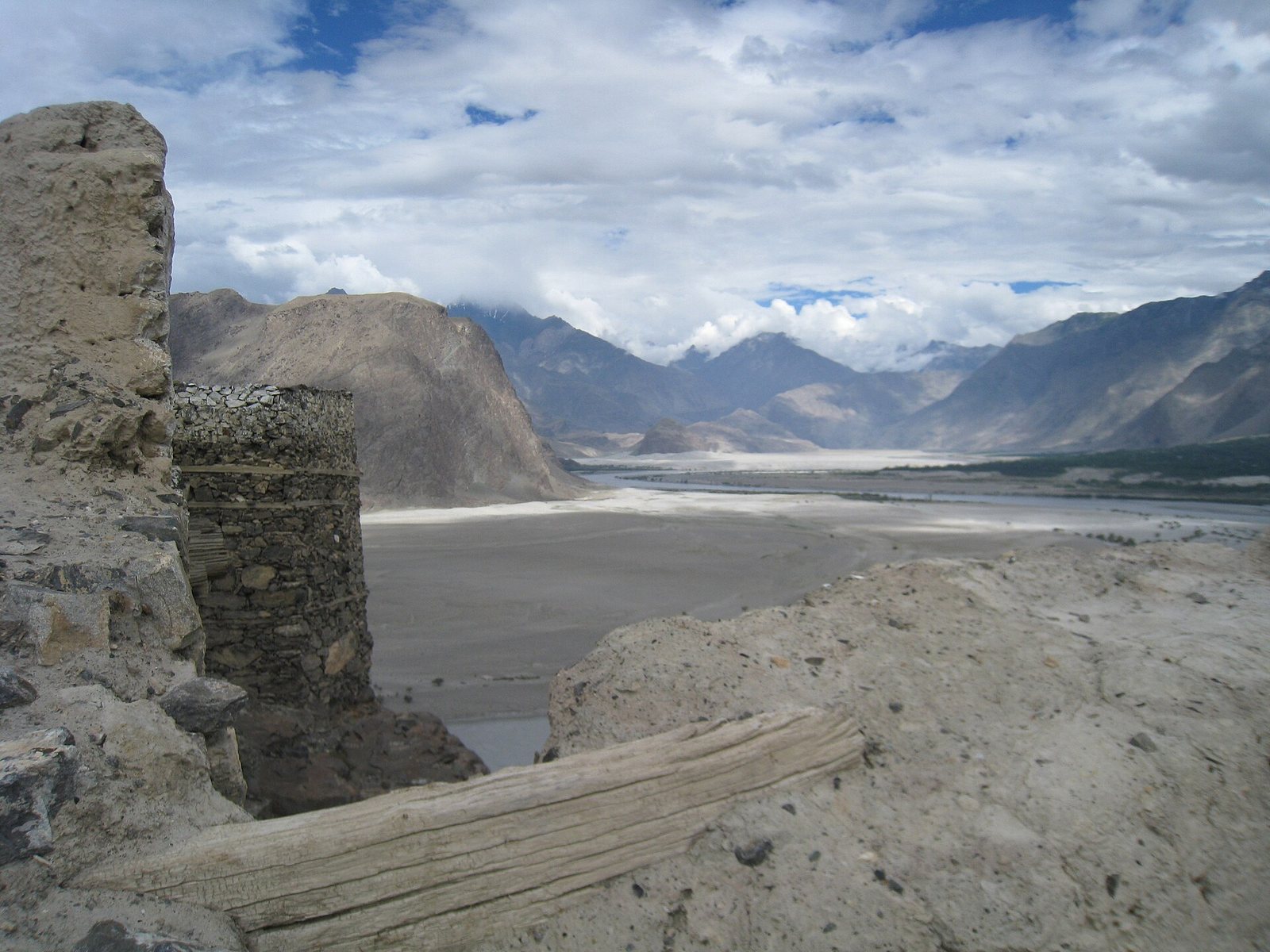
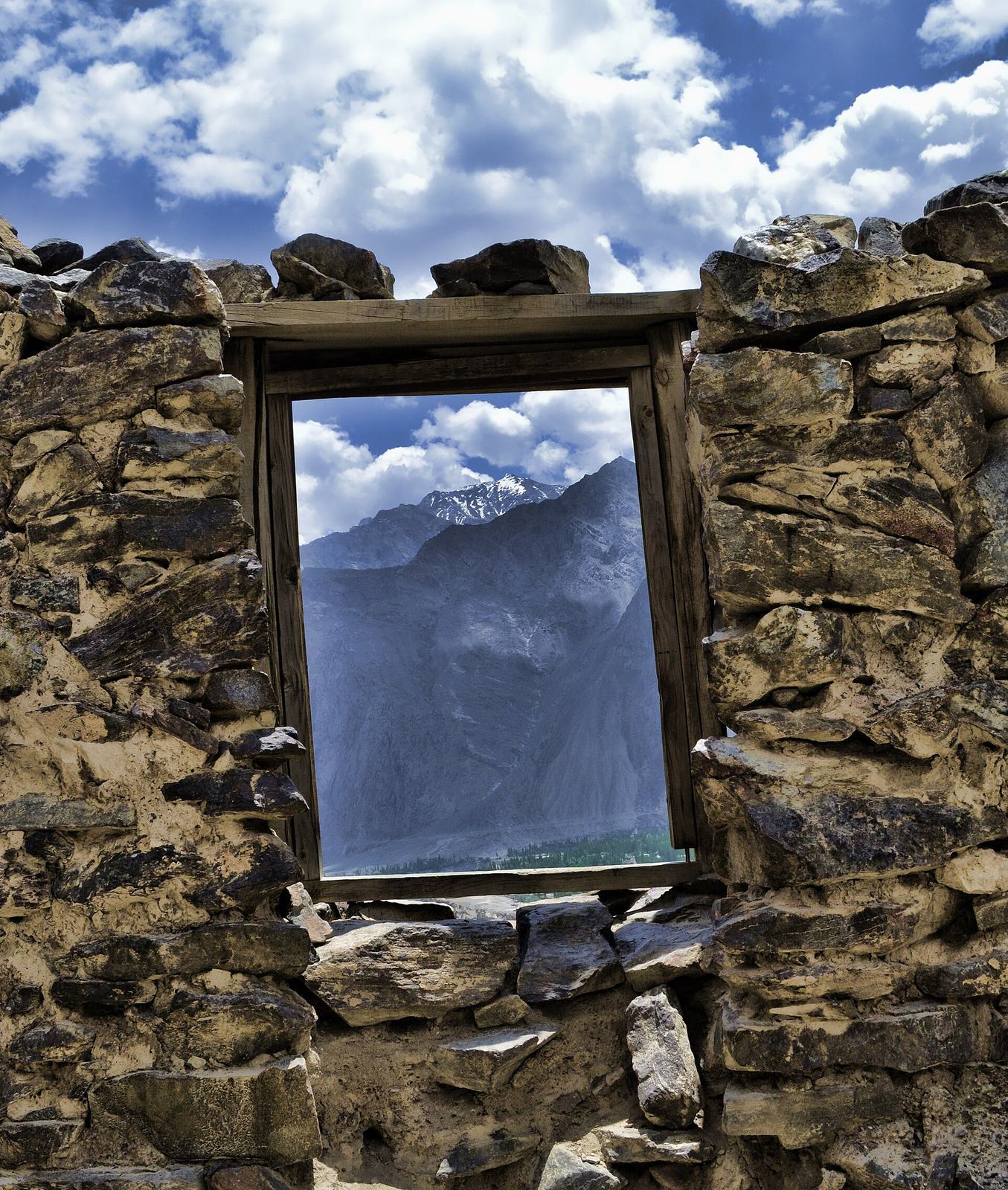
The fort stands on a rocky spur above Skardu, overlooking the Rock of Skardu and the meeting of the Indus and Shigar rivers. The spur rises about 100 metres above the level ground of the valleys and drops steeply on three sides. Skardu lies at roughly 2,300 metres above sea level in a valley branching from the Indus Valley. A steep path leads to the entrance gate. Part of the fortification wall has been restored; from it, the view east is toward the Indus as the river flows around an island.
Water and neighboring structures
Stone water channel
Water reached the fort from nearby Satpara Lake through a channel built of stone.
Mendoq Khar palace
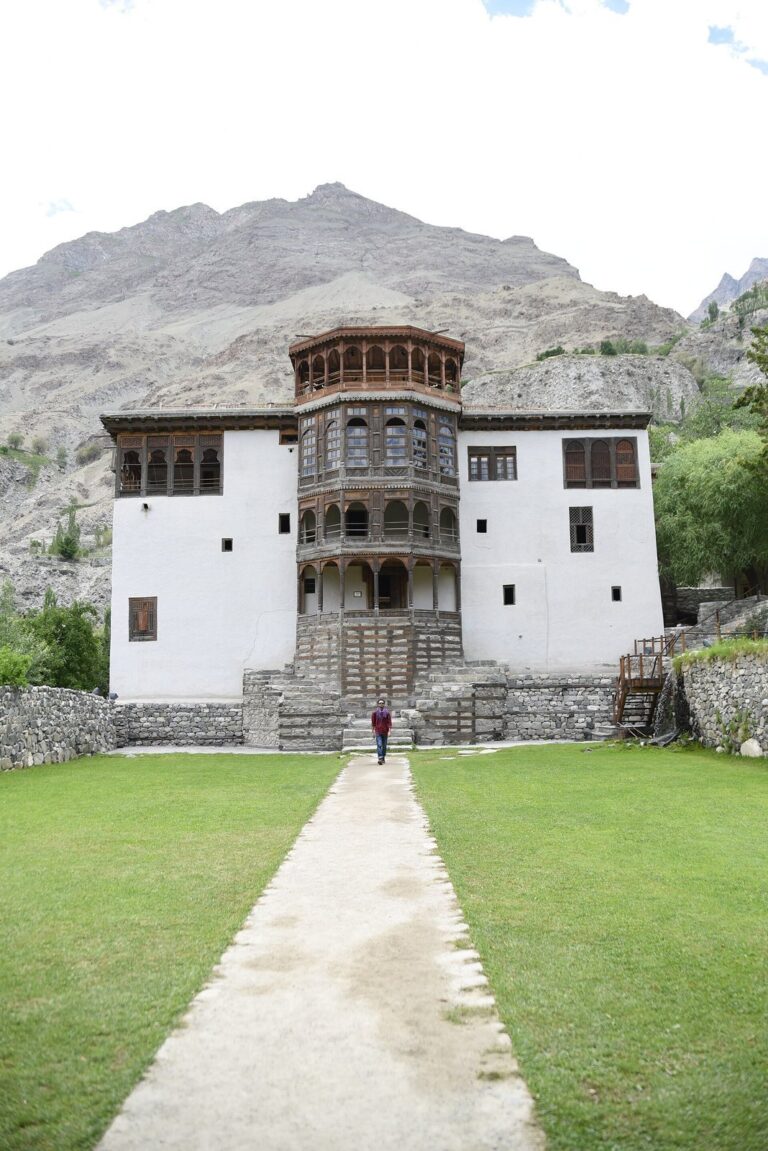
The Mendoq Khar palace stands immediately beside the fort. It is associated with Mandok Gyalmo, a queen of Ladakh.
Wooden mosque
A wooden mosque stood within the fort grounds. It was in a ruinous state by 1924.