Yamato Tenjin’yama Kofun: A Fourth-Century Keyhole-Shaped Mound in Japan
Site at a Glance
- Popularity
- Medium
- Country
- Japan
- Primary era
- Classical
- Eras represented
- Classical
- Civilizations
- Yamato
- Site type
- Burial
- Remains
- Burial Mound
On this page8 sections
History
Construction and proposed role
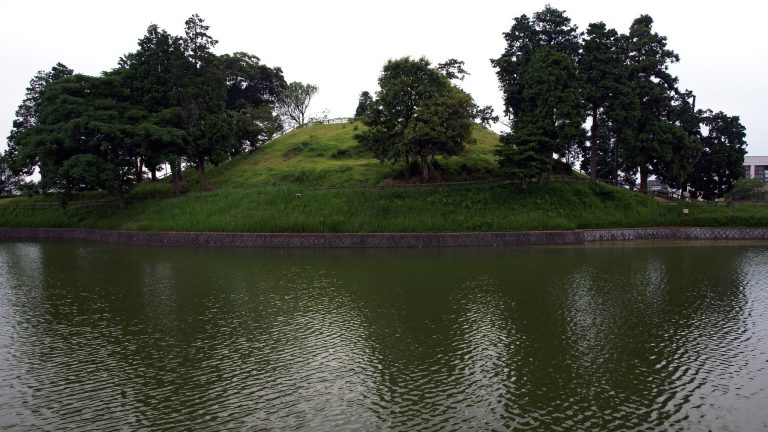
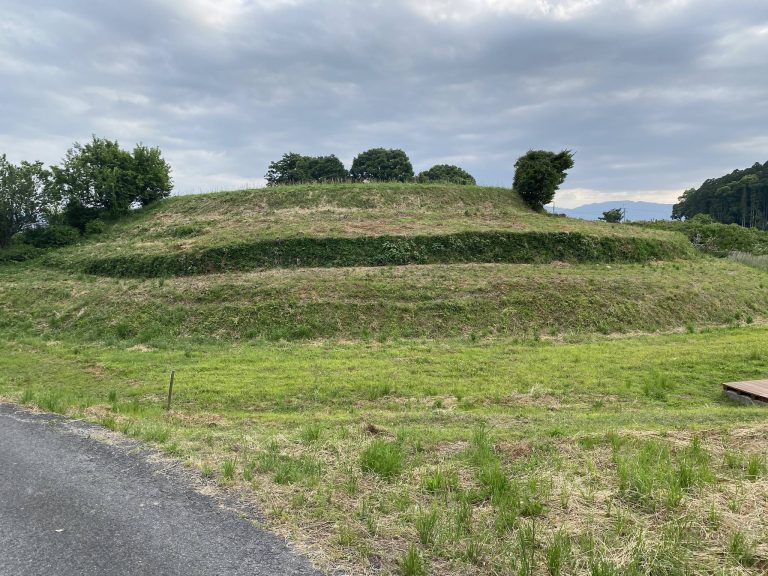
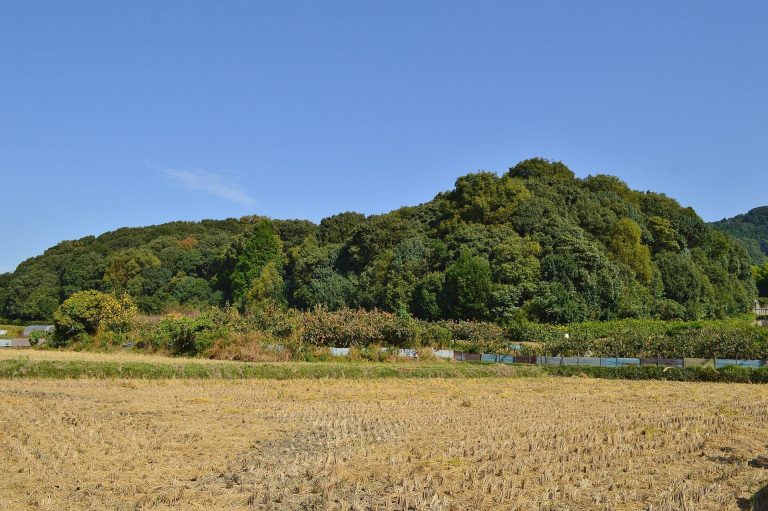
Yamato Tenjin’yama Kofun is a keyhole-shaped mound, with a rounded rear and a projecting front, on the eastern edge of the Nara Basin in Japan. It was built in the latter half of the fourth century, during the later part of the Early Kofun period, the early phase of Japan’s archaeological era named for its characteristic burial mounds.
The mound belongs to the Yanagimoto Kofun Group, itself part of the Oyamato Kofun Group, regional groupings of burial mounds. It has been proposed as a subsidiary mound, meaning a mound associated with a larger tomb, of nearby Andonyama Kofun. Andonyama is traditionally identified as the tomb of Emperor Sujin, whose place in Japan’s early imperial chronology is not historically secure. Excavation led to the interpretation that Yamato Tenjin’yama may have held funerary goods rather than a human interment. This possibility has informed wider interpretations of subsidiary mounds.
Shrine and archaeological history
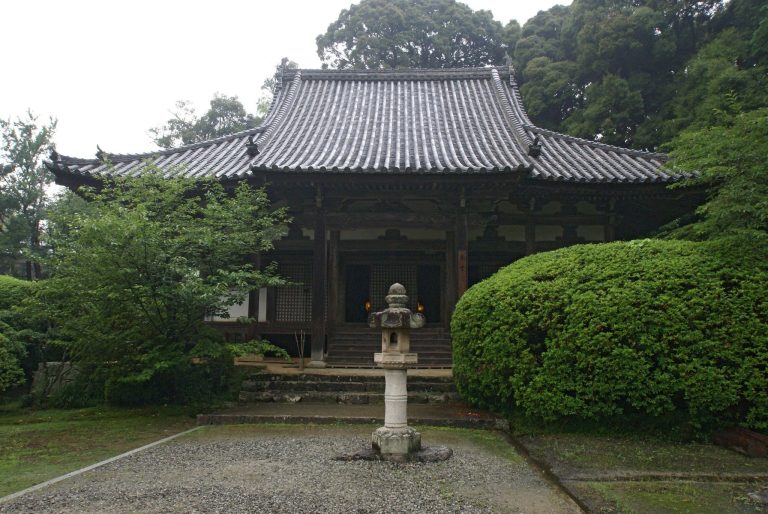
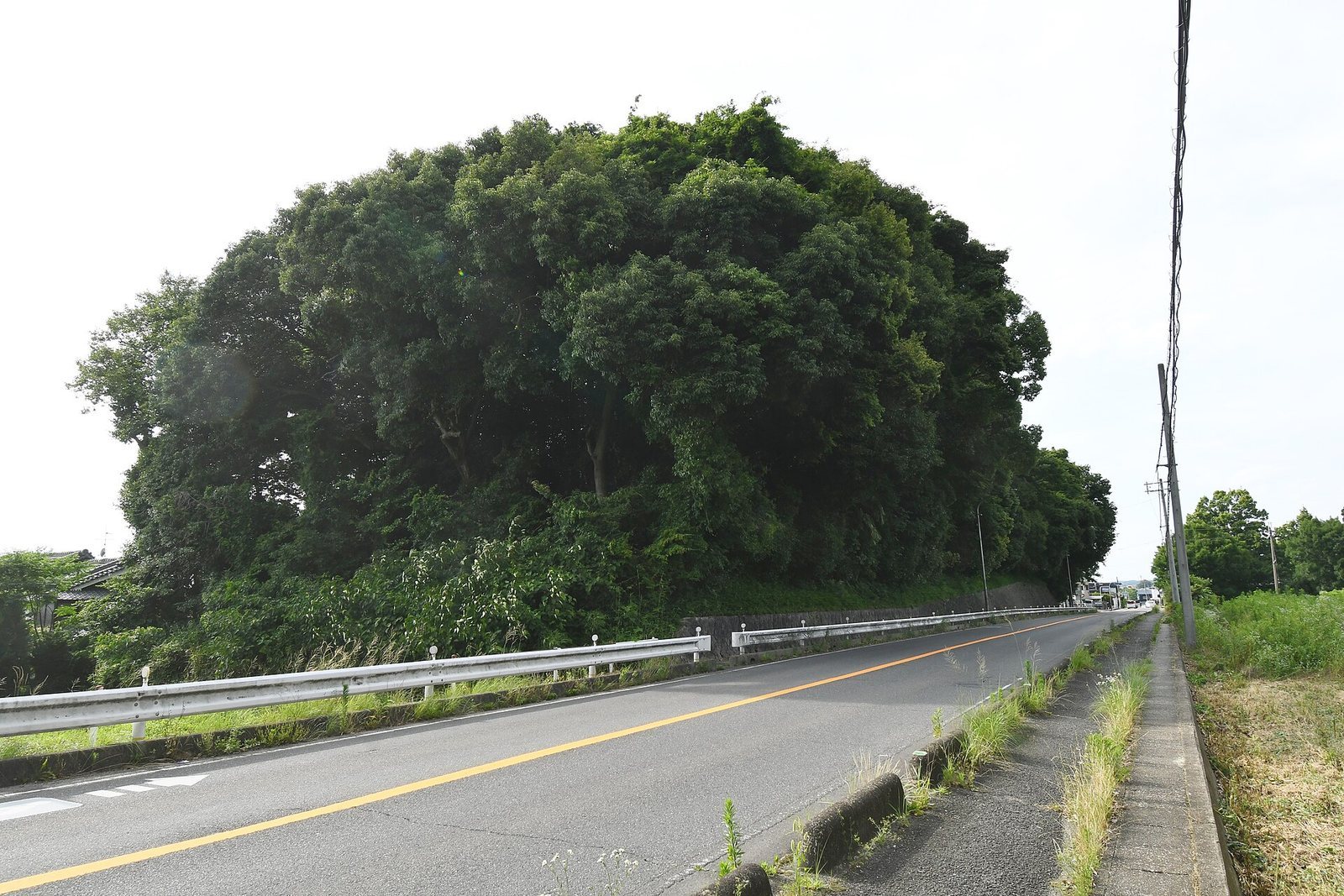
Isanagi Shrine occupies part of the mound. A record places the shrine there by 1485, while shrine tradition says it had previously stood on a hillside to the southeast. The shrine is included in the Engishiki, a tenth-century compilation of court regulations and procedures that contains a register of shrines.
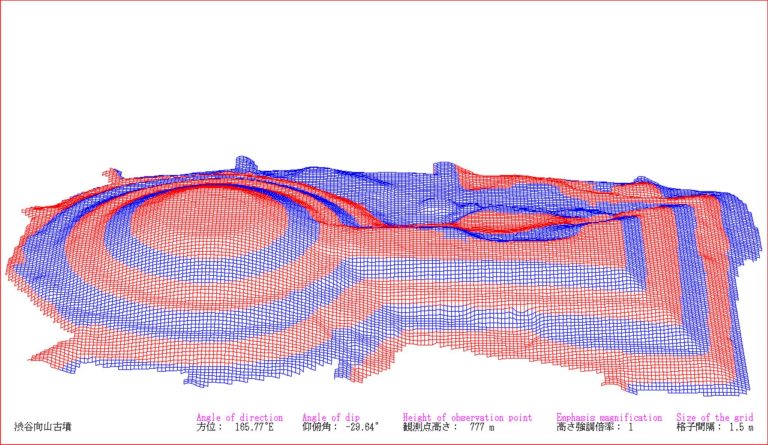
In 1960, before road construction, archaeologists from the Nara Prefectural Kashihara Archaeological Institute, led by Masao Suenaga, excavated the stone chamber and recovered its contents. They reported the findings in 1963. Muneyasu Date and colleagues remapped the site in 1998 and reported their survey in 1999. The finds received Japan’s National Important Cultural Property designation in 2002, a status for culturally significant heritage. The wooden coffin became a Nara Prefecture Tangible Cultural Property in 2008, and the site was designated a Nara Prefecture Historic Site in 2009.
Remains
The remains center on an earthen keyhole-shaped mound, with a stone-built chamber beneath its rounded rear section. The mound’s ground plan and excavated interior preserve evidence of its form and arrangement.
Mound and chamber
Mound
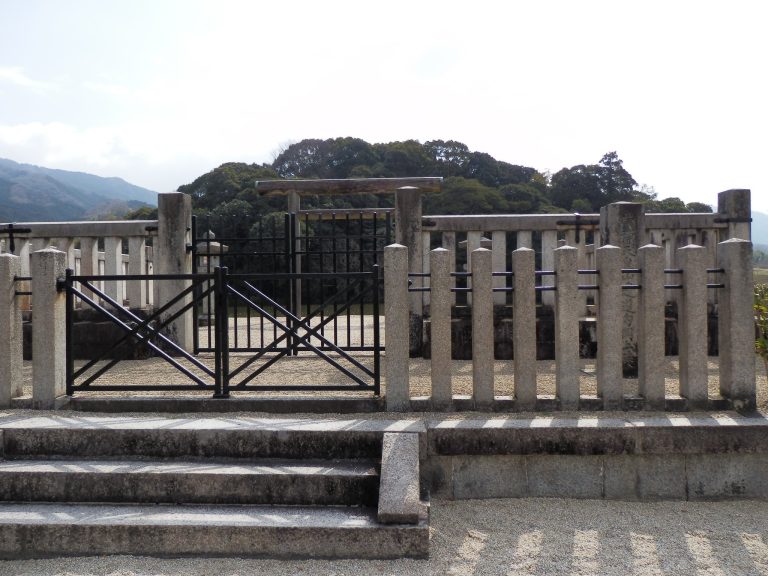
The mound stands west of Andonyama Kofun and partly within Isanagi Shrine’s precinct. It measures 103 metres long and reaches 9 metres high at the rear circular section; its projecting front faces south. Stones covered its surface, and a double-rimmed jar came from the front portion. Construction of National Route 169 removed the eastern half, while shrine buildings altered the western half.
Stone chamber
A below-ground stone chamber lies at the center of the rear circular section, with its long north-south axis parallel to the mound’s axis. Built from flat, split stones, it measures 6.1 metres long, 1.3 metres wide, and 1.2 metres high internally. Its walls angle markedly inward, and the roof rises on two sides to meet at a central ridge.
Coffin and grave goods
A clay support at the chamber’s center held a wooden coffin made from Japanese umbrella-pine boards. The examined boards measured 2.6 by 0.76 metres. A partition divided the coffin’s central area into a box-shaped compartment measuring 1 by 0.5 metres.
The compartment held about 41 kilograms of cinnabar, a red mineral composed mainly of mercury sulfide. Twenty bronze mirrors, placed with their backs facing upward, and four iron double-edged swords lay around it. Outside the compartment were three more mirrors, two to the north and one to the south, as well as three iron swords and other iron objects. The 23 mirrors include 17 Chinese examples, chiefly with square-grid and compass motifs, bands depicting deities and animals, or inward-facing floral designs, alongside unusual Japanese mirrors. The collection is not dominated by triangular-rimmed mirrors with divine-beast imagery, a type common in many early Kofun-period tombs. The inventory also includes 16 iron objects and pottery fragments. The finds are held by the Nara National Museum; the wooden coffin is held by the museum attached to the Nara Prefectural Kashihara Archaeological Institute.