Nageswaraswamy Temple, Kumbakonam: An Early Chola Shiva Temple
Site at a Glance
- Popularity
- High
- Country
- India
- Primary era
- Medieval
- Eras represented
- Medieval, Early Modern
- Civilizations
- Chola, Vijayanagara
- Site type
- Religious
- Remains
- Temple
On this page13 sections
History
Nageswaraswamy Temple, Kumbakonam, is a Hindu temple dedicated to Shiva in India. The oldest parts of its present stone structure date to the ninth century, when the Chola ruler Aditya Chola built it. The temple is regarded as one of the earliest Chola foundations.
Chola foundation and learning
Inscriptions record contributions to the temple from Chola rulers and describe its role as a centre of learning. Students studied Purva Mimamsa, a school of philosophy concerned with Vedic ritual and interpretation, through a teaching method called Pravahakarma. Provisions supported the food and upkeep of both teachers and students.
Later patronage
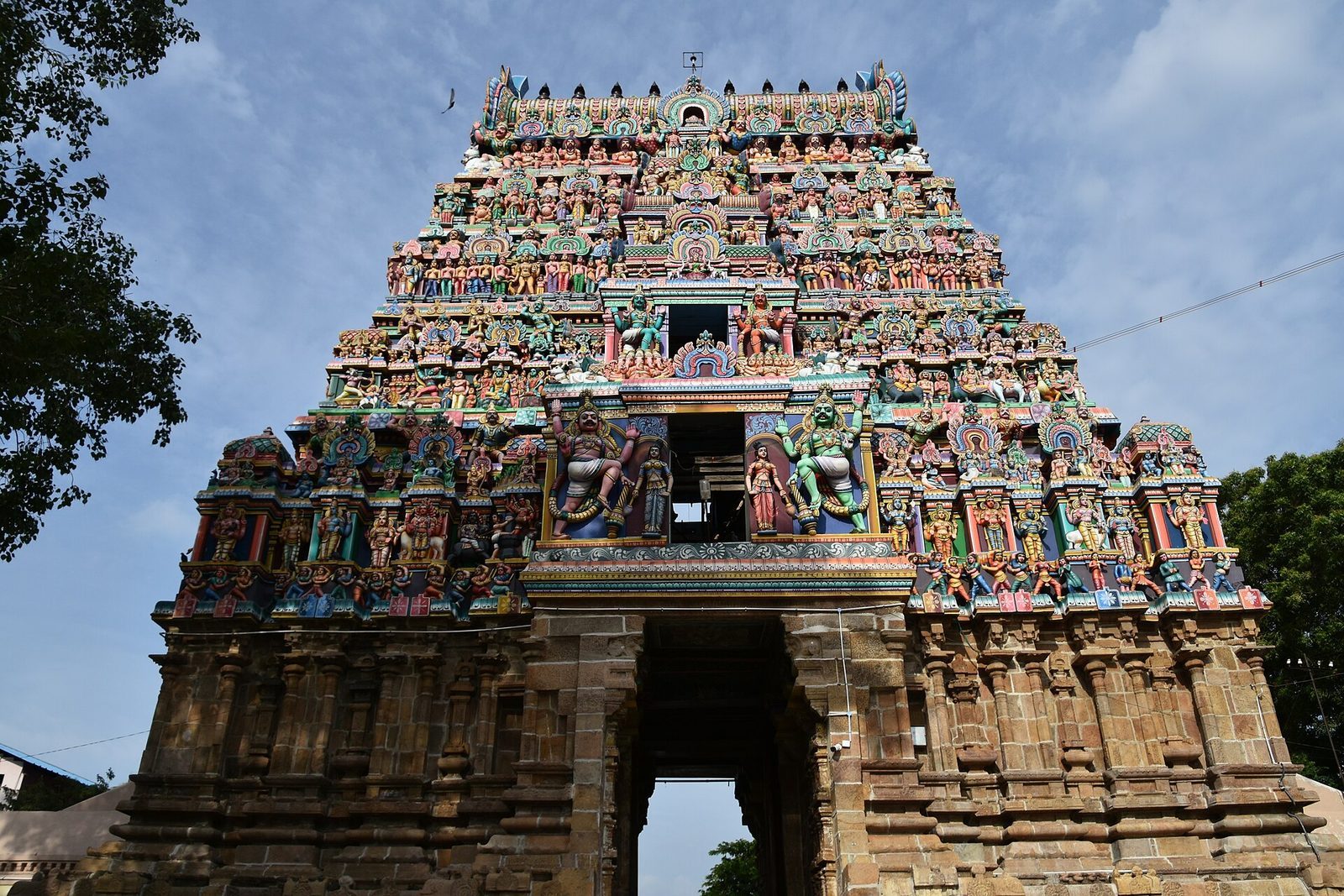
Inscriptions also record support from the Thanjavur Nayaks and the Thanjavur Maratha kingdom. Expansion continued under the Nayaks into the sixteenth century, including the addition of tall gateway towers.
Devotional traditions and festivals
The temple is praised in the Tevaram, a foundational collection of Tamil hymns to Shiva, and is counted among the 275 temples honored in that tradition. The poet-saint Tirugnana Sambandar composed ten hymns to Nageswarar, Appar composed twelve, and Sundarar composed seven. The temple is also associated with the sacred sites along the Cauvery River.
Several legends explain the temple’s sacred associations. One tells how Adisesha, the cosmic serpent, performed penance at Kuvivanam while struggling beneath the weight of the earth. Parvati appeared and restored his strength. Other traditions say that Dakshan, Karkotakan, and King Nala worshipped Shiva here. In another origin story, a bilva leaf used in worship of a pot of amrita, the mythic nectar of immortality, fell at this place, where a Shiva lingam appeared. The site was consequently called Vilvavanesam.
Tradition also connects worship here with Surya, the solar deity, and treats sunlight falling on Shiva’s image as an act of solar worship. The temple has a shrine to Rahu. In Hindu astrology, Rahu and Ketu are lunar nodes regarded as influential celestial powers; a belief holds that worshippers seeking relief from their effects or from serpent-related astrological afflictions should pray here in the morning, then visit three other serpent-associated Shiva temples at different times that day.
Nageswaraswamy is one of twelve Shiva temples associated with Kumbakonam’s Mahamaham festival, held every twelve years. A legend says that Vasuki and other serpents worshipped here during the first period of a Mahashivaratri night before continuing to three other temples in succession. Mahashivaratri, a major observance dedicated to Shiva and held in February or March, is one of the temple’s principal festivals.
Renovation and consecrations
Padagacheri Sri Ramalinga Swamigal undertook renovation work and arranged a consecration ceremony in 1923. Further consecration ceremonies took place in 1959, 1988, and 2015.
Remains
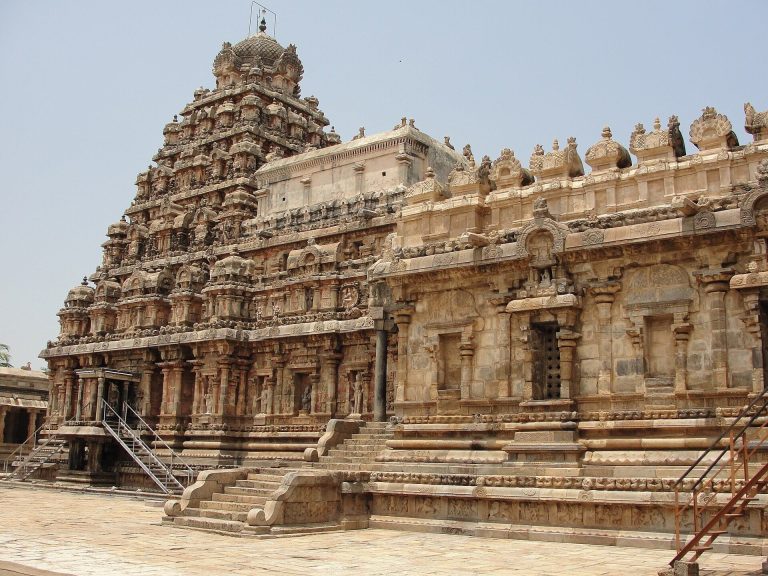
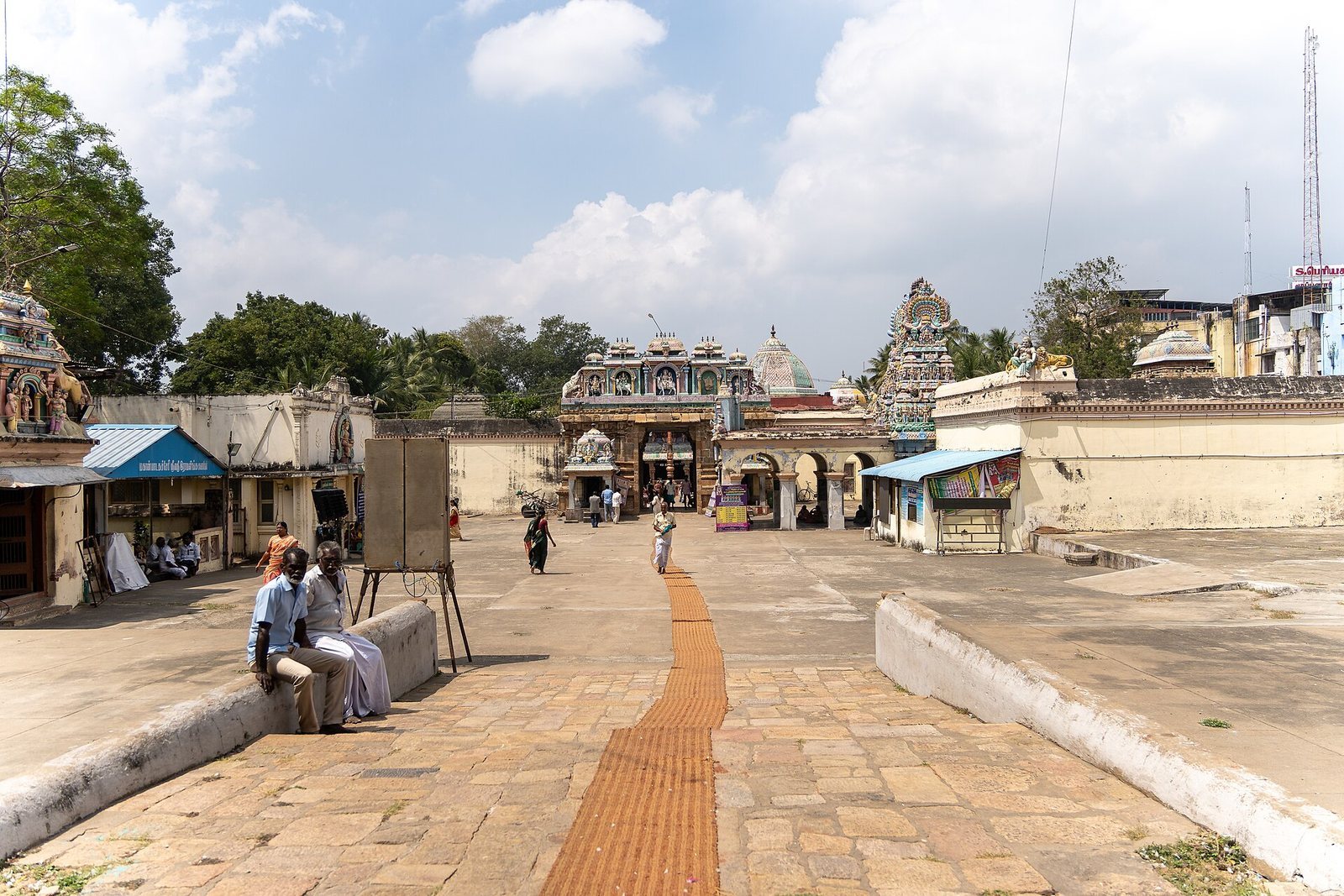
The temple complex is among the largest in Tamil Nadu. It has three precincts and three gateway towers, while its early Chola structures are predominantly stone. Those early buildings have a substantial porch attached to the sanctum, with both set slightly below ground in a pit-like arrangement.
Precincts and internal layout
Gateways and precincts
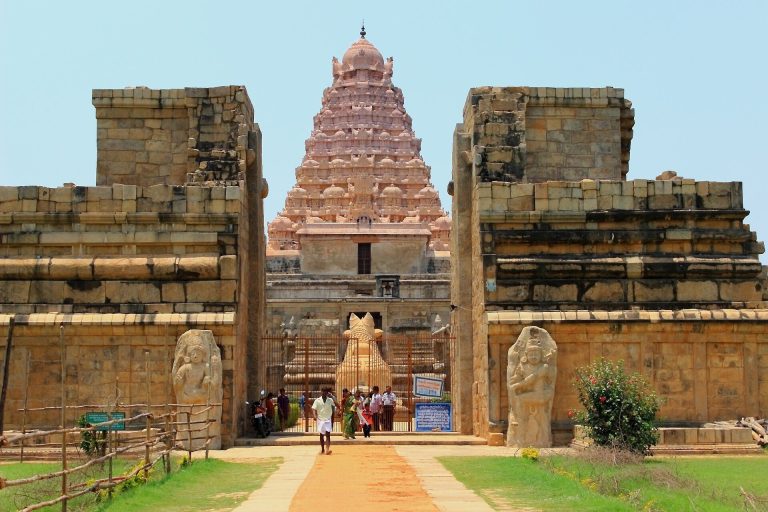
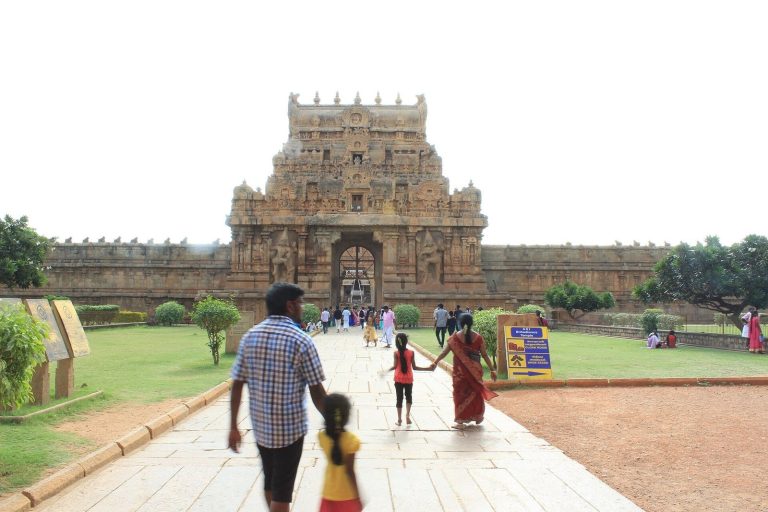
Gateway towers stand on the eastern, western, and southern sides. The principal entrance faces east and rises through five tiers. The second precinct, built during the Vijayanagara period, when a major South Indian empire flourished from the fourteenth to the seventeenth centuries, contains numerous sculptures. An independent shrine to the goddess Periyanayagi stands in the outer precinct, apart from the main axial arrangement, and faces south.
Shrines and halls
The complex contains shrines to Nageswarar, Periyanayagi, and Rahu. A garden and a lion-faced sacred well are on the left, while the Periyanayagi shrine is on the right. Farther inside, a sixteen-pillared hall lies to the left and the Nataraja hall to the right.
Sanctum and sculpture
Sanctum
The sanctum is built in a chariot form, comparable to the design at Sarangapani Temple in Kumbakonam. Its orientation allows sunlight to enter during Chithirai, the Tamil month that falls around April and May, and reach the principal deity. The sanctum rises from a lotus-shaped base whose petals are carved in pronounced detail.
Images and reliefs
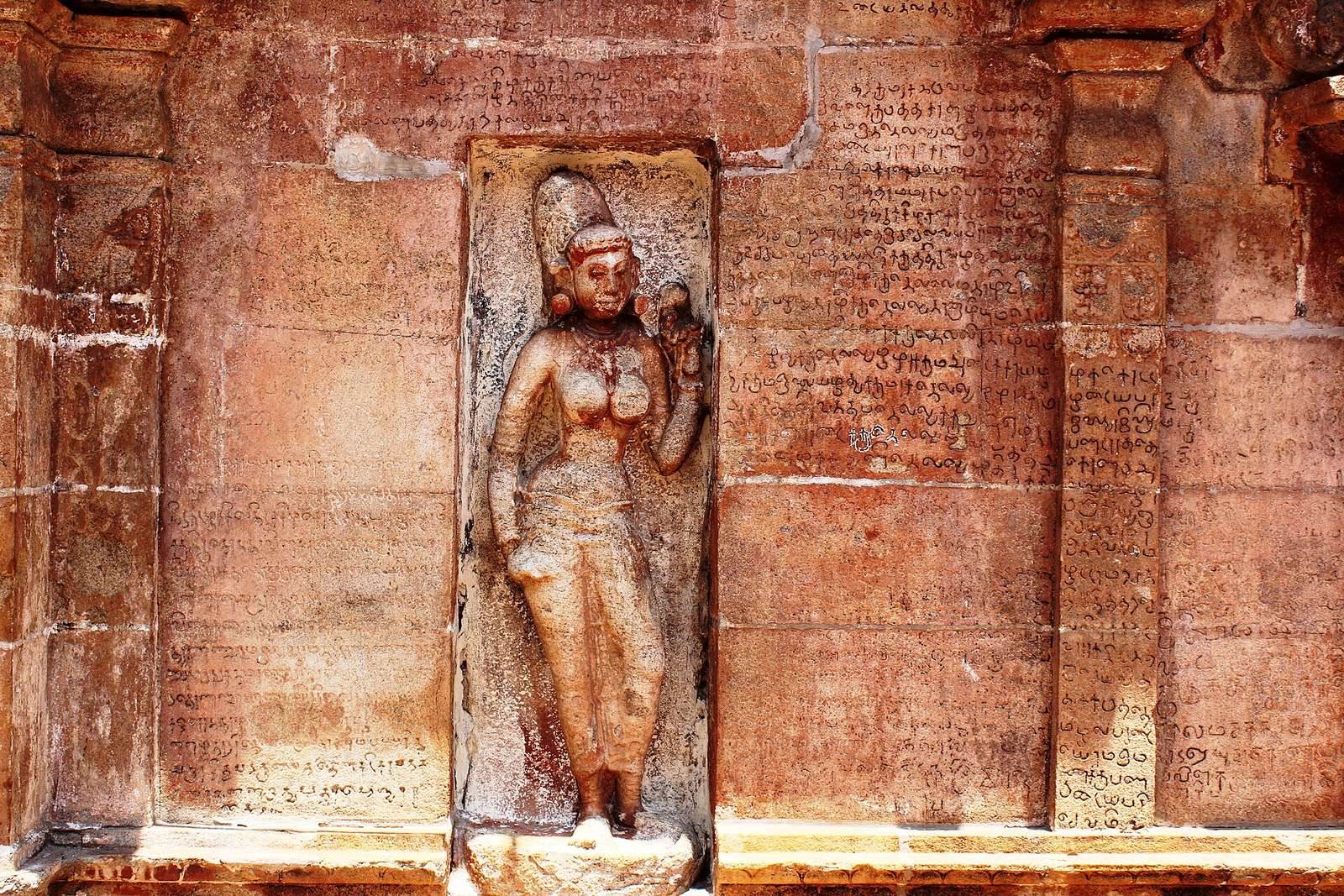
Niches on the sanctum’s outer walls hold images of Ardhanari, the combined form of Shiva and Parvati, Brahma, and Dakshinamoorthy, a form of Shiva associated with teaching. Near-life-size wall sculptures represent donors or contemporary princes and princesses. Low-relief scenes from epics appear along the base beneath the sanctum’s wall projections.
Chariot hall and other features
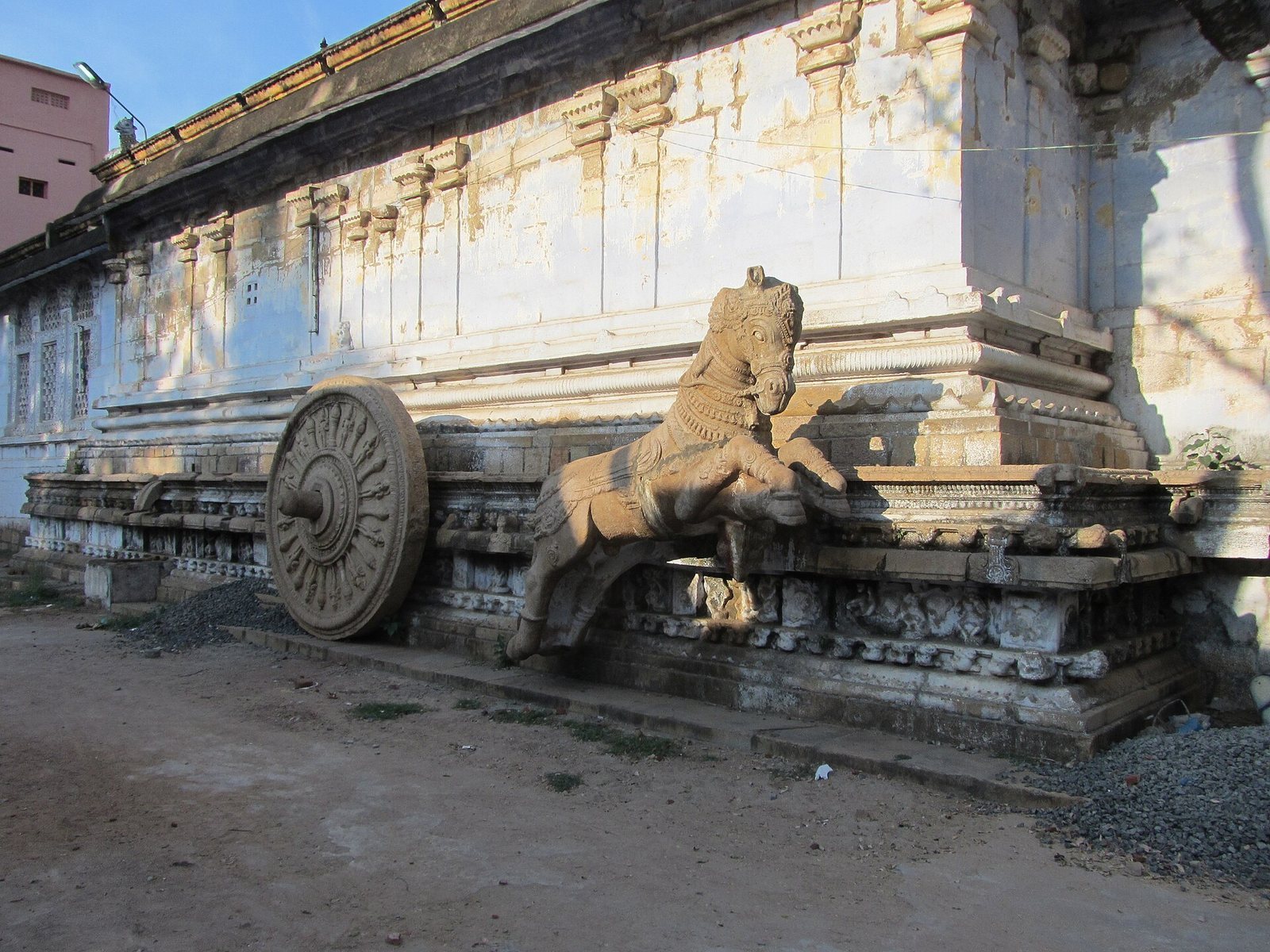
The Nataraja hall also takes the form of a chariot. Its stone wheels have the twelve zodiac signs worked into their spokes, and the design includes two horses and four elephants in pulling positions. Inside, Sivakami, a form of Parvati, keeps rhythm for Shiva’s cosmic dance, while Vishnu plays a flute. In the porch attached to the Nageswarar sanctum, a statue of Vinayagar, also known as Ganesha, is called Gangai Vinayagar. It was brought to the Chola empire as a trophy during the Ganges expedition of the eleventh-century emperor Rajendra Chola, and its style resembles Pala art associated with eastern India. The complex also has a sacred water feature called Naga Theertham, a bilva tree, and a flagstaff about 35 feet high. After its upper part was damaged, the flagstaff was repaired and reinstalled on 29 January 2016.