Palace Modello: A Communal Savings Bank Building in Rijeka
Site at a Glance
- Rating
- 3.4
- Popularity
- Very Low
- Country
- Croatia
- Primary era
- Modern
- Eras represented
- Modern
- Civilizations
- Austria-Hungary, Habsburg, Hungarian
- Site type
- Civic
- Remains
- Library
On this page6 sections
History
Theatre site and construction
Palace Modello is a bank building in Rijeka, Croatia, constructed between 1883 and 1885 for the city’s communal savings bank. It rose on the site of the Adamić Theatre, built in 1805 and demolished in 1883. Palace construction began immediately after the theatre’s removal, on a site agreed upon by Rijeka’s mayor, Giovanni di Ciotta. Work was carried out by the Vienna-based architectural bureau Fellner & Helmer, led by Ferdinand Fellner and Herman Helmer.
Civic and cultural uses
The palace’s ceremonial hall now serves as the auditorium of the Italian Cultural Club, while Rijeka’s public library operates on the ground floor. Nearby, the Croatian National Theatre, built by Fellner & Helmer in 1885, took the place of the demolished Adamić Theatre.
Remains
Street-facing exterior
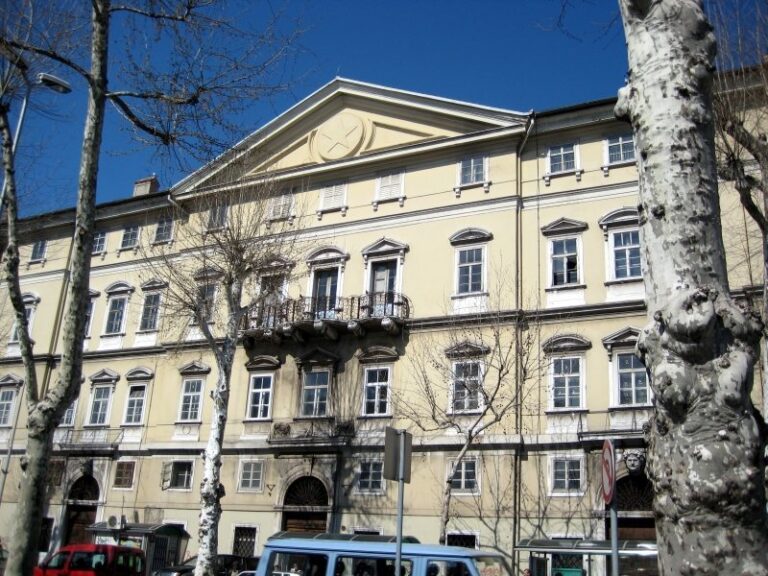
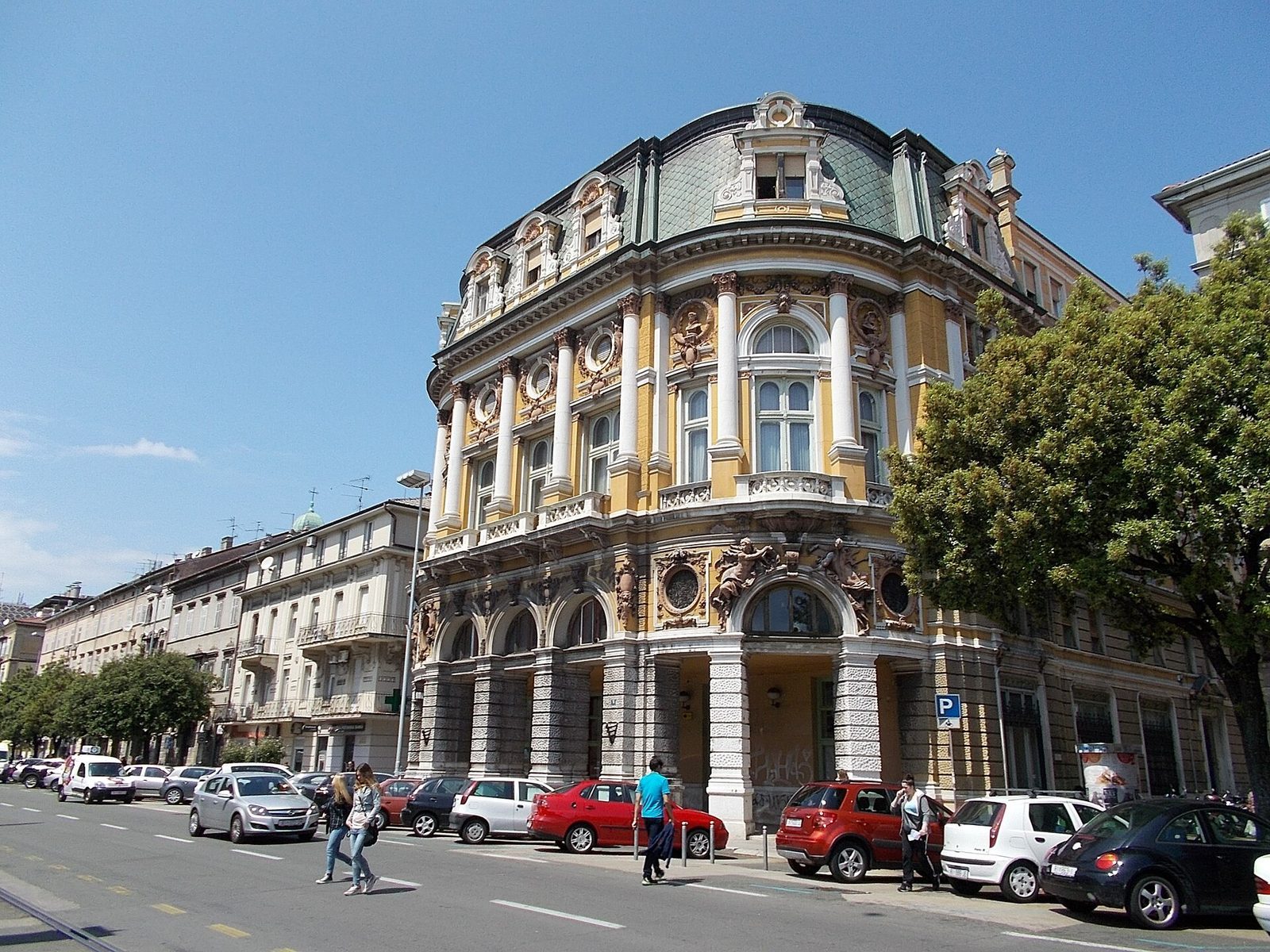
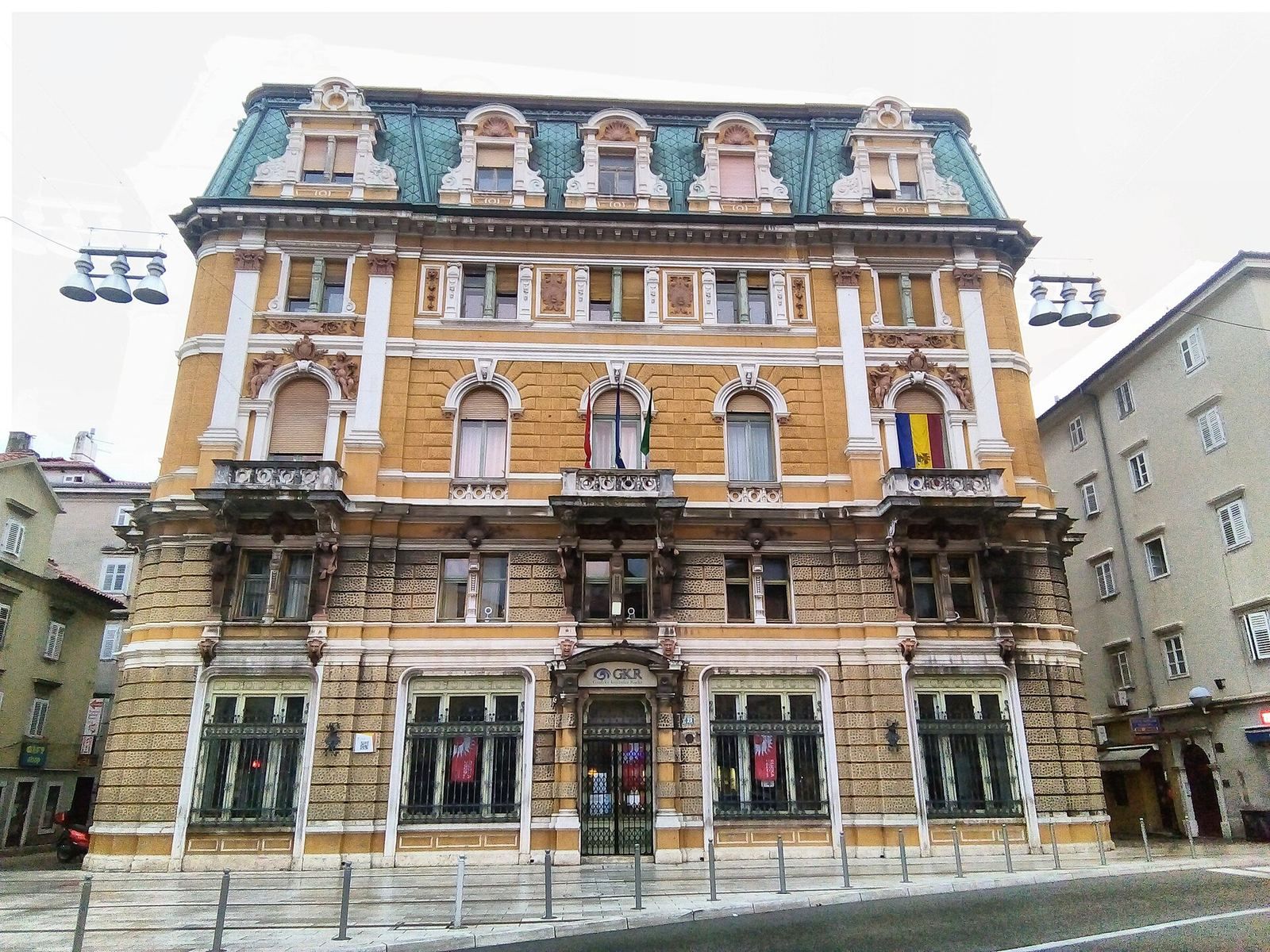
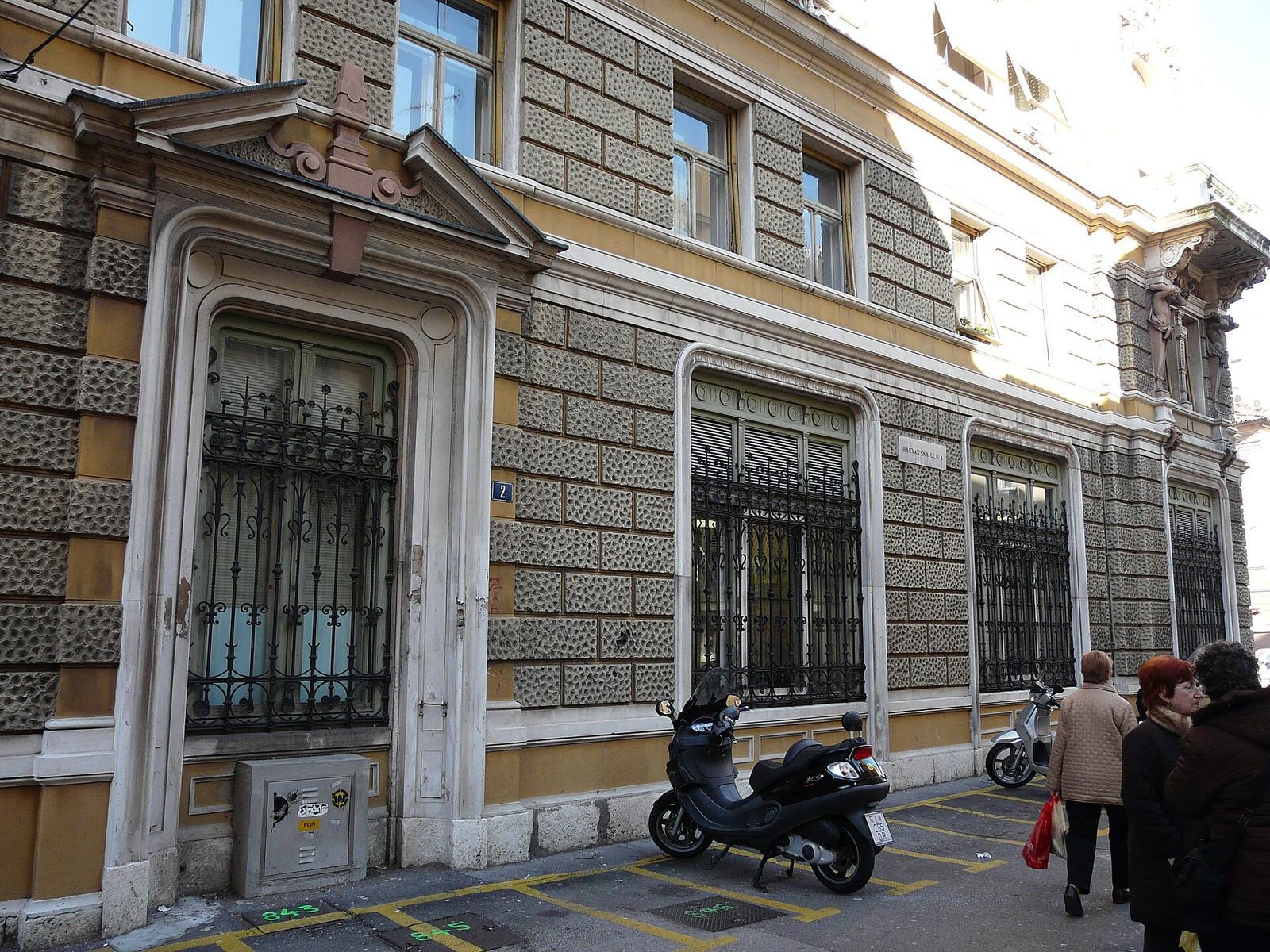
The palace has street-facing façades on Ivan Zajc Street, formerly Porto, Bačvarska Street, and Adamićeva Street. Entrances are situated on Bačvarska Street and Vatroslava Lisinskog Street. Opposite the city bazaar and near the Croatian National Theatre, the building is distinguished by a richly decorated exterior. Its sculptural and ornamental details draw on late Renaissance and late Baroque styles; sculptor Ignazio Donegani produced the decorative elements.
Ceremonial hall
The palace’s gala hall is ornamented with elaborate stucco work. It remains in use as the auditorium of the Italian Cultural Club.