St. Ludger’s Abbey: A Benedictine Monastery in Helmstedt, Germany
Site at a Glance
- Rating
- 4.3
- Popularity
- Medium
- Country
- Germany
- Primary era
- Early Modern
- Eras represented
- Medieval, Early Modern, Modern
- Civilizations
- Holy Roman Empire
- Site type
- Religious
- Remains
- Monastery
On this page8 sections
History
Foundation and medieval authority
St. Ludger’s Abbey is a Benedictine monastery in Helmstedt, Germany. Founded around 800 by Saint Ludger, a Christian missionary, it belongs to the Benedictine Order, whose members follow the Rule of Saint Benedict. It is the oldest continuing ecclesiastical institution in the Braunschweig region.
Ludger entered the area with Charlemagne, the Frankish emperor whose campaigns extended Frankish power into Saxony, to convert the Saxons. The foundation took place during the Saxon Wars, campaigns by the Franks against the Saxons in the late eighth and early ninth centuries. Before the abbey was established, the site had served as an ancient Germanic spring sanctuary.
The abbey stood on an old trade route linking settlements at Brunswick and Magdeburg, and merchant traffic brought economic benefits. It became an Imperial Abbey, under the emperor’s direct authority rather than that of a local territorial ruler. Its abbots, the heads of the monastery, held lordship over Helmstedt until the 15th century. The town’s arms depict Saint Ludger, reflecting the abbey’s importance to Helmstedt.
St. Ludger’s was a sister house of Werden Abbey. One abbot governed both monasteries, a personal union reflected in their coats of arms, which showed paired abbatial staffs. The abbey resisted the 16th-century Reformation and remained Roman Catholic until its dissolution.
Rebuilding and the abbey gate
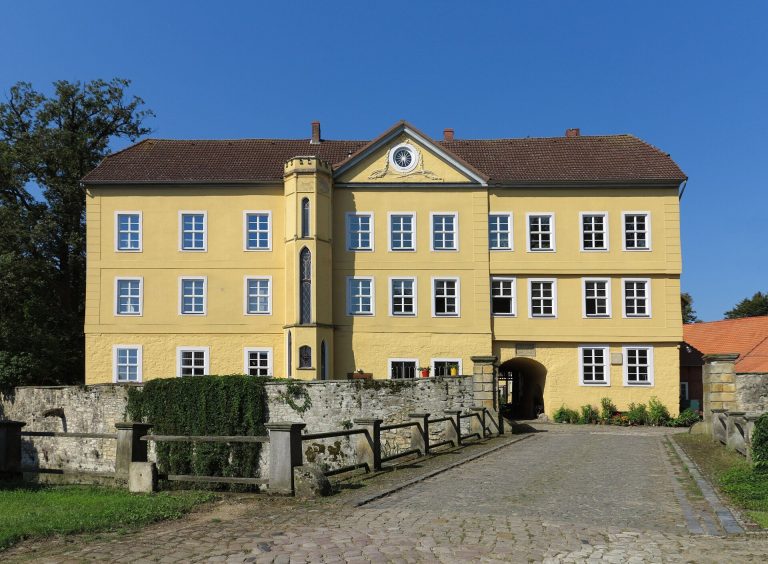
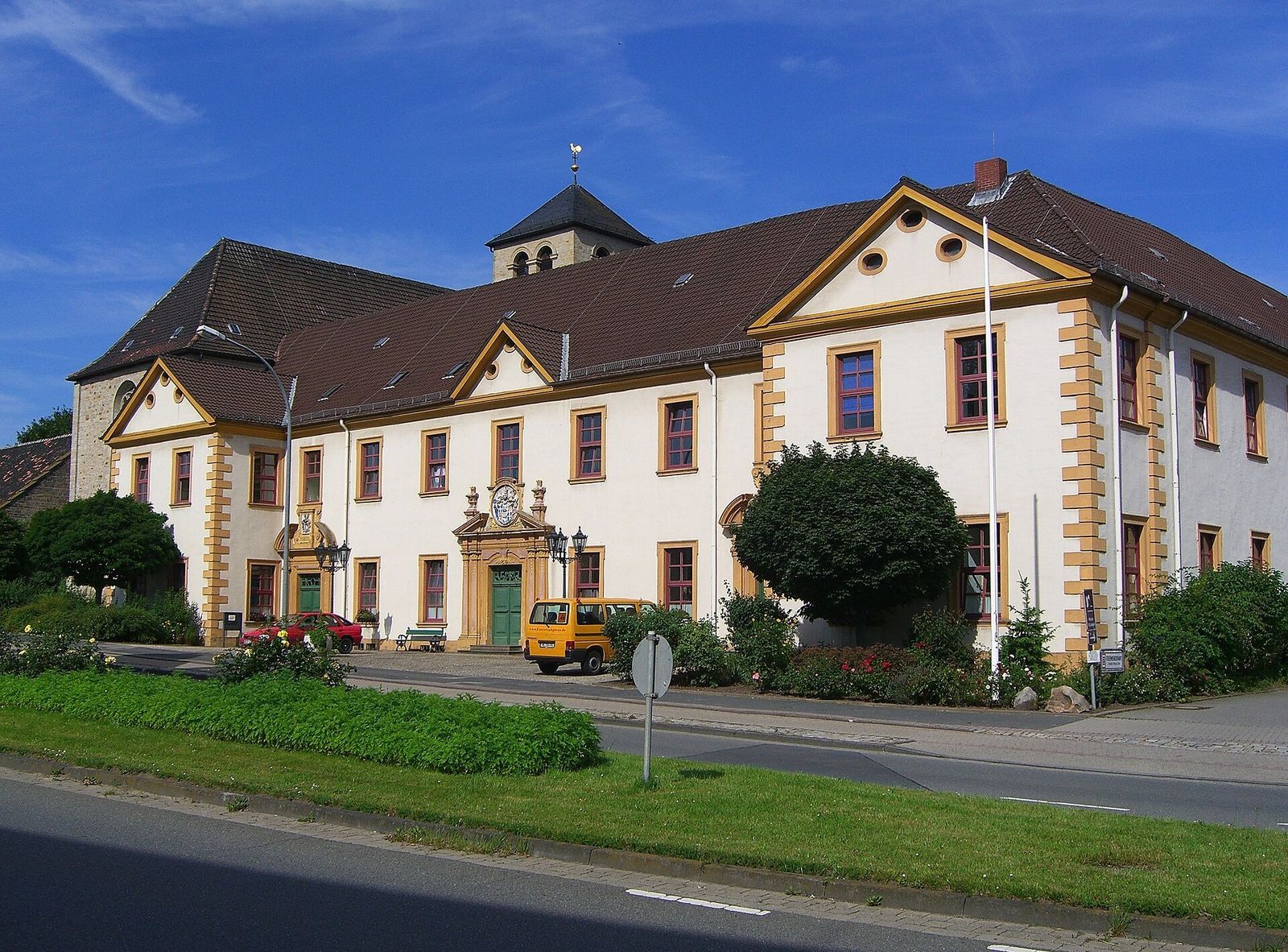
After the Thirty Years’ War, the major European conflict of 1618 to 1648, the abbey complex was rebuilt in the Baroque style, known for dramatic and elaborate design. Its religious life continued alongside its economic and civic roles.
Secular estate and modern parish
In December 1802, the abbey was secularized, meaning it passed from ecclesiastical to civil control, and its property went to the Duchy of Brunswick-Lüneburg. The former monastery became a state agricultural estate, which operated there until 1977 before continuing south of Helmstedt. A road through the former estate was completed that year as part of the town’s ring road. A Catholic school operated at the site by at least the 18th century.
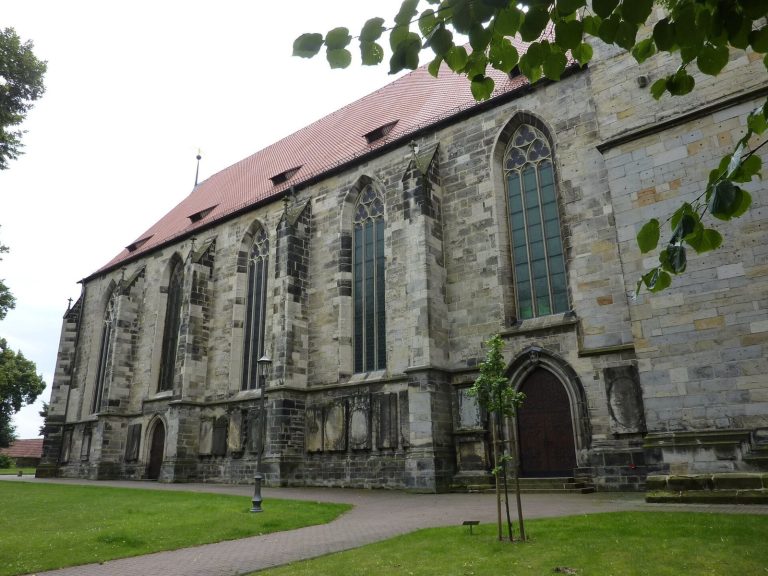
Arson destroyed the church in June 1942. It was rebuilt between 1947 and 1949, while other abbey buildings also suffered severe Second World War damage and were restored. The Diocese of Hildesheim acquired a monastic building in 1980 for the Catholic parish community. From 1986 it served as a Catholic meeting centre, with the transfer to that use formalized on 4 June. The church continues as the parish church of St. Ludgeri.
Remains
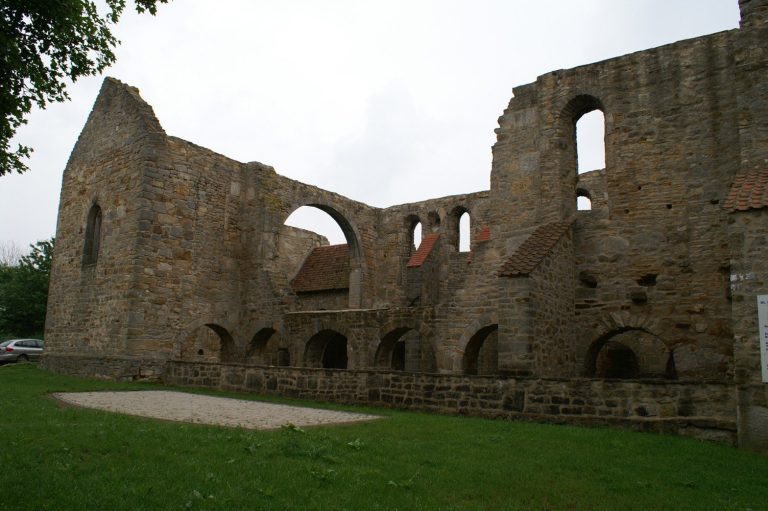
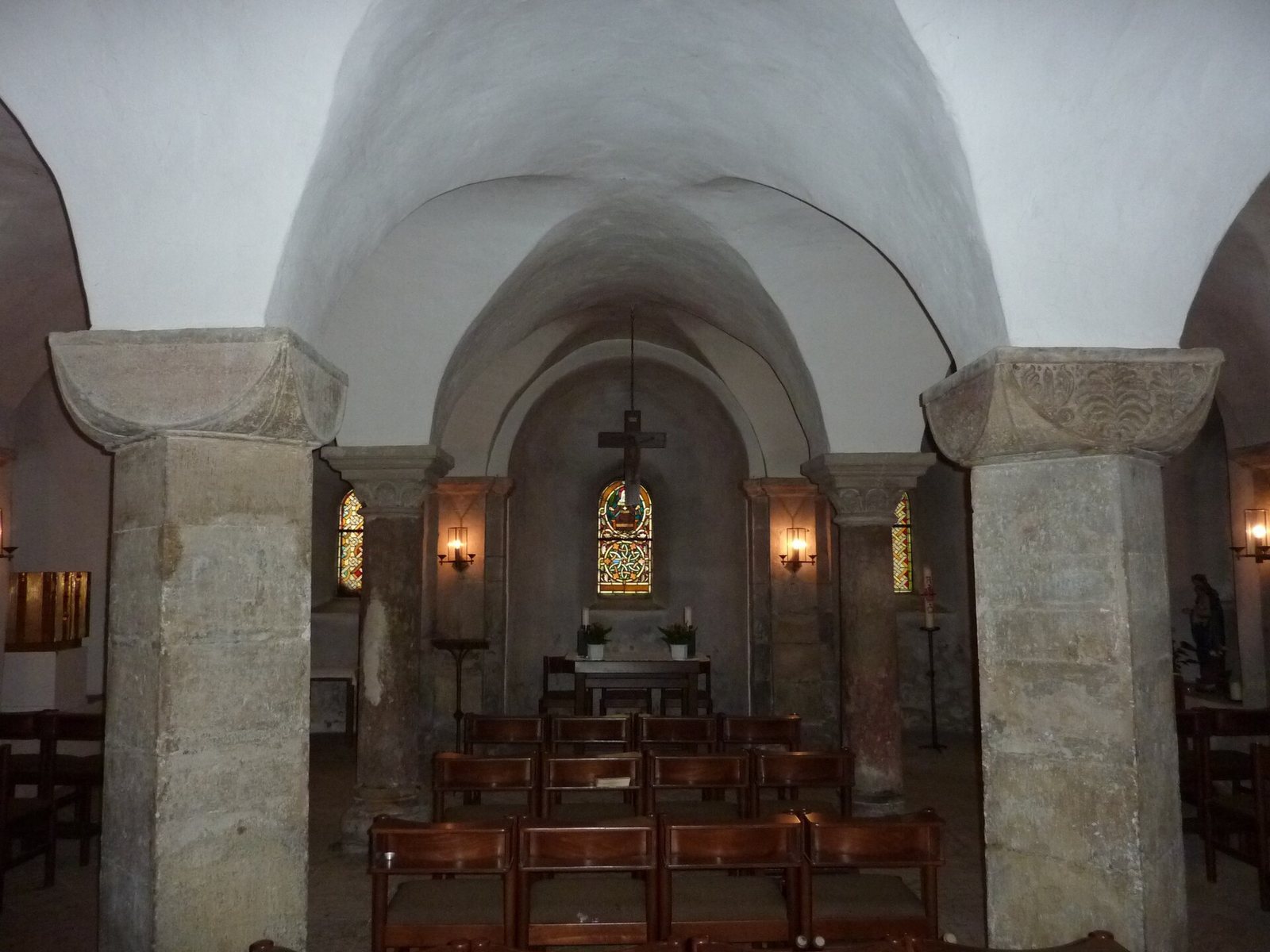
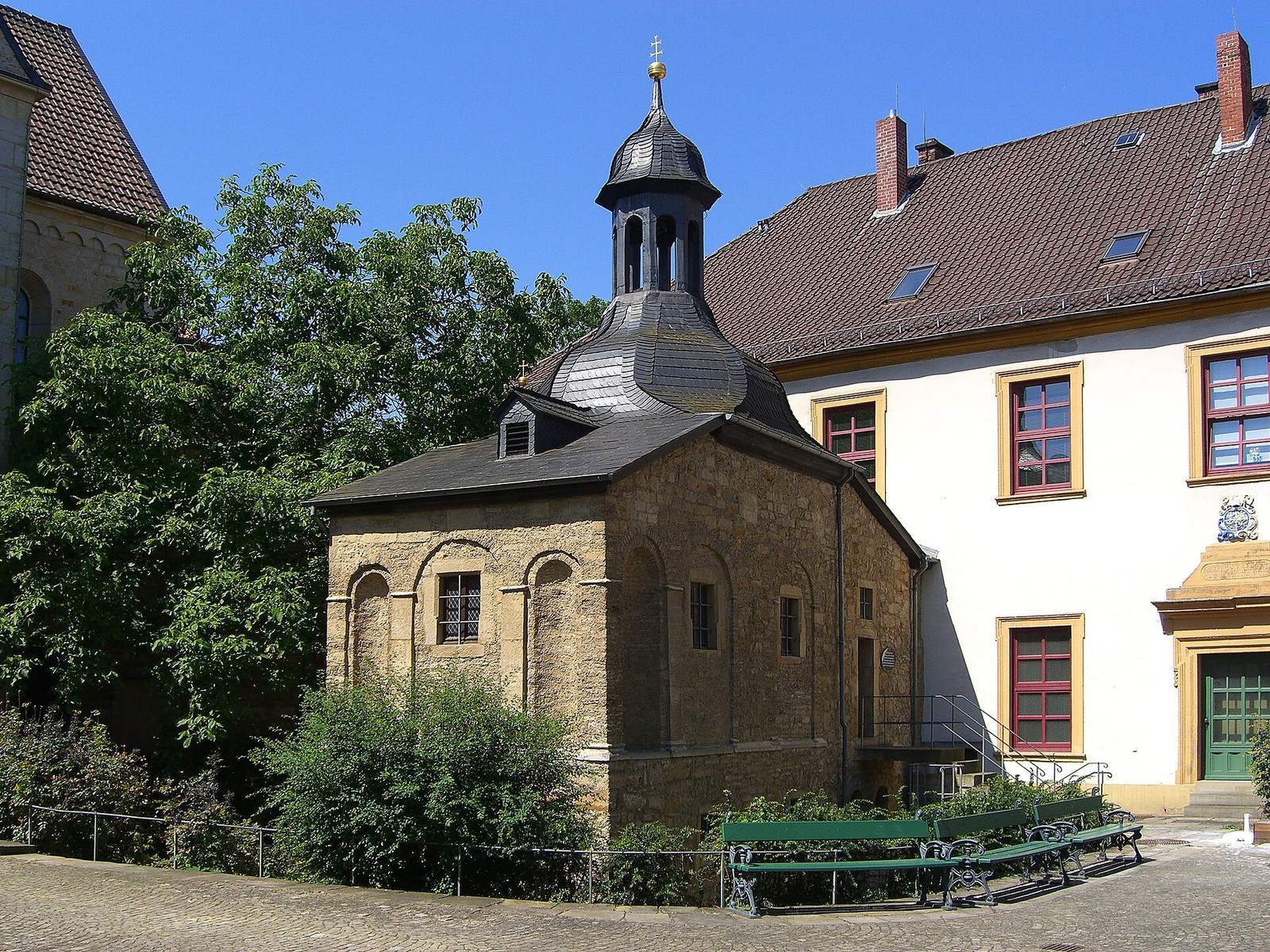
The surviving complex brings together Romanesque religious structures and buildings from the Baroque reconstruction. Its documented features include a courtyard chapel, a Romanesque crypt, and an 18th-century entrance arch.
Entrance and grounds
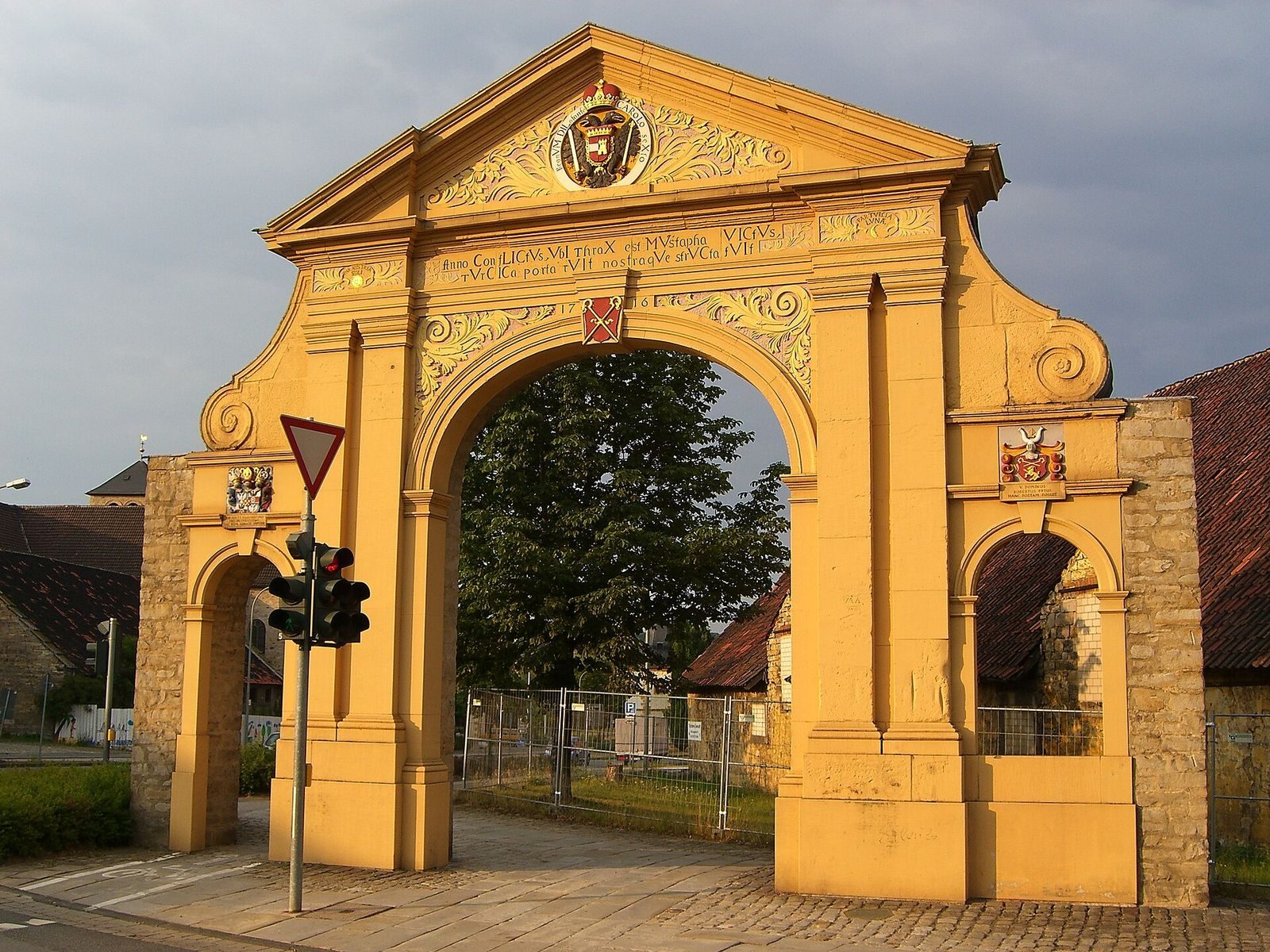
The Turkish Gate forms the abbey’s principal entrance. Built in the 18th century as a triumphal arch, it followed Prince Eugene of Savoy’s 1716 victory over Ottoman forces at the Battle of Peterwardein. Eugene was a Habsburg military commander. The abbot and the prior, a senior monastic officer, expressed their joy at the victory and the abbey’s connection to the emperor, who handled its secular affairs. An 18th-century dovecote, a building for housing pigeons, was also added to the complex.
Romanesque chapel and crypt
The Romanesque double chapel, a two-level chapel, stands in the courtyard and was retained during the later rebuilding. Its upper level is dedicated to John the Baptist, the prophet who baptized Jesus, and its lower level to Peter, an apostle and early leader of the Christian church. A Romanesque crypt, a chamber beneath a church or chapel, is another feature of the abbey.
Church interior and parish hall
The church’s chancel, the area around the altar, was redesigned in 1972 by German church artist Claus Kilian. An organ built by the Franz Breil organ-building company was inaugurated in August 1983. The church has nearly 300 seats.
A tradition holds that a crucifix was taken from Helmstedt to Werden in 1547. A copy made from synthetic material is now displayed in the parish hall.