Bonmont Abbey: A Cistercian Monastery in Switzerland
Site at a Glance
- Popularity
- Medium
- Country
- Switzerland
- Primary era
- Medieval
- Eras represented
- Medieval, Early Modern, Modern
- Civilizations
- Duchy of Savoy, Holy Roman Empire, Swiss
- Site type
- Religious
- Remains
- Monastery
On this page8 sections
History
Bonmont Abbey is a medieval monastery at Bonmont in Chéserex, Switzerland. Founded between 1110 and 1120, its community first followed the rules of the Benedictines, a Western Christian monastic order, before joining the Cistercians in 1131. The Cistercians were a reform movement that emphasized stricter observance of the Rule of St Benedict. The abbey church combines Romanesque and Gothic forms.
Foundation and Cistercian affiliation
The circumstances of the foundation are uncertain. Bonmont is first mentioned in 1123, when it depended on Balerne Abbey. The lords of Divonne, Walcher de Divonne and his brother Étienne de Gingins, gave land to the community, including the village of Pellens. Walcher later became a monk at Bonmont. One early donor accused the monks of destroying Pellens and expelling its residents. The settlement eventually ceased to exist.
At the request of its first abbot, Moïse, Bonmont joined the Cistercian Order in 1131 and affiliated with Clairvaux, a leading Cistercian abbey. Bonmont became Clairvaux’s eighth daughter abbey, meaning it was institutionally connected to and descended from Clairvaux, and the first monastery in Switzerland to join the Cistercians. Pope Innocent II confirmed the affiliation in a formal document dated 18 February 1132. Balerne adopted the same connection five years later. The change at Bonmont has been associated with Bernard of Clairvaux’s visit to the region.
Land, influence, and church affairs
Donations from regional lords enlarged the abbey’s holdings, which Pope Alexander III confirmed in 1164. In the first half of the 13th century, Bonmont gained rights of patronage over churches at Vich, Burtigny, Grens, Crassier, Colombier-sur-Morges, and Commugny. Such rights allowed an institution to propose clergy for a church. Bonmont also sought associated tithes, customary church levies often assessed on produce or income, and held agricultural and vineyard estates. By the second half of the century, its lands reached beyond Lake Geneva. Protected by the House of Savoy, a ruling dynasty with influence around the lake and western Alps, Bonmont became one of the region’s wealthiest monasteries.
Noble families were buried at the abbey. From the 12th to the 13th century, one chapel served as the burial place of the lords of Gex, a branch of the House of Geneva. In 1135, Bernard of Clairvaux recommended the monks of Bonmont and Hautecombe to Arducius of Faucigny, the newly appointed bishop of Geneva.
Bonmont also took part in wider church politics. During the Council of Basel, a 15th-century council concerned with church reform and authority, the abbot and the French cleric Nicolas Loiseleur went to London in 1438 to negotiate with King Henry VI of England. They sought to persuade him to withdraw support from Pope Eugenius IV and instead back the council’s members. In 1439, the council elected Felix V as an antipope, a rival claimant to the papacy.
Dissolution and secular administration
Bern’s conquest of Vaud and the Reformation brought the monastery to an end in 1536. The Reformation was a 16th-century movement for religious change that divided Western Christianity. Bonmont was secularized and confiscated, and an administrator took up residence there the following year. After the dissolution, the convent buildings served as a hospice for the poor. The abbey hospital continued to operate until 1672.
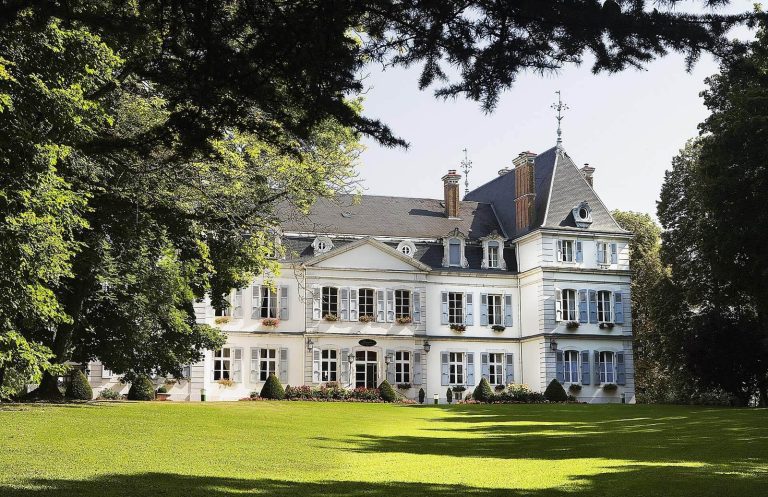
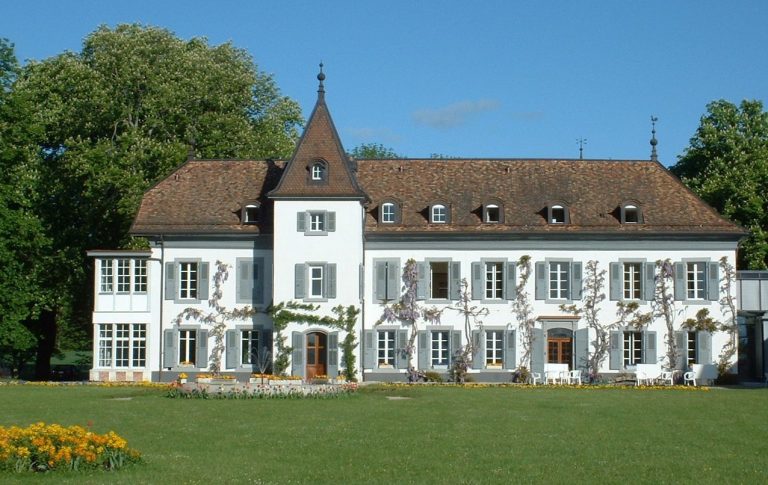
The abbey’s lands initially belonged to the Nyon bailiwick, an administrative district governed by a bailiff. In 1711, Bonmont became a separate bailiwick comprising Gingins, Chéserex, La Rippe, Chavannes-de-Bogis, and Bogis-Bossey. Its administrator exercised judicial rights, while the bailiff of Nyon retained higher authority over more serious matters. A castle was built on the former abbey grounds in 1738 to serve as the bailiff’s seat.
Bonmont became state property in 1798 and was privatized in 1802. The bailiwick’s communities entered the district of Nyon in the canton of Léman; that district became part of the canton of Vaud in 1803. The former abbey church received protection as a historic monument in 1942 and is recognized as a Swiss heritage site of national significance. The canton of Vaud took over the church in 1982 and carried out its restoration through 1995. The Bonmont Abbey Foundation was entrusted with its management.
Remains
Grounds and surviving fabric
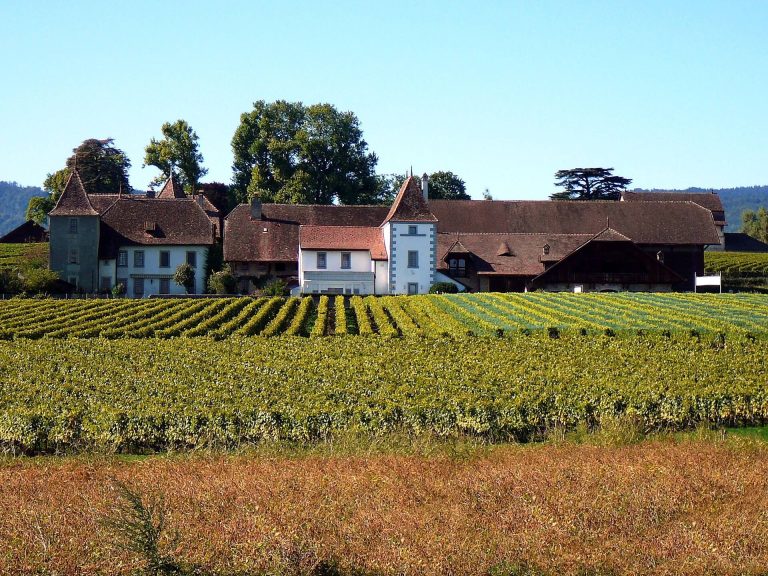
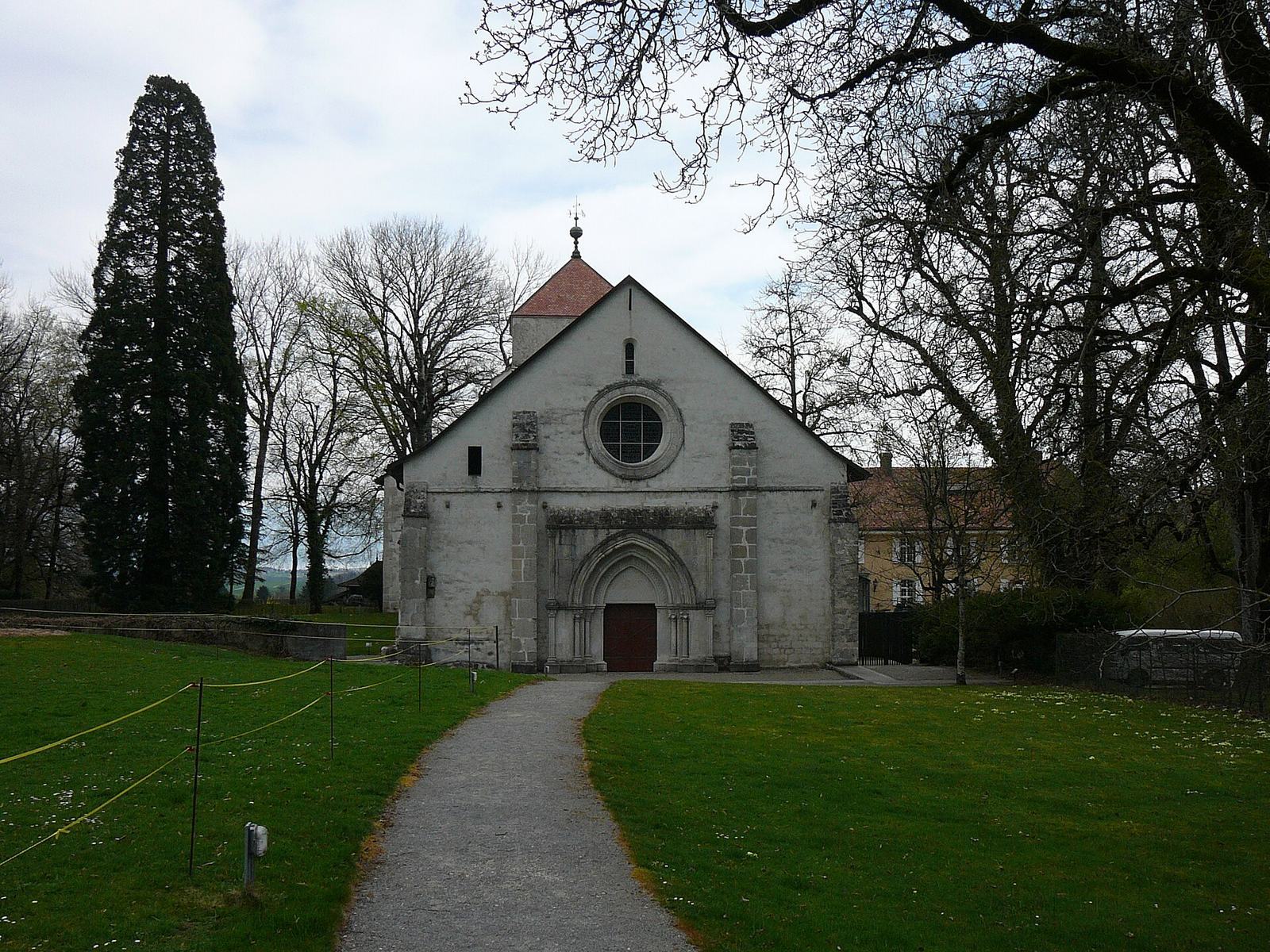
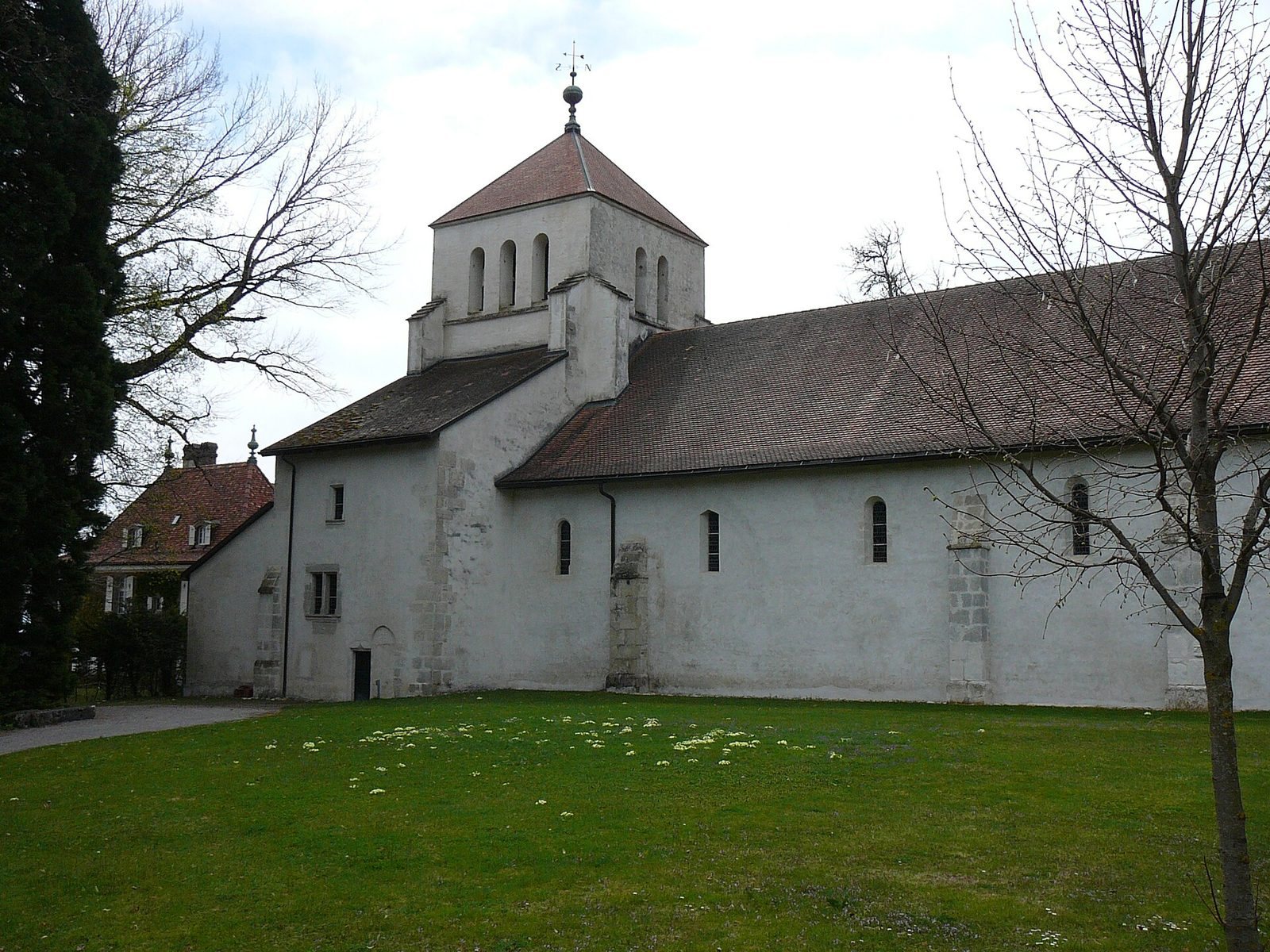
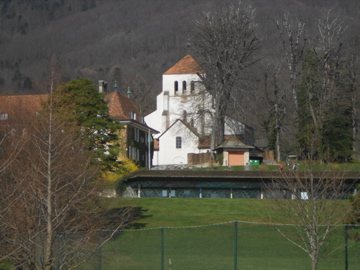
The church and castle stand within a golf course at Bonmont in Chéserex. The abbey church is the surviving monastic building; the castle remains privately owned. The church was initially designed with the restrained ornament associated with Cistercian practice.
Abbey church
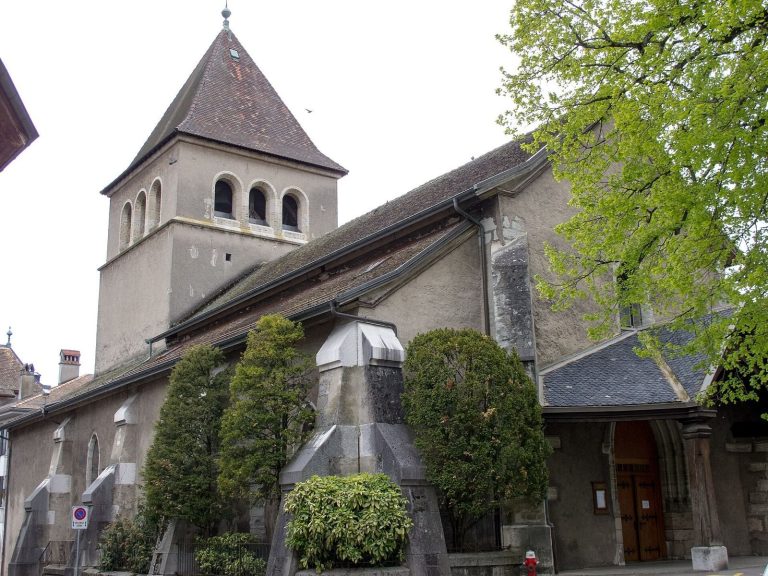
Construction of the church began in 1131 and continued into the late 12th century. It was consecrated in 1214 and dedicated to Mary. The convent buildings had also been partly completed by 1142. A substantial tower was added above the central crossing, where the nave and cross-arms meet, in 1488, replacing an earlier roof turret.
From the 14th century, paintings and colorful ornament decorated the interior, including floral patterns in ocher-yellow or black. Following the abbey’s dissolution, the wooden flooring was taken up and reused. The nave became a wine store on the ground floor and a granary above. A cheese factory occupied the north arm of the church, while a bakery used the south arm. A small chapel below the arch leading into the sanctuary remained in use. The interior was remodeled in 1761.
Two entrances were added in 1820. One, with a pointed arch, was placed in the fifth section between structural supports on the south side of the nave; the other, with a rounded arch, was set in the second section on the north side. A two-storey residence was also built above the former bakery.
Chapter house and burials
Excavations in 1952 revealed part of the chapter house, the room where the monastic community met for business, along with three funerary slabs. The remains of five abbots lay beneath the slabs, and a lead seal of Pope Martin V was found among them.