Dalmaz Fortified House: A Medieval Defensive Residence in France
Site at a Glance
- Popularity
- Medium
- Country
- France
- Primary era
- Medieval
- Eras represented
- Medieval, Early Modern
- Civilizations
- Duchy of Savoy, Holy Roman Empire
- Site type
- Military
- Remains
- Castle
On this page8 sections
History
Foundation and Dalmaz lordship
The Dalmaz Fortified House is a residence with defensive features in France. The Counts of Geneva, medieval rulers of the County of Geneva, probably built it in the late 13th or early 14th century to strengthen the area’s defenses.
By the late 14th century, the nobleman Pierre de Dalmaz lived at La Balme. The Dalmaz family appears to have held the lordship until the 18th century. Medieval forms of the name include Dalma, Darmaz, Darma, and Dalmat. Its origin is uncertain, as is whether the family named the house or the house gave its name to the family. A legend links the name to a sultan of Damascus captured during the Crusades, in which a member of the Dalmaz family was said to have taken part. The story does not establish the name’s origin.
Later ownership and fires
The lordship passed to the non-noble Rubelin family, which retained it until the Duchy of Savoy was occupied in 1792. During the 19th century, the fortified house was divided among several farming families. Domestic fires occurred in July 1865, in 1906, and in December 1985.
Remains
Setting and position
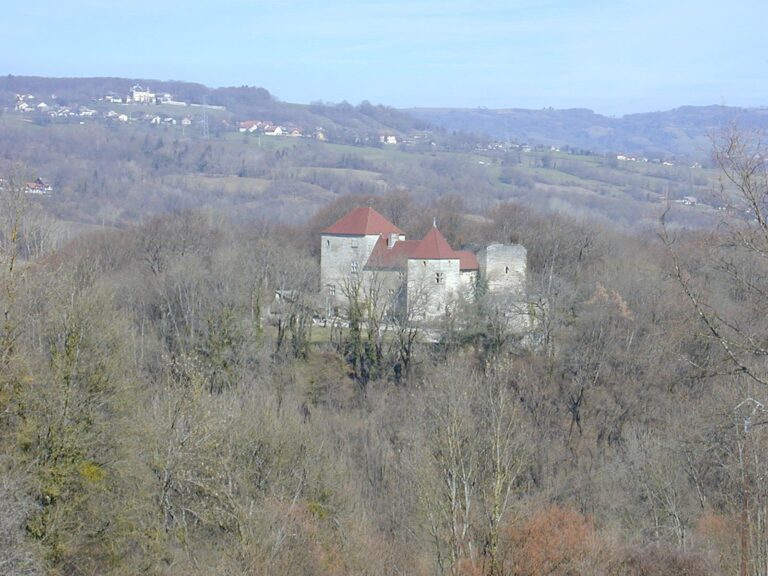
The house stands on high ground northeast of La Balme, opposite La Bâtie. Its position controlled the route between Annecy and Geneva, as well as a secondary route toward Cruseilles; the road to Geneva continued through Choisy and Cruseilles. The house forms part of an agricultural and residential cluster. It is the only survivor among three local castles or fortified houses.
Surviving structures
Residential block and towers
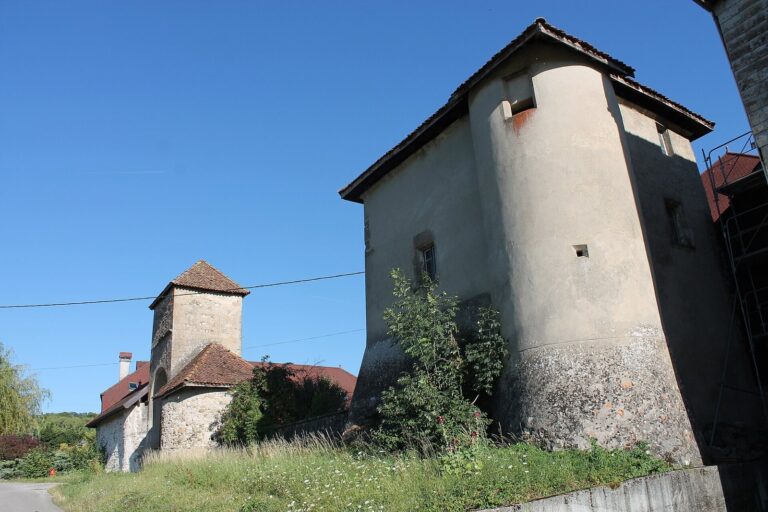
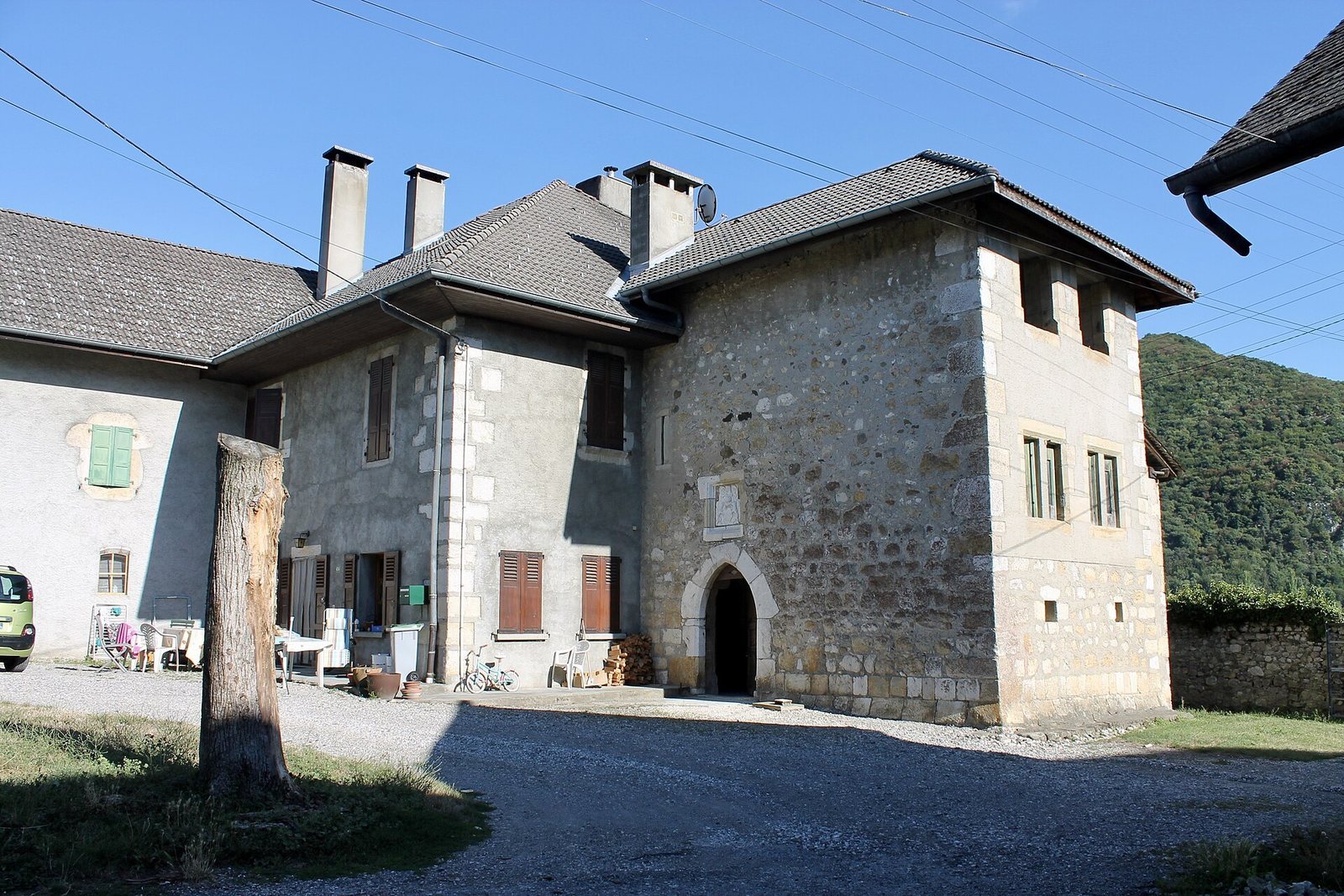
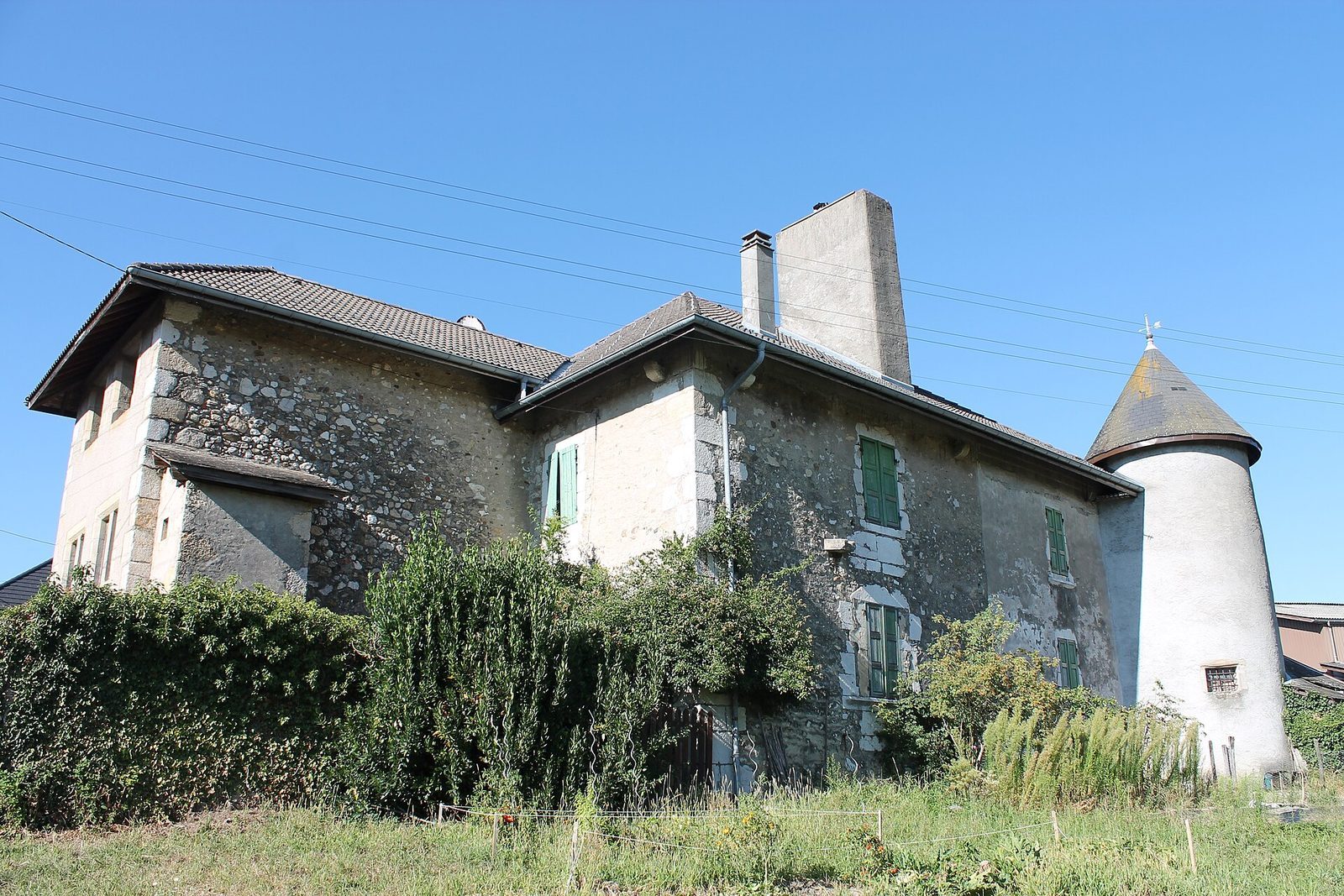
The surviving structures include a residential block, a stair tower, and a round tower. On the south façade, the stair tower stands to the left of the round tower. The north façade also includes the residential block and stair tower.
Stairs and doorway
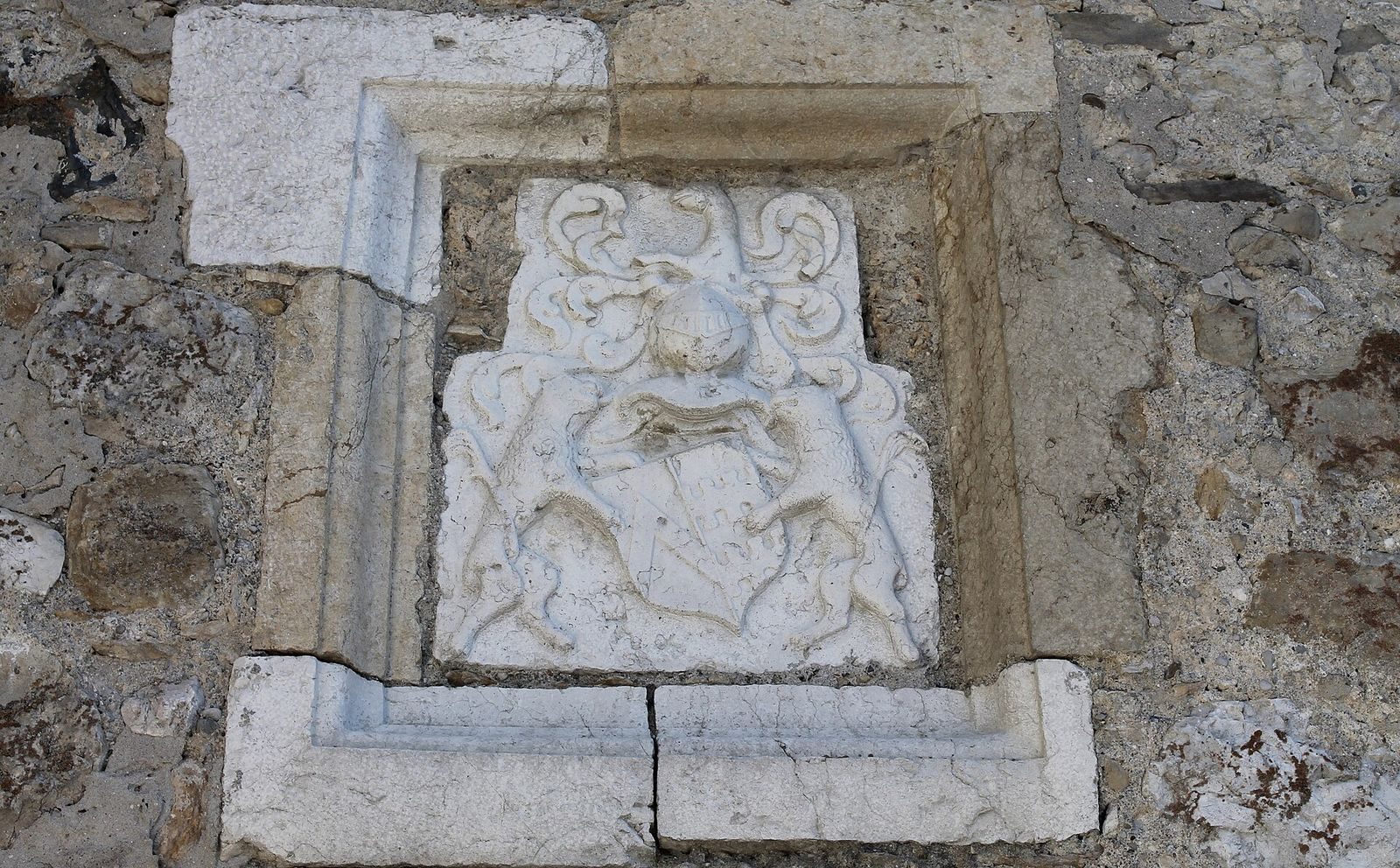
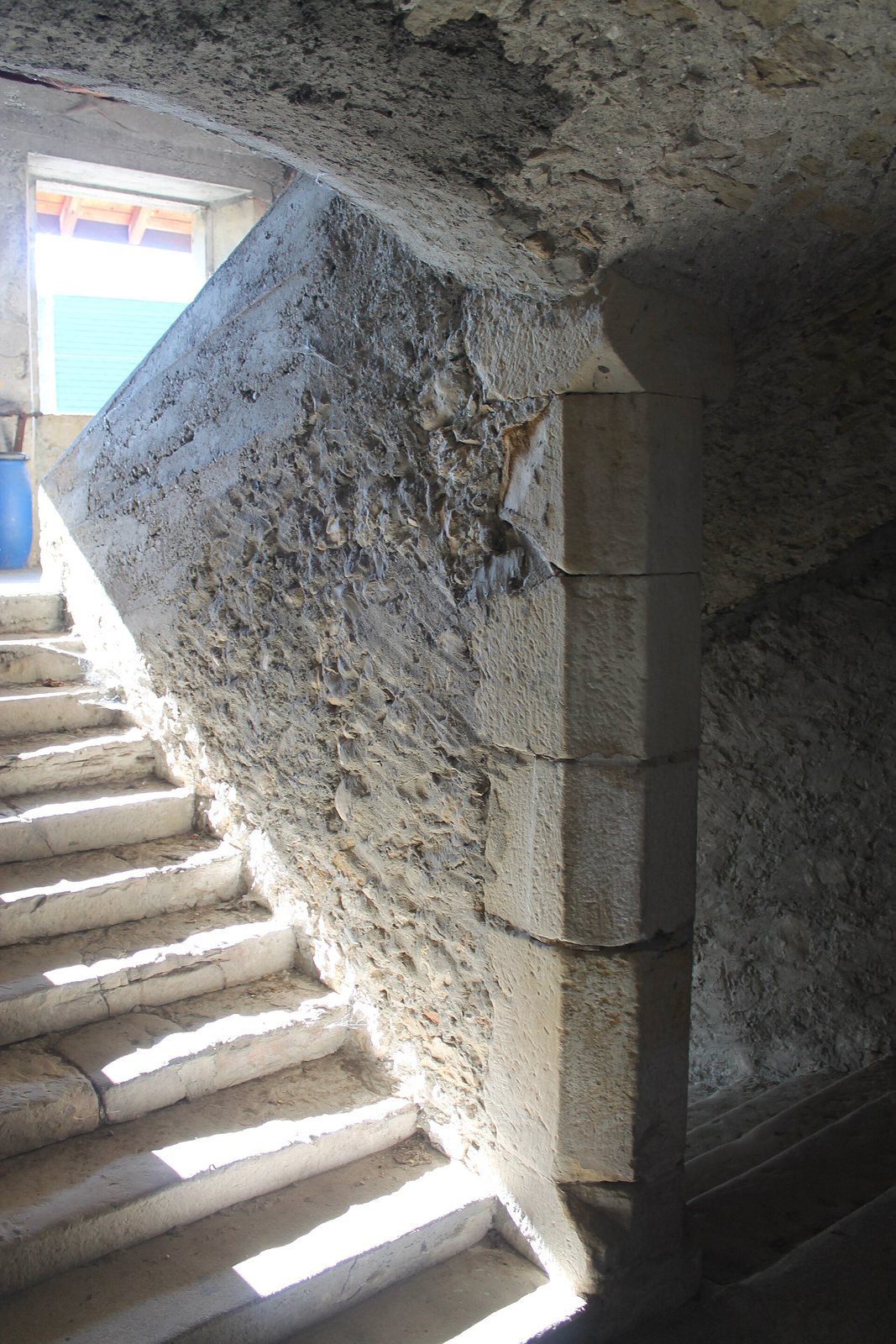
Italian-style Renaissance stairs survive within the complex. The Renaissance was a European cultural and artistic period that revived classical forms. Above a doorway, the Dalmaz arms date to the 16th century.