Dūr-Katlimmu: An Assyrian Provincial Center in Syria
Site at a Glance
- Rating
- 4.9
- Popularity
- Very Low
- Country
- Syria
- Primary era
- Iron Age
- Eras represented
- Bronze Age, Iron Age, Classical
- Civilizations
- Assyrian, Parthian, Roman, Seleucid
- Site type
- Settlement
- Remains
- City
On this page16 sections
History
Dūr-Katlimmu was an ancient settlement on the east bank of the lower Khabur River in Syria, occupied from the Late Chalcolithic, the final phase of the Copper Age, and later serving as an Assyrian provincial center.
Early settlement and Mitanni rule
The earliest known occupation was concentrated on the citadel and began in the 4th and 3rd millennia BCE. During the Middle Bronze Age, settlement also extended into Lower City I. Dūr-Katlimmu was occupied during the Mitanni period, when the Mitanni kingdom preceded Assyrian rule in parts of northern Mesopotamia.
An earlier Amorite settlement may have been called Dūr-Yagid-Lim and founded by a king of Terqa. The proposed connection between that settlement and Dūr-Katlimmu is uncertain, as is the suggestion that the name Dūr-Katlimmu developed from an older form, Dūr-Igitlim.
Assyrian provincial rule
Dūr-Katlimmu became a provincial center during the Middle Assyrian period, a phase of Assyrian history in the second millennium BCE. It was probably established in this role by the 13th century BCE, though the ruler responsible is not known with certainty. Shalmaneser I is credited with installing Ibašši-ilī, son of Adad-nirari I, as the founder of the local ruling dynasty. The city formed part of Assyria’s efforts to strengthen imperial control, develop urban centers, and increase agricultural production.
The city also served at times as a center for Hanigalbat, Assyria’s western territories. Assur-idin, a senior official known as a grand vizier and sometimes styled king of Hanigalbat, may have lived there. His father, Qibi-Assur, and son, Ili-pada, held the same office. All belonged to a collateral branch of the Assyrian royal family and helped govern the empire’s western regions. Dūr-Katlimmu may have served as their capital on some occasions.
Neo-Assyrian expansion and the empire’s fall
Assyrian control across much of the Khabur region weakened during the 11th and early 10th centuries BCE as Aramean communities expanded. Dūr-Katlimmu seems to have remained an Assyrian enclave, although control of the city during this period is uncertain. Assyria re-established control over the region in the 9th century BCE, and the city again became a provincial center.
During the Neo-Assyrian period, a phase of Assyrian imperial power in the first millennium BCE, the settlement expanded. A large irrigation canal supported cultivation and the growth of communities in the surrounding countryside. Aramaic-speaking inhabitants became increasingly prominent from the 7th century BCE, when the city was known as Magdalu, a name meaning tower or fortress.
The Assyrian Empire fell in 609 BCE after defeat by Babylonian and Median forces. Dūr-Katlimmu remained occupied at first, retaining Assyrian elites and administrative practices. Assyrian military and administrative remnants may also have persisted in the region for several years. The city was known as Magdalu after the empire’s collapse, and Roman-period usage gives the form Magdala.
Babylonian, Seleucid, and later occupation
The Red House remained in use into the early Neo-Babylonian period. Four tablets from the opening years of Babylonian rule under Nebuchadnezzar II, dated to 605 and 602/603 BCE, indicate that local families and administrative traditions continued after the Assyrian Empire fell. The building burned in the early 6th century BCE. The city then became less urbanized, with only scattered settlement known.
Occupation resumed during the Seleucid period, from the 3rd to the 2nd centuries BCE. From the 2nd century BCE, Dūr-Katlimmu lay in a borderland between the rival Roman and Parthian empires. A cemetery used during the later Parthian-Roman occupation went out of use in the 3rd century CE.
Coins from the Byzantine period, mostly recovered from graves and minted around 400 CE, indicate a later phase of use. This activity may have been connected with trade between the Byzantine Empire, the eastern Roman Empire, and the Sasanian Persian Empire. It is the last known occupation of the site, which appears to have been abandoned afterward.
Investigation, conservation, and damage
After local residents found a fragment of a stele during digging in 1879, the archaeologist Hormuzd Rassam investigated the site in the late 1870s. Max von Oppenheim visited in 1911, and Max Mallowan surveyed the area in 1934. Surveys in 1975 and 1977, followed by the discovery of Middle Assyrian tablets, led to excavations beginning in 1978. Hartmut Kühne directed 32 excavation campaigns through 2010, while German teams carried out geophysical surveys from 1999 to 2003.
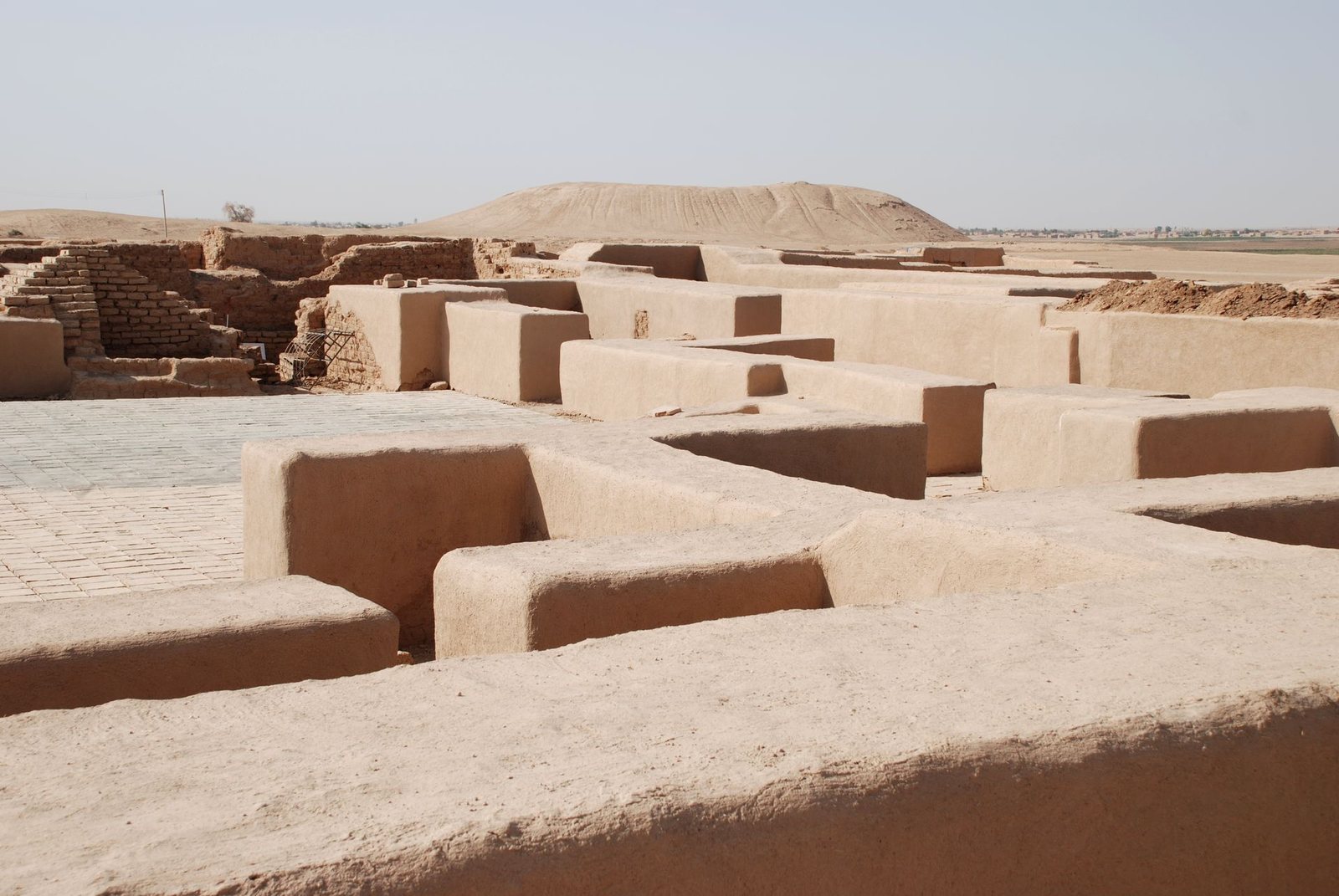
Conservation work in 2008–2010 sought to preserve the site and improve its accessibility. Extensive looting was visible in aerial images taken in March 2011, although when it occurred is uncertain. During the Syrian Civil War, looting damaged the site, and objects held at the Deir ez-Zor Museum were moved by the Syrian army to an unknown location. Excavations otherwise ceased after 2010 because of the conflict, though a French archaeological team reportedly worked at the site in July 2020.
A further fragment of the stele of Adad-nirari III, a Neo-Assyrian king, appeared on the art market and was seized by London police in 2014. Its provenance was uncertain.
Remains
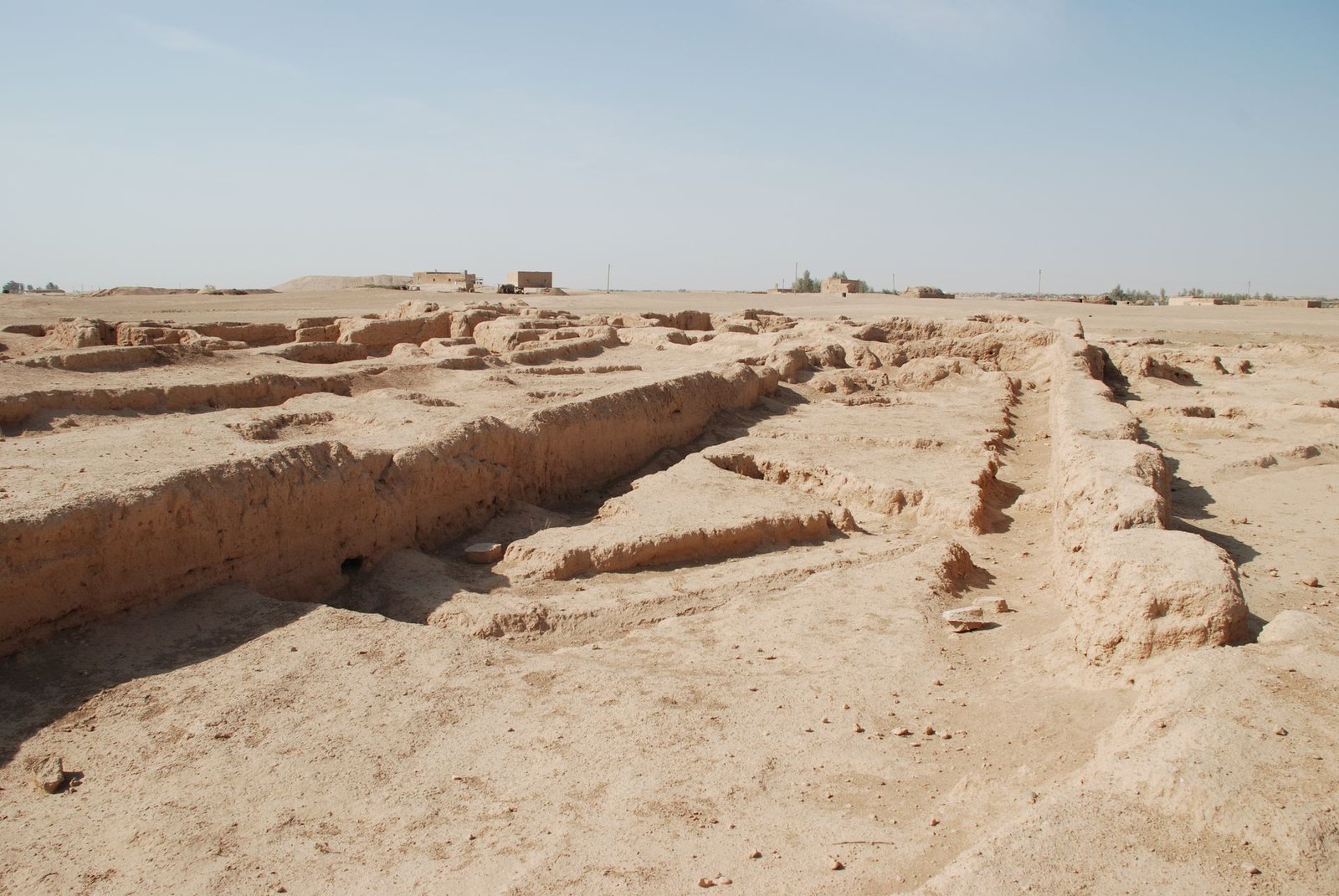
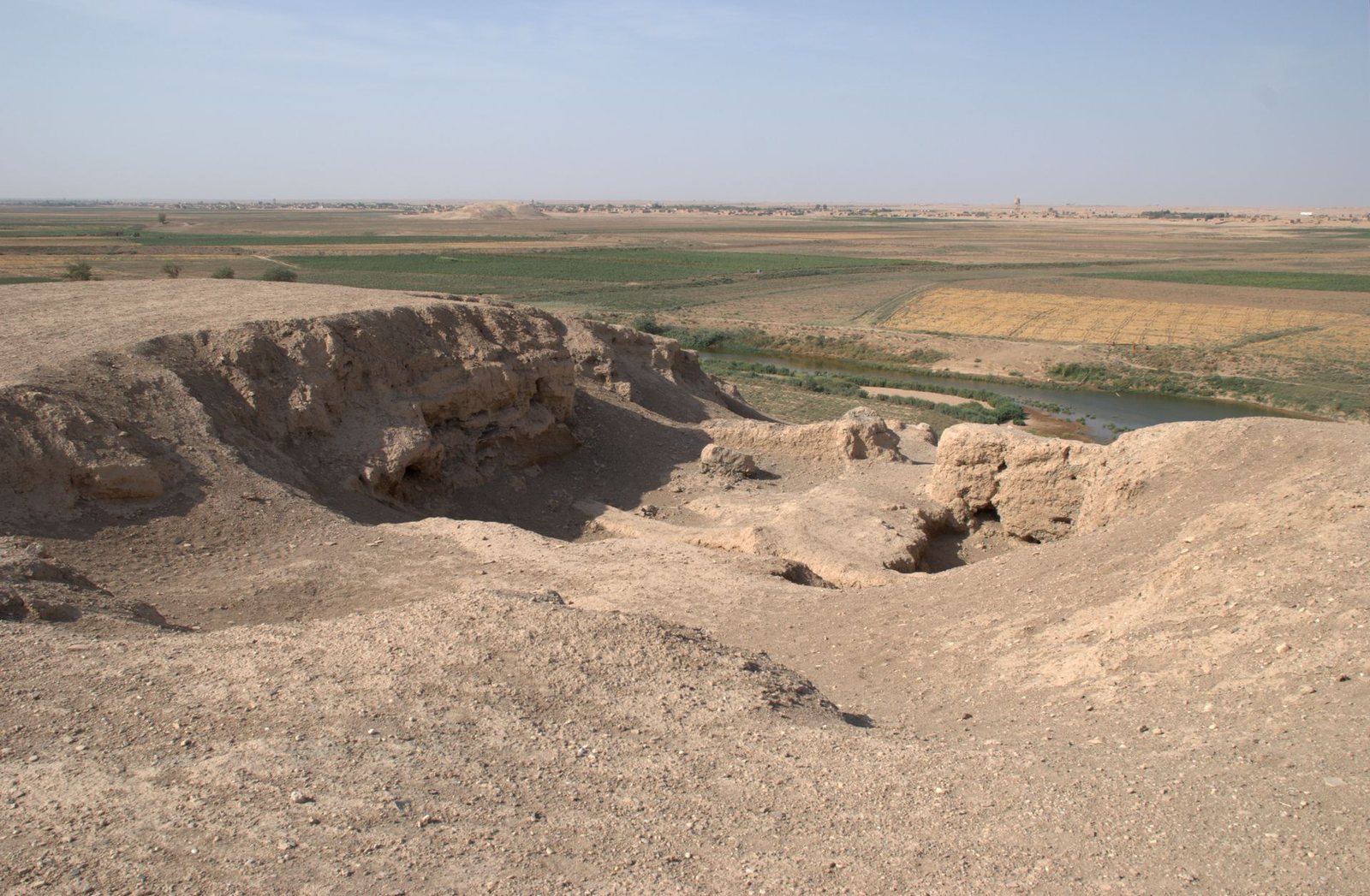
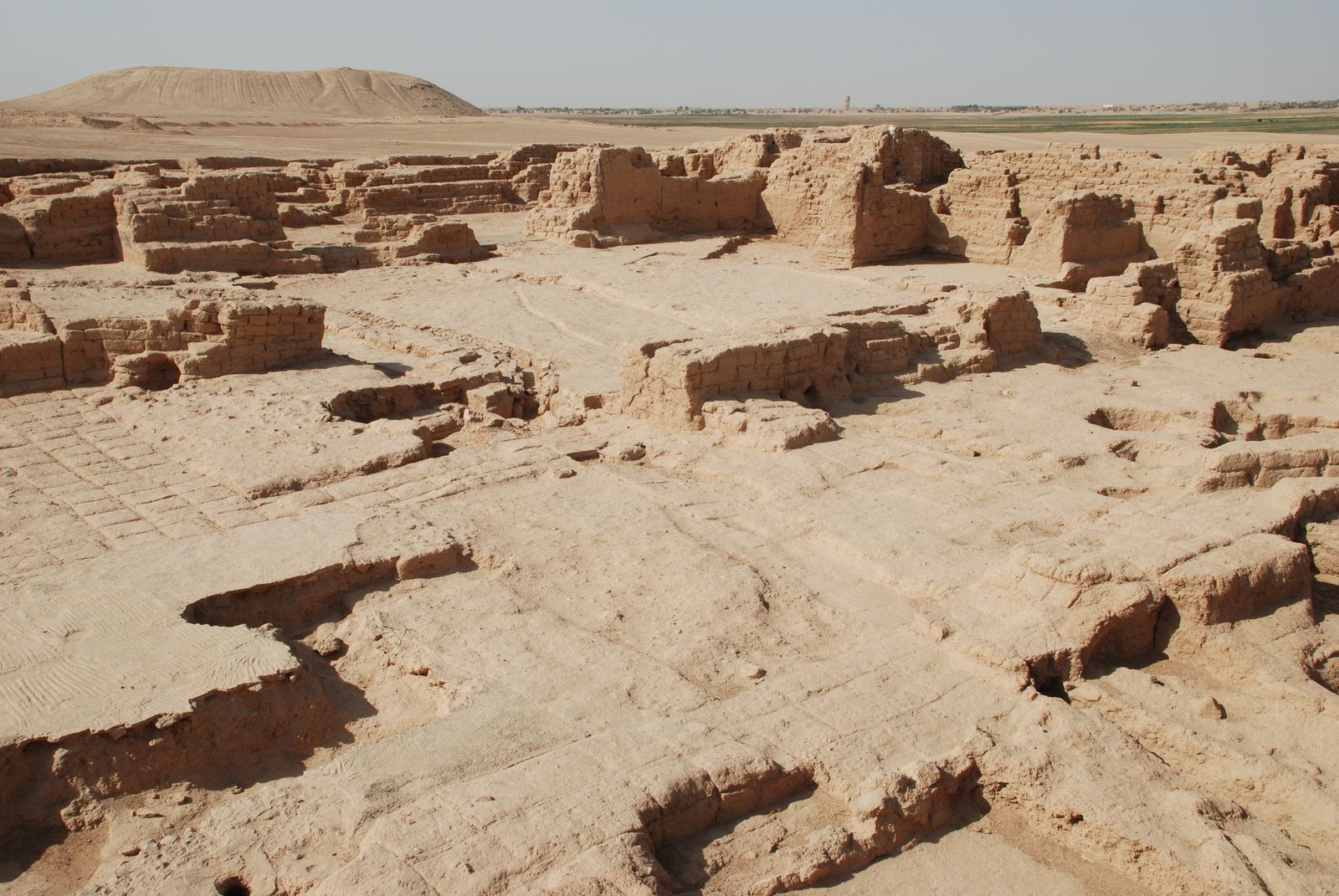
Dūr-Katlimmu occupied a limestone terrace beside the fertile, alluvial valley of the lower Khabur. The settlement comprised a southern citadel, Lower City I to its east and south, Lower City II to the northeast, and suburbs beyond the city walls. At its greatest extent, the settlement covered about 100 hectares, while the walled area enclosed about 60 hectares. In the Neo-Assyrian period, a wall roughly four kilometres long bounded the urban area, which was crossed by a canal.
Citadel and administrative buildings
Building P
On the citadel, Building P was a multi-room complex with long, narrow rooms used for administration, storage, and archives. More than 600 tablets were recovered there. Most concern administration under Shalmaneser I and Tukulti-Ninurta I, including property and livestock records, contracts, grain deliveries and storage, and the management of herds and agricultural estates. A group of 35 letters from a governor’s correspondence also describes administration in the Khabur region. The texts are written in cuneiform, a wedge-shaped writing system.
Temples
An excavated temple dates to the Middle Assyrian period. In the Neo-Assyrian city, the principal temple was dedicated to Salmanu. Tablets also refer to a Harbor of Salmanu, probably located on the Khabur.
Other citadel buildings
A possible governor’s palatial residence has been identified on the citadel. A separate building there, dated by its pottery to the Seleucid period, may have served an administrative purpose. Later residential remains are also present on the citadel, while occupation extended into Lower City I.
Elite residences in Lower City II
The Red House
The Red House was a palatial elite residence in the middle of Lower City II, covering about 5,400 square metres. Tablets place its use at approximately 630–600 BCE, and excavated layers show occupation in the early Neo-Babylonian period. Its archive was associated with Shulmu-sharri, a wealthy senior official linked to Ashurbanipal and his designated successor, Ashur-etil-ilani. Shulmu-sharri was responsible for the city’s garrison, which included chariot units and imperial intelligence services. The building yielded 550 Akkadian tablets in cuneiform and 40 Aramaic tablets.
Other elite residences
Four adjoining elite residences in the central part of Lower City II date to the 8th and 7th centuries BCE. Two further large residences, known as Buildings F and W, stood at the northeastern corner of the city wall.
Burials and inscribed stone
A Parthian-Roman cemetery occupied part of central Lower City II. Its graves included simple earth burials, mudbrick tombs, burials in jars, and sarcophagi. About 500 graves were excavated among the hundreds recorded. Grave goods included silver jewelry and gold earrings, most dating to the Middle Parthian period, around 70 BCE–70 CE; such objects became scarce in later burials.
The stele of Adad-nirari III is represented by fragments associated with Dūr-Katlimmu. The first was found at the site in 1879. Another fragment, later seized in London, had uncertain provenance.
Evidence of early settlement
Surface pottery and a section cut by a modern water channel reveal the earliest occupation on the citadel, dating to the 4th and 3rd millennia BCE. The channel section also indicates Middle Bronze Age occupation in Lower City I. Hittite pottery has likewise been found at the site.