Benington Castle: The History and Remains of a Medieval Castle
Site at a Glance
- Popularity
- Medium
- Country
- United Kingdom
- Primary era
- Medieval
- Eras represented
- Medieval, Modern
- Civilizations
- British, English
- Site type
- Military
- Remains
- Castle
On this page8 sections
History
Benington Castle is a medieval castle site near Stevenage in Hertfordshire, England. Peter de Valognes founded it in the late 11th or early 12th century as a motte-and-bailey castle, combining a raised mound with an enclosed courtyard.
Stone castle and medieval conflict
In 1136, Roger de Valognes built a stone castle with a keep, its principal fortified tower. In 1177, Henry II, king of England from 1154 to 1189, ordered the castle’s tower to be slighted, or deliberately damaged so its defences could no longer function effectively. Benington was among at least 21 castles subject to this order.
The castle was back in use by 1192. In 1212, it was destroyed after the English baron Robert Fitzwalter rebelled against King John, who ruled from 1199 to 1216.
Later changes and protection
Georgian construction and garden landscaping altered the medieval castle site. The remains have been protected as a scheduled monument since 1936, a legal designation for an archaeological site.
Remains
Castle site and surrounding features
Castle layout
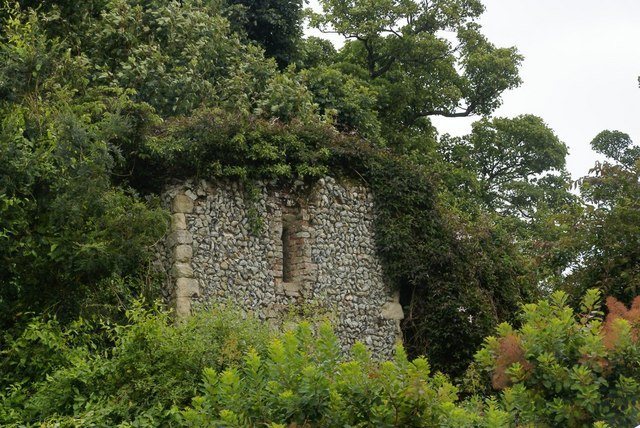
The castle began as a motte-and-bailey, with a raised mound and enclosed courtyard, and its later stone phase included a keep. Surviving castle remains include the keep’s foundations and earthworks.
Benington Lordship and garden structures
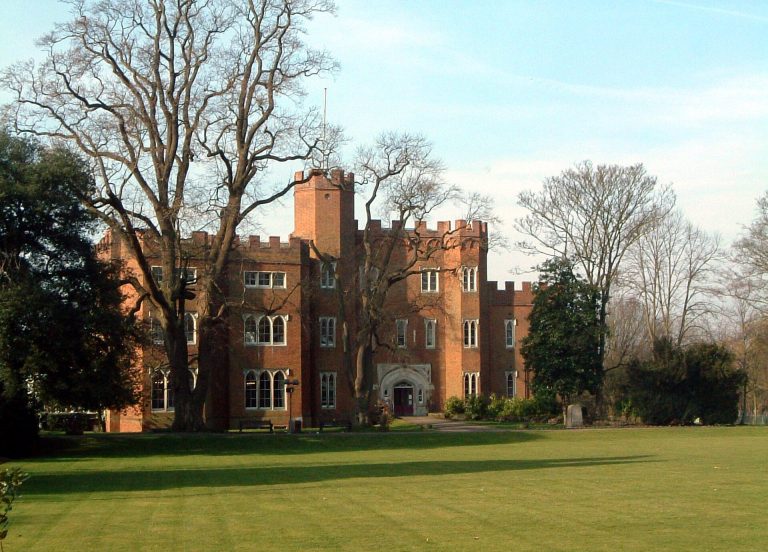
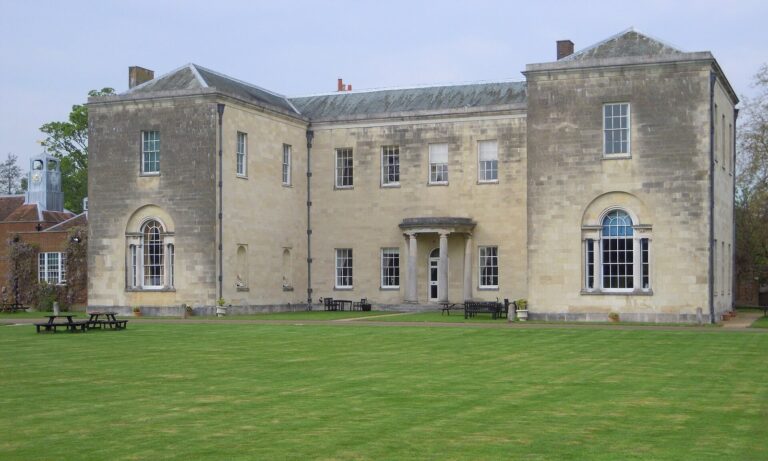
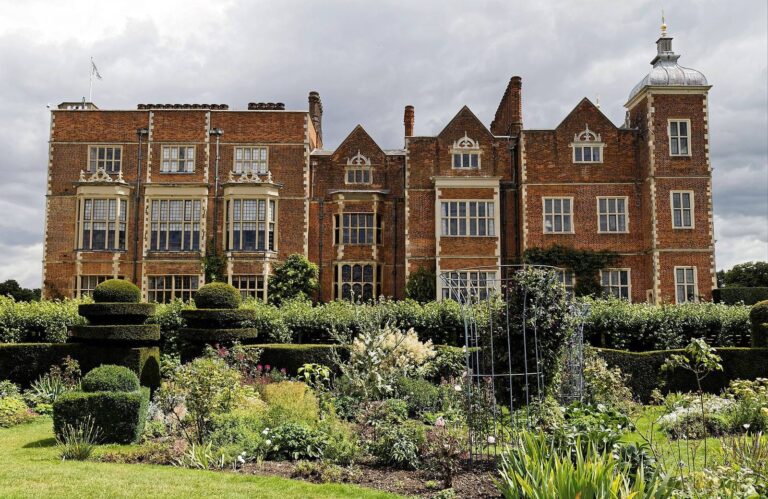
Benington Lordship, a Georgian house, occupies the castle site, and its gardens cover seven acres. In 1832, George Proctor added a neo-Norman gatehouse, a style reviving forms associated with Norman architecture, along with a summerhouse and a curtain wall, a defensive wall enclosing a fortified area.
Stream and St Peter’s Church
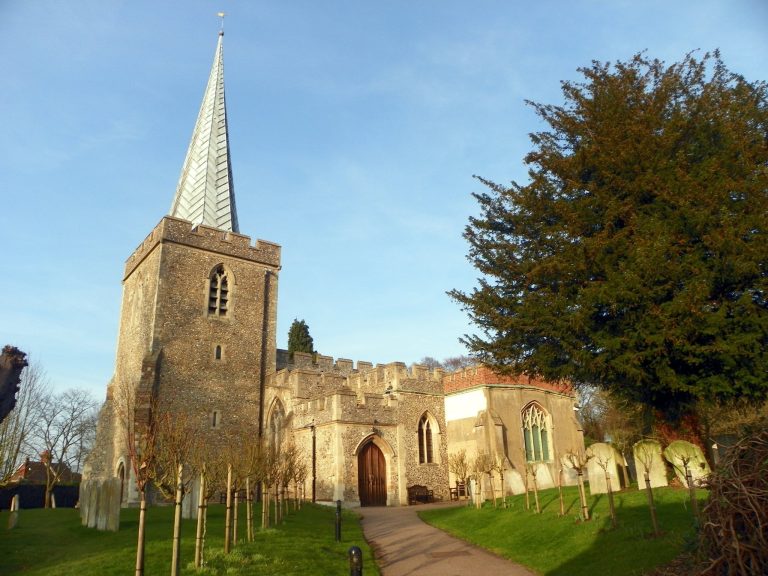
A dammed stream may have formed part of the medieval defences, although its present appearance reflects later landscaping. Nearby medieval St Peter’s Church stands within a bailey but outside the boundary of the ancient monument.