St Oswald’s Priory, Gloucester: An Anglo-Saxon Minster and Augustinian Priory
Site at a Glance
- Rating
- 4.3
- Popularity
- Medium
- Country
- United Kingdom
- Primary era
- Medieval
- Eras represented
- Medieval
- Civilizations
- Anglo-Saxon
- Site type
- Religious
- Remains
- Monastery
On this page5 sections
History
Foundation and royal patronage
St Oswald’s Priory, Gloucester, in the United Kingdom, began as a minster, a major early medieval church serving a wider district, in the late 880s or 890s. It was founded by Æthelflæd, ruler of Mercia and daughter of Alfred the Great, and her husband Æthelred, a senior Mercian official. Dedicated at first to St Peter, it became an important part of Gloucester’s new burh, or fortified settlement. An earlier St Peter’s Abbey had been established elsewhere in Gloucester around 679 by Osric, an early ruler of the Hwicce.
Both founders were buried at the minster. Æthelred died in 911 and Æthelflæd in 918. After West Saxon and Mercian forces raided Danish territory in 909, some of St Oswald’s bones were brought from Bardney Abbey in Lincolnshire. Oswald was a seventh-century king of Northumbria venerated as a Christian martyr, and the church was renamed in his honour.
Æthelstan, Æthelflæd’s nephew and later king of the English, had grown up at her and Æthelred’s court and became a major benefactor. A charter that survives only in a transcript made in 1304 records privileges he granted the minster in 925, recalling an earlier pledge to Æthelred. Æthelstan may also have commissioned grave covers for the founders’ tombs.
Pilgrimage and decline
Before work began on a new church at St Peter’s in 1089, St Oswald’s was Gloucester’s principal destination for pilgrims. Late in the reign of Cnut, the Danish king who ruled England in the early eleventh century, the priory’s estates were used to support a royal clerk.
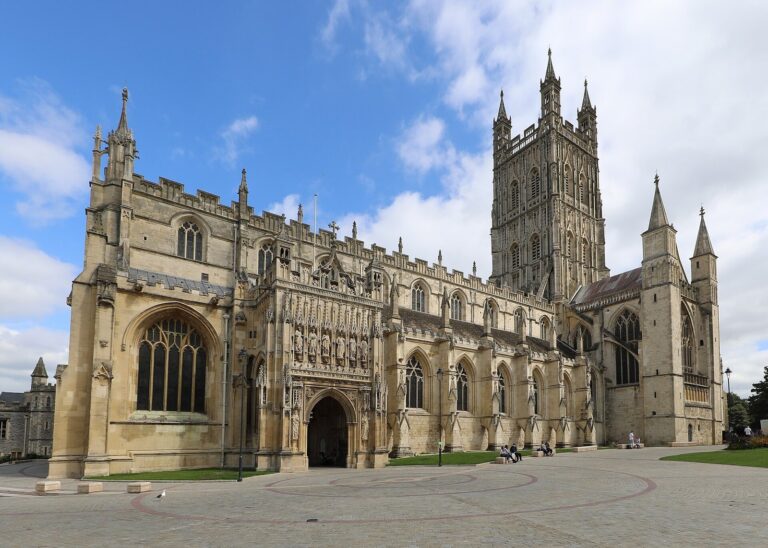
The priory declined as Serlo, the Norman abbot of St Peter’s, began an ambitious replacement church in 1089, later known as Gloucester Cathedral. With its income greatly reduced, St Oswald’s had become a small house of Augustinian canons regular, clergy who lived communally under a religious rule, by 1153.
Suppression and destruction
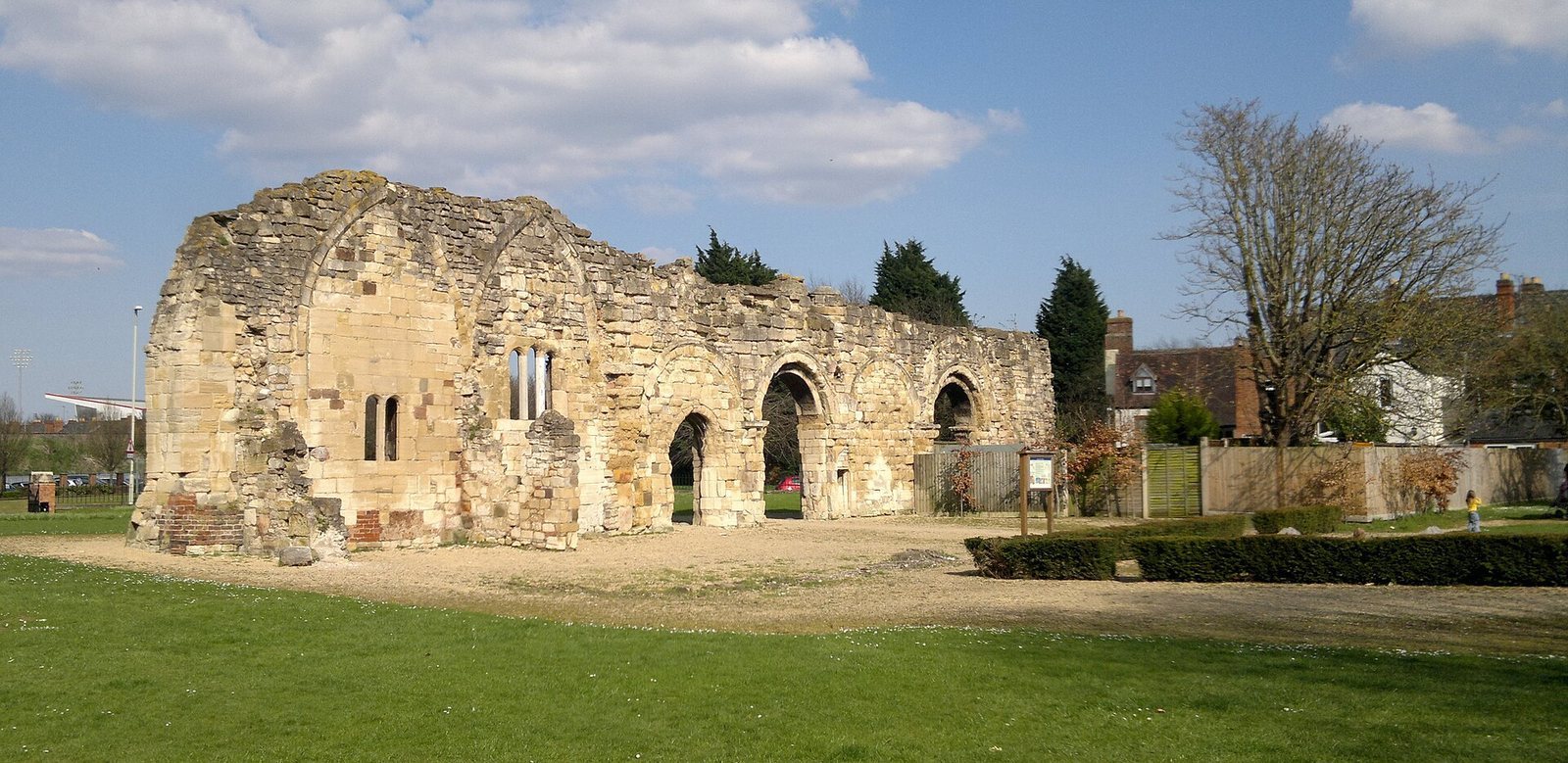
The priory was suppressed in 1536, and its church became the parish church of St Catherine. In 1643, during the English Civil War, a conflict between Royalists supporting Charles I and Parliament, Royalist forces besieged Gloucester. The church suffered severe damage and was largely demolished.
The ruins were listed at Grade I in 1952, the highest listed-building category in England, reserved for buildings of exceptional interest.
Remains
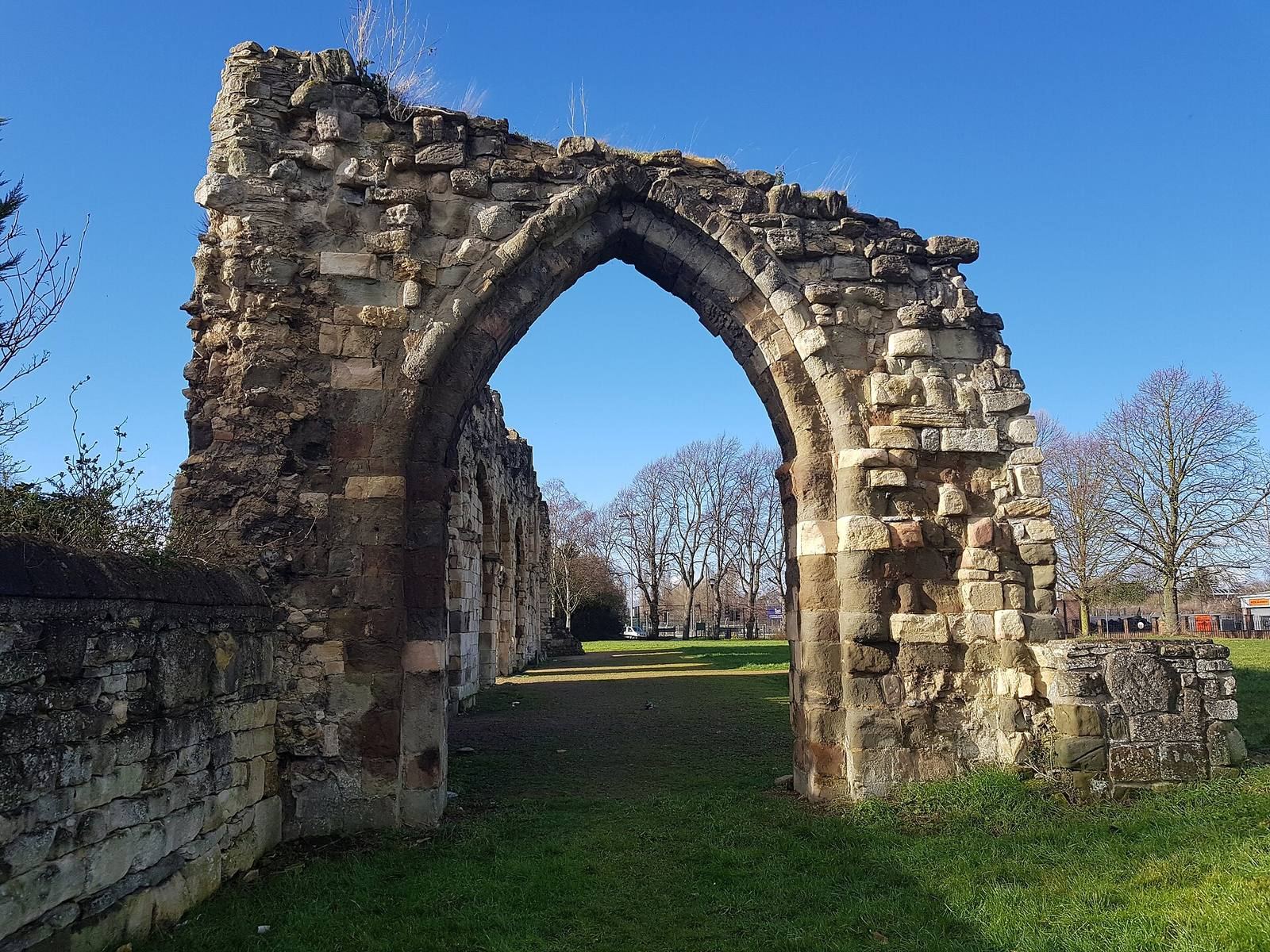
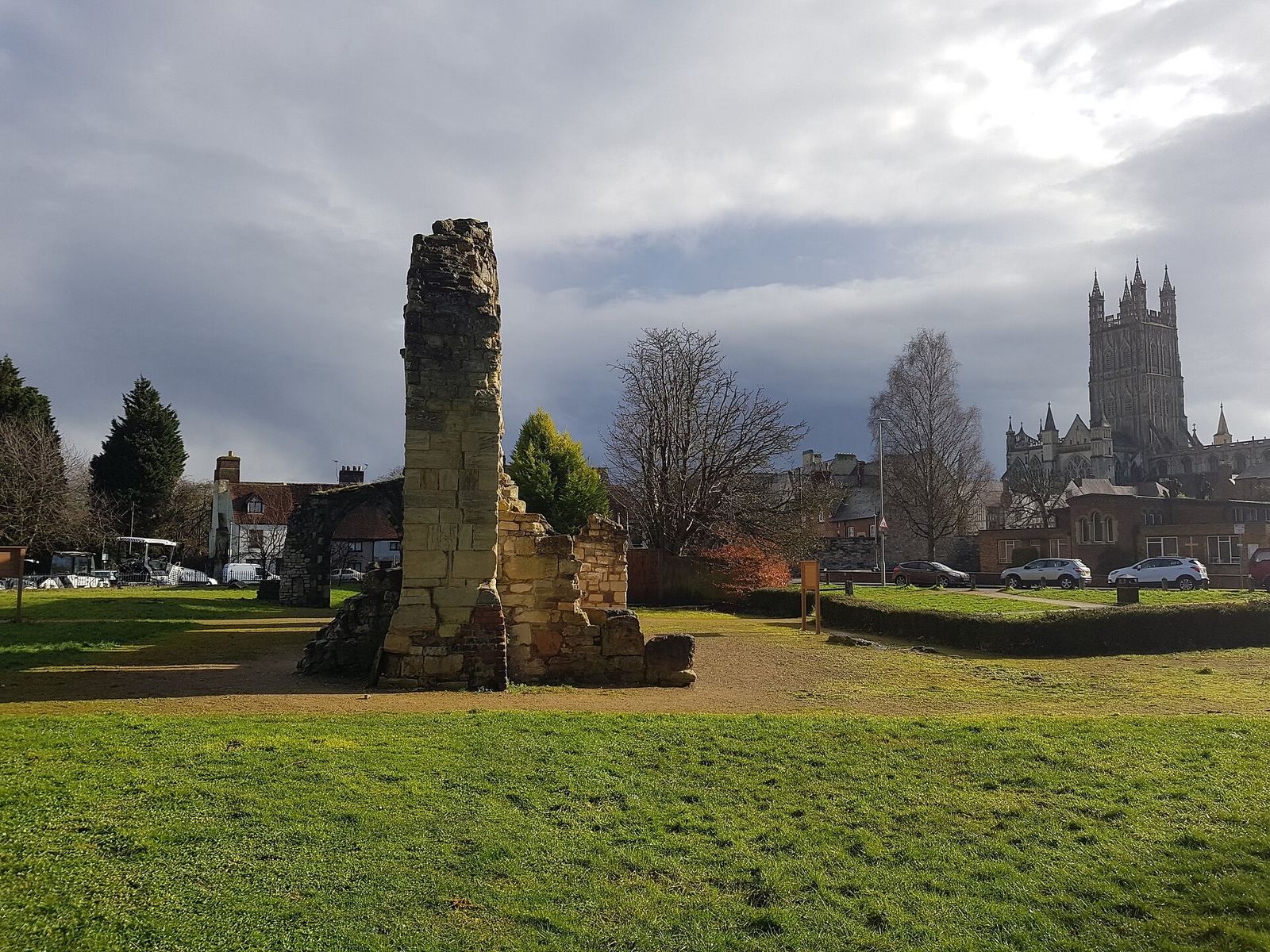
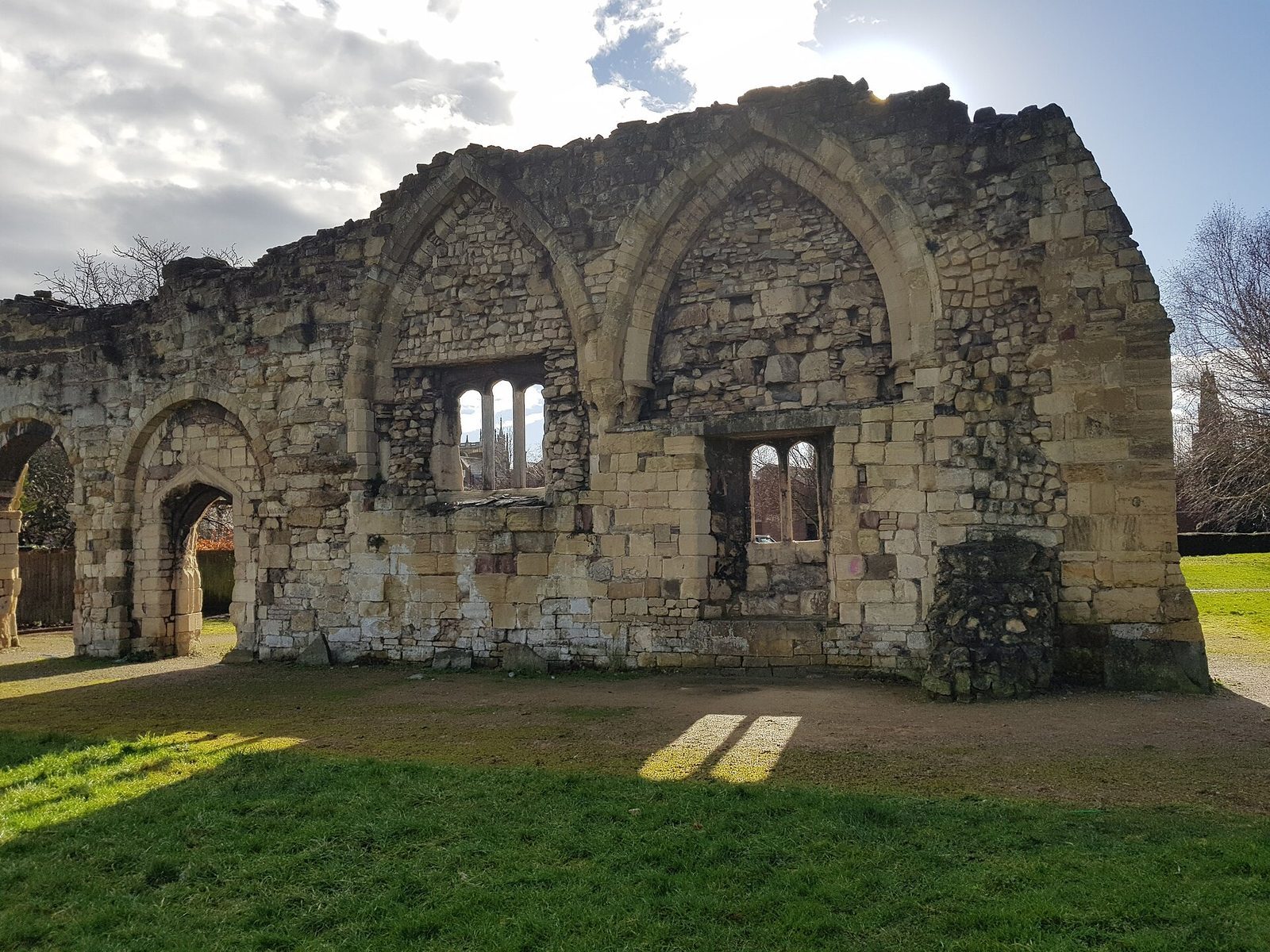
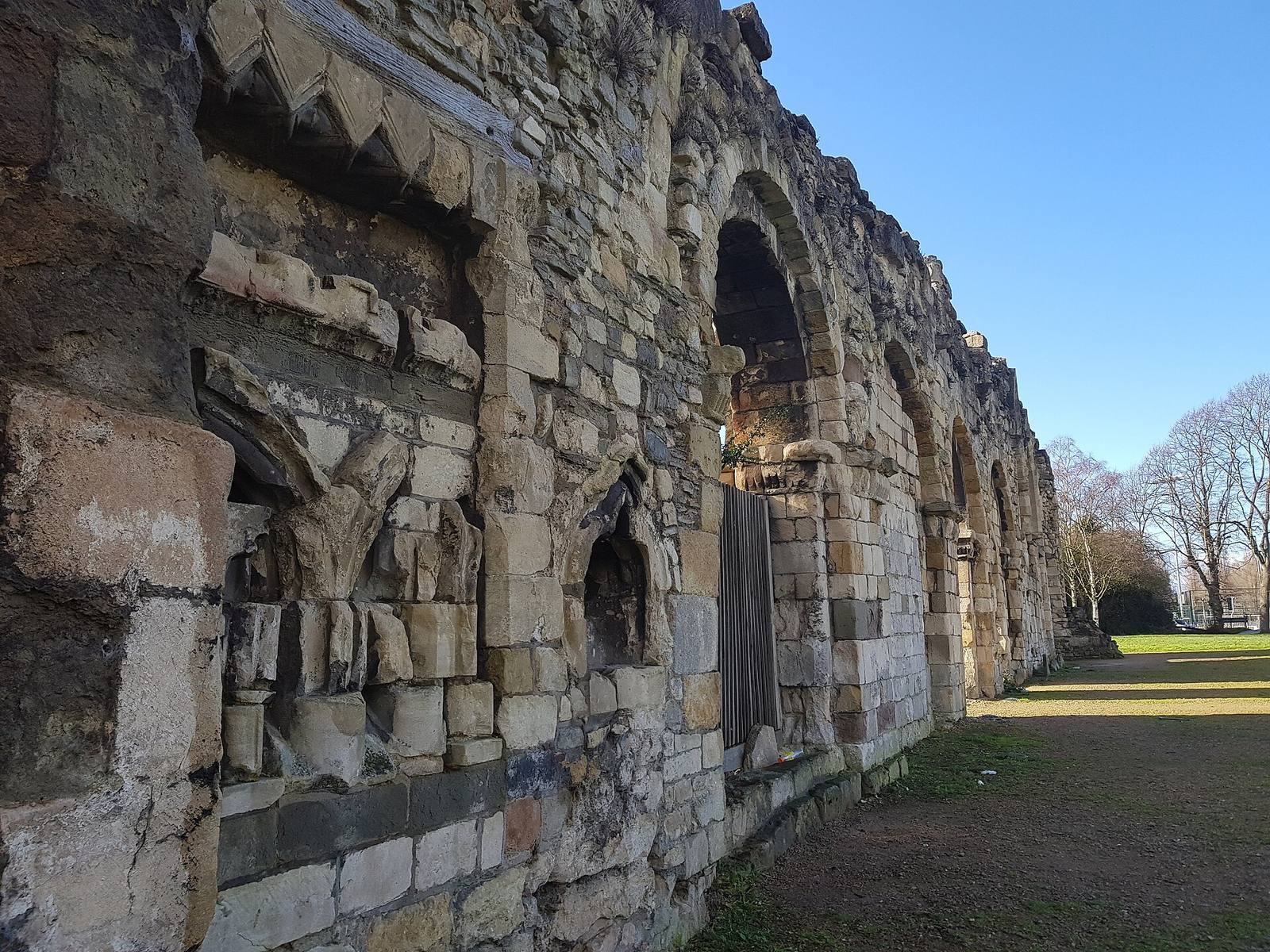
The priory survives as ruins that include a standing stone wall. The minster’s design appears to have been an exact copy of Winchester’s Old Minster, an Anglo-Saxon cathedral church. An Anglo-Saxon cross was found among the ruins, and some objects from the priory are held at Gloucester City Museum & Art Gallery.