Château Morange: A Neo-Classical Residence in Saint-Denis, Réunion
Site at a Glance
- Rating
- 4.5
- Popularity
- Very Low
- Country
- France
- Primary era
- Modern
- Eras represented
- Modern
- Civilizations
- French
- Site type
- Domestic
- Remains
- Elite Residence
On this page4 sections
History
Construction during Réunion’s prosperity
Château Morange is a mid-nineteenth-century Neo-Classical residence in Saint-Denis, Réunion, France. Prosper Morange initiated its construction around 1850, with F. Chatel as contractor. The residence was built during a period of prosperity on Réunion, when wealthy bourgeois families erected grand homes on the outskirts of Saint-Denis.
Prison use and later roles
As the sugar economy declined from the 1860s onward, Château Morange became a prison for notable exiles. Abdelkrim al-Khattabi, a Moroccan political and military leader who led resistance in the Rif against Spanish and French colonial forces, was imprisoned there from 1926 to 1929.
The building now serves as a youth and cultural center, providing community and cultural activities. On 13 December 2010, the château and its grounds, including the patio, park, outbuildings, and boundary fences, were registered under France’s legal heritage-protection system.
Remains
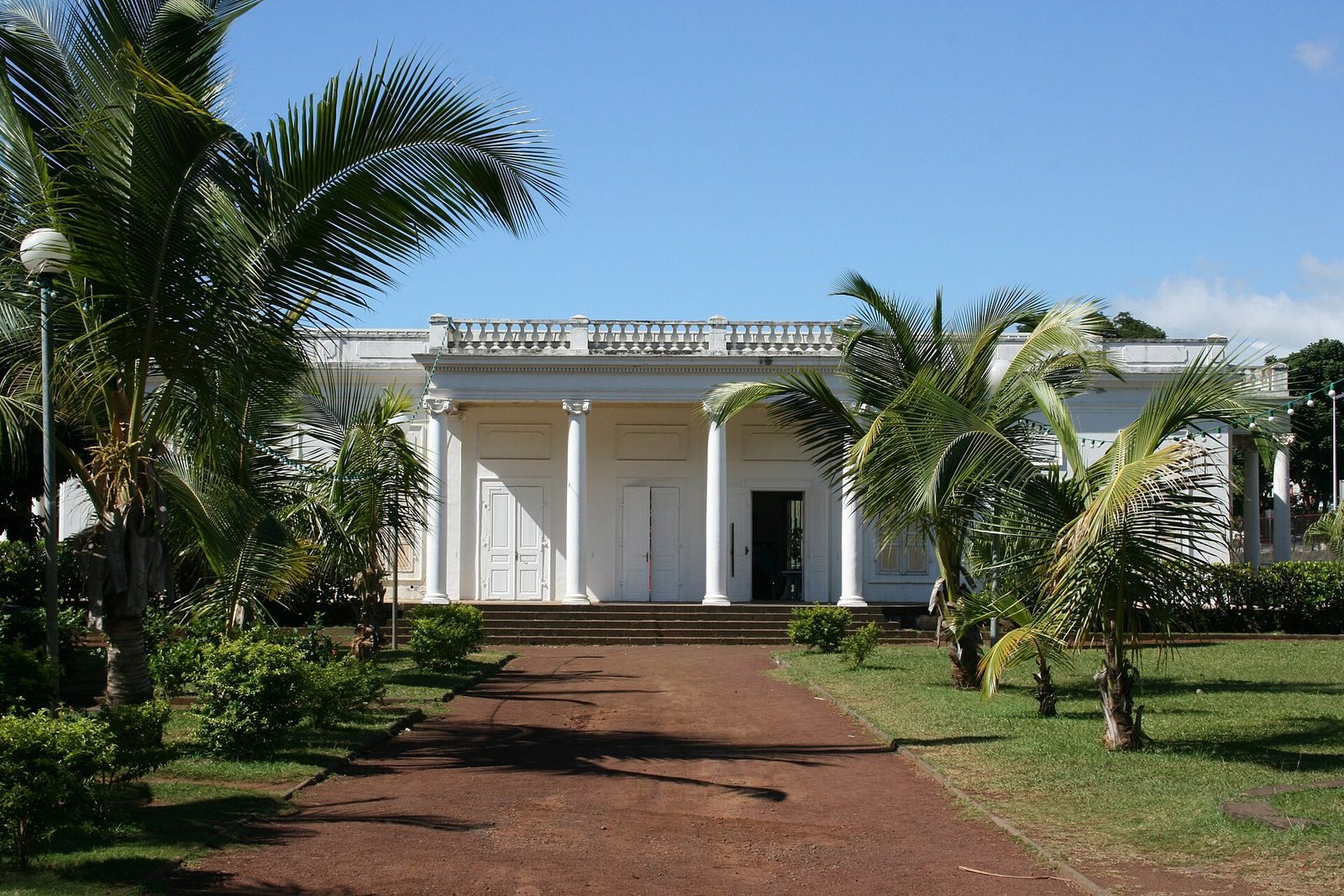
The property lies on boulevard Doret in the Camélias district, at the foot of the road toward St-François. Its ensemble comprises the château, a patio, a park, outbuildings, and boundary fences. The residence is Neo-Classical in style, drawing on forms associated with ancient Greek and Roman architecture.
The principal building consists of several sections, with a colonnaded portico forming a front verandah and an external staircase serving the building. Construction materials include lava, rough stone masonry, brick, and plaster, with metal roofing. A performance hall in the current cultural center seats 110.