John the Theologian Monastery: An Orthodox Monastic Community in Cherdyn, Russia
Site at a Glance
- Popularity
- Medium
- Country
- Russia
- Primary era
- Early Modern
- Eras represented
- Early Modern
- Civilizations
- Russian
- Site type
- Religious
- Remains
- Monastery
On this page9 sections
History
The John the Theologian Monastery is an Orthodox monastery in Cherdyn, Russia, probably founded in 1462 by Jonah, Bishop of Perm. It belongs to the Solikamsk Diocese, a territorial church district overseen by a bishop.
Foundation and royal privileges
In the sixteenth century, Ivan IV, also known as Ivan the Terrible, visited the monastery. In 1580 he granted it a charter providing broad independence in economic and spiritual affairs. Later rulers confirmed the charter in 1586, 1600, 1608, 1615, and 1624.
Closure and parish use
In 1784, reforms under Empress Catherine II, which transferred church lands to state control, led to the monastery’s closure. Its estates passed to the Trinity-Sergius Lavra, an important Orthodox monastery, while its buildings were sold and its churches assigned to parish use. The Church of John the Theologian was closed.
Reopening and twentieth-century closures
Following a petition by Palladius, Bishop of Perm, the monastery reopened in 1910 as a women’s community. The church had been attached to the Epiphany Church until that year, and was transferred to the monastery from 1911 to 1919. In 1918, Abbess Rufina (Kokoreva) and the nuns left east with the White Army, forces that opposed the Bolsheviks during the Russian Civil War. The monastery closed in 1919, its nuns dispersed, and its churches again served parish communities.
The monastery was closed during the 1939–1946 period. The church closed in 1940 and was used by the local museum; it returned to religious use in 1947 and remained open thereafter.
Re-establishment
On September 13, 2003, the monastery marked its 540th anniversary with a liturgy celebrated by Irinarkh, Bishop of Perm and Solikamsk. It was the first liturgy there in many centuries. In 2004, the Holy Synod, the Russian Orthodox Church’s governing body, re-established the monastery as a men’s community, with Gerasim (Gavrilovich) as abbot. The monastery is a regional cultural-heritage site, and reconstruction work must be coordinated within its protected zone.
Remains
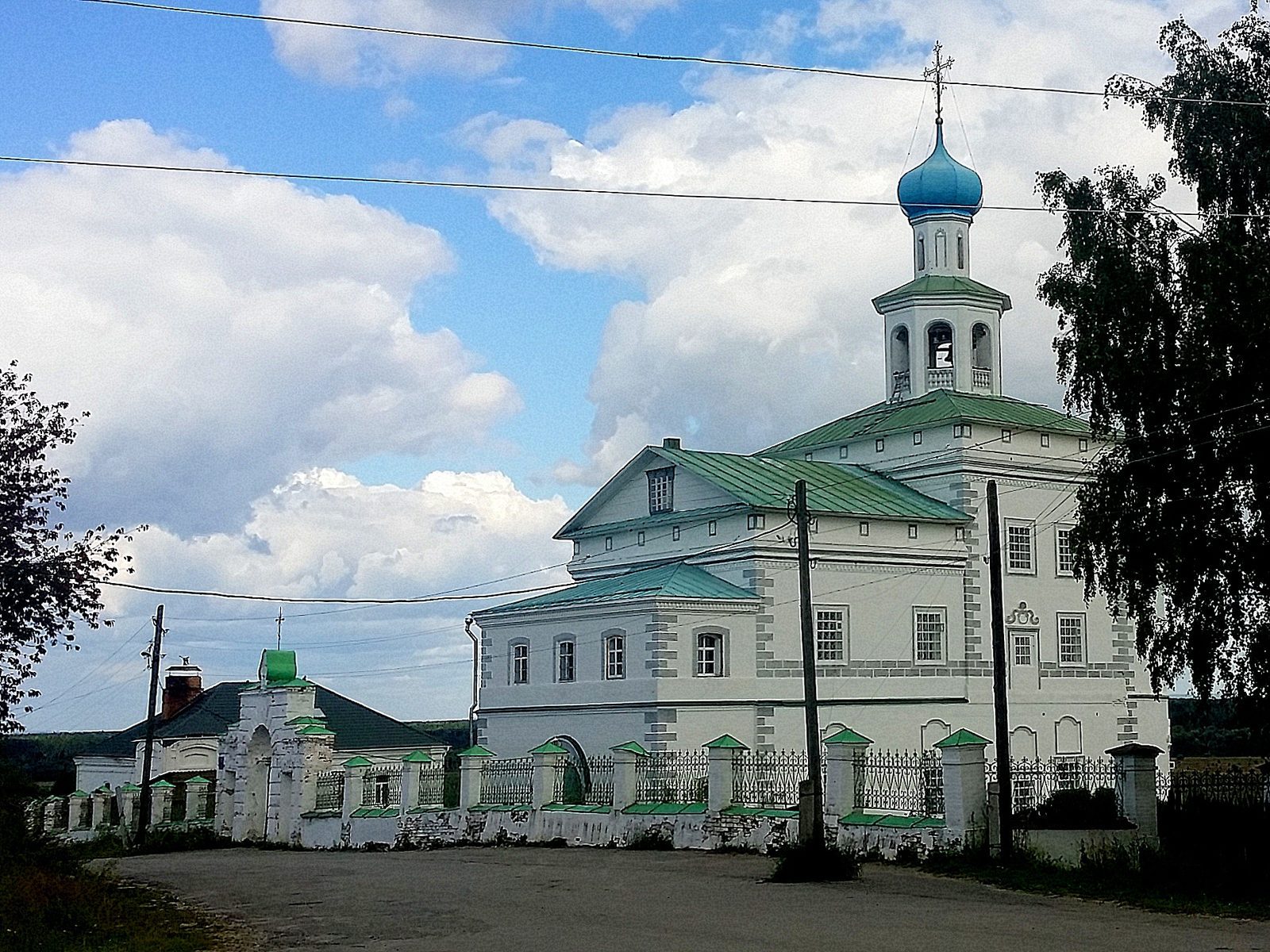
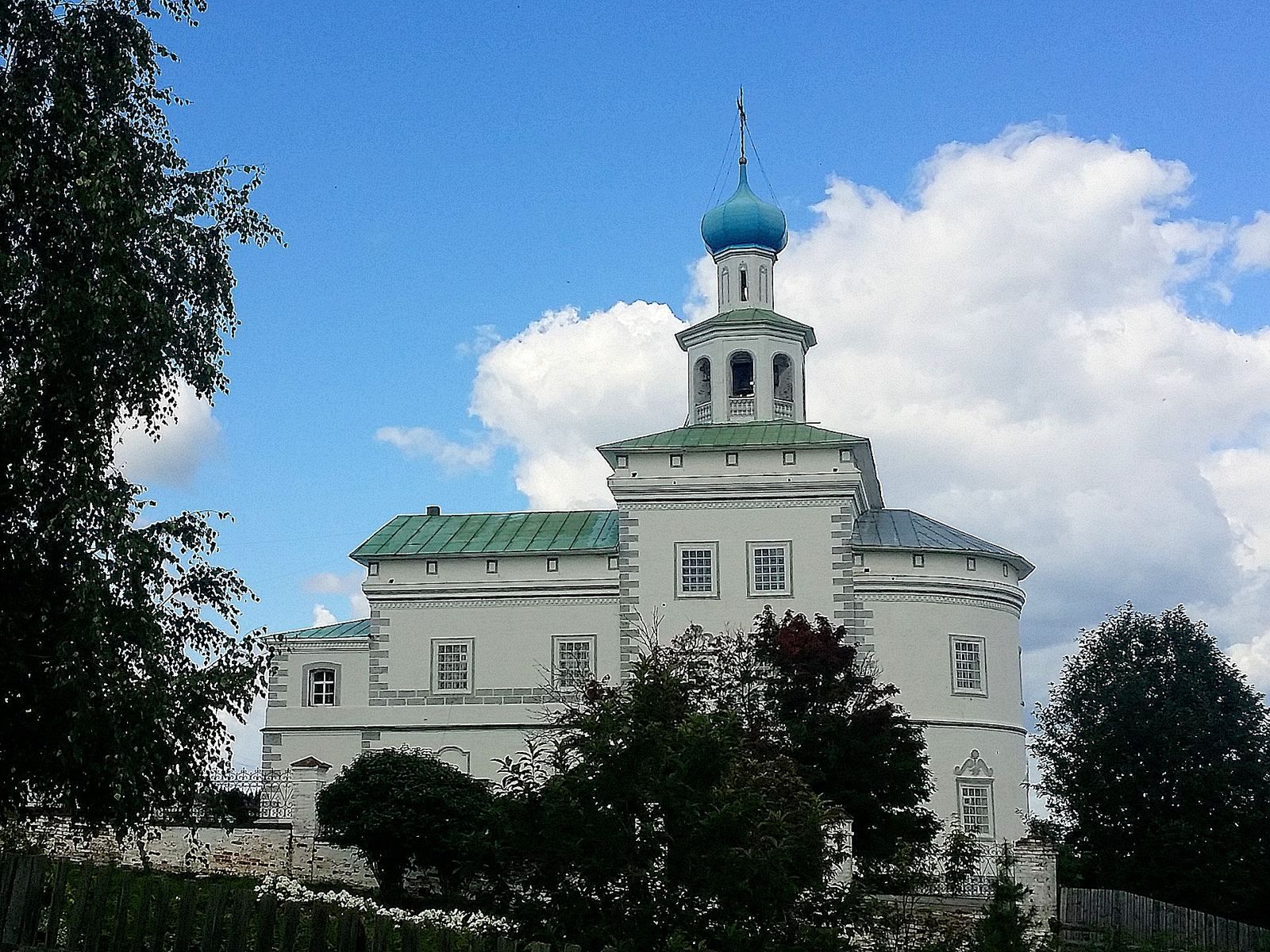
The monastery occupies a site on the bank of the Kolva River. Its described buildings include the brick Church of John the Theologian, a restored brotherhood building, and a house used as a spiritual center.
Monastic buildings
Church of John the Theologian
The brick church dates to 1704–1718 and has two altars. Its lower, heated church is dedicated to John the Theologian, the traditional Christian title for John the Apostle. The upper church, intended for summer use, is dedicated to the Ascension, the Christian observance of Jesus’s ascent to heaven. The church’s four-sided upper section rises to an eight-sided structure that incorporates a belfry. A covered gallery with a vaulted ceiling originally surrounded the building. The church was restored in 2011.
Brotherhood building and spiritual center
The brotherhood building was in disrepair when the monks arrived and was restored in 2008. A house acquired for the monastery became a spiritual center with Sunday schools for children and adults, as well as accommodation for pilgrims.