Wettenhausen Abbey: An Imperial Abbey and Augustinian Canons’ Provostry
Site at a Glance
- Popularity
- Medium
- Country
- Germany
- Primary era
- Early Modern
- Eras represented
- Medieval, Early Modern
- Civilizations
- Holy Roman Empire
- Site type
- Religious
- Remains
- Monastery
On this page11 sections
History
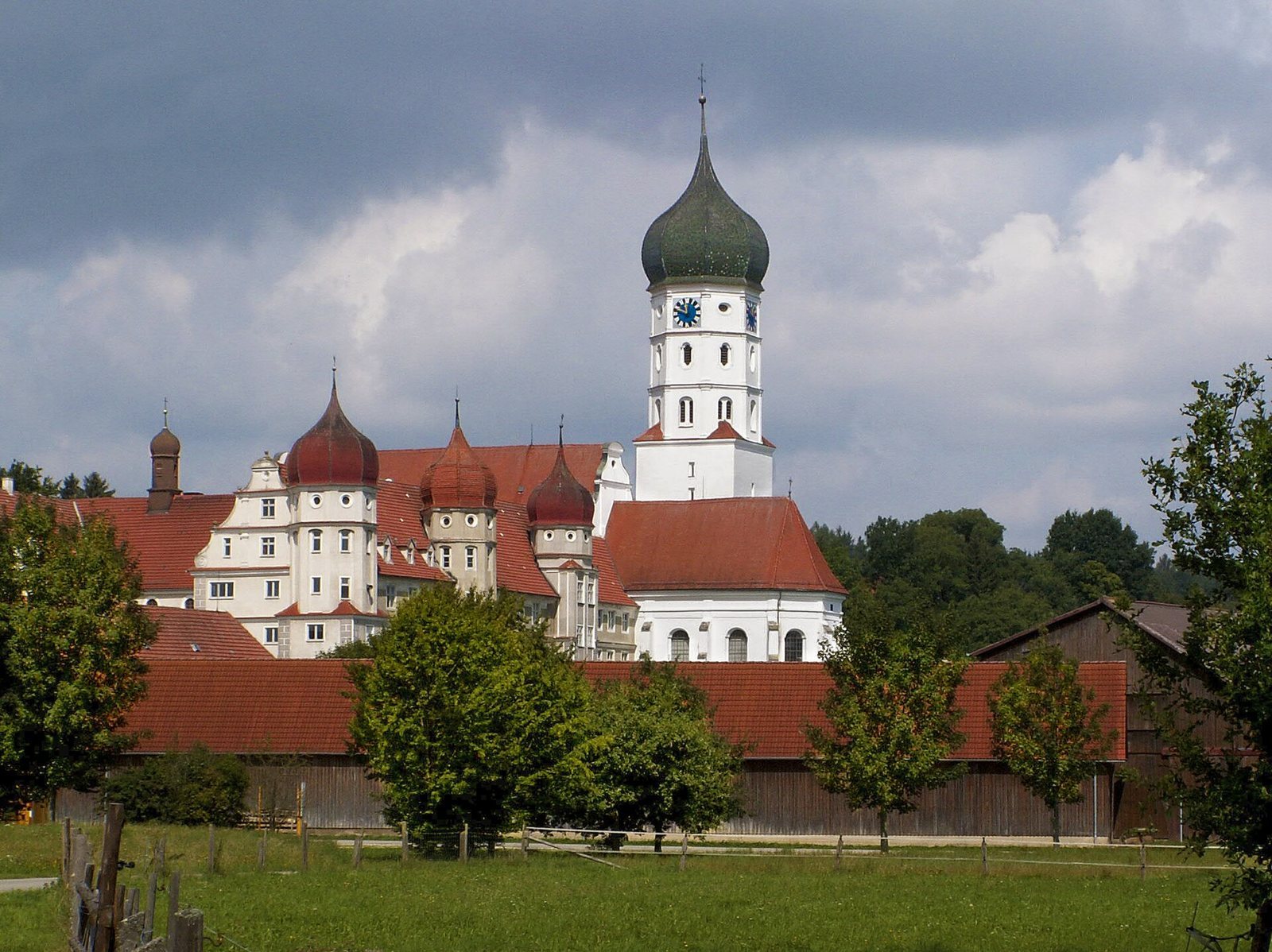
Wettenhausen Abbey, a Catholic provostry in Kammeltal, Bavaria, Germany, was dedicated to Saint Mary and Saint George. Its Augustinian Canons were clergy who followed the Rule of Saint Augustine. The monastery’s early history is uncertain, and its foundation cannot be securely placed at a specific site or date.
Origins and foundation
A house chronicle credits the noblewoman Gertrud of Roggenstein and her sons Wernher and Konrad with founding the monastery in 982. The associated legend tells that Gertrud promised the community as much land as she could plow in a day, then rode around a large area with a decorative plow hanging from her neck. A monastery may have been established at Wettenhausen at that time and later destroyed during the Investiture Controversy, a medieval dispute over the appointment of church officials. Another possibility is that an earlier house stood at Ettenbeuren. Neither account establishes the location or history of a monastery before the twelfth century.
Wettenhausen first appears in a surviving charter in 1130. Bishop Hermann of Vohburg’s document records a donation to the monastery, but does not clearly say that it was founded that year. The Augustinian Canons’ provostry was established around 1124–1133, under the influence of the reform-minded cleric Geroh of Reichersberg and perhaps for canons of Augsburg Cathedral. Gertrud and her sons are named as donors. The community accumulated considerable property, and its religious discipline was especially strong in the fifteenth century and again from the late sixteenth century, influencing other monasteries.
From provostry to Imperial Abbey
Several rulers and nobles served as advocates, exercising legal and administrative rights on the provostry’s behalf. The Margraves of Burgau, Counts of Berg, and Habsburg rulers of Burgau held the role before Wettenhausen purchased the right to choose its own advocate in 1412. The Lords of Knöringen held the office until 1469, followed by the imperial city of Ulm from 1471. The Bishop of Augsburg assumed it around 1531–32. For a time around 1530, Wettenhausen also belonged to the Danube canton, a regional division of the Imperial Knighthood, an organization of nobles whose territories were directly subject to the emperor.
In 1566, Wettenhausen gained imperial immediacy, meaning it was directly subject to the emperor rather than an intervening lord, and became an Imperial Abbey. Its territory formed part of the Swabian Circle, a regional administrative and military grouping within the Holy Roman Empire. The provost held a seat and voice on the Swabian Prelates’ Bench in the Imperial Diet, the assembly of the Empire’s estates; admission to the College of Swabian Imperial Prelates is dated to 1575. The provost consequently held the rank of an Imperial prelate. In 1602, the provosts received papal permission to use pontificals, liturgical insignia and vestments usually associated with bishops. The pope held high justice at Wettenhausen, jurisdiction over serious crimes, until 1776.
War, dissolution, and later use
Wettenhausen suffered repeated devastation during the Thirty Years’ War. Under Provost Dionys von Rehlingen, the abbey later experienced cultural, economic, and religious flourishing. Around 1800, its territory covered about 56 square kilometers and included approximately 5,400 inhabitants.
The abbey was dissolved in 1802–03 during secularization, the transfer of church property to state control, and assigned to Bavaria under the Imperial Deputation Recess of 1803. At dissolution, 25 Augustinian Canons lived there. Its library, which contained several thousand books, was transferred to the Bavarian State Library and the University Library of Dillingen. The former abbey buildings initially served as a Bavarian royal revenue office. In 1864, the Dominican Sisters of St Ursula in Augsburg acquired the buildings, re-established a convent, and founded a school. The school is now a German secondary school specializing in music and science.
Remains
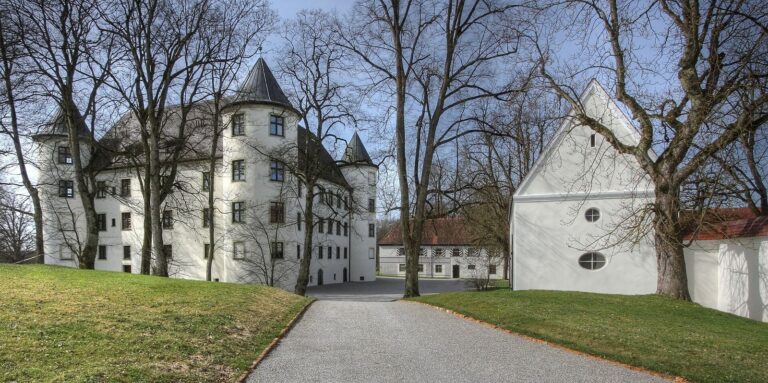
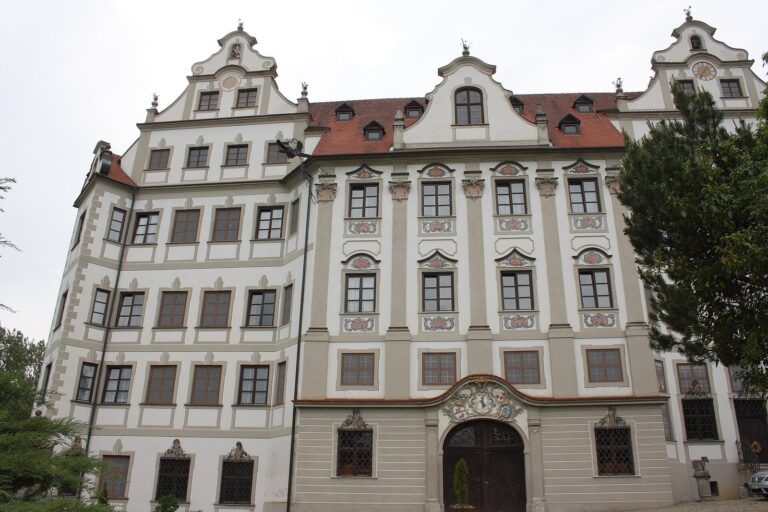
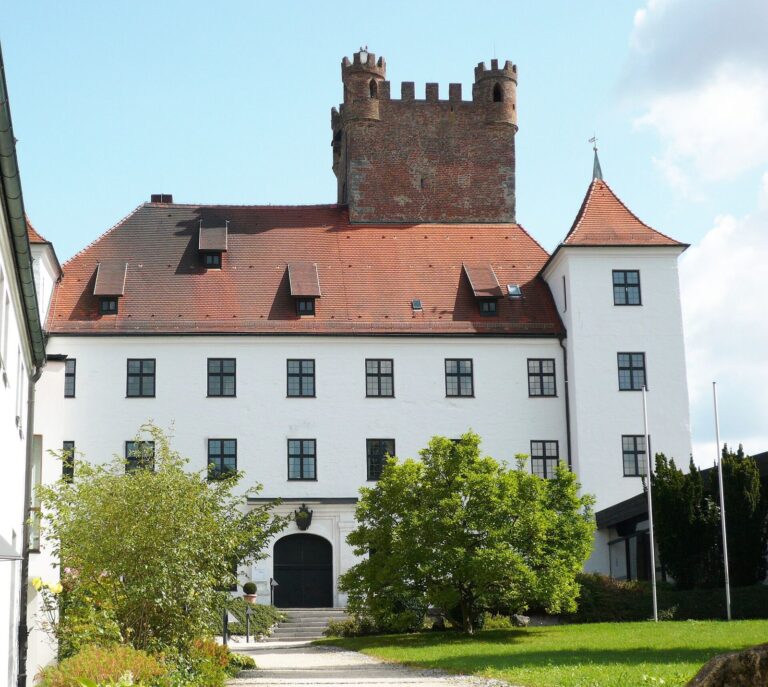
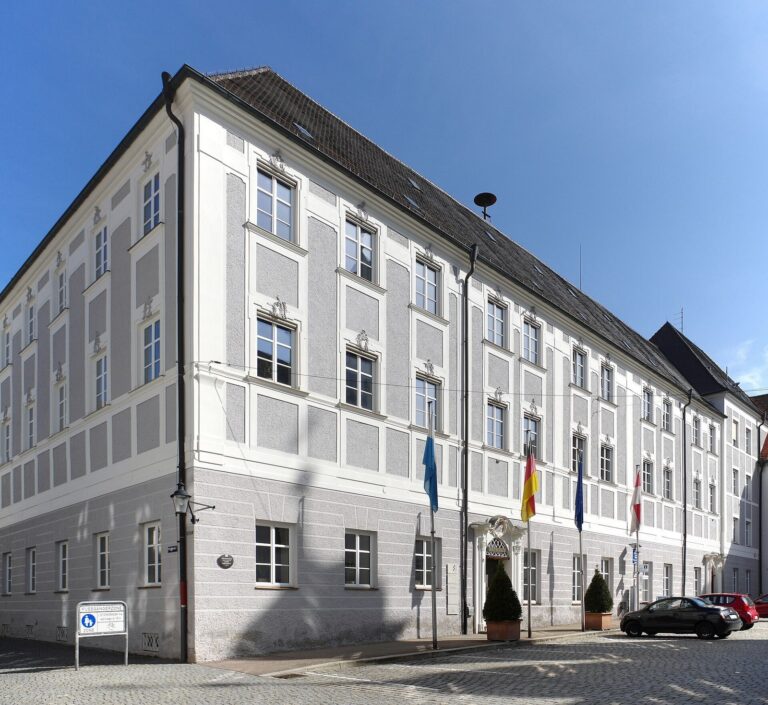
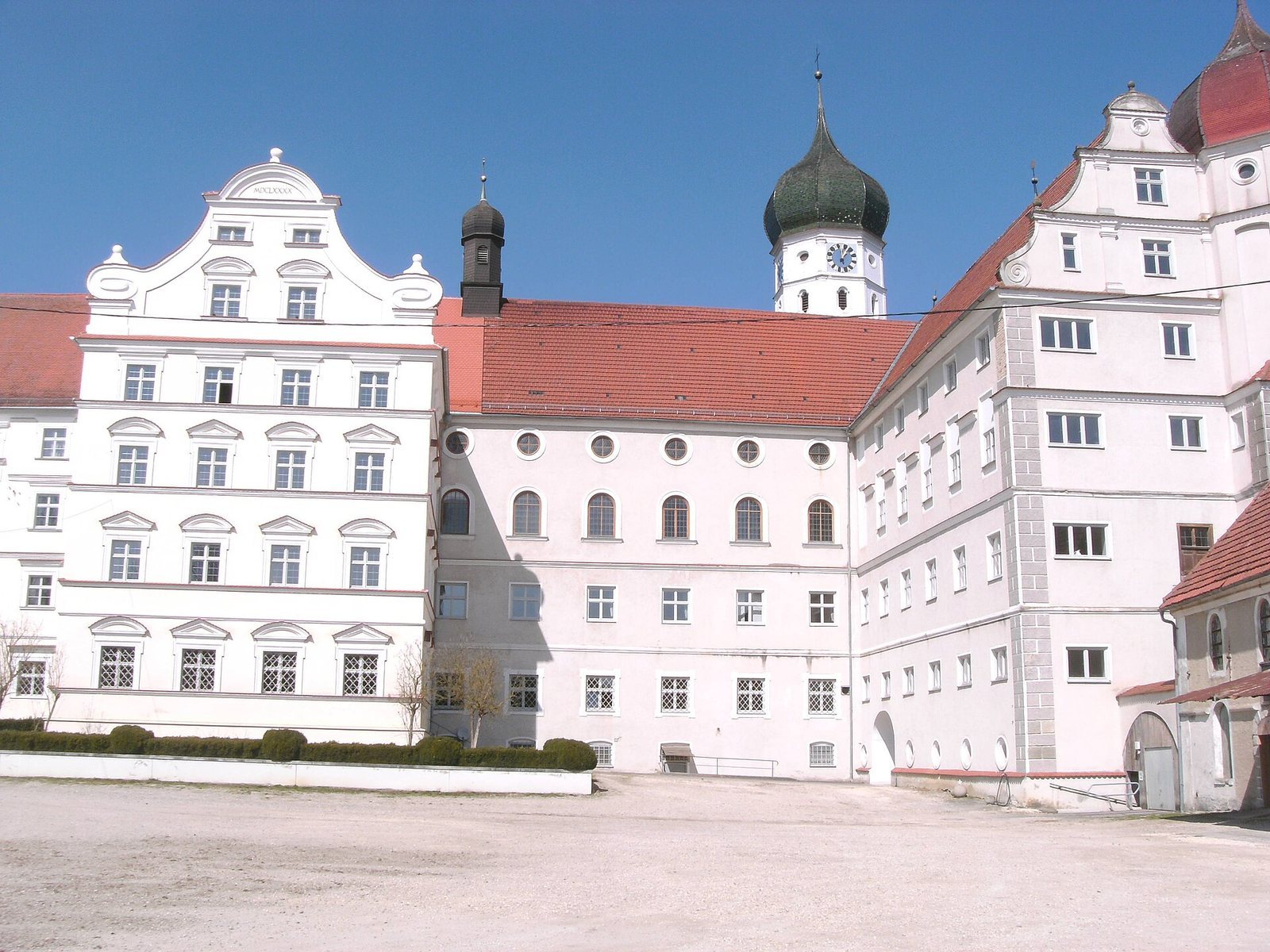
The surviving complex includes the former abbey church, monastery buildings, a ceremonial hall, and a cloister. Baroque rebuilding shaped the church and monastic complex, while stucco and painted decoration survive in the interior features described below.
Church and monastic buildings
Former abbey church
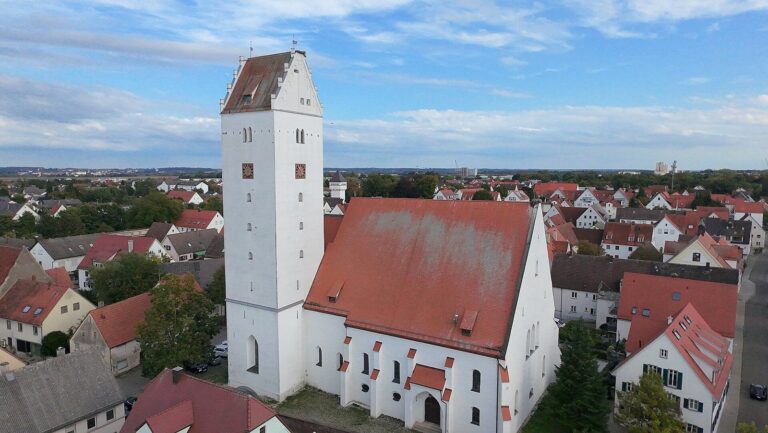
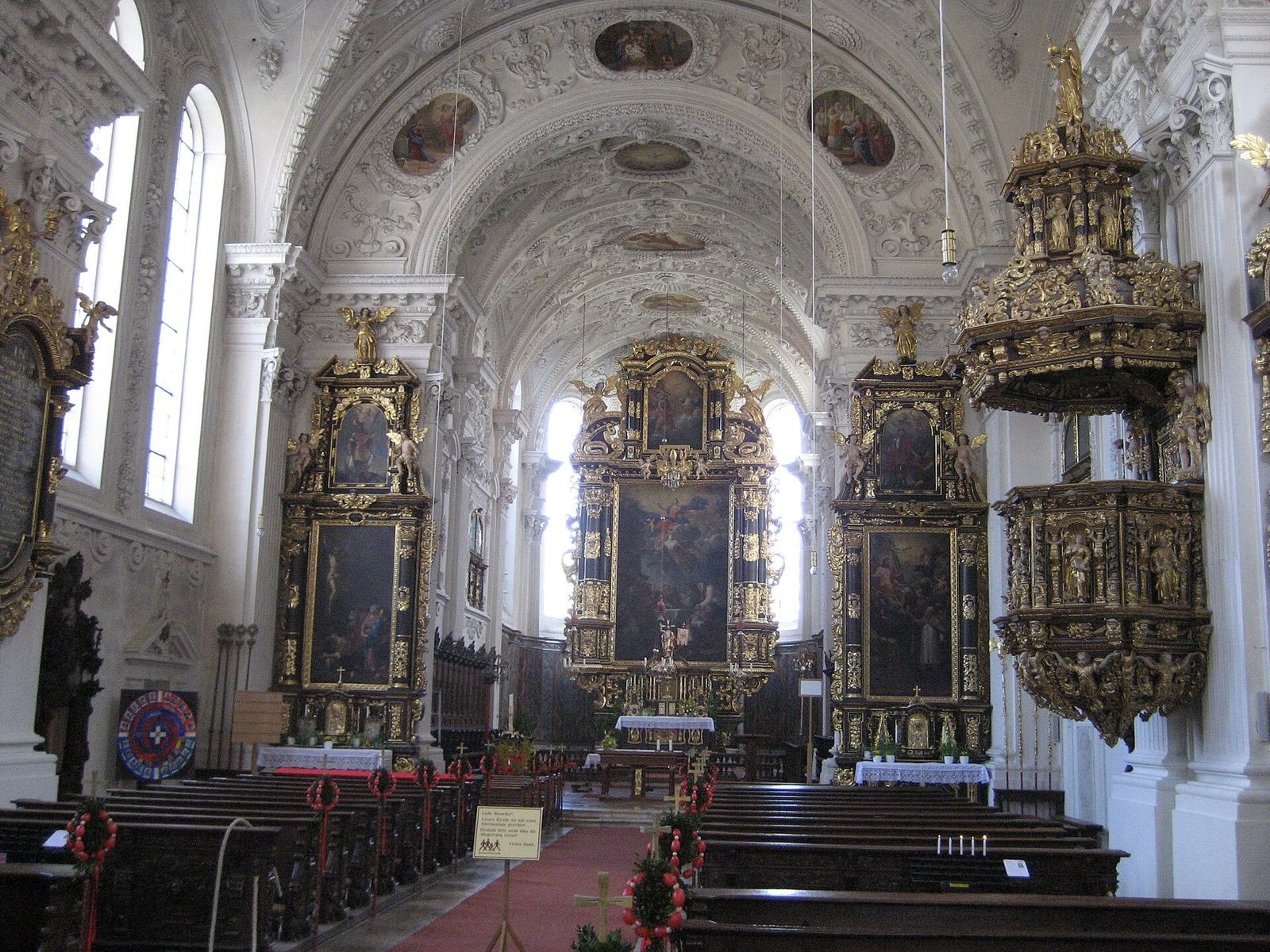
The former abbey church dates to the twelfth century and is dedicated to the Assumption of Mary, the Christian belief that Mary was taken into heaven. It was altered in the Baroque style during the seventeenth century under the direction of architect Michael Thumb. The building now serves as Kammeltal’s parish church.
Baroque rebuilding
Between 1670 and 1683, the monastery and collegiate church were rebuilt in the Baroque style under Thumb’s direction. M. Gigl created the stucco decoration for the work.
Decorated interiors
Kaisersaal
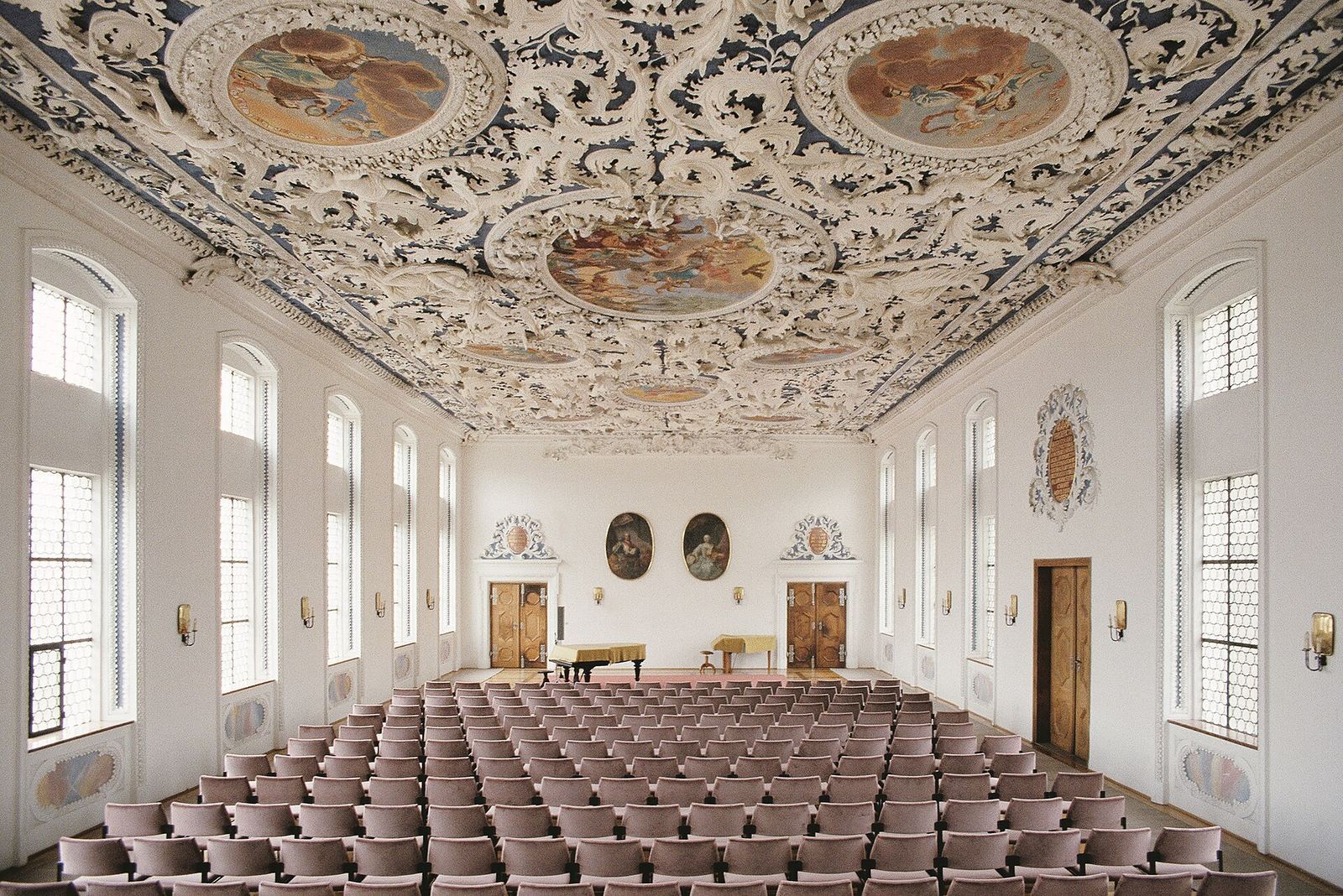
The Kaisersaal, or Imperial Hall, has an elaborate ceiling made by Johann Georg Brix in 1694, with stucco ornament in acanthus-leaf forms. A depiction celebrating the House of Habsburg, the European ruling dynasty whose members ruled Austria and the Holy Roman Empire, is also associated with the hall.
Cloister
The cloister contains a cycle of ceiling paintings that use emblems, or symbols, to convey ideas.