Tomb of Baba Loghman: A Seljuk-Style Mausoleum in Iran
Site at a Glance
- Popularity
- Medium
- Country
- Iran
- Primary era
- Medieval
- Eras represented
- Medieval
- Civilizations
- Unclassified
- Site type
- Religious
- Remains
- Tomb
On this page6 sections
History
The Tomb of Baba Loghman is a Seljuk-style mausoleum in Sarakhs, Iran, dating to the eighth century AH, in the Islamic calendar that begins in 622 CE. The Seljuks were a medieval dynasty that ruled parts of western and central Asia.
The mausoleum is attributed to Loghman Sarakhsi, known as Baba Loghman, a Sufi mystic, or practitioner of Islam’s mystical tradition, associated with the fourth century AH. It is regarded as his burial place and may also have served as a ceremonial tomb. Loghman is described as a contemporary of the Persian Sufi master Abu Sa’id ibn Abu al-Khayr, who was born between 957 and 967.
The building has undergone restoration and continues to serve as a pilgrimage site. Iran registered it as a National Heritage monument in 1932, under number 165, and it is also regarded as a historic monument.
Remains
Architectural layout
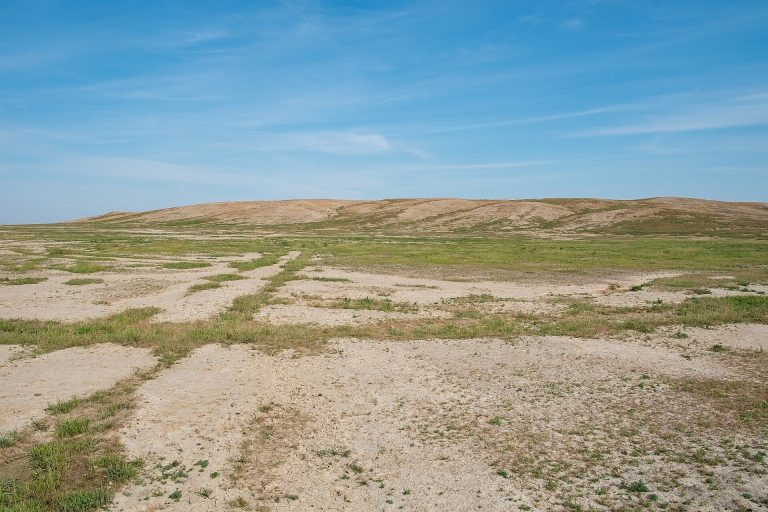
This large brick complex stands about three kilometres north of Sarakhs’s city centre, near the Iran–Turkmenistan border. It occupies an area among earthen mounds containing ruined subsidiary buildings. Its plan combines two connected square sections, with the tomb set inside a larger enclosure. Brick construction, plasterwork, and patterned surfaces shape the surviving architecture.
Enclosure and porch
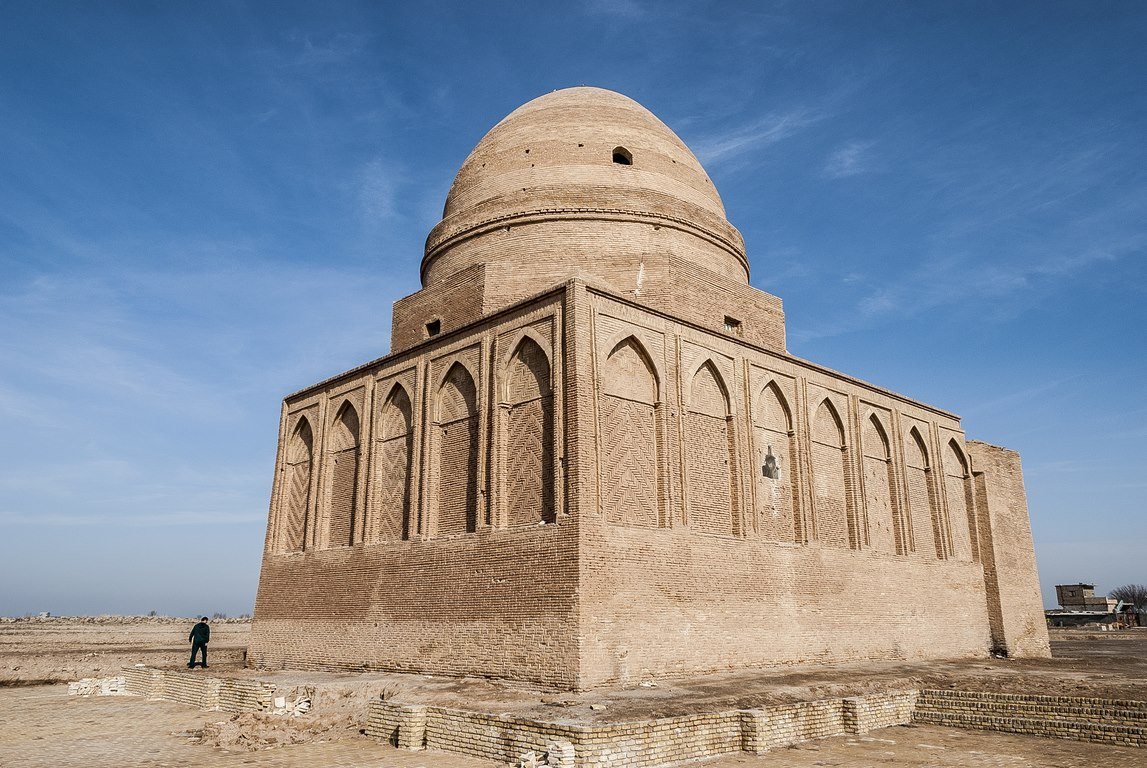
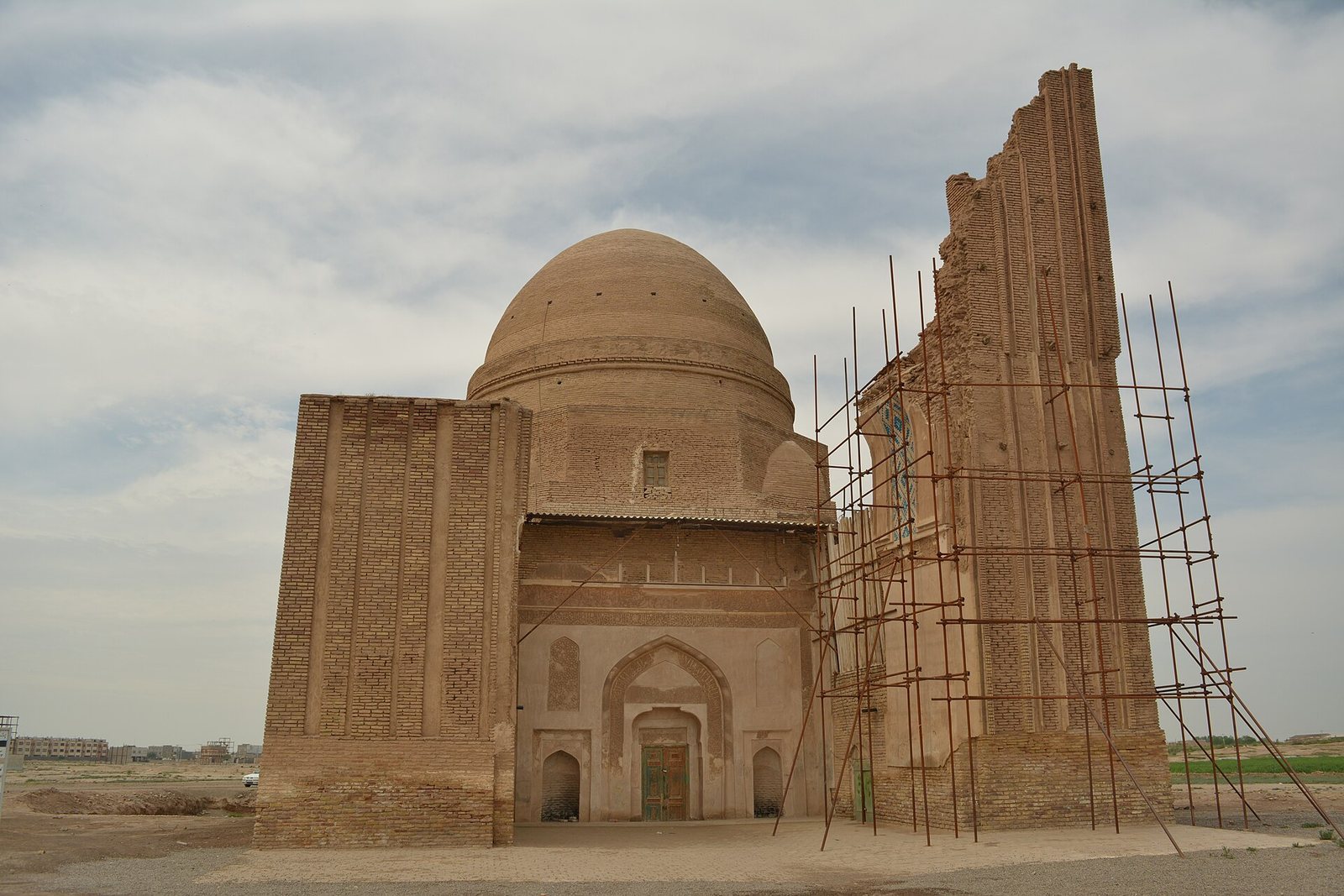
The outer precinct is rectangular, measuring 40 by 26 metres, and two brick walls enclose the structure. A high porch projects from the north side in front of the tomb. The building has two levels, with galleries on the upper storey and a niche in the middle of each interior wall.
Tomb and dome
The tomb’s square lower storey changes to an eight-sided upper section. Above it, a low brick dome has separate inner and outer shells and rests on a cylindrical support. A ring-shaped band marks the transition between the dome’s rounded crown and its drum, the upright section beneath the dome. The supporting wall stands on a many-sided base.
Openings and decoration
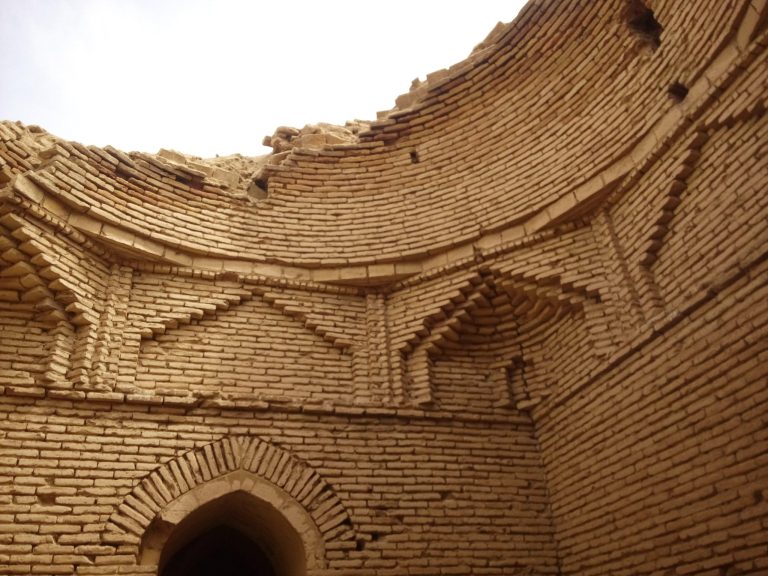
Four rectangular openings in the upper section admit light. The exterior is ornamented with blind arcades, rows of arches set against a wall without openings, and finely arranged geometric brickwork. Inside, raised and recessed diamond patterns decorate the arches. The design closely resembles the Tomb of Sultan Ahmad Sanjar, named for a Seljuk sultan.