Hvedholm Castle: A Historic Estate Near Faaborg, Denmark
Site at a Glance
- Popularity
- Medium
- Country
- Denmark
- Primary era
- Modern
- Eras represented
- Medieval, Early Modern, Modern
- Civilizations
- Danish
- Site type
- Domestic
- Remains
- Castle
On this page8 sections
History
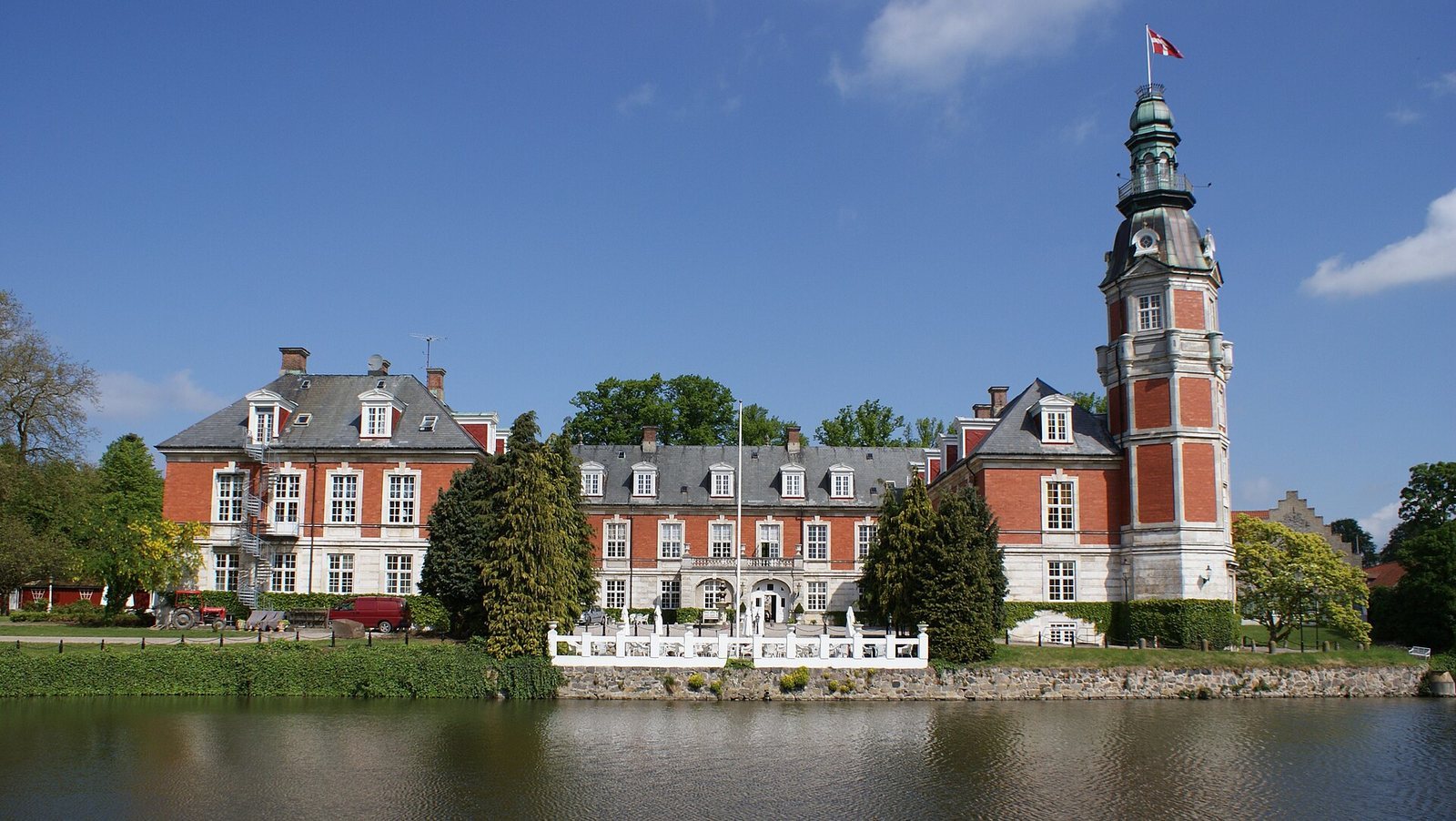
Hvedholm Castle is a historic estate near Faaborg on the island of Funen, Denmark. Its history reaches back to the 15th century, and its main building dates to 1588. The present building reflects a later reconstruction in the Historicist style, a 19th-century approach that drew on earlier architectural forms.
Early ownership and rebuilding
The estate was held over time by the Banke, Panter, Hardenberg, Bille, and Brahe families. The Panters preceded the Hardenbergs in the late 15th century. The Bille family gained the estate through marriage in the 16th century, and the Brahes acquired it by marriage in the early 17th century. A noble residence is also associated with the estate in the 16th century.
After a fire, the main building was rebuilt in 1681. It underwent another major reconstruction in 1878–1882 for Count Bille Brahe Selby, based on architectural drawings. A further fire is dated to 1880, around the period of this work.
State ownership and later use
In 1919, a very large tax demand led the Brahe family to sell the castle to the Danish state for about 175,000 kroner. Part of the estate was returned to the family as compensation in 1928 and sold again in 1937. The state sold the castle into private ownership in 1996, after which the main building became a hotel. Horne Church formerly served as the estate’s patronal church, a church associated with the landowner’s patronage. The castle is protected as cultural heritage.
Remains
Estate layout
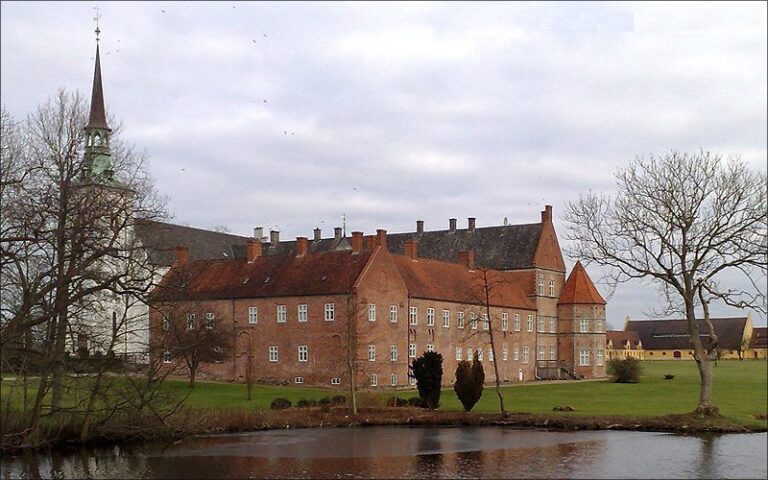
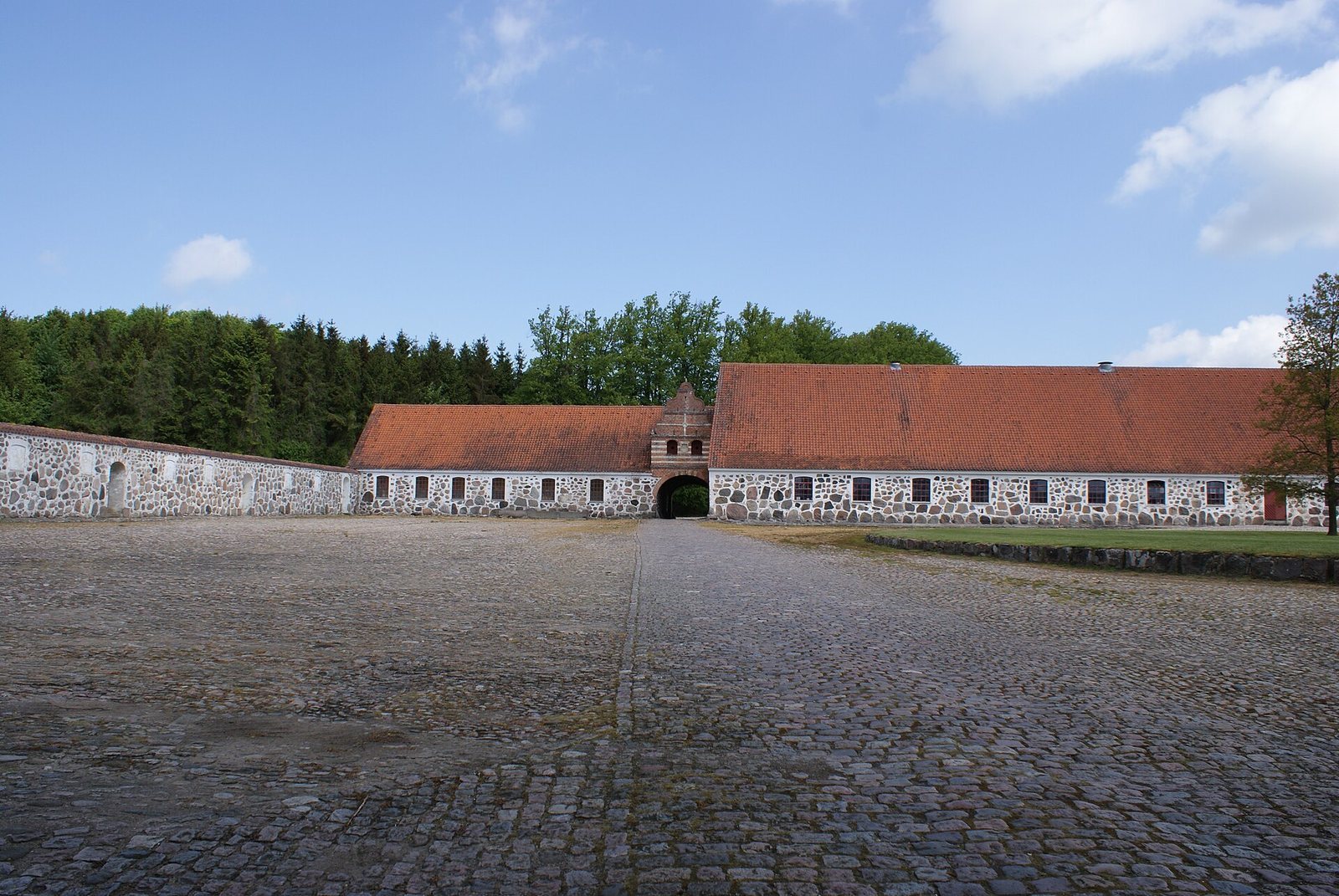
The estate includes the three-winged main building, historic farmyard buildings to its north, and a park extending around the castle. An English landscape garden lies to the south. A long avenue links the castle complex with Horne Church.
Main building
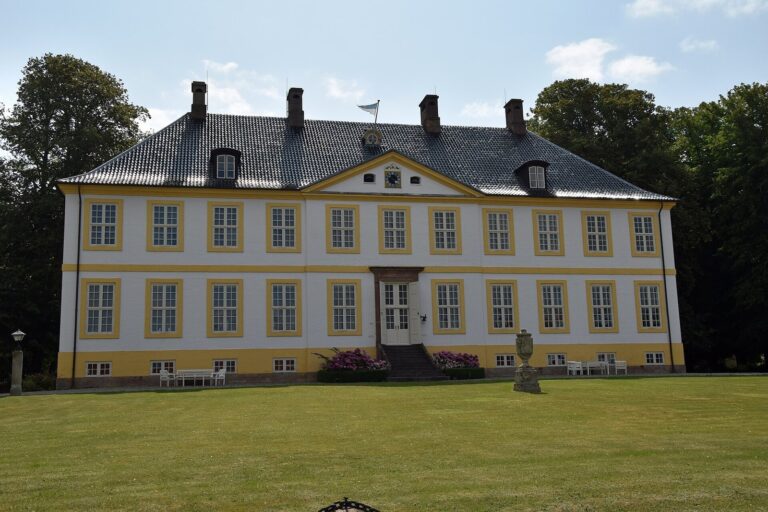
The main building is in the Historicist style, with design elements drawn from French Baroque, the ornate architectural tradition associated with Baroque France. A tall lookout tower rises above its three wings.
Park and farmyard buildings
The castle stands within a 10-hectare park. Historic farmyard buildings survive north of the main building, while the English landscape garden to the south was designed to create a naturalistic park setting.
Avenue and Horne Church
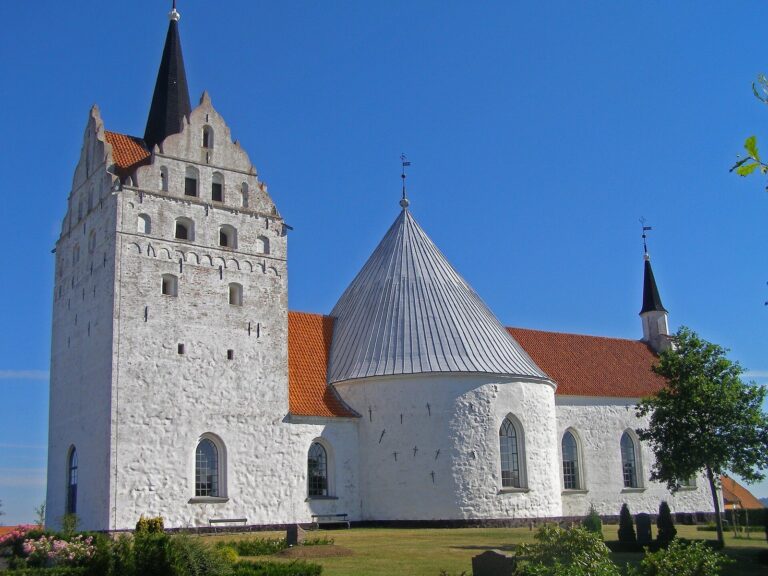
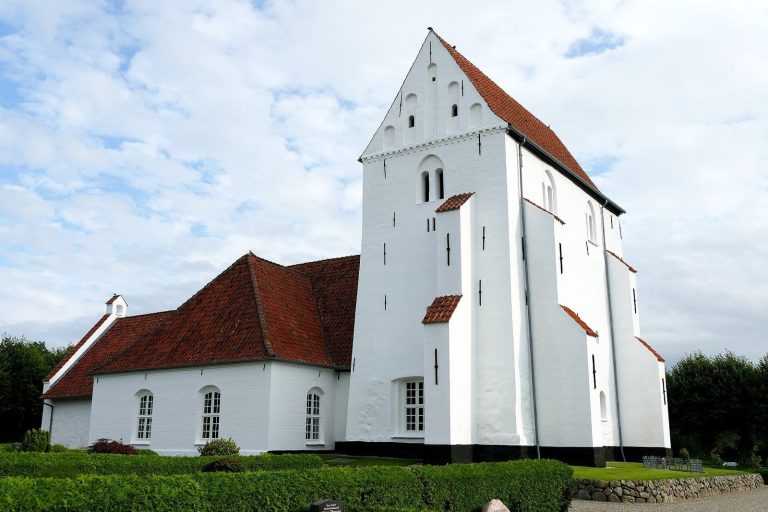
The avenue connects the castle complex with Horne Church, described as the only round church on Funen.