Bakewell Castle: A Motte-and-Bailey Fortification in Derbyshire
Site at a Glance
- Rating
- 3.9
- Popularity
- Very Low
- Country
- United Kingdom
- Primary era
- Medieval
- Eras represented
- Medieval
- Civilizations
- English
- Site type
- Military
- Remains
- Castle
On this page9 sections
History
Bakewell Castle is a motte-and-bailey fortification, with a raised mound and enclosed areas, in Bakewell, Derbyshire, United Kingdom. It may have originated as an Anglo-Saxon stronghold established by Edward the Elder in 924 to counter a Mercian invasion.
Possible Anglo-Saxon origins
The Anglo-Saxon Chronicle describes Edward entering Peakland after fortifying Nottinghamshire, then reaching Bakewell and ordering a garrisoned settlement there. This settlement may have been a burh, a fortified settlement or stronghold in Anglo-Saxon England, intended to resist a Mercian invasion.
Medieval castle
The surviving motte dates to the 12th century. One interpretation is that it was built over an earlier Saxon burh. Another possibility is that the earlier site was a manor rather than a fortification. Under this interpretation, King Richard I, known as Richard the Lionheart, granted the manor to Ralf Gernon during the 12th century, and Gernon fortified it.
Destruction and protection
Bakewell Castle was demolished during the English Civil War, a series of conflicts in England from 1642 to 1651. It is a Scheduled Monument, a site protected under England’s statutory heritage system.
Remains
Surviving structure
Motte and baileys
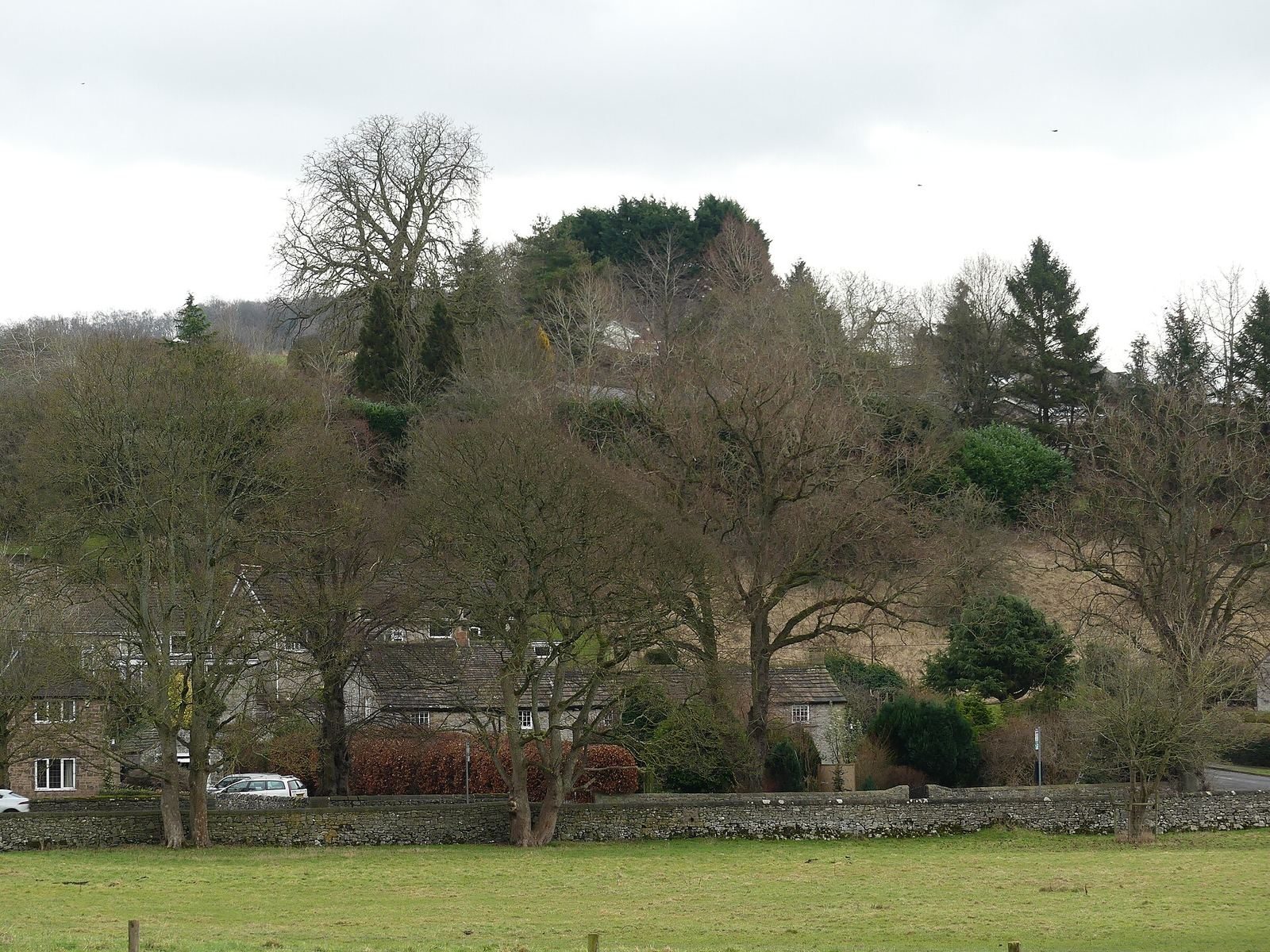
The castle’s earthworks occupy a mound called Castle Hill and preserve the layout of a motte with two baileys, or enclosed areas. The motte may once have been further defended by a timber fence. Earthworks make up the principal surviving remains.
Foundation walls
Some foundation walls also survive beneath vegetation, alongside the earthworks.
Pottery and excavations
Excavations in 1969 and 1971 informed historian M.J. Swanton’s interpretation of the castle. Pottery from the south-eastern part of the bailey most likely dates to the 12th or 13th century.