Lejlek Mosque: An Ottoman Mosque in Novi Pazar
Site at a Glance
- Rating
- 5
- Popularity
- Very Low
- Country
- Serbia
- Primary era
- Early Modern
- Eras represented
- Medieval, Early Modern, Modern
- Civilizations
- Ottoman, Serbian
- Site type
- Religious
- Remains
- Mosque
On this page10 sections
History
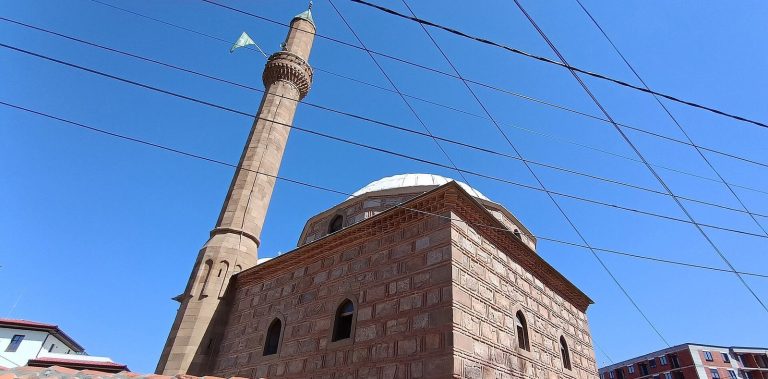
The Lejlek Mosque is an Ottoman mosque in Novi Pazar, Serbia, usually dated to the 16th century, though construction in the latter half of the 15th century has also been proposed. Ottoman registers refer to it in 1516. It is among Novi Pazar’s oldest mosques; if the earlier date is correct, it would be the oldest mosque in Sandžak, a historical region spanning southwestern Serbia and northern Montenegro.
Origins and traditions
The mosque is also called Ahmed-bey Mosque and Ahmed-bey Silahdar Mosque, names probably connected with its original patron, Ahmed-bey Silahdar. Bey was an Ottoman title whose rank varied, while a silahdar was a court officer responsible for the ruler’s weapons. The name Lejlek comes from the Turkish word leylek, meaning stork. Storks nested on the minaret and are regarded as sacred birds by Muslims in the region.
A tradition says that Sultan Mehmed II, the Ottoman ruler who captured Constantinople in 1453, prayed at the mosque during his 1459 campaign in Bosnia. If true, the story would place the mosque’s beginnings around the time of Gazi Isa-bey Mosque, associated with the 15th-century Ottoman governor and military leader Gazi Isa-bey. The tradition does not independently establish the mosque’s construction date. Another legend tells of a stork praying at a church said to have stood on the site, prompting its conversion into a mosque. This remains a legendary account of the building’s origins.
Rebuilding and later changes
The mosque was destroyed and burned several times. The present building followed a reconstruction in the first half of the 18th century, when many religious and secular structures damaged by war were being restored. Its architectural character is also associated with the period after the Great Turkish War of 1683–1699, a conflict between the Ottoman Empire and a European coalition, in the late 17th or early 18th century. A carpet dated 1767 places the word havale, meaning ‘alter and transfer to another,’ before the name of the original donor, Ahmed-bey, and provides evidence of rebuilding.
In 1881, Salih-bey Begović, son of Hadži Ali-beg, restored the mosque, added an open porch, built a religious elementary school, and repaired the fountain used for washing before prayer and for drinking water. The porch was later enclosed during a 19th-century renovation. Subsequent conservation work returned it to its earlier open form and strengthened the building. In 2001, the Islamic Community of Serbia created a courtyard complex for educational and economic use; the earlier school was replaced, and the courtyard and fountain were renewed. The mosque is protected as a cultural monument of the Republic of Serbia.
Remains
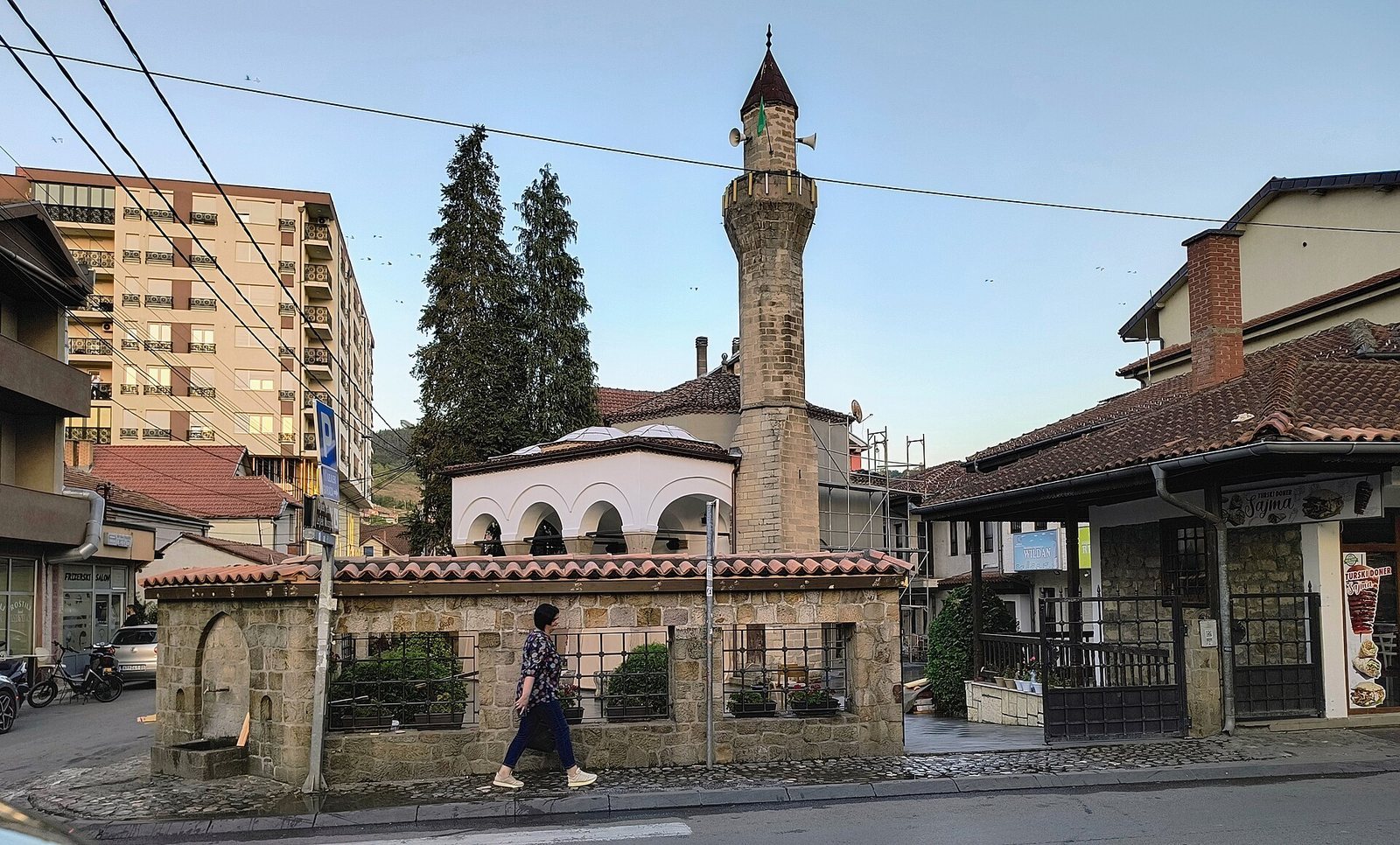
The mosque is a modest, single-room building with an almost square prayer hall beneath a closed dome without openings. An eight-sided drum, the raised base supporting a dome, carries it, and tiles cover the roof. The building’s dimensions, design, and masonry depart from strict conventions for domed mosques. It is comparatively modest beside larger buildings based on Bursa-school models, an early Ottoman architectural tradition associated with Bursa.
Main building
Prayer hall
Three windows set low in the walls light the interior, with two more low windows on the side facing the porch. The only interior feature described as ornament is the mihrab, the prayer niche. Outside, the walls are plastered and whitewashed. Dressed stone frames the entrance and windows, while bricks set in a toothed pattern form the roof cornices.
Porch and minaret
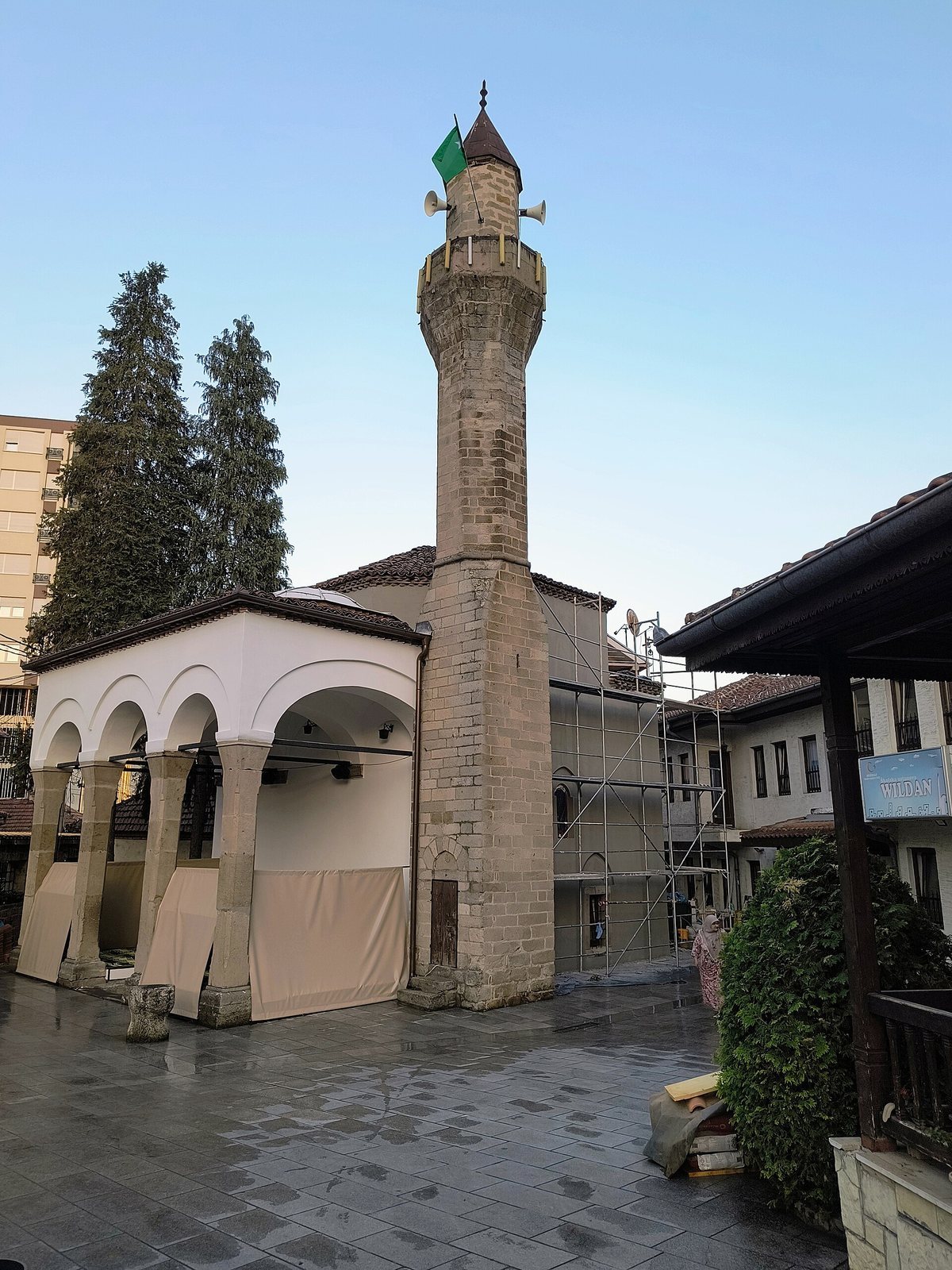
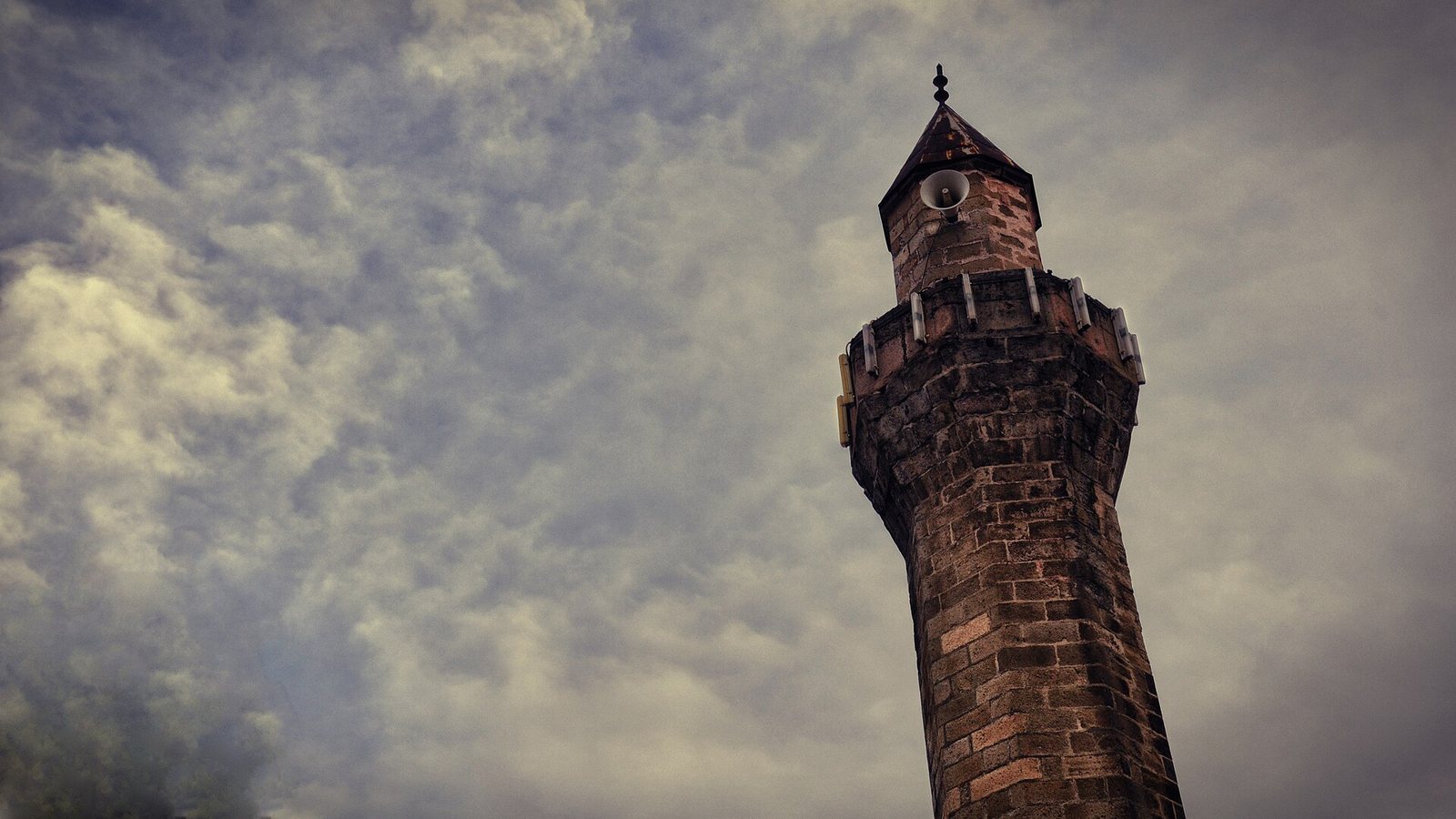
The deep, high porch has three open sections, each formed by semicircular arches resting on massive stone pillars. The pillars have plain bases and tops. Three small domes cover the porch; the central one is slightly larger and emphasizes the entrance. The octagonal minaret, built of dressed stone, stands to the right of the entrance and adjoins the mosque for most of its height.
Courtyard features
Funeral and burial features
Beside the porch is a round mejtaš, a stone used in funeral rites when lowering a body. Several graves beside the fountain have Ottoman nišan markers, gravestones marking the burials.
Fountain
A stone inscription slab at the fountain measures 45 by 55 centimeters. Its Turkish inscription is written in Arabic script and dated 1891.